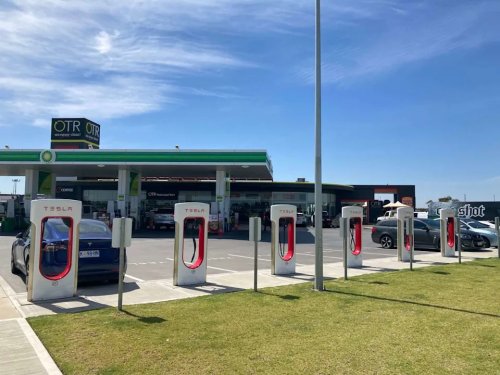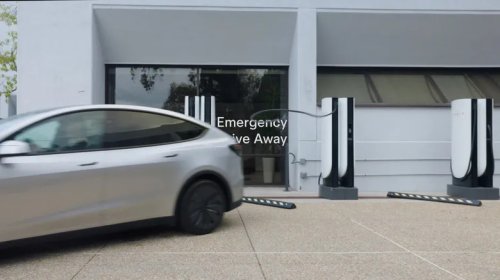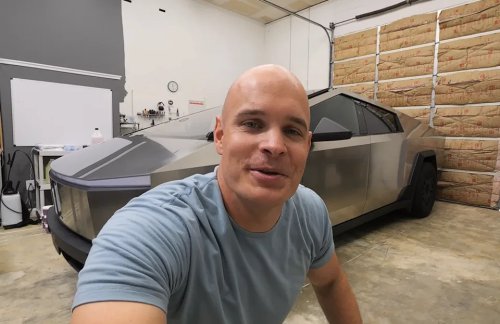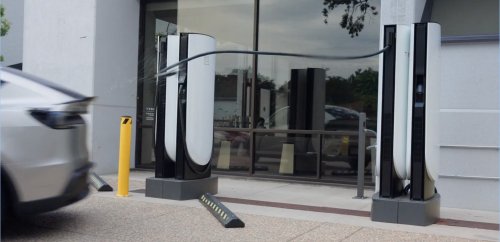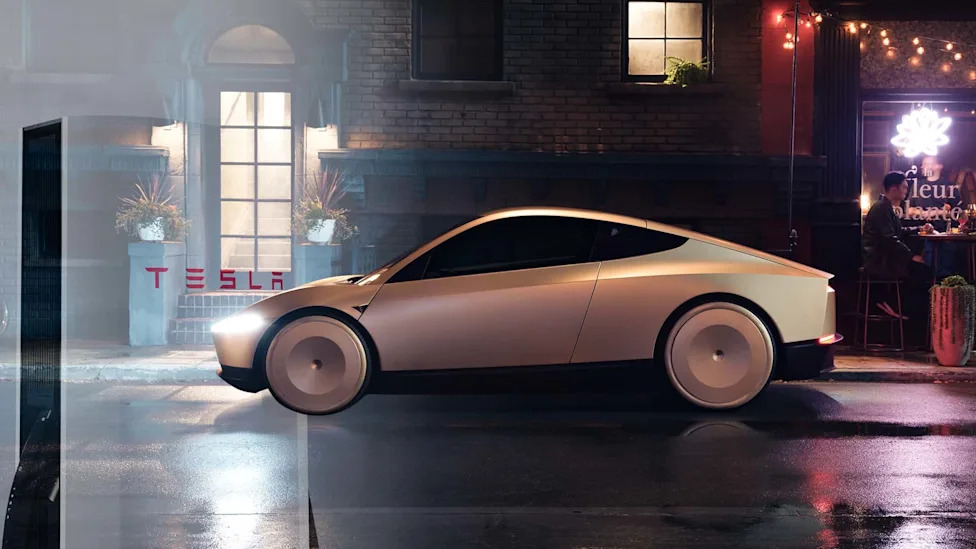



















You Can't Charge The Tesla Cybercab At Home (Yet)InsideEVscontact@insideevs.com (Rob Stumpf)Fri, September 11, 2026 at 2:27 PM UTCAdd us on GoogleTesla Cybercab SuperchargerThe purpose-built robotaxi won't be able to slow charge from a plug like other Teslas.Tesla's Cybercab is missing a key piece of hardware.This means that charging one of the robotaxis today requires plugging into a Tesla Supercharger.In the future, Tesla plans for wireless charging.Tesla has gone through absurd lengths to remove anything from the Cybercab that it doesn't think a robotaxi needs. Steering wheel? Gone. Pedals? Who needs 'em. Mirrors? As if. It turns out that you can also add another common EV component to that list: the onboard charger.The production Cybercab apparently doesn't have one. That's according to Out Of Spec's Kyle Conner who inspected the two-door autonomous taxi at its launch event in Austin last week and determined that the car can't be plugged into the same home charger you use for your Model 3. In fact, it can't be plugged into a home charger at all right now.AdvertisementAdvertisementIn order to charge the Cybercab, you'll need to visit one of Tesla's Superchargers—which is totally fine right now, because nobody outside of Tesla can actually buy a Cybercab (yet). But why won't it work with a typical Tesla Wall Charger? That requires a little bit of an EV explainer to make sense.The electricity supplied to your home by the power company is delivered as alternating current (AC). Batteries, meanwhile, store energy in direct current (DC). In a normal home-to-EV charging scenario, your car is plugged into a wall where it sips AC electricity into its onboard charger. The car's onboard charger then converts it to the DC current needed to charge the battery.The Cybercab, in a quest to minimize cost and complexity, deletes that box altogether.AdvertisementAdvertisementIn order to actually charge, the Cybercab needs to be supplied with DC current directly—that means hooking up a DC fast charger to the NACS port hidden in an access panel within its rear bumper. Eventually, Tesla plans to install wireless charging equipment at Supercharging sites so that cars no longer have to plug in, which means removing the human from yet another part of the Cybercab ownership experience.Notably, wireless inductive charging is slower than plugging into a fast charger. A video published two years ago shows the tech charging at speeds up to 25 kilowatts, which is significantly slower than a Supercharger's peak rate of around 250 kW. But that would be faster than any Tesla can currently charge on AC. Given that Cybercab's battery is under 50 kWh, a full wireless charge should take right around two hours, assuming that old promised figure is real. Not a terrible trade-off for ditching the cable (and the person needed to plug the car in).I know it might seem weird that a vehicle would be restricted to DC fast charging. After all, the entire idea behind EVs being cost effective today is charging at home. But the Cybercab is a platform made for making money, which means spending as much time as possible on the road. Charging quickly is kind of the point.Tesla could also decide to add an onboard charger before the car is offered to consumers. The car isn't technically purchasable by consumers today, so between now and when you can actually get one in your driveway, the ability to add AC charging could arrive. For now, you'll just see fleets juicing up at Tesla's own stalls.More Tesla Cybercab NewsWatch Tesla's Wild 'Unboxed' Manufacturing For The Cybercab In ActionTesla Cybercab's Backup Steering Wheel Is A Giant On-Screen JoystickTesla's Cybercab Is Finally Here. So Is The Competition.The Tesla Cybercab Is Already Being Investigated For Not Having A Steering Wheel