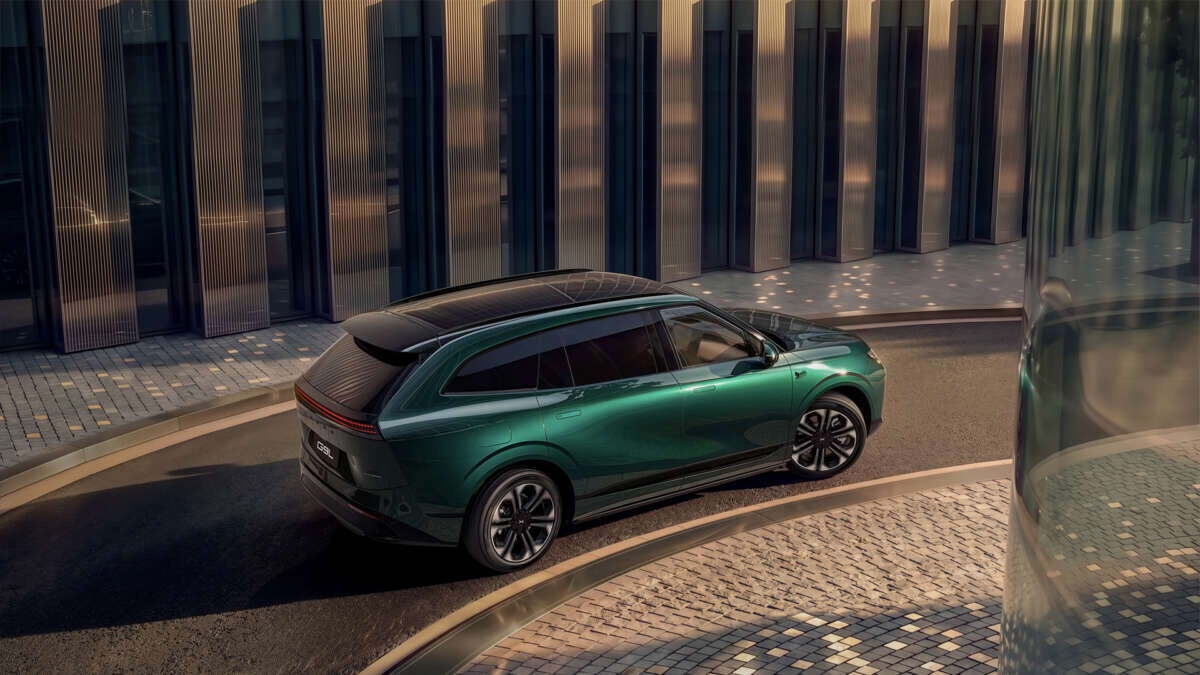
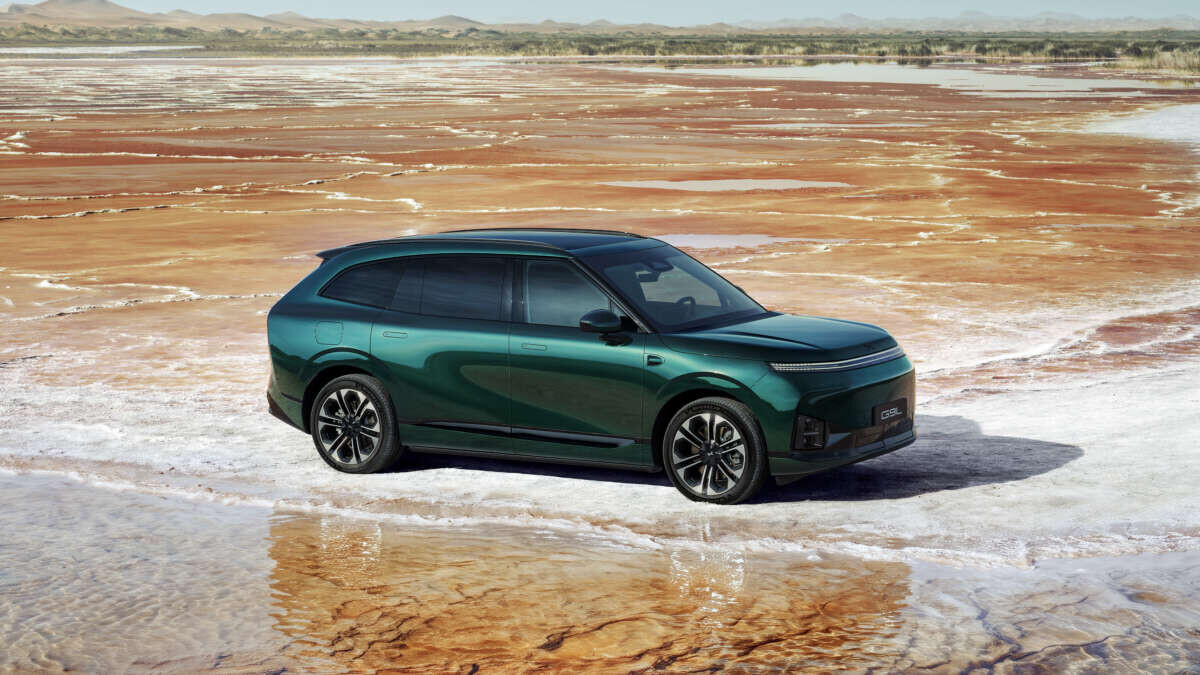
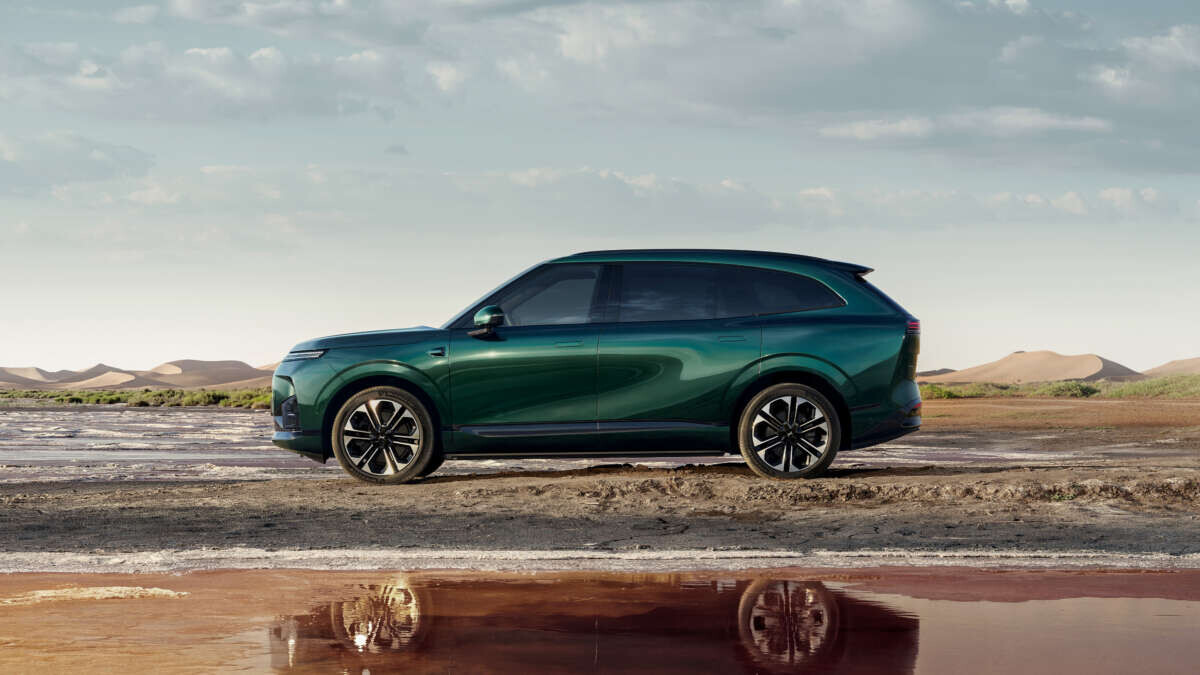
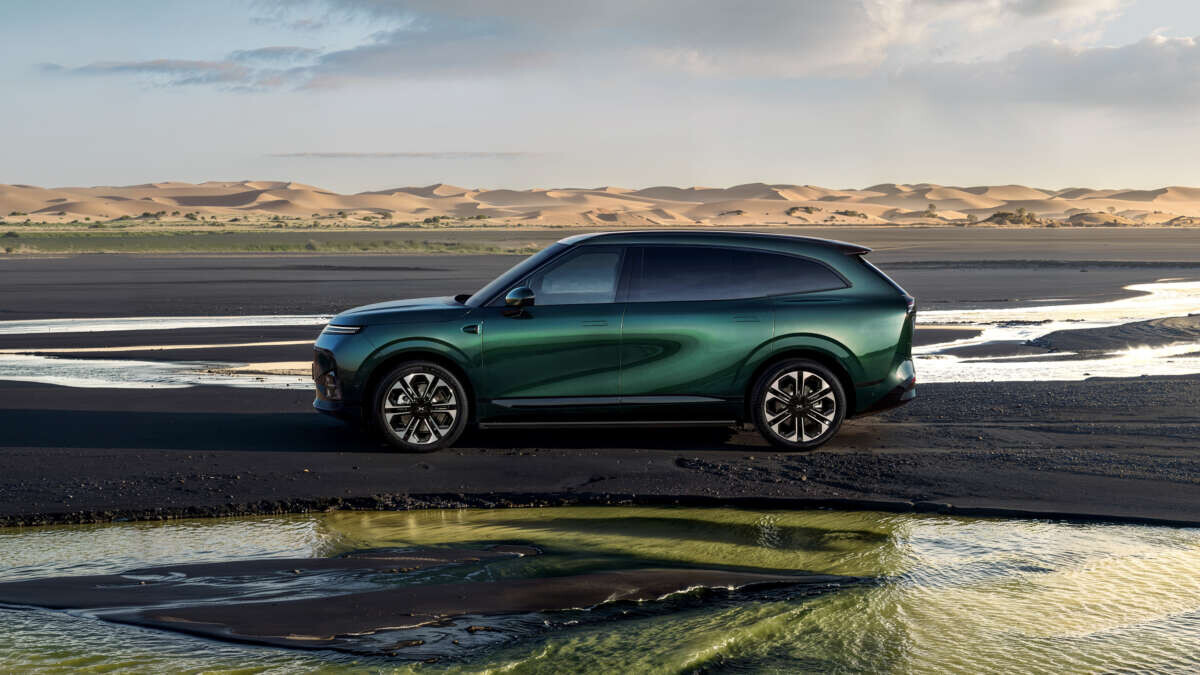
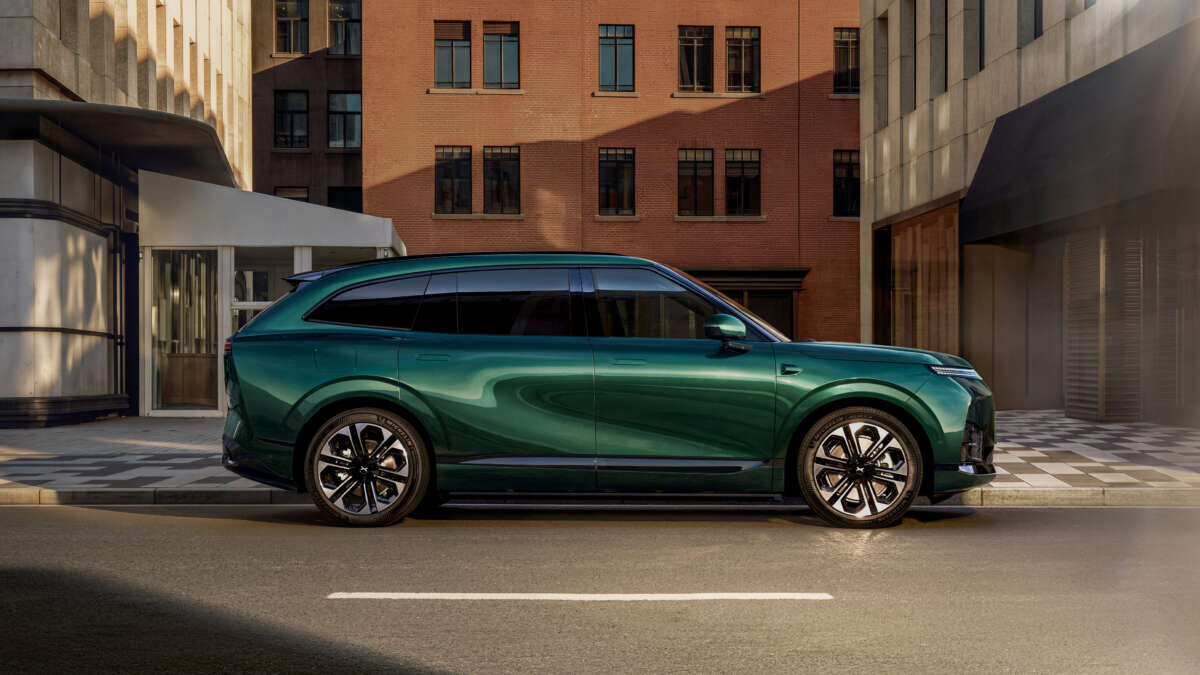
XPeng achieved two major milestones in the third quarter. The first came on July 16, when the XPeng MONA L03 made its debut in Munich, becoming another volume seller for the automaker after the M03. The second came in September, when XPeng’s monthly overseas exports exceeded 10,000 vehicles for the first time, giving its overseas expansion story a new source of momentum. In between, the XPeng GX, priced from RMB 279,800 ($42,000), maintained monthly sales of around 7,000 units throughout the quarter, consistently ranking among the brand’s three best-selling models. With new models gaining traction and overseas sales reaching record highs in higher-margin markets, the same question inevitably resurfaced during earnings season: Has XPeng become profitable, or at least how much has it reduced its losses? Based on its third-quarter results, the answer to the first question is still no. XPeng’s key financial results for Q3 2026 XPeng delivered 118,390 vehicles in the third quarter, up 2.1% year on year. Revenue reached RMB 24.28 billion ($3.64 billion), up 19.1%, while its net loss widened 127.9% year on year to RMB 870 million ($130 million). However, the loss narrowed 35.1% from RMB 1.34 billion ($201 million) in the second quarter. Can XPeng achieve break-even in the fourth quarter? The company did not directly answer that question at its earnings call on the evening of the results announcement. Instead, much of the discussion focused on overseas markets. Overseas Markets Take Center Stage “What surprised me most was that deliveries increased by only 2.1%, while revenue rose by nearly 20%.” We shared XPeng’s latest financial results with @硬神996, an owner of several XPeng models, including the G9, G6, P7 and M03. What stood out to him most was the gap between the year-on-year growth in deliveries and revenue. A 2.1% increase in deliveries translated into 19.1% revenue growth. Meanwhile, XPeng generated RMB 4.6 billion ($690 million) in gross profit in the third quarter, up more than 12% both year on year and quarter on quarter. Automotive gross profit rose 19.3% year on year to RMB 2.8 billion ($420 million), and surged 37.2% from the previous quarter. Even more striking was the increase in XPeng’s average selling price per vehicle. It rose from RMB 155,600 ($23,340) in the third quarter of 2025 and RMB 165,100 ($24,770) in the second quarter of this year to RMB 182,700 ($27,410) in the third quarter. XPeng sold slightly more vehicles than in the same period last year, but generated significantly more revenue. The higher average selling price and stronger sales were partly driven by models such as the GX, L03, M03 and G9L. XPeng MONA L05 More importantly, however, XPeng’s expansion into overseas markets played a major role. The outlook for its international business also took up a substantial part of the earnings call. According to XPeng, overseas sales accounted for more than 20% of its third-quarter deliveries. That means at least 24,000 of the 118,390 vehicles delivered during the quarter were sold overseas. The increase in overseas volumes was only part of the story: international sales also accounted for a disproportionately large share of revenue, making them a key factor behind the quarter-on-quarter narrowing of XPeng’s net loss. Wu Jiaming, XPeng’s vice president of finance and accounting, said at the earnings call that the gross margin of its export business was “more than twice” that of its domestic business. He added that the export business made a “much healthier” contribution to net profit than domestic operations. Meanwhile, XPeng’s use of a distributor model in some overseas markets means that “gross profit is effectively net profit” in those markets. This also reinforces how He Xiaopeng characterized the international business at the start of the earnings call: “International business is XPeng’s strongest driver of growth and profitability.” Despite its third-quarter performance, XPeng remains relatively cautious in its overseas sales projections for 2026. It expects overseas deliveries to exceed 40,000 vehicles in the fourth quarter, taking full-year overseas sales above 100,000 for the first time, in line with its previously stated target. XPeng G9L This caution reflects the fact that key models such as the GX, G9L and L05 only went on sale in the second half of the year. Both market preparation and the logistics involved in shipping and delivering vehicles take time. Against this backdrop, XPeng has offered a much more ambitious outlook for 2027, forecasting that overseas sales will double. Where does that confidence come from? He Xiaopeng said overseas customers have shown “very strong interest” in XPeng’s AI-powered intelligent driving technology. He believes this will help the company “build a stronger image as a global technology brand.” Wu Jiaming and Brian Gu, XPeng’s vice chairman and co-president, provided a more detailed breakdown of the company’s expectations. On the distribution front, XPeng expects its overseas sales network to exceed 1,000 outlets next year, roughly double this year’s figure. On the product side, strong models launched in the second half of this year, including the L05 and GX, will have a full year on sale in 2027. XPeng GX The L03, for example, was delivered for less than a quarter of this year. “Most of the incremental growth will come from these newly launched global products.” In addition, updates to existing models and the launch of new vehicles next year are expected to create further opportunities overseas. XPeng is currently prioritizing Australia and the UK, two markets with relatively favorable tariff treatment for Chinese electric vehicles. He Xiaopeng said the company was “committing more resources to building localized subsidiary operating models” in both countries. Having greater control over its retail operations, alongside a relatively open market environment, is a key consideration. That does not mean the two markets will account for the bulk of XPeng’s overseas sales. Counterintuitively, neither currently ranks among its strongest overseas markets. Retail sales in Australia reached just 615 vehicles in September, while the UK recorded 1,765 cumulative registrations from January to October, below the 1,250 vehicles XPeng sold in Germany in September alone. In its 2027 overseas sales outlook, XPeng expects Europe to account for more than 50% of international sales, followed by Southeast Asia and the broader Asia-Pacific region at around 30%, and the Middle East and Latin America at approximately 20%. XPeng’s strategy for 2027 is clear: overseas expansion will be a central bet. Can XPeng Outgrow the Market? “Only companies with genuine core competitiveness, a focus on operational quality, a global mindset and a forward-looking strategy can navigate market cycles.” “Looking ahead to 2027, I believe XPeng will grow significantly faster than the industry.” “We will enter the traditionally slow first quarter of 2027 with a substantial order backlog. I believe the pressure on the industry will make the differences between companies more pronounced. We aim to widen the gap with competitors through strong growth momentum, ample cash flow and healthy profit margins.” He Xiaopeng’s comments at the earnings call that evening, particularly his assessment of the industry’s outlook for 2027 and XPeng’s competitive position, came across as notably assertive. That confidence is reflected in the company’s fourth-quarter guidance. XPeng expects monthly deliveries to exceed 60,000 vehicles for the first time in November. For the fourth quarter as a whole, it forecasts deliveries of 169,000 to 174,000 vehicles, up 45.4% to 49.7% year on year, and revenue of RMB 30.4 billion to RMB 31.8 billion ($4.56 billion to $4.77 billion), representing growth of 36.6% to 42.9%. A monthly delivery target of 60,000 vehicles may appear aggressive at first glance. But XPeng delivered 50,200 vehicles in October. To meet its fourth-quarter guidance, it would need to average approximately 59,400 to 61,900 deliveries per month in November and December, less than 20% above its October record. XPeng MONA L03 Overseas performance remains a factor that cannot be overlooked in this calculation. For example, when discussing the MONA lineup, He Xiaopeng pointed to its plastic interior materials, smaller dimensions, younger styling and features designed around specific in-car scenarios, such as an aquarium or small hooks. These elements, he said, make the cars “somewhat better suited to younger drivers.” This is different from the P and G series, which are designed around “what mature users need in their daily lives.” This also aligns with Wang Fengying’s earlier disclosure that XPeng plans to establish standalone MONA stores in 2027. As for the impact of the MONA brand on XPeng’s overall brand image and average selling price, He Xiaopeng does not see a lower average selling price as a negative. “There is nothing wrong with lowering the average selling price.” In a market with a tiered consumer structure, there is demand at every price level. Even for Toyota and Honda, the bulk of sales comes from their mainstream models. His assessment of MONA’s contribution to XPeng’s sales and financial performance—”MONA will certainly be a major volume driver, but production capacity is limited; overseas growth could contribute more because prices are higher”—also overlaps with the comments made by XPeng executives at the earnings call that evening. With service and other revenue, often viewed as a proxy for Volkswagen-style service income, remaining relatively stable at around RMB 2.6 billion ($390 million), and some models across the MONA and other lineups gradually gaining traction, how will XPeng perform in the fourth quarter? XPeng reported official deliveries of 50,200 vehicles in October. However, data from automotive portals put its domestic retail sales at 36,911 units that month. Overseas exports may account for the gap between the two figures. The company’s fourth-quarter export target of 40,000 vehicles is therefore likely to make a substantial contribution to its delivery and revenue figures for the quarter. Still, a high proportion of overseas sales cannot conceal the weakness of China’s domestic auto market. As one of the players in that market, XPeng has inevitably felt the impact. Based on the 36,900 units reported by automotive portals, XPeng’s domestic retail sales in October were broadly in line with its usual monthly level, suggesting that its new-model offensive has yet to translate into a significant increase in domestic sales. As mentioned at the beginning, the M03, L03 and GX are currently among XPeng’s main sales drivers. Beyond the positive sales figures, recent public discussion around the company has focused on whether MONA—which accounts for nearly 60% of XPeng’s sales mix—is strengthening or weakening the brand, and whether it should eventually operate as an independent brand. XPeng MONA M03 As a multi-model XPeng owner, the interviewee @硬神996 has firsthand experience of the differences between the customer groups for different models. He noted that “the owners’ communities and the people taking delivery of these cars are completely different.” MONA also stands apart from XPeng’s other lineups in terms of materials, vehicle dimensions and brand positioning. For example, he pointed to MONA’s use of plastic interior materials, smaller dimensions, younger styling, and features designed around specific in-car scenarios, such as keeping fish in the cabin or adding small hooks. These details make the lineup “somewhat better suited to younger drivers,” in his view, unlike the P and G series, which offer “what mature users need in their daily lives.” This distinction also ties in with XPeng President Wang Fengying’s earlier disclosure that the company plans to open standalone MONA stores in 2027. As for MONA’s impact on XPeng’s brand image and average selling price, he does not consider a lower average selling price to be a bad thing. China’s consumer market has a tiered structure, with demand across different price brackets. Even Toyota and Honda, he noted, sell the most vehicles in the mainstream segments. His assessment of MONA’s contribution to XPeng’s sales and financial performance—”MONA will certainly be a major volume driver, but production capacity is limited; overseas sales could contribute more incremental growth because prices are higher”—also echoes comments made by XPeng executives at that evening’s earnings call. With service and other revenue, which is seen as broadly comparable to the service revenue reported by Volkswagen, holding relatively steady at around RMB 2.6 billion ($390 million), and some models across the MONA and other lineups gradually gaining traction, how will XPeng perform in the fourth quarter?

 Liked by Jacob Gagnon, Thomas Tremblay














 Liked by Jacob Gagnon, Thomas Tremblay