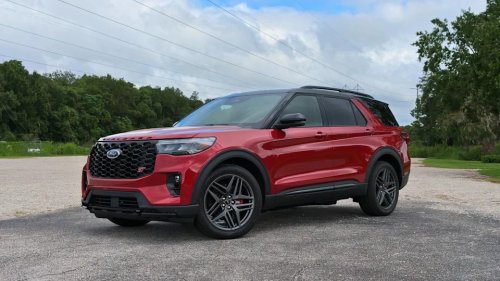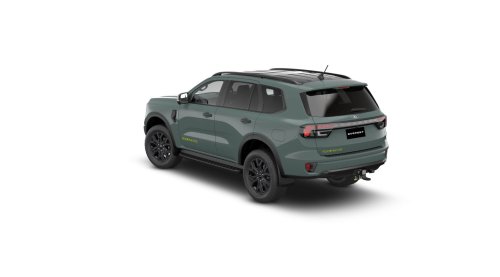
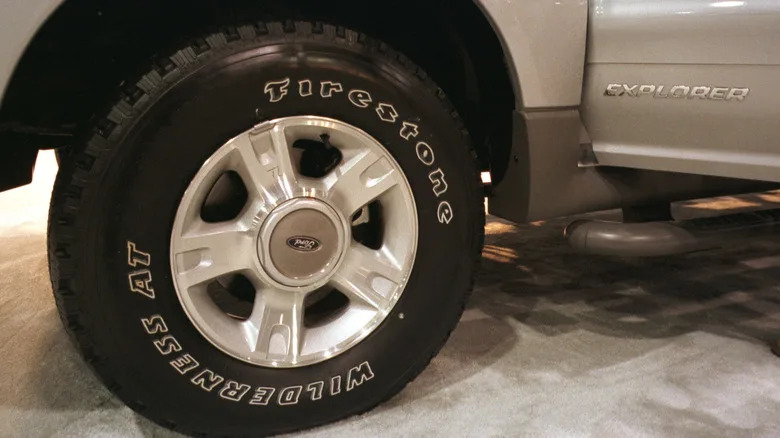
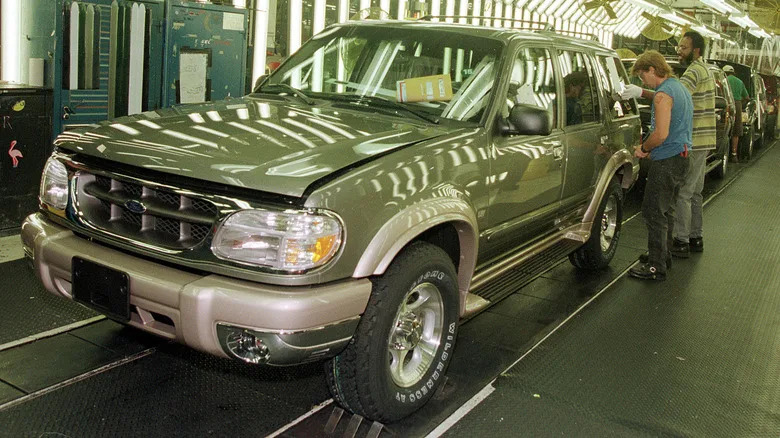



















Henry Ford (left) and Harvey Firestone on a camping trip - Historical/Getty ImagesThe Ford Explorer is a popular choice for today's drivers, with the Blue Oval selling 222,706 of them last year — making it the best-selling three-row SUV in the country for 2025. Go back 25 years, though, and the company was likely wondering if the Explorer had a future at all. That's because the brand's big SUV was caught up in a massive recall of Firestone tires in 2000. The Explorer itself wasn't recalled as part of the issue, but the automaker would spend billions of dollars trying to make things right, and it cost Ford plenty in terms of consumer trust, too. Meanwhile, the broken trust between Ford and Firestone meant the end of nearly a century of cooperation dating back to the companies' respective founders. Henry Ford's Model T rode on Harvey Firestone's pneumatic tires as far back as 1905, and the two entrepreneurs would become close friends, too. For example, together with Thomas Edison and John Burroughs — the latter of whom was a famed naturalist of the time – the "Four Vagabonds" took a series of long-distance road trips together in the late 1910s/early 1920s. Ford would go on to use Firestone as a regular tire supplier — although not an exclusive one — right up to the recall crisis.And to be clear, this was a crisis. We sometimes poke fun at Ford's current spate of recalls, ranging from the F-150's unexpected downshifts to the bad backup cameras for the Edge and Bronco. However, the Firestone situation was no joke, as it led to the deaths of at least 174 people while injuring more than 700.AdvertisementAdvertisementRead more: 5 Nearly Indestructible Transmissions (And The Cars That Use Them)What was the problem with the Explorer's Firestone tires?Firestone Wilderness AT mounted on a Ford Explorer - Robert King/Getty ImagesAs described in an engineering analysis report from NHTSA, the exact problem was "belt-leaving-belt tread separations." That means the outer belt of the tire completely comes off the inner belt, taking the tire's treads with it. Needless to say, that's not good, especially at highway speeds.The analysis report discovered the belts in the bad Firestone focus tires were manufactured with some significant adhesion issues where the inner and outer layers came together. Physical design flaws called out in the study included not providing thick enough rubber in the space between the two belts (inter-belt gauge). It was a similar story with the belt-wedge rubber that's supposed to suppress cracks at the tires' edges. Turning to the tires' shoulder pockets – the areas where the tread and wall come together — the report said those on the affected Firestone rubber created a ring of weak spots that ran all the way around the tires.Nor was that the end of the list. It turns out that Firestone received warnings about many of these problems months before the tires were forced into a recall. Documents suggest Firestone and Ford were aware of the tire issues as far back as 1997, and Firestone cast some of the blame on both the automaker and the Explorer's drivers. Firestone claimed some Explorer drivers didn't keep their tires properly inflated and blamed the "vehicle load level and low standard tire pressure," according to a CNN report.How much was Ford to blame for the Firestone fiasco?1999 Ford Explorer coming down the line wearing Firestone tires - Bill Greenblatt/Getty ImagesAs mentioned, Ford never had to recall the Explorer vehicle itself in relation to the Firestone fiasco. There doesn't seem to be a record of the company ever being found liable in a court of law, either. Sure, Ford faced plenty of lawsuits, but it took a highly pro-active approach to settling them.AdvertisementAdvertisementIt's pretty clear Ford bears some responsibility here. For instance, right off the bat, there's evidence that Ford knew the Explorer's front suspension was a questionable proposition. The same basic twin I-beam setup had already been used in the Bronco II, leading to hundreds of lawsuits over that vehicle's propensity for rolling over. Moreover, when the Explorer's front suspension was changed, in 1995, the modifications raised the vehicle's center of gravity further.Ford made the final decision over exactly what tires would be mounted on the Explorer, and it didn't always prioritize safety. Consider: Ford execs knew getting a good review from Consumers Union (the precursor to Consumer Reports) was important, so they pre-tested the Explorer with two different tire sizes. The smaller ones were judged most likely to pass the CU criteria, but Ford went with the larger rubber. The Ford-Firestone tire recall ultimately stands as one of the ten biggest automotive scandals that caused an executive to step down.Want more like this? Join the Jalopnik newsletter to get the latest auto news sent straight to your inbox, and add us as a preferred search source on Google.Read the original article on Jalopnik.