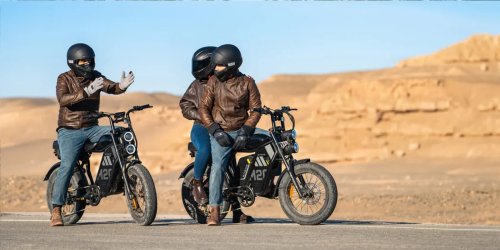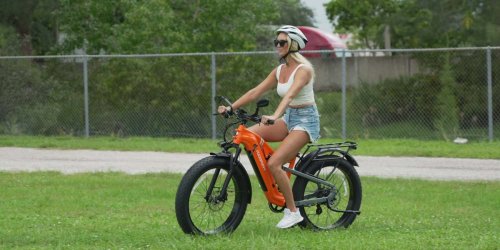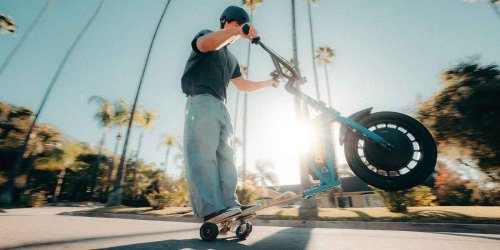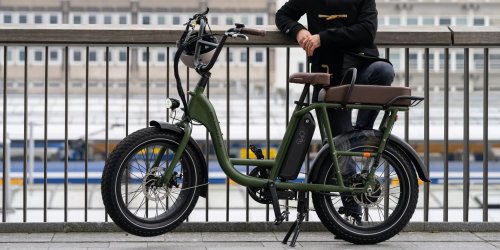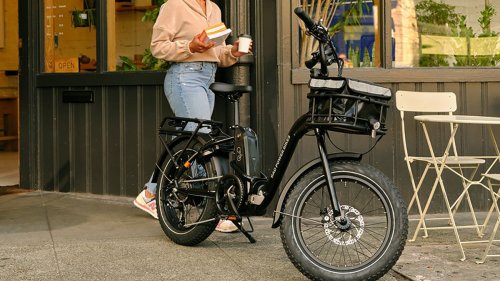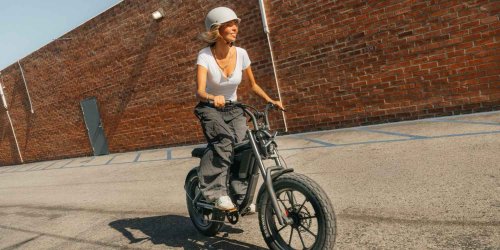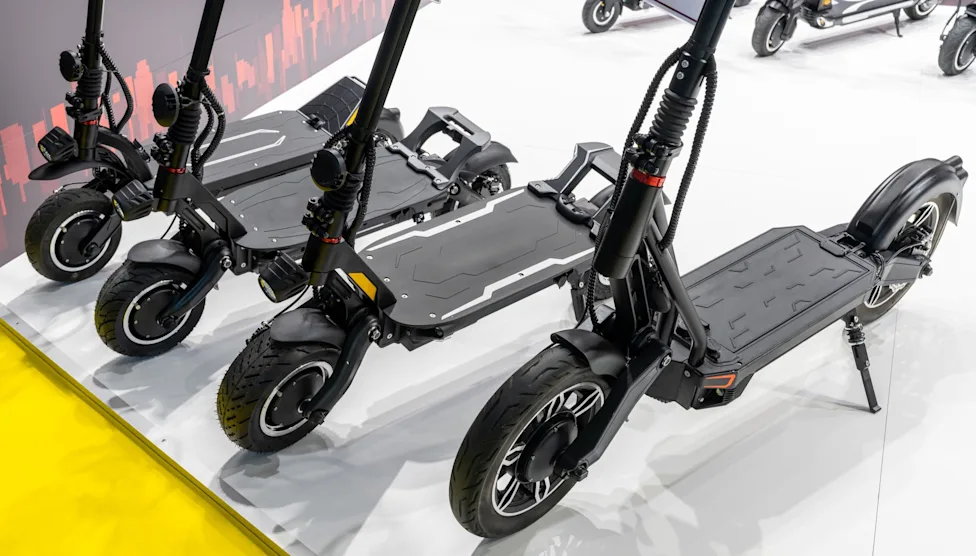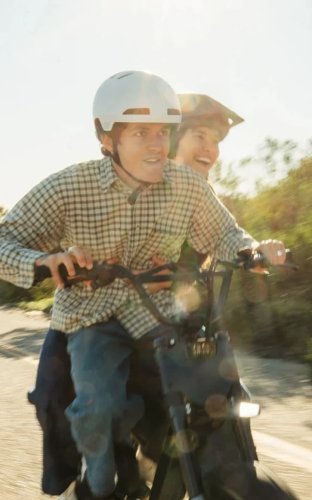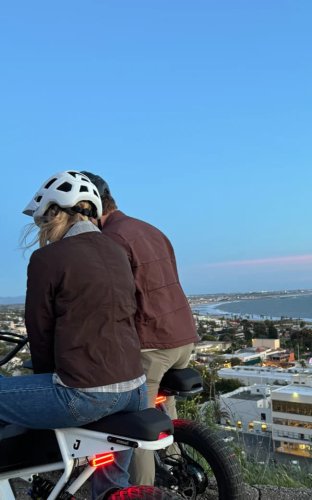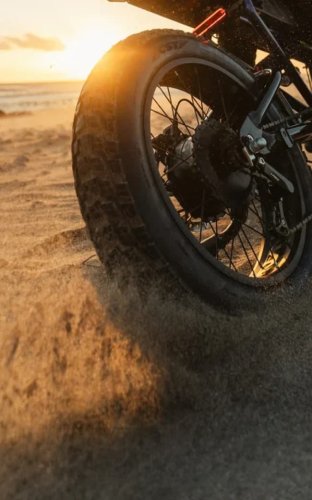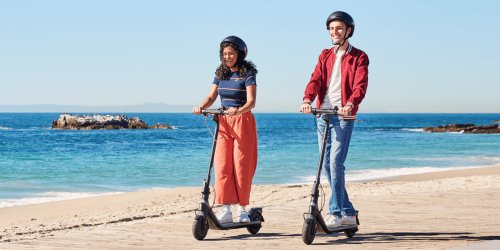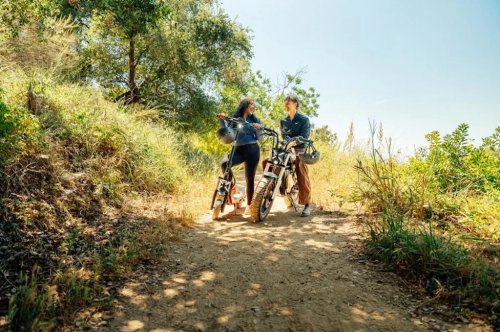
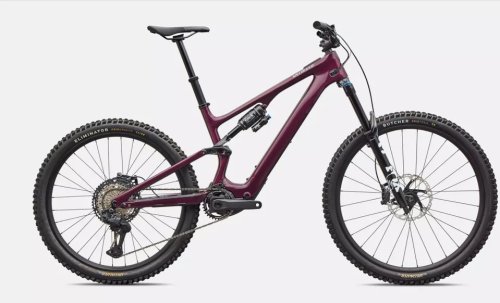
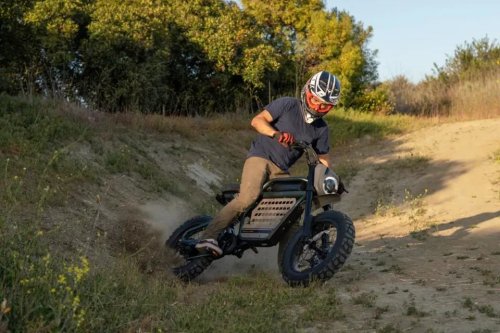
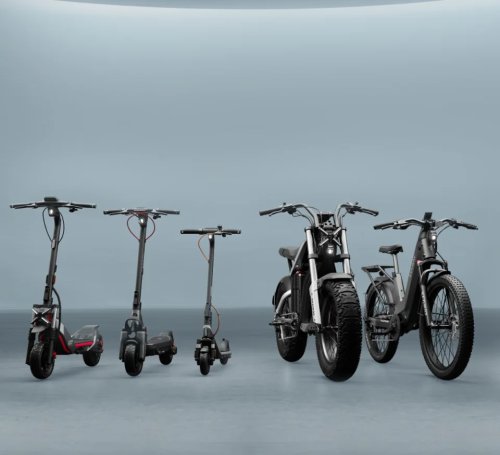



















Electric mobility keeps expanding beyond the bike lane, with riders looking for tools that work equally well on pavement and trail.SegwayI didn't know I needed a new way to get around, until a friend in Portland mentioned he had an "e-scooter" in his basement he was looking to offload. What he failed to mention was that the scooter was a decade old, had been gathering moisture and corrosion for years, and that even after I spent a few hundred bucks replacing the antiquated battery pack that powered it, the rig would scarcely be powerful enough to crest a highway overpass, and even on the flats it would max out at 25 miles per hour. We should have hauled it to the dump.But that beleaguered scooter unlocked something in me, a new way to explore Oregon when my skinny-tired road bike and knobby-tired mountain bike couldn't travel as far as I needed them to. I replaced my buddy's sad chariot with a Vespa, then a baby Suzuki motorcycle, then a couple of "real" bikes, two different Triumph Scramblers, before deciding I'd had one too many close calls and it was time to bring this particular mid-life crisis to an end.Meanwhile, mobility evolved. Electric scooters, both stand-up and sit-down, have taken over the bike lanes. Electric motorcycles zip past their vrooming ancestors so quietly that the soundlessness adds to their danger. Drivers already too often blind to two-wheeled counterparts now can't hear them, either. But the electric revolution is clearly here to stay. And with it, a predictable backlash.AdvertisementAdvertisementAnalog mountain bikers are muttering at electrified competitors passing them on singletrack trails. Jailbroken e-bikes are breaking speed laws. Unregistered e-motos are masquerading as bicycles. People are getting hurt. There are lawsuits, calls for new regulations, and copious cranky messages populating Facebook and Reddit threads. And the growth isn't slowing, because a boom in new people riding new modes of transportation will increase the number of people getting hurt that way, too. The hope is that those injuries are generally far less serious than the ones people get when mangled in a car crash, where the speeds and the stakes are much higher.Electric mountain bikes like this Specialized Turbo Levo have narrowed the gap with their analog counterparts, packing serious trail capability into a lighter, more discreet build.How Do The New Electric Rides Actually Perform?Much of the complaining about e-bikes and scooters has always felt hypothetical to me. I've been riding an electric mountain bike, a Specialized Turbo Levo, for much of the past five years. I do occasionally pass people on climbs, but if that angers them they're polite enough not to show it. The bike never lets me go any faster on a descent, when too much speed can be a real hazard. And what it always does is double or triple the time and distance I cover on the trail, taking me well past where most other riders tend to cluster, in the first few miles. It's hard for me to see a real problem there, and it seems land managers agree. More of the trails I ride that were once closed to e-bikes are opening.The experience on city streets feels a little different, but not by much. Last year I spent some time with a Segway eKickscooter ZT3 Pro, an off-road-capable offering from one of the original giants in electric mobility. I'd occasionally hop on a Lime scooter and it always felt weak, unsteady and expensive. The degree to which I see people using them around my hometown of Portland, Oregon has always confounded me. Not much cheaper than an Uber ride, and if you got around that way a dozen times a month, you're edging towards a car payment. But the Segway won me over. It felt sturdy and smooth, and I could fold the handle down towards the wheels to throw it in the back of a car, when that made sense. That means it can bridge the gap between my home and public transit, or I could ride it in one direction and then hop in a car to get home. I felt vulnerable on it, but not unsafe.Then I tried out a much more comfortable alternative: the Ride1Up Revv 1 DRT, a futuristic, sleek black e-bike that pushes the edge of what it means to be a bike. The 20-by-4-inch Innova tires have a duo-sport tread, there's a throttle that makes pedaling feel futile, and it can easily hit 25 miles an hour and 25 miles to a charge. It quickly rendered the other e-bike in my garage, a Specialized Turbo Creo gravel bike, obsolete, because on the DRT I could dress in normal clothes and know I wouldn't arrive at a destination soaked in sweat, or grimed by chain grease. It felt stable, fun, and easy to drive.AdvertisementAdvertisementRide options like these are showing up in bike shops everywhere now. But this burgeoning industry faces real threats of its own.The Ride1Up Revv 1 DRT leans into off-road terrain, with fat knobby tires and full suspension built for dirt as much as pavement.What's Fueling The E-Bike Industry's Growing Pains?For a chat about how the DRT evolved away from the sad basement scooter that had started this whole obsession, I called up Kevin Dugger, the founder of the e-bike's parent company, Ride1Up. Dugger fixed used bikes as a self-employed mechanic while he was a student at UC Davis, buying old Treks and Giants at police auctions and flipping them the way other people flip houses. He built his first e-bike on a custom frame around 2015, when the category was still mostly a curiosity. In a hot Davis summer, he found that an e-bike could match or beat the time of a car, minus the sweat. He couldn't find a company making the kind of bike he wanted, so he flew to Asia, met with manufacturers, and self-financed the company for its first three or four years.Now, Dugger told me, nearly every e-bike company in the country is fighting the same three headwinds: legislation, litigation and tariffs. Some of that could wind up being good for the industry, but it's a turbulent period, he said. Many cities and states failed to enforce sensible rules already on the books, so throttle-equipped electric motorcycles marketed loosely as "e-bikes" and jailbroken hub motors were lumped in with slower, better-behaved machines. "You can see packs of people riding on Surrons in the middle of the road," he told me, referring to a brand of electric dirt bike that isn't legally an e-bike at all. "There's no enforcement, and that leads to the public being angry." But some legislative responses go too far, he said, capping all e-bikes at 20 mph or banning throttles outright.The litigation problem is newer and a bigger threat, Dugger said. Product liability lawsuits are proliferating, and insurance companies tend to settle cases quickly. Dugger described one recent claim against Ride1Up where an independent analyst found the bike had performed exactly as designed, and the insurer settled anyway rather than risk a jury verdict. Coupled with tariffs that have forced manufacturers to raise their prices, he said the industry isn't seeing much profitability at the moment. Ride1Up has survived by laying off nearly half its staff, slashing marketing spending and focusing mostly on product and customer support, Dugger said.AdvertisementAdvertisementDown the road, the concern is about U.S.-facing brands running out of room to absorb litigation and tariff costs. He predicted a landscape crowded with rotating, low-cost import brands selling under a new name every time a prior version folds. Most riders want a faster, throttle-equipped bike. But the companies willing to build that bike are the ones facing the steepest legal and regulatory risk, he said.Segway's growing product lineup reflects how far electric mobility has spread, from stand-up scooters to moto-style e-bikes.Why Hasn't Europe Seen The Same Backlash?The good news is that the backlash may be temporary. I called Nick Howe, head of e-bike at Segway, and Tom Hebert, the company's vice president of sales and its resident scooter expert, hoping to understand why the same conflict hasn't erupted in Europe the way it has in American bike lanes.Howe told me everything we once knew about who buys bikes has changed. Ten years ago, a casual customer walking into a bike shop might have left with a $1,000 hardtail mountain bike. Today, they're just as likely to buy something with a battery on board. Segway sees two overlapping trends driving adoption: aging casual riders returning to cycling because the motor flattens hills and distance, and younger riders adopting kick scooters, one-wheels and e-bikes as a default way to get around rather than as a novelty.The analog-versus-electric feud never really landed in Europe, Howe told me. Partly, that's cultural: bike infrastructure has evolved across European cities for decades, and nearly a third of daily trips in Amsterdam and Rotterdam were already made by bicycle before electric assist existed, so the lanes were already built for two wheels. That meant earlier and more proactive regulation as well, baked into the bikes' hardware rather than left to enforcement. European e-bikes are speed-limited to 25 kilometers per hour, about 15.5 mph, by motor wattage limits built into the hardware, not just by law. "They cannot go faster," Howe told me. "Their bikes can't." In the U.S., he said, looser early rules combined with a culture of tinkering, jailbreaking throttles and controllers, let the ceiling keep rising even as legislation tried to catch up.AdvertisementAdvertisementWhile news stories often focus on conflict, the enduring story is one of success, Howe said. Adoption of e-bikes and scooters is still climbing. Any new mode of transportation naturally goes through some challenge, he said, before being accepted by the broader public, just as mountain bikes did after a period of some angst about them on trail networks.Is U.S. Infrastructure Finally Catching Up?Hebert, who oversees Segway's business across the Americas, says the infrastructure picture is improving as well. In his native Chicago, the city has invested heavily in bike lanes and scooter parking to relieve traffic congestion, and there's good progress in New York, Los Angeles and Seattle. Further south, Latin American metropolises from Bogotá to Mexico City are building bike lanes to encourage more two-wheeled transit, he said.I have no idea where the scooter from my buddy's basement ended up — I'm guessing a landfill. But I'm glad it broke down when it did.This article was originally published on Forbes.com