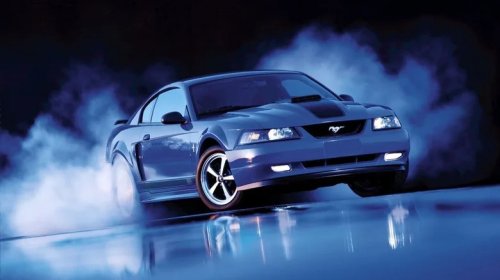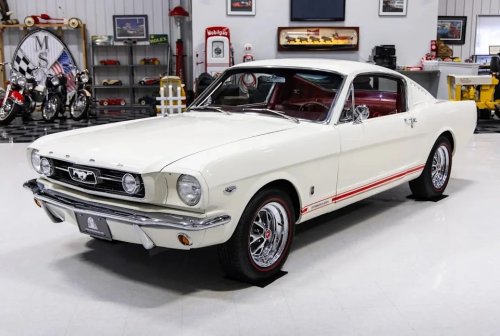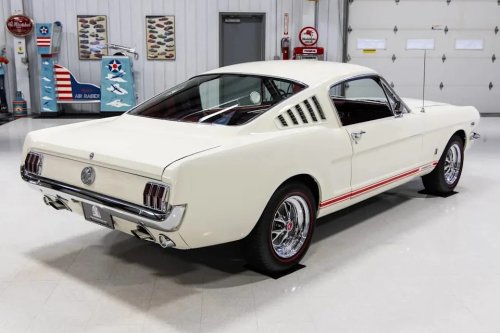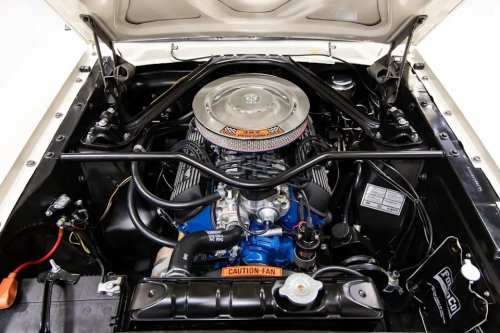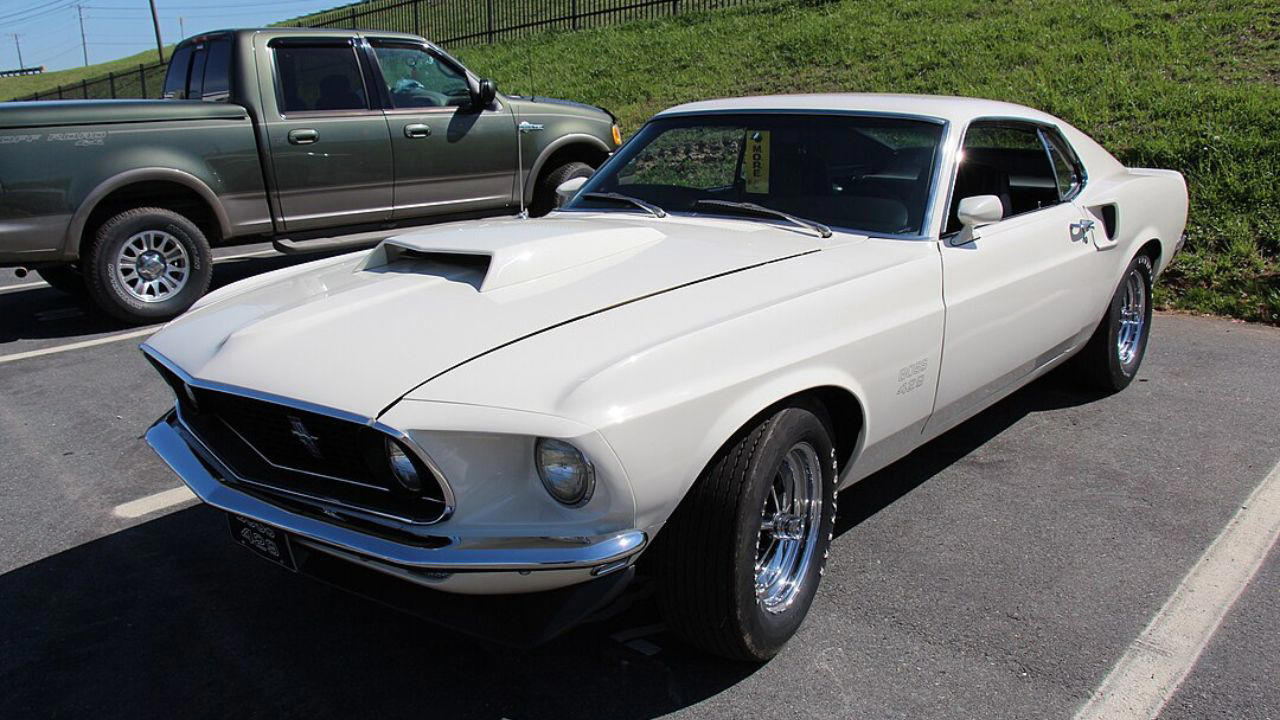



















Why the 1969 Ford Boss 429 existed mainly to qualify an engine for NASCARThe 1969 Ford Boss 429 is often celebrated as one of the rarest and most desirable muscle cars ever built. With its massive semi-hemispherical V8, aggressive styling, and limited production numbers, it has become a legend among collectors. But despite its reputation as a street-performance icon, the Boss 429 was never primarily created to dominate drag strips or impress Mustang buyers. Its true purpose was much simpler: to qualify Ford’s new 429 cubic-inch engine for NASCAR competition. The NASCAR Homologation Rule During the late 1960s, NASCAR required manufacturers to offer engines in production vehicles before they could be used in competition. This process, known as homologation, was designed to ensure that race cars maintained a connection to vehicles available to the public. Ford found itself in an escalating horsepower battle against rivals such as Chrysler and Dodge. Chrysler’s 426 Hemi had become a dominant force in NASCAR, thanks to its exceptional airflow and high-rpm capabilities. Ford needed an answer. The company’s response was the new 429 cubic-inch “Boss” engine. A Racing Engine First, Street Engine Second Unlike many muscle car engines that were adapted for racing, the Boss 429 was designed from the start with NASCAR in mind. Ford engineers created cylinder heads featuring large ports and semi-hemi combustion chambers that could breathe efficiently at high engine speeds. The engine was intended to compete directly against Chrysler’s legendary Hemi. Its architecture emphasized airflow and durability, two critical factors for surviving hundreds of miles at sustained high rpm on NASCAR’s high-speed oval tracks. Installing this engine in a production car was largely a means to an end. Ford needed to satisfy NASCAR’s homologation requirements, and the Mustang became the chosen platform. Why the Mustang? Ironically, the Mustang was not an ideal fit for the enormous Boss 429 engine. The engine bay required extensive modifications before the powerplant could even fit. Ford contracted Kar Kraft, a specialty engineering firm, to handle the conversion process. Standard Mustang Mach 1 bodies were shipped to Kar Kraft, where technicians modified shock towers, relocated suspension components, adjusted battery placement, and made numerous other changes to accommodate the oversized engine. The resulting car was expensive to build and difficult to produce. Ford reportedly lost money on every Boss 429 sold. If the goal had been simply to create the ultimate street Mustang, Ford could have chosen a less costly and more practical approach. The extensive engineering required demonstrates that creating a production performance car was not the primary mission. Limited Production Was All That Was Needed To meet NASCAR requirements, Ford only needed to build enough vehicles to satisfy homologation rules. As a result, Boss 429 production remained relatively low. Only about 1,359 Boss 429 Mustangs were produced during the 1969 and 1970 model years combined. These numbers were tiny compared to other Mustang variants of the era. The limited production wasn’t a marketing strategy designed to create exclusivity. Instead, it reflected Ford’s need to build just enough cars to make the engine legal for racing. Success on the Track Once homologated, the Boss 429 engine family became an important part of Ford’s NASCAR efforts. The race versions differed significantly from the street engines, but they shared the same basic architecture and cylinder-head design that NASCAR required to be available in production vehicles. Ford’s NASCAR programs benefited from the engine’s strong breathing characteristics and competitive power output. The Boss 429 helped Ford remain a serious contender during one of the most competitive periods in stock car racing history. An Accidental Legend Today, the Boss 429 is remembered as one of the greatest muscle cars ever built. Yet its legendary status is somewhat accidental. Ford did not create the car because Mustang buyers were demanding a giant semi-hemi V8. The company created it because NASCAR rules required a production vehicle to legitimize a racing engine. The Mustang simply served as the most practical vehicle available to carry the powerplant. What began as a homologation special eventually became one of the most collectible Fords ever produced. The Boss 429 stands as a reminder of a unique era in American motorsports, when manufacturers built extraordinary street cars not primarily for customers, but to gain an advantage on the racetrack. Conclusion The 1969 Ford Boss 429 existed mainly because Ford needed to qualify its new 429 engine for NASCAR competition. The car was essentially a street-legal passport for a racing engine. Its complicated installation, limited production, and high manufacturing costs all point to the same conclusion: the Boss 429 was a NASCAR homologation special first and a production muscle car second. That racing-focused origin is precisely what makes it such an enduring icon today. More from Fast Lane Only Unboxing the WWII Jeep in a Crate 15 rare Chevys collectors are quietly buying 10 underrated V8s still worth hunting down Police notice this before you even roll window down