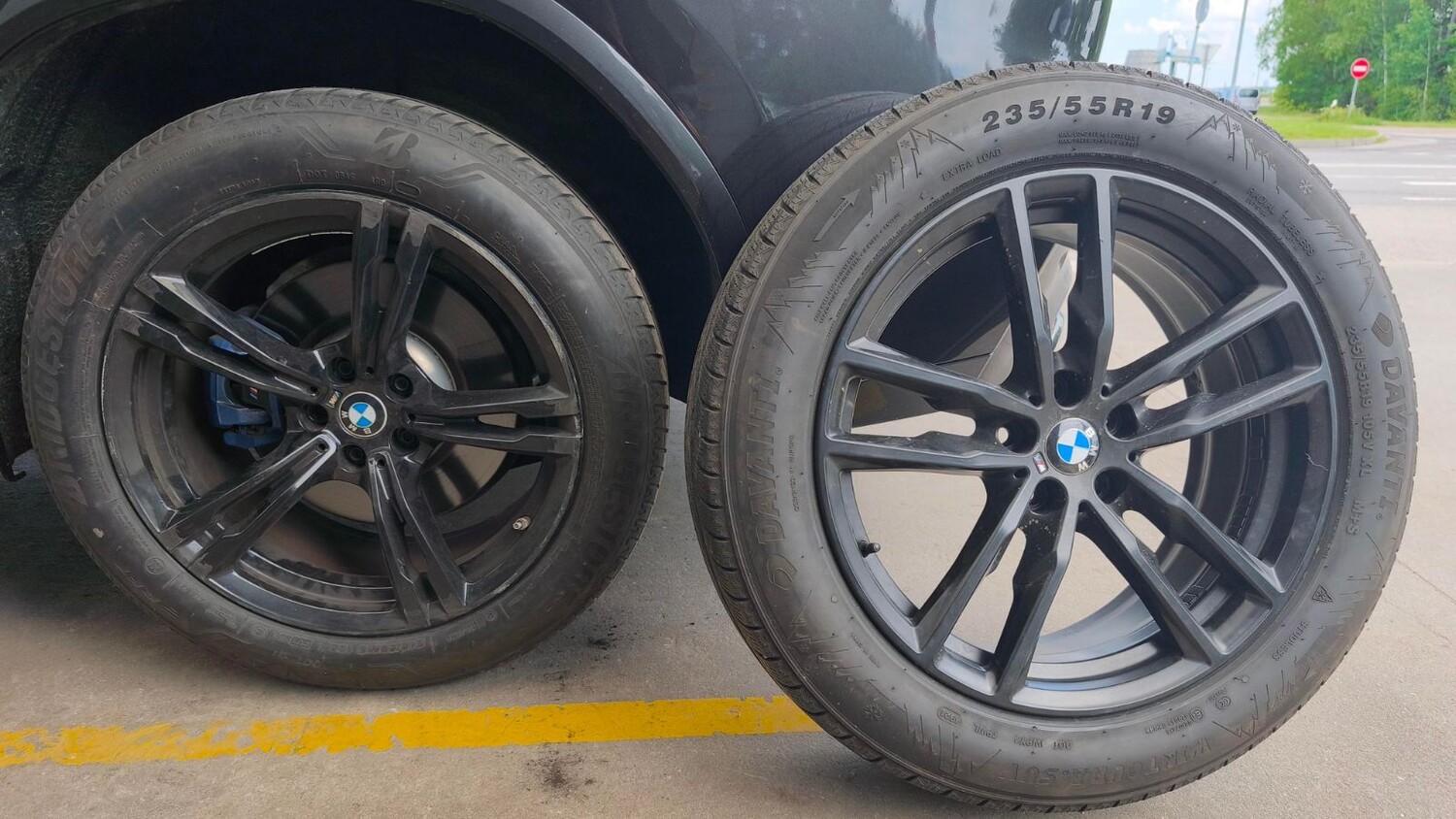
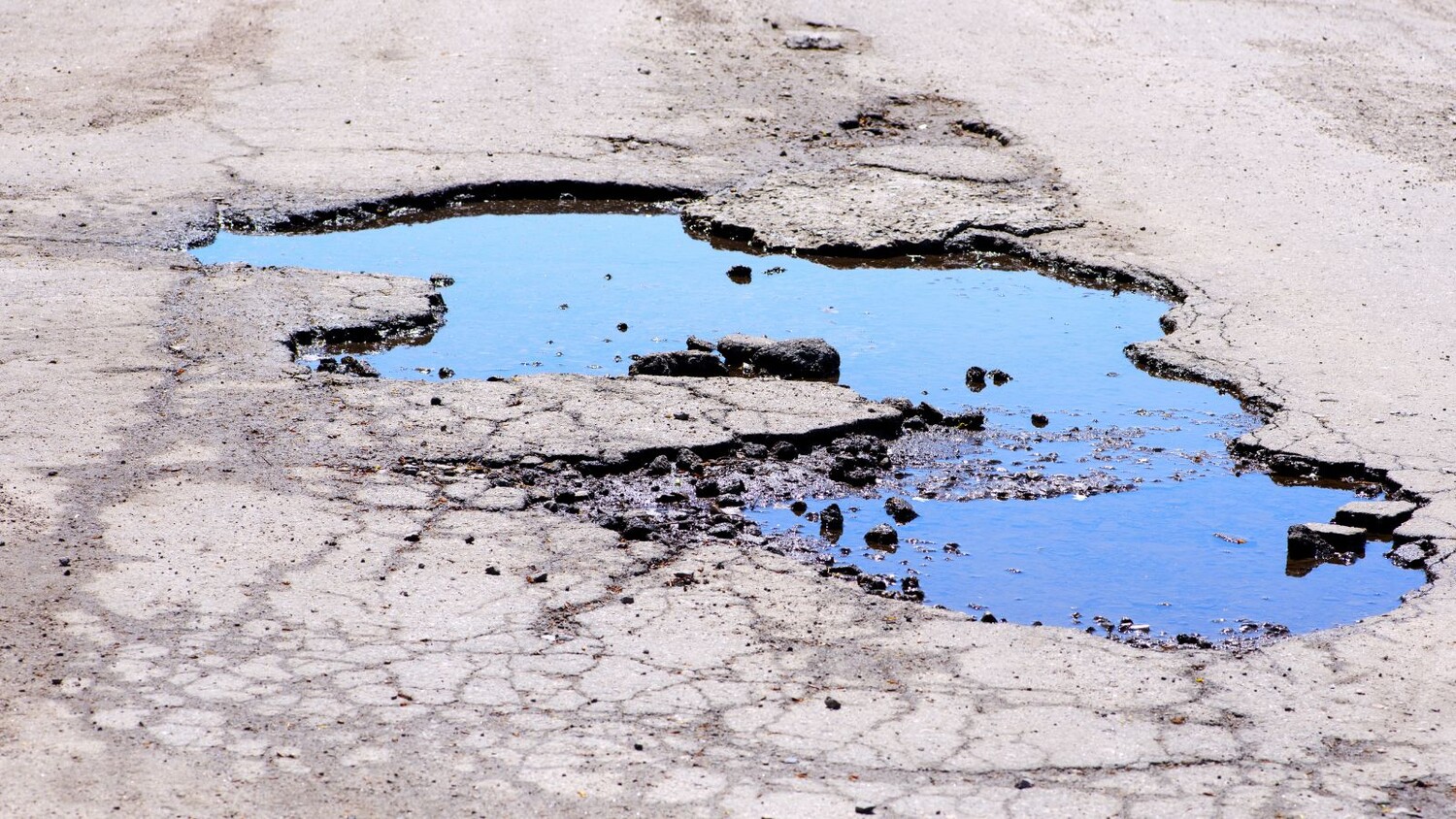
October can make damaged pavement deceptively easy to underestimate. Canada’s most intense pothole season generally arrives after repeated winter freeze-thaw cycles, but autumn brings its own combination of aging road damage, colder temperatures, wet pavement and earlier darkness. A depression that looked minor during a dry summer commute can become much harder to judge once it fills with rainwater or a vehicle’s tire pressure falls with the temperature. Twelve factors help explain why an October pothole can turn an ordinary drive into an unexpectedly expensive repair. The consequences can extend well beyond a flat tire, reaching wheels, alignment, steering, suspension and even low-hanging body components, while some of the most serious tire damage may not be immediately visible. October Is a Shoulder-Season Trap October is not normally the peak of Canada’s pothole season. Municipalities such as Toronto typically see potholes become more frequent after winter, when repeated freezing and thawing has weakened pavement. That does not mean autumn roads are harmless. Cracks, depressions and patches left from earlier deterioration remain in place, while colder nights and moisture begin creating conditions that can make existing weaknesses worse. Canadian research involving provincial transportation agencies has identified freeze-thaw activity as one of the most important influences on pothole formation. The scale of the problem shows how much damaged pavement drivers routinely encounter. Montréal has reported repairing roughly 120,000 to 200,000 potholes on major streets in a typical year, while Ottawa has cited approximately 250,000 pothole repairs annually. October therefore does not need to create an entirely new crop of holes to cause trouble. It merely has to make existing road damage less predictable at a time when many motorists are not yet thinking about winter-style road hazards. Rainwater Can Hide How Deep a Pothole Really Is A dry pothole at least gives a driver some visual information. Its edges, depth and shape may be visible early enough to slow down safely. Add several centimetres of rainwater, however, and that information can disappear. What looks like a shallow puddle may conceal a much deeper depression or a sharp pavement edge capable of delivering a hard impact to a tire and wheel. ICBC specifically warns that standing water can conceal dips, potholes and other road hazards. Wet conditions create another complication because available tire grip is reduced compared with dry pavement. That makes sudden braking or steering around a last-second obstacle a poor solution. A driver who notices a water-filled hole too late may have to choose between hitting it and making an abrupt manoeuvre on a slippery surface. CAA-Quebec similarly warns that puddles can conceal potholes and advises reducing speed before reaching standing water. In autumn, an ordinary-looking puddle can therefore deserve considerably more caution than its appearance suggests. Colder Air Can Quietly Lower Tire Pressure One of October’s least obvious changes happens inside the tires. Transport Canada says tire pressure drops by approximately 7 kPa, or 1 psi, for every 5°C decrease in temperature. A vehicle whose tires were properly inflated during a warm September afternoon can therefore enter a colder October morning with noticeably lower pressures, even though nothing has punctured the rubber. The change can be easy to miss without checking pressures when the tires are cold. That matters when a tire strikes a pothole. CAA-Quebec notes that an underinflated tire is more vulnerable to being squeezed between the road defect and the wheel, increasing the possibility of damage. Transport Canada also warns that underinflation causes excessive sidewall flexing and heat buildup during normal driving. October’s temperature swings can consequently reduce some of the cushion a tire provides just as rough pavement becomes harder to see. A pressure check is inexpensive, but ignoring seasonal pressure changes can make a hard pothole strike considerably less forgiving. Low-Profile Tires Leave Less Room for Impact Absorption Large wheels and thin-looking tires have become common on everything from compact cars to luxury SUVs. They can sharpen steering response and create a distinctive appearance, but rough pavement exposes an important trade-off. CAA-Quebec identifies low-profile tires as particularly vulnerable to pothole impacts, while Michelin notes that a taller tire sidewall generally provides greater impact absorption than a shorter one. The difference becomes meaningful when a wheel suddenly drops into a hole and meets the far edge. A taller sidewall has more material available to deform and absorb some of that force before the wheel itself approaches the pavement. A shorter sidewall provides less separation. CAA-Quebec has even noted during vehicle testing that higher-profile tires on smaller wheels can absorb deteriorated-road impacts better than lower-profile alternatives. None of this means a low-profile tire is automatically fragile, but it does mean a pothole that feels merely unpleasant in one vehicle may produce wheel or tire damage in another. A Rim Can Be Damaged Even When the Tire Stays Inflated Drivers often look immediately for a flat tire after a hard impact. If the vehicle continues rolling and the tire-pressure warning remains dark, the natural assumption is that nothing serious happened. Wheels are not necessarily so forgiving. CAA-Quebec warns that pothole impacts can bend, crack or, in severe cases, break wheels. A tire that still contains air therefore does not prove that the wheel assembly escaped unharmed. The auto industry takes that type of impact seriously enough to have standardized laboratory procedures for evaluating it. SAE International’s J1981 standard describes a road-hazard impact test for wheel-and-tire assemblies, developed in connection with real-world hazards including potholes. More recent engineering research has also examined repeated pothole strikes and wheel deformation. For drivers, the practical lesson is simpler: a violent hit deserves attention even when there is no roadside flat. New vibration, unusual steering behaviour, visible wheel damage or unexplained pressure loss afterward can justify a closer inspection rather than assuming the car was lucky. Some Tire Damage Can Remain Hidden After the Hit A tire can look surprisingly normal after absorbing a violent pothole impact. The outer rubber may show no cut, and the tire may continue holding pressure. Michelin cautions, however, that severe impacts can damage internal tire components without leaving obvious external evidence. Internal cords can be compromised when the tire is sharply pinched or deformed, which is why a visual glance alone cannot always rule out damage after a significant strike. One warning sign that should never be dismissed is a sidewall bulge or bubble. Michelin explains that this typically indicates damaged internal cords, often caused by striking a pothole or curb, and recommends replacing rather than continuing to drive on such a tire. The problem may become noticeable only after the original impact has faded from memory. That delayed appearance is part of what makes pothole damage deceptive. The car can leave the scene apparently intact, only for a potentially serious tire defect to reveal itself during a later walk-around or pressure check. Alignment Damage Can Turn Into a Slow-Burn Expense Not every pothole repair begins with a tow truck. Sometimes the vehicle continues to operate normally enough that the damage shows itself gradually. Transport Canada notes that a significant jolt from a pothole or curb can knock the front end out of alignment. Instead of causing an immediate breakdown, the change may show up as pulling to one side, an off-centre steering wheel or unusual tire wear over the weeks that follow. That delay matters because poor alignment can quietly shorten tire life. When the wheels no longer point at the correct angles, sections of the tread can scrub against the road rather than wearing evenly. Transport Canada links improper alignment with rapid or uneven wear and changes in handling and ride quality. Michelin likewise recommends checking alignment when a vehicle develops pulling, vibration or abnormal wear after hard road impacts. A pothole encountered in October could therefore contribute to a set of tires wearing prematurely through winter, turning one brief impact into an expense that is not recognized until much later. Steering and Suspension Components Absorb the Shock Too The tire and wheel take the first hit, but they are only the beginning of the load path. Forces from a pothole travel through the hub and into the suspension and steering system. CAA-Quebec identifies control arms, tie rods and shock absorbers among the components that can be affected by severe pothole impacts. Engineering studies of pothole events similarly examine loads travelling through wheels, knuckles, control arms and related suspension hardware. Most impacts will not destroy a suspension component, but a sufficiently severe strike can create damage or accelerate wear. That is why changes in steering feel, unusual noises or a vehicle that no longer tracks as it did before deserve attention after a major hit. The human tendency is to focus on the tire because it is visible from the driveway. Much of the suspension system is not. A driver may see an undamaged sidewall while the real consequence of the impact sits farther inward, where only a proper inspection can determine whether anything was bent, loosened or weakened. Long or Deep Holes Can Reach Beyond the Wheels Depth is not the only characteristic that makes a pothole dangerous. Length matters as well. CAA-Quebec notes that a sufficiently long road depression can allow a vehicle to drop far enough for low portions of the body to contact the pavement. Bumpers, body panels and other components close to the road can become vulnerable, especially on vehicles designed with limited ground clearance. This is one reason two cars can cross the same damaged section of pavement and emerge with very different outcomes. A crossover with taller tires and generous clearance may absorb the event without obvious damage, while a low-slung sedan with short sidewalls has less margin in both places. CAA-Quebec vehicle testing has previously highlighted how low front bodywork can be vulnerable on badly deteriorated surfaces. Autumn adds wet leaves, water and darker commuting hours to the visual challenge, making the shape of the road defect harder to judge. What looks like a wheel-and-tire hazard can sometimes become a bodywork problem as well. Speed and Braking Timing Can Change the Severity of the Hit Speed is one of the variables that determines how damaging a pothole strike becomes. CAA-Quebec lists vehicle speed, tire dimensions and the depth and length of the pothole among the factors affecting the outcome. The safest opportunity to reduce the force is usually before reaching the hole, when there is still time to slow smoothly without making an abrupt manoeuvre. Braking at the wrong moment can also change the loads acting on the front suspension. SAE research examining vehicles travelling through potholes found that braking can have a strong effect on front-suspension loads, with the outcome also influenced by speed, vehicle weight and design. CAA-Quebec advises motorists who cannot safely avoid a pothole to slow before reaching it and release the brake before entering rather than braking hard while the wheels are in the depression. Sudden swerving can create its own collision risk. A controlled reduction in speed generally offers a better response than a last-second attempt to dodge the hole. Rough Roads Create Costs That Extend Beyond One Repair Bill Pothole damage can seem highly individual: one unlucky wheel, one repair invoice and one frustrated driver. Across an entire road network, however, deteriorated pavement carries a much larger financial burden. A CAA analysis released in 2021 estimated that poor road conditions cost Canadian motorists an average of about $126 per vehicle each year, adding up to approximately $3 billion nationally through additional repairs, maintenance and vehicle operating costs. Those figures should not be interpreted as a pothole-only bill. CAA’s analysis covered the broader effects of poor roads, including rough pavement, rather than assigning all of the expense to individual holes. Still, the numbers illustrate why damaged surfaces matter economically even when most encounters do not result in dramatic roadside failures. Extra tire wear, alignment issues, suspension repairs and other operating costs accumulate across millions of vehicles. An October impact that initially feels like little more than a loud bang can become one small part of a much larger national cost associated with deteriorating pavement. The Most Important Check May Happen After the Impact The seconds after a hard pothole strike are not always when damage becomes obvious. Once it is safe to do so, a basic inspection can reveal visible cuts, wheel damage or a developing sidewall bulge. Tire pressure also deserves attention, particularly if the vehicle begins displaying a warning or one tire appears lower than the others. Michelin recommends having a tire professionally inspected after a significant impact because internal damage may not be visible from the outside. Drivers should also pay attention to how the vehicle behaves afterward. New vibration, pulling, an off-centre steering wheel, unusual noises or a change in ride quality can indicate that the impact affected more than the rubber. CAA-Quebec recommends stopping in a safe location to inspect the vehicle after a serious pothole strike and arranging professional assessment when damage is suspected. October potholes are easy to dismiss because winter has barely begun, but the season on the calendar matters less than what the vehicle actually experienced. 19 Used Cars Canadians Should Avoid in 2026 (Based on Owner Complaints) Buying a used car in Canada can feel safe until repair bills start stacking up. Owner complaints tell a different story than glossy listings. Transmission failures, electrical problems, and weak winter reliability show up again and again in consumer reports. Many of these issues appear after warranties expire, when owners least expect them. Some vehicles look affordable upfront, but become expensive to keep on the road. Others struggle in cold weather, urban driving, or long highway commutes. Here are 19 used cars Canadians should avoid in 2026 (based on owner complaints).

 Liked by Ethan Harris, Mia Hall
















 Liked by Ethan Harris, Mia Hall


