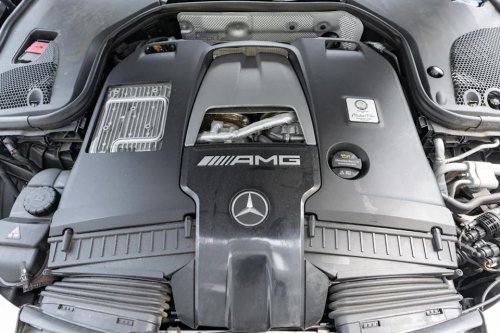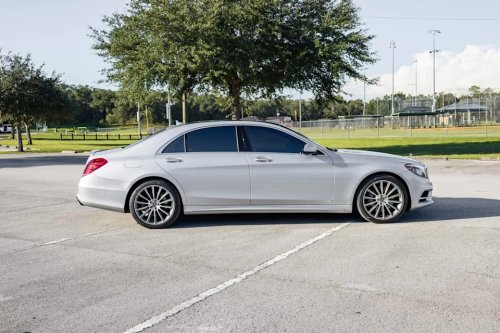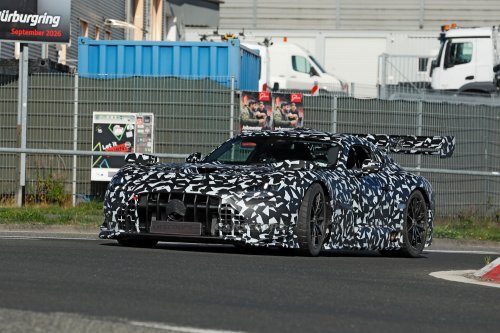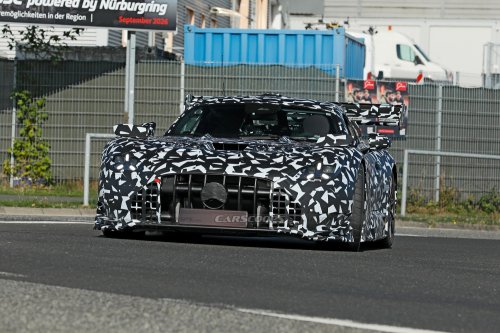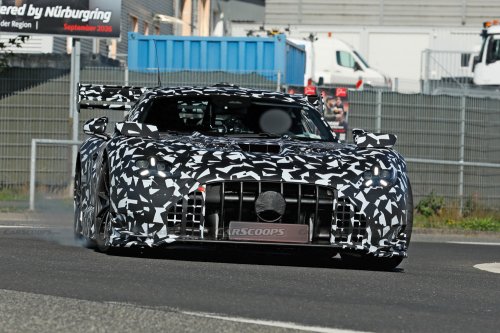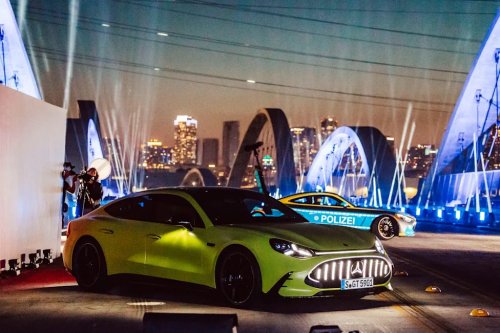
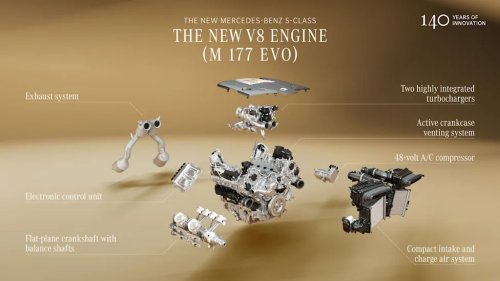
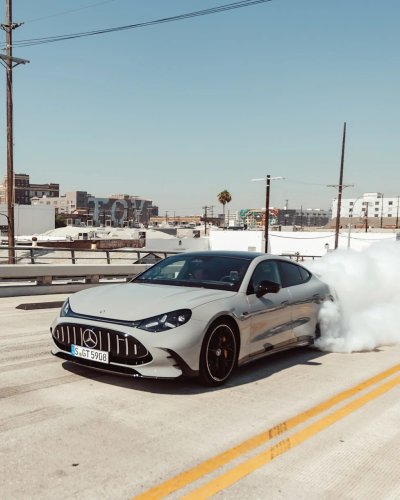
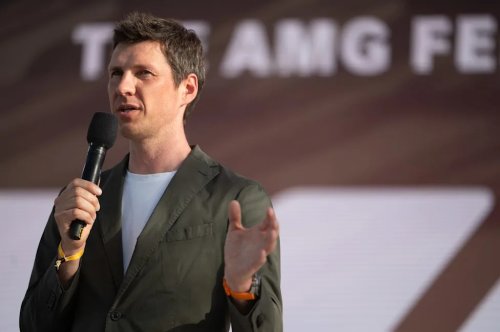



















AMG Is Playing Both Sides of the Powertrain WarMercedes-Benz AG – Communications & Marketing (Mercedes-Benz AG – Communications & Marketing)After the California launch of the 2027 Mercedes-AMG GT 4-Door Coupe last week, Mercedes-AMG's production car lineup is on its way to becoming well-versed in the power of axial-flux motors and electric performance. But Affalterbach is not veering away from its tradition of powerful Germanic engines; in fact, one recent rallying cry from Mercedes-AMG and brand CEO Michael Schiebe has been that of continuity.Mercedes announced it was pivoting to develop new V-8 and six-cylinder combustion engines back in 2025, and the brand has followed through: an all-new flat-plane crank V-8, the M177 Evo, arrived in the 2027 Mercedes-Benz S-Class, and new eight-pot and inline-six powerplants are set to be found in incoming AMG models. Such heavy-handed investment in gasoline-powered engines is partially driven by customer desire, Schiebe admitted. So, without high demand and existing infrastructure, why did Mercedes-AMG bother building an all-electric halo car to top its performance lineup?Mercedes-Benz (Mercedes-Benz)"We cannot just live on combustion engines if you believe, strategically, that long-term the future will be electric. We want to build the most desirable cars, completely independent from the drivetrain, whether electric or combustion," Mathias Geisen, member of the board of management of Mercedes-Benz Group AG, said to Road & Track. "If I look at it from a global perspective, we were overestimating the speed with which customers would be willing to switch over to electric mobility. In those days, it was the right decision to say, ‘Why do we fully invest in combustion engines if the market is expected to go exponentially toward electric mobility?' We obviously overestimated this speed."AdvertisementAdvertisementDevelopment cycles are a tricky balancing act for automakers, particularly in an era of rapid regulatory changes. Automakers who pledged to go all-electric by 2030 now face a triple threat of dwindling demand for EVs, a lack of federal subsidies for consumers, and combustion engine-favorable regulations in America. Mercedes focused on electric mobility early and paid the price, as early EQ models that required costly development sold poorly. But unlike manufacturers like Honda and Ford, who have both scrapped EV plans in full, Mercedes doesn't want to be caught off guard if or when the pendulum swings the other way."If we go back five years, we made the decision that we would develop both sides of the powertrain and make them state-of-the-art. If you don’t know the [market] share, how do you manage the share? You have to have flexibility," Ola Källenius, chairman of the board of management of Mercedes-Benz Group AG, said in a media roundtable. "You also have to have a certain flexibility in your supply base. If you have something that really takes off, you can invest in it more."Mercedes-AMG (Mercedes-AMG)But AMG customers have come to expect rumbling V-8 powerplants over the past 59 years, and they generally won't settle for less. Asked about the 671-hp electrified 2.0-liter four-cylinder powerplant offered in AMG iterations of the C63 and GLC63, Schiebe admitted that the M139 engine wasn't properly explained to its customer base and sales force. The engine was faster and more efficient than its predecessor, producing quicker Nürburgring lap times, but U.S. customers still demanded six- or eight-cylinder power, Schiebe said.AMG doesn't want its more performance-focused customers to view electric power as a crutch, so it's no surprise that one of the company's strongest talking points around the new electric GT EV is its simulated V-8 mode. Yes, the 1153-hp power peak of the electric grand tourer is impressive, but engineers were as focused on emotion as outright performance. Sonic and sensory tricks should make the owner feel and hear the rumble of an AMG V-8 from inside an EV. It's a ruse, to be sure, but one that is hopefully good for business.AdvertisementAdvertisement"It's the car that carries the AMG V-8 legacy into the electric era. This will be the first electric car to really win over the petrol heads," Schiebe said. "If you make such a huge investment in such a development endeavor and try to make this a serious production technology, then you need to get back the investment that you do. We are so convinced of this technology that we said, ‘Yes, there will be more cars in the future that will feature that engine.'"Mercedes-AMG CEO Michael Schiebe.picture alliance - Getty Images (picture alliance - Getty Images)Schiebe should hope so, as the cost of developing Mercedes's High Performance Electric Architecture was likely high, and the Yasa-designed, Mercedes-built axial-flux motors that underpin the electric architecture are more expensive than a traditional EV drivetrain. Even so, Schiebe said the performance gains significantly outweigh the costs. Looking beyond a cost-per-horsepower analysis of its new drivetrain, Mercedes executives are betting the new GT draws on new customers as much as existing ones. Stagnation can spell death for any automaker, and appealing to a younger, potentially more EV-friendly audience is as important as satisfying long-time buyers.Clearly, Mercedes and its subsidiaries appear to possess enough capital to play both sides of the powertrain coin. But having enough money to accomplish something is one part of a corporate success strategy. Internal political will to take risks is perhaps harder to come by these days, and Mercedes just proved that it has all hands on deck for an intramural powertrain war. The tiebreaker will ultimately be the buyers.You Might Also LikeIf You Can Only Own One Car, Make It One of TheseThese Are the Most Popular Cars by State