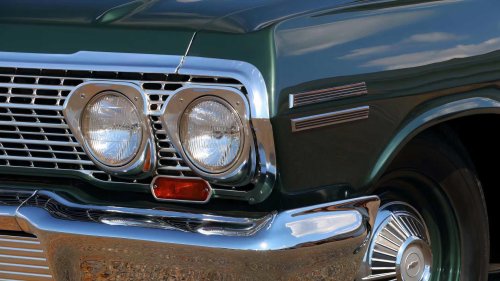
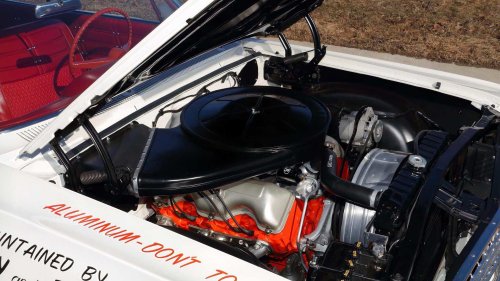
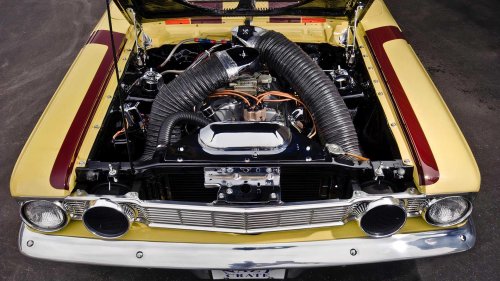
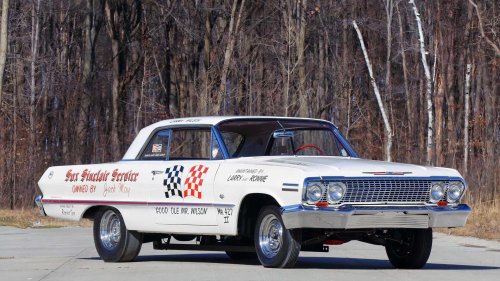
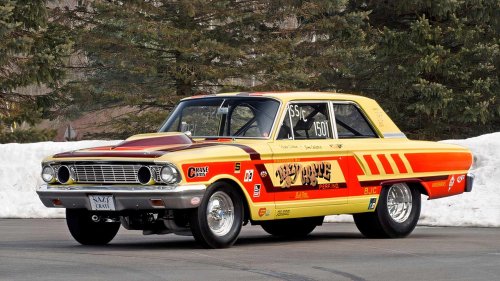
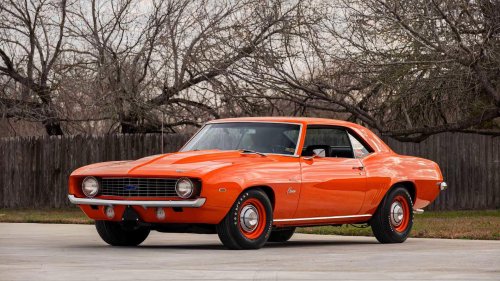



















Detroit's big three aren't always thought about when it comes to special, limited-run cars. But, Ford, Chevy and Dodge all have a history with creating them. That was especially prevalent during the golden age of American automakers. All three of them produced limited-run cars that had incredible performance for their time. Only a hundred or less examples were made of each of them, too, making them among the rarest production cars on the planet. The 1960s Was A Golden Age Of American Auto Manufacturing MecumAnyone who knows their american cars will know that the 1960s was a real boom period for American auto manufacturing. This was the time when the era of muscle cars started getting into its full swing. That brought some crazy creations along with it. A few of those were special models designed specifically to dominate in motorsports. Why were they made? What motorsports were they supposed to compete in? That's what we're going to discuss now... Detroit's Big Three Used Clever Loopholes To Build Crazy Homologation Specials On The Quiet MecumDuring this golden era of the American car industry, Detroit's big three utilized some very clever loopholes to get themselves into one of the most legendary racing series in American motorsports. That's the NHRA's Super Stock class of drag racing. This class of drag racing is still around today, and back in the 1960s it used cars based on stock, road-legal machinery. This meant that there was a minimum production requirement to enter a car in the Super Stock class. That minimum number was 50 cars in total. As with other racing series with rules like this over the years, it opened the door to crazy homologation specials that really were just street-legal drag cars.As well as using those classic homologation special loopholes, the big three used other tricks to keep their crazy homologation specials on the down low. Firstly, they typically didn't specifically advertise them. You had to know where and who to ask to be able to get one. Secondly, they often under-rated the power in any information that was published about them. That under-rating was done to disguise how fast they really were to insurance companies, who might not have wanted to cover these cars for road used if the big three started making big claims about how powerful their cars were.Thirdly, loopholes in the order forms were actually built in to allow smaller cars with big-block engines. That was something Chevrolet implemented in its now-infamous COPO system. Initially designed for special orders for fleet customers, it was then used to bypass a General Motors manufacturing order that stated that small and mid-sized models couldn't have big-block engines. As these were intended to be niche, one-off orders, the top brass at GM didn't mind. They Built Three Ultra-Low-Volume, Stripped-Down, Street-Legal Race Cars In The Early-Mid 1960s To Compete In Drag Racing MecumKnowing that they could use these minimum production rules (and those other little tricks) to create homologation specials that were much more powerful than regular production models, all those big three companies got to work. They produced lightweight variants of their regular production models that had the most powerful engines they could cram under the hood. The first wave of these cars showed up in the early-mid 1960s, and they've now become legendary for being absolute performance monsters. They're also all known for being under-the-radar sleepers, as they were basically not advertised and their power was grossly under-advertised. 1962 Dodge Dart 413 Max Wedge The Dodge Dart was an incredibly common Dodge model during the early 1960s. The 413 Max Wedge, however, was anything but ordinary. Powered by the 413 cubic inch Max Wedge engine, it produced an advertised 410 horsepower and 460 lb-ft of torque running on regular gas. Use higher quality racing fuel, and you could bump the power up to 420 horsepower and 470 lb-ft of torque. That's, again, as per what was advertised. It's believed to have a true output of over 450 or even over 500 horsepower. That allowed it to hit a 1/4 mile time of 13.4 seconds at 121 mph, a truly fantastic figure for the time.The 1962 Dodge Dart Max Wedge is the rarest out of the three cars we're talking about here. Only 55 of them were ever produced. That put it just over the minimum production requirement of 50 cars. That's pretty odd in some ways, as this car wasn't really a special edition. It was a car that was readily available to anyone who wanted to buy it. Perhaps there was such a small niche of people wanting to own a Dart with the Max Wedge engine option that it only just sold enough to be able to be homologated? 1963 Chevrolet Impala Z11 MecumThe Chevrolet Impala's had many famous variants over the years. The rarest one of them all has to be the 1963 Impala Z11. Chevrolet's entry into the crazy world of early-mid '60s NHRA Super Stock homologation specials has a 427 cubic inch V8 that was advertised to produce 430 horsepower and 575 lb-ft of torque. The Impala Z11's real power is thought to be well over 500 horsepower. It was also stripped down, removing anything uncessary to making it go fast, and it was only ever available with a 4-speed manual transmission. All of that made it the first car ever to achieve a 10 second 1/4 mile time (around 10.8 seconds at 124 mph). Only 57 1963 Impala Z11s were built. Just like the 1962 Dodge Dart 413 Max Wedge, that puts it just above the homologation threshold for the NHRA Super Stock class. 1964 Ford Fairlane Thunderbolt MecumThe Ford Fairlane is one of the last cars you'd associate with muscle car-style performance. That makes it all the more shocking, then, that the Ford Fairlane Thunderbolt exists in any capacity. Powered by a 427 cubic inch V8, the Fairlane Thunderbolt was advertised as having an output of 425 horsepower and 480 lb-ft of torque. Of course, that's far from what people think it was making. It's thought that the Fairlane Thunderbolt could make as much as 600 horsepower in reality! This helped give the Fairlane Thunderbolt a 1/4 mile time of 11.61 seconds at 130 mph - more impressive than the Dodge Dart 413 Max Wedge, but not as good as the Chevrolet Impala Z11. 100 Ford Fairlane Thunderbolts ended up being produced. That's double the minimum production requirement, and enough to make it the least rare car out of the three. That still makes it incredibly rare for a Fairlane, though, and as a result they're incredibly desirable. An Entrepreneurial Chevrolet Dealer Later Exploited The COPO System To Build A Drag Racing Monster MecumYou might think these three early-mid '60s monsters might have been the end of the Super Stock homologation specials. That was far from the case. Entrepreneurial dealers worked out that they could use Chevrolet's COPO system to build their own specials, without full support from GM. One such dealer who took advantage of this was Fred Gibb, who used that system to create the 1969 Chevrolet Camaro ZL1. This absolute monster used an all-aluminum hand-built 427 cubic inch V8, producing an advertised 430 horsepower and 450 lb-ft of torque. It's now believed that these cars produce over 500 horsepower. Only 69 of these cars were ever built as well, making it as rare as the three early-mid '60s cars that preceded it.Sources: Chevrolet, Dodge, Ford