Volvo Cars’ highly anticipated EX60 electric crossover is mired in a production crisis that’s likely to leave U.S. dealerships without “significant volume” deep into 2027.
The Swedish automaker had expected to sell about 7,000 EX60s in the U.S. this year, dealers told Automotive News in January.
Instead, two manufacturing problems have the company on track to deliver a fraction of that volume, according to a person with knowledge of the situation.
Volvo began building the midsize luxury EV in late April in Torslanda, Sweden. But production volume to date is only about one-tenth of the company’s roughly 2,000-vehicle weekly build target, said the person, who asked not to be identified because the information is private.

Keep up with product planning news with Automotive News' regularly updated database.
Future Product database: 5-year vehicle timelines
Future Product guide: Our 10-week series on future products by brand
Volvo sold about 500 EX60s worldwide in July before volumes tumbled to roughly 250 in August, according to GlobalData estimates.
With supplies running short, the automaker plans to prioritize deliveries in Europe, where EV adoption is stronger. That leaves no additional vehicle allocations for U.S. retailers the rest of this year, with significant volume not expected until the second half of 2027, the person said.
Sign up for Automotive News’ daily podcast series featuring interviews with industry leaders, insiders and our journalists.
Volvo told its U.S. retailers that it has delayed customer deliveries in a late September memo reviewed by Automotive News.
“Introducing a brand-new platform and product into a running factory is always a challenge,” the memo said. “The delays are not related to vehicle quality, safety, or product performance.”
EX60 availability will “remain limited” in the near term, Volvo spokesperson Jacquelyn Johnson said, but the company expects “a significant number” of already allocated vehicles to reach U.S. retailers early next year.
The sputtering launch means dealers effectively need to write off 2026, and potentially the first half of 2027, for the EX60, said Matthew Haiken, of Prestige Volvo in East Hanover, N.J.
“Volvo is leaving significant volume on the table while rivals such as BMW arrive with fresh product,” Haiken said. “We need the product now more than ever.”
‘No blueprints to copy’
The EX60 manufacturing issues involve difficulties integrating the vehicle’s battery pack into its body and producing electric motors.
The EX60 is Volvo’s first model to use megacasting and cell-to-body construction. Mating the battery system to that cast structure has proved more complex than anticipated, according to the source who spoke to Automotive News.
“With megacasting, cell-to-body and more, it introduces industry-first state-of-the-art concepts for which there are no blueprints to copy,” Johnson said. “Therefore, the ramp-up phase takes a little longer than initially planned.”
Volvo has struggled to launch some EVs previously. Software glitches, quality issues and missing features plagued the EX90, delaying its arrival by more than a year. That experience left some retailers wary about similar challenges with the EX60.
In January, Jason Church, chairman of the Volvo Retail Advisory Board and COO of Courtesy Automotive Group in Scottsdale, Ariz., called the EX60 the company’s “second chance” to get an EV launch right.
“EX60 must launch on time and be top-notch when it rolls off the line in Sweden,” Church told Automotive News at the time. “Early customers cannot be beta testers.”
High stakes for a critical model
The EX60 competes in the industry’s largest premium segment and is key to Volvo’s push toward 200,000 annual U.S. retail sales by 2030. Volvo’s most popular U.S. model, the similarly sized XC60 hybrid, notched 41,105 sales last year.
Executives have hyped the new EV’s potential.
CEO Hakan Samuelsson called the EX60 the most important launch he has overseen at Volvo. He projected global sales for the nameplate of about 40,000 this year.
Chief Commercial Officer Erik Severinson said the EX60 has “the best package in the industry in that segment,” citing its pricing, real-world usability and rapid charging capability.
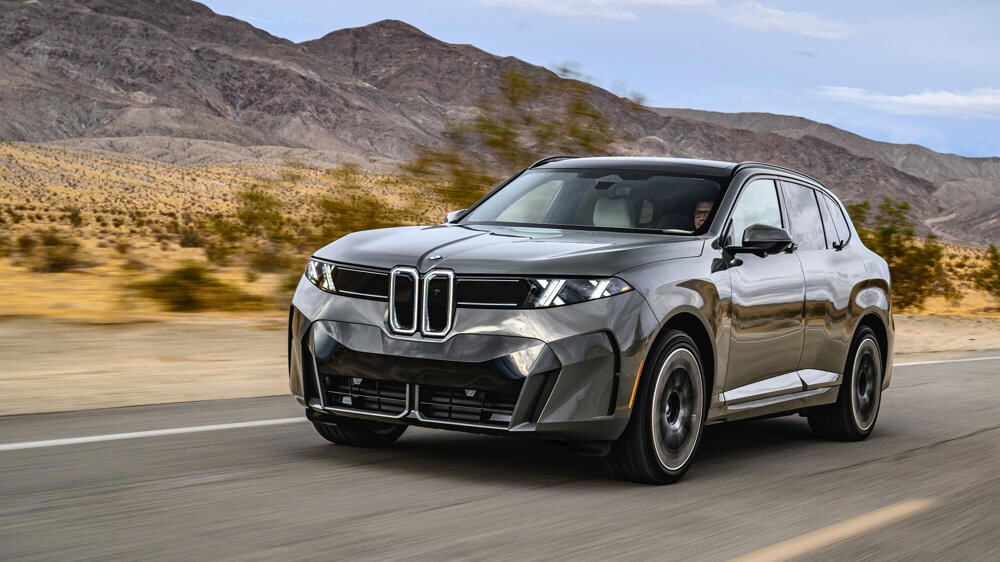
The EX60’s troubles come as European rivals Mercedes-Benz and BMW have introduced competitive EVs to the midsize premium crossover segment.
The slow ramp-up is aggravating Volvo’s global sales slump. Third-quarter deliveries dropped 11 percent, including a 41 percent plunge in China.
In the critical U.S. market, Volvo deliveries slumped 8.7 percent in the third quarter, as the aging XC90 and XC60 lost sales momentum. Updates to both crossovers are planned for early next year.
The pressure has forced Volvo to scrap its 2026 volume and cash flow outlook and decline to provide new short-term guidance amid rising market uncertainty. Volvo has imposed a global hiring freeze for white-collar jobs and tightened outside spending, Automotive News reported Sept. 28.