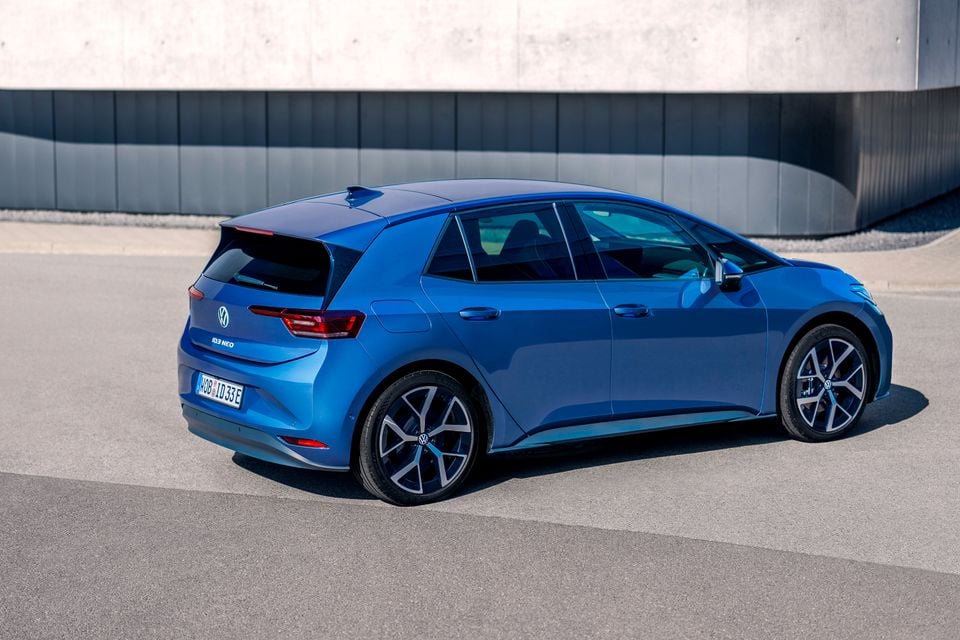
With profits falling, and lots of balls to keep in the air, Volkswagen has been forced into some tough decisions, and it has chosen to scrap investment in new production methods in favour of rescuing development of the electric Golf and T-Roc. The automaker told multiple outlets, including Reuters, Automotive News and Bloomberg, that it "will not implement the 'Gamechanger' manufacturing concept in the form originally planned". Under the original plan, Volkswagen was to move production of internal combustion Golf vehicles from Wolfsburg to Puebla, Mexico in order to retool part of the German factory with new production technologies, including a gigacasting facility that can significantly reduce the number of components that need to join together to form a car's body. Prior to its cancellation, Gamechanger was touted as essential to helping the company turn a profit on its German-made EVs, and was closely tied to the much-delayed next-generation Scalable System Platform (SSP), which will one day replace the existing MEB and PPE EV architectures. Despite the cancellation of Gamechanger, Volkswagen told media outlets that work continues on SSP. Sources have told Automotive News that cancelling Gamechanger will save Volkswagen billions of euros of investment funds. Volkswagen has currently allocated €135 billion (A$220bn) for capital expenditure and development from 2027 to 2031. With a bit more space in the budget, the automaker is now able to press on with developing the ID. Golf and ID. Roc, which are pure electric versions of the Golf and T-Roc based on SSP. This essentially reverses an earlier decision, reportedly announced on the company's intranet, to pause work on the Golf EV as the German automaker "simply cannot afford this work at present". It's unclear when the ID. Golf and ID. Roc will be launched. In May, prior to the Golf EV's pause, Thomas Schäfer, head of the Volkswagen brand, said the ID. Golf's release date had been pushed back from 2028 to 2030. Discontinuing Gamechanger has earned the ire of the company's workers' representatives, with Daniela Cavallo, head of the Volkswagen works council, calling the move a "flagrant breach" of the collective bargaining agreement reached in 2024. Speaking to Deutsche Welle, Ms Cavallo said "short-term return-driven thinking now stands in the foreground, and no longer the future viability of the Volkswagen Group, as was the case for decades". She vowed that "production of the internal combustion Golf is not leaving Wolfsburg until we get transparency on the details of the decision". Volkswagen has been hit hard by increasing tariffs in the US, strong competition from Chinese automakers, and a dramatic slump in sales in the vital Chinese market. These pressures forced Volkswagen to launch an updated cost-cutting plan in July, with the automaker planning to fire up to 100,000 staff members, close four factories in Germany, and cut its model range in half by the early 2030s. For the third quarter of 2026, Volkswagen Group suffered a €5.9 billion (A$9.4bn) loss, the company's largest quarterly loss since 2015, when the Dieselgate emissions cheating scandal surfaced. This was mainly thanks to writing down the value of its majority stake in Porsche. Derek Fung would love to tell you about his multiple degrees, but he's too busy writing up some news right now. In his spare time Derek loves chasing automotive rabbits down the hole. Based in New York, New York, Derek loves to travel and is very much a window not an aisle person. Read more

 Liked by Caleb Green, Lucas Wright




 Liked by Caleb Green, Lucas Wright