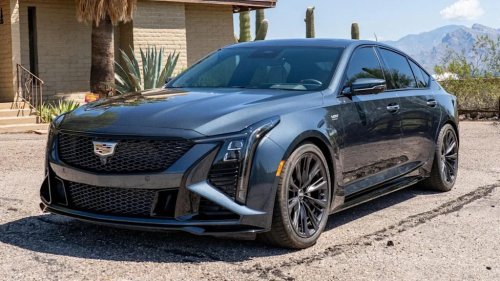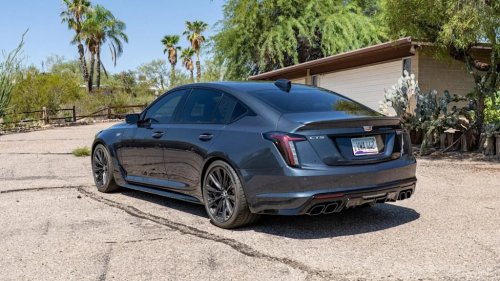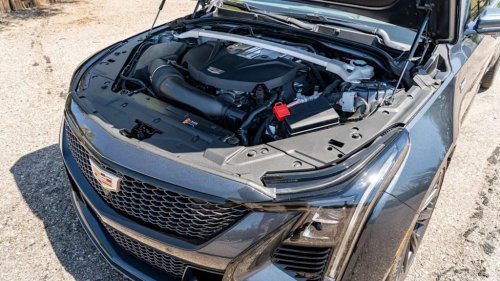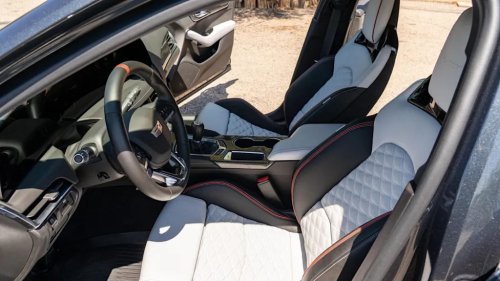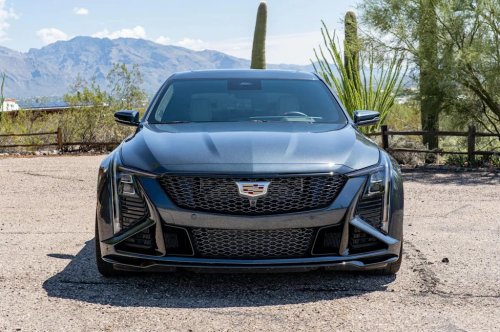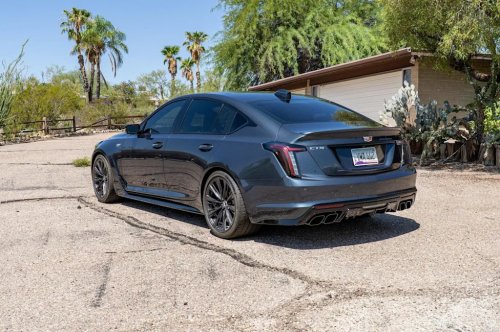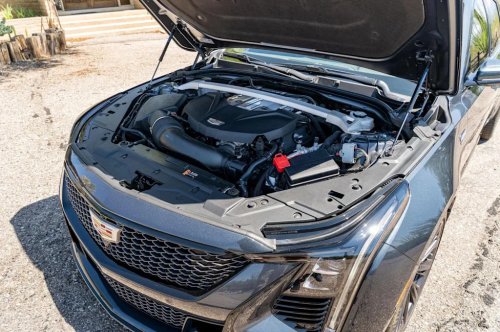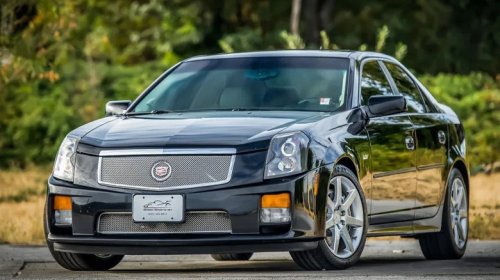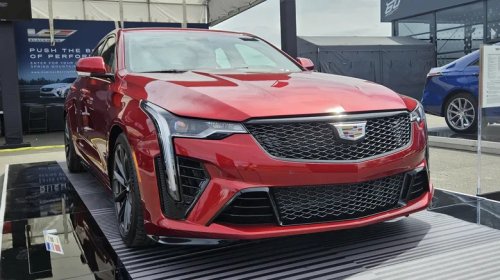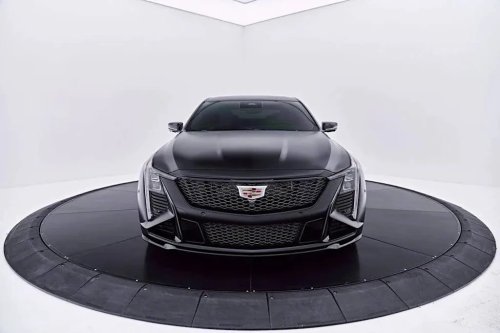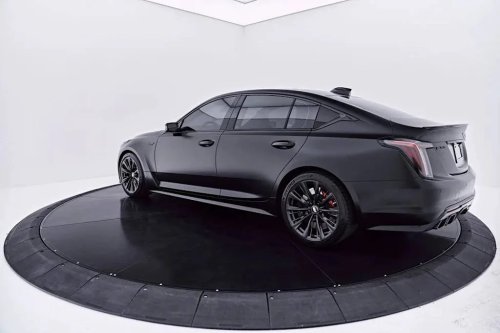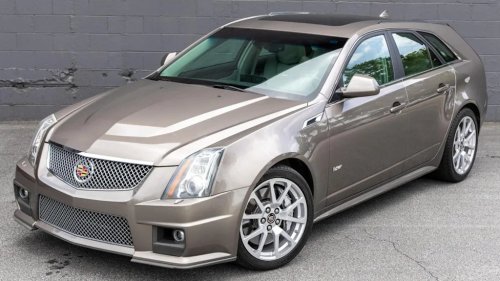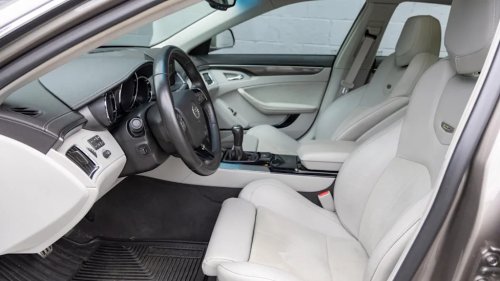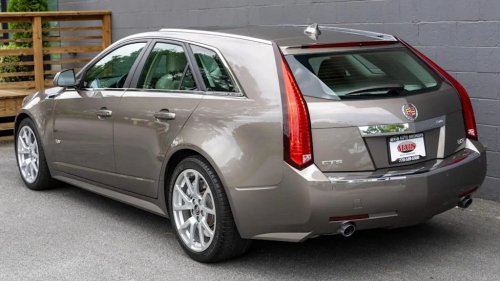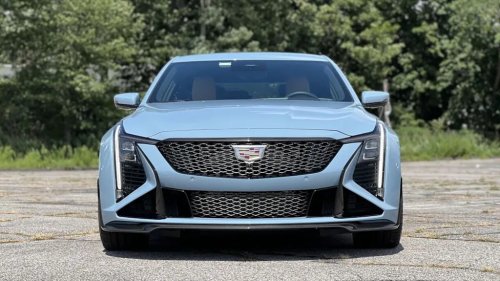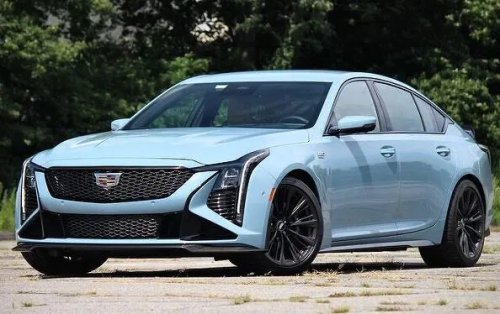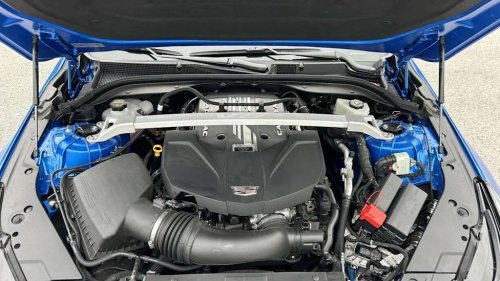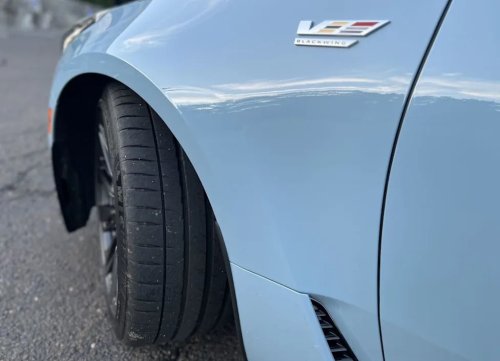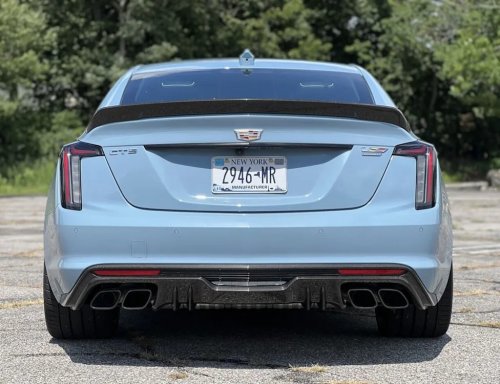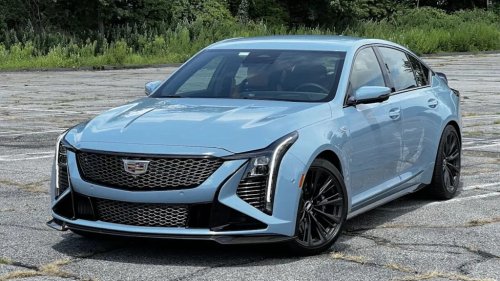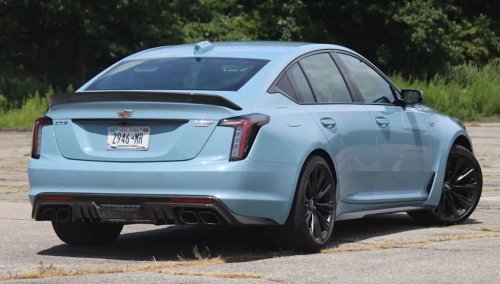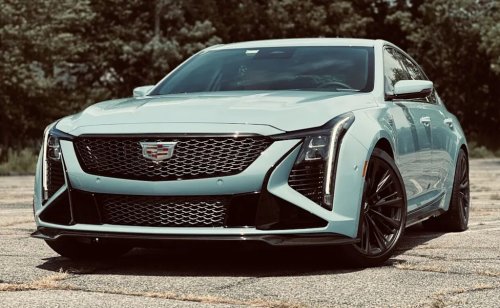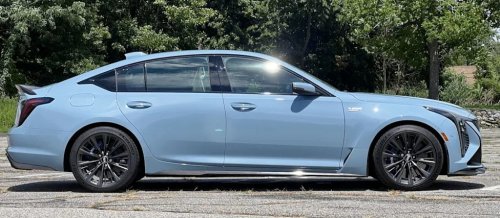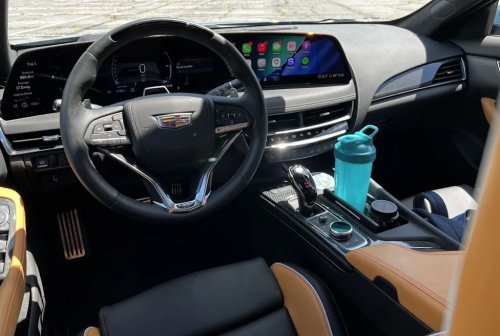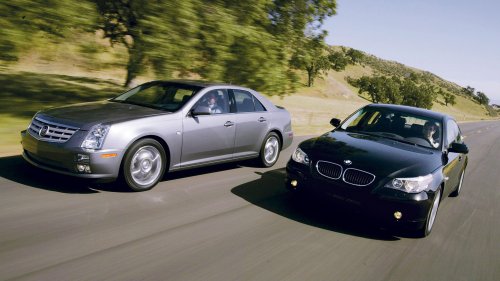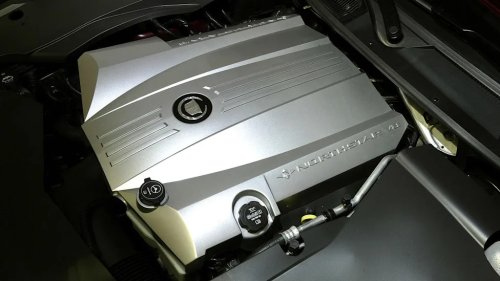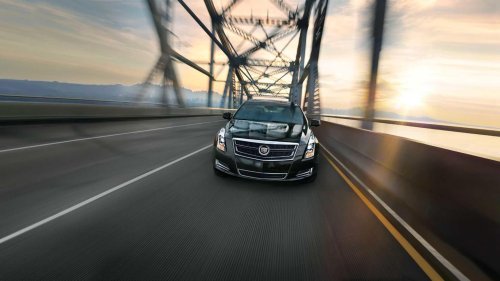
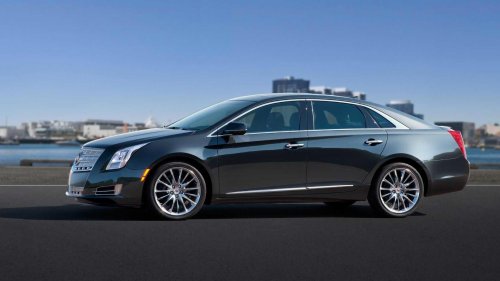
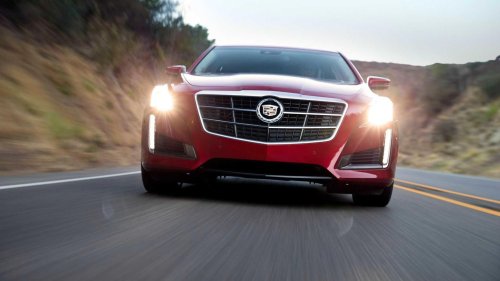
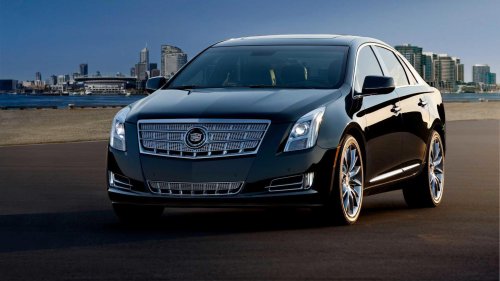
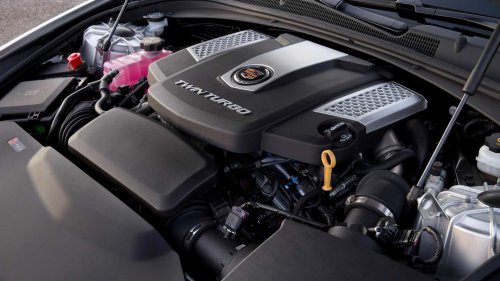



















If you're after a taste of some Cadillac twin-turbo magic but can't quite justify the spend on a brand-new CT4 or CT5, then point your search in the direction of a last-generation model from the Cadillac V-sport range.There are few brands as serious about performance sedans as Cadillac, a company with sedans that have often introduced or normalized the latest high-tech advances of the day, typically leveraged to the benefit of power output, safety, and handling capabilities. Today, Cadillac will sell you two sedan models: the CT4 and CT5. These are both available in respected high-performance variants, plus the automaker even offers elite Blackwing variations which bring the full brunt of Cadillac's performance capabilities to the market.But before the CT4 and CT5 became hot stuff, the CTS, ATS, and XTS (and to an extent, the short-lived CT6), represented some of the finest American-engineered sports sedans available, especially in V-sport form. And now, sports sedans that were once $73,000 just seven years ago can now be had for as little as $20,000, with some of Cadillac's finest twin-turbo engineering under the hood. The $25,000 Performance Sedan Sweet Spot CadillacIn 2019, a Cadillac CTS V-Sport would relieve you of $62,000 to $72,000 before options, depending on the model grade. Data from the CarBuzz Marketplace reveals that shoppers with a budget of $35,000 can do nicely on a unit with a sub-25,000 mile odometer reading, with some high-mileage units on offer from about $16,000 with less than 90,000 miles on the clock. Selection isn't abundant, so be sure to shop patiently.The XTS V-Sport is in a similar ballpark, with a key exception. With a 2019 model year starting price of $73,000, it was as expensive as the top line CTS V-Sport of the day. Thing is, in the used market, it's tougher to find low-mileage units. Seems like the XTS V-Sport was a popular pick among high-mileage drivers who kept those odometers ticking. At this writing, the lowest-mileage XTS V-Sport models tend to have 75,000 miles or more on their odometers, with a few exceptions. With that sort of mileage, you're looking at a sub-$20,000 asking price. You'll find even higher-mileage units on offer with well over 100,000 miles of use, some with asking prices under $11,000. The CTS And XTS V-sport Models Fulfilled Different Purposes CadillacThe last-generation V-sport models came in two flavors: CTS V-sport and XTS V-sport. Initially, the V-sport line was launched as a means of bridging the gap between conventional Cadillac sedans and the holy-grail 'V' models. With the V-sport designation, shoppers had a stepping stone from which to capture some of that go-fast Cadillac magic and track-ready hardware, but without the license-decimating thrust of the bananas supercharged V8 engine available further up the model range. Never mind the fuel bill.Today, these stepping-stone performance Cadillacs with the brand's first-ever twin-turbo V6 give shoppers a compelling used car buy to consider in the luxury sport sedan universe, though each represents a very different take on the recipe that's reflected in their current used offerings today.Cadillac An all-new third-generation CTS was launched for the 2014 model year with the intention of pushing the model line upmarket. The big news was an all-new engine, Cadillac's first-ever twin-turbo V6. The Michigan-built power plant joined Cadillac's first-ever eight-speed automatic in the new CTS V-sport grade, backing drivers with Brembo brakes, faster steering, a cooling system that was ready for track day use, a driver-selectable 'Track' mode, and unique suspension calibrations for the standard Magnetic Ride Control dampers. There's an electronically-controlled limited-slip rear axle as well, helping you achieve zero to 60 in 4.6 seconds according to the factory.The XTS V-sport was the other initial recipient of the so-called LF3 twin-turbo V6 engine. But despite a shared powertrain, the two models targeted very different buyers.Cadillac The CTS was intended to be an athletic and high-tech performer that could challenge some of the world's best sports sedans. The XTS V-sport, conversely, was more of a modern hot-rod take on a traditional Cadillac: big and comfortable. Its front-drive-oriented platform got a Haldex AWD system, but the overall design and engineering approach resulted in a car with a keen focus on comfort and luxury, not handling and agility. The focus with the XTS was more on style, comfort and fashion, with available LF3 power for the driver who preferred their big, comfortable Cadillac sedan to be a little on the gutsier side. Meet The LF3, Cadillac's First Twin-Turbocharged V6CadillacThe LF3 engine launched as its own headline in 2014. Competition in the turbocharged six-cylinder segment was tough, with the German automakers dominating, so Cadillac brought a 420-horsepower gun to the knife fight. But the big news was its availability in a newly-minted V-Sport trim grade of the incoming new CTS that also launched that year. At the same time, the LF3 almost immediately became an optional engine upgrade in the larger XTS. Two years later, in 2016, a specially-tuned version of this engine would power the high-performance Cadillac ATS-V.Cadillac At this point in time, premium automakers were flexing some big muscle in the turbocharged engine department, with more boosted six-cylinder engines taking up engine bays once occupied by less-powerful V8s. The LF3 was Cadillac's take on the trend. In the XTS V-Sport, you got 410 hp and 369 lb-ft of torque. In the CTS V-Sport you got a little more, 420 hp and 430 lb-ft.According to Cadillac, both the CTS and XTS product lines at the time intended to use the newly-launched engine as a centrepiece of the latest model offerings, effectively kicking off the new V-Sport range with its very own engine.The LF3 twin-turbo engine was a derivative of the free-breathing 3.6-liter DOHC V6 powering various other Cadillac models at the time. For twin turbo duty, almost every component was unique– including the block casting, connecting rods, pistons, and fuel injection. Special cylinder heads were used to encourage tumbling and turbulence in the intake air flow, resulting in a more efficient combustion process. All said, this is far from the standard 3.6-liter engine with a pair of turbos bolted up.The LF3's twin turbos spool up fast to pressurize the engine's intake air supply, but compressing air heats it up. Engines prefer to breathe cool air, so liquid-to-air heat exchangers are used to pull heat out of the compressed air charge as it travels the short path to the intake valves. The engineers say this approach reduces air flow routing volume by more than 60 percent versus a traditional intercooler setup. In simple terms, this means the two little turbos spend more time pressuring your combustion chambers, and less time pressurizing a bunch of pipes and ducts. This liquid charge-cooling approach isn't unique to Cadillac, but does leverage earlier experience in the development of the 6.2-liter supercharged V8 from the CTS-V.Sources: Cadillac