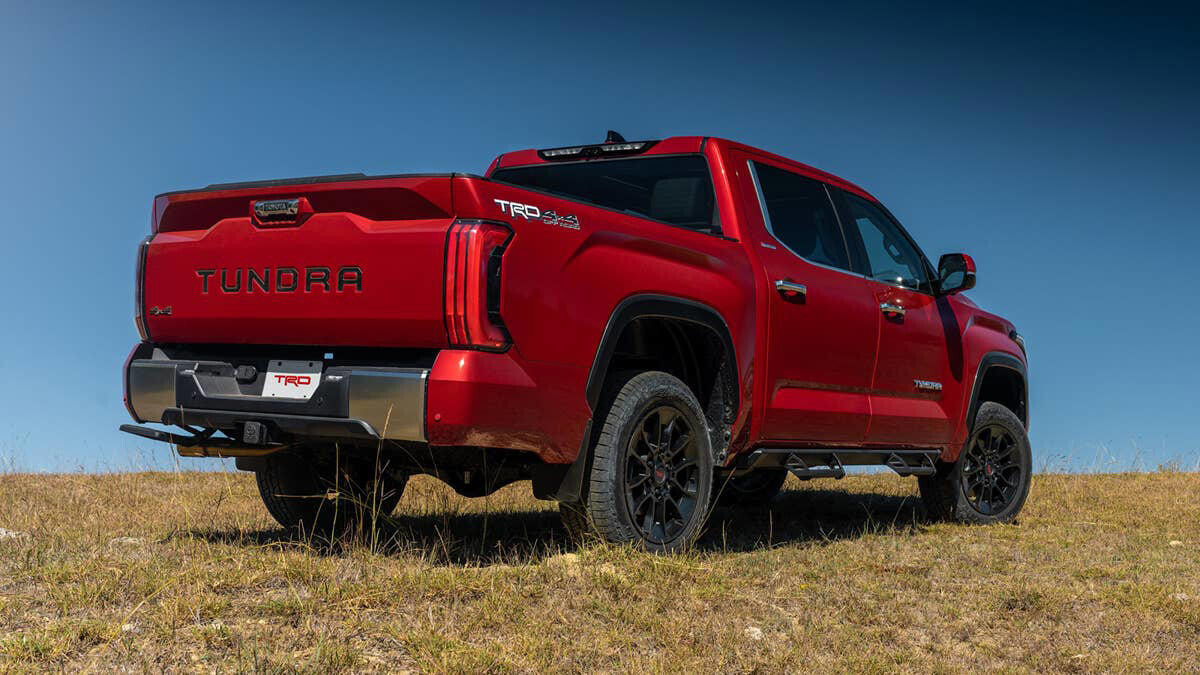
Toyota has announced another significant safety recall affecting Canadian pickup truck owners, this time involving an engine component that could break without warning while driving. Approximately 6,835 Toyota Tundra trucks are being recalled across Canada because of improperly manufactured camshafts that could snap during operation, potentially causing a sudden loss of engine power.
Announced on November 13, 2026, the recall covers certain Tundra models from the 2022, 2023, 2025, and 2026 model years. The defect raises concerns about highway safety, particularly for drivers who depend on their trucks for work, towing, and long-distance travel. Although Toyota believes the problem originated from a limited production batch, thousands of vehicles must be checked to identify those carrying potentially defective parts.
Nearly 7,000 Canadian Tundra Trucks Are Included in the Recall
Toyota Canada has confirmed that approximately 6,835 Tundra pickups are involved in the latest safety campaign. The recall covers specific vehicles from four model years: 2022, 2023, 2025, and 2026. It does not mean every Tundra sold during those years contains a defective engine component. Instead, Toyota has identified a population of vehicles that may have received camshafts from a problematic manufacturing batch. Owners will need to confirm whether their individual truck is included.
The distinction matters because Tundra owners use their vehicles in very different circumstances. Some are daily commuters, while others operate construction businesses, transport equipment, or tow recreational trailers across provincial highways. A mechanical issue capable of interrupting propulsion can become more than an inconvenient repair. Toyota’s recall process is designed to identify potentially dangerous components before they fail, although the initial announcement does not establish how many Canadian trucks actually contain the suspect camshafts.
The Defective Part Is a Camshaft That Controls Engine Operation
At the centre of the recall is a camshaft, one of the essential mechanical components inside an internal combustion engine. A camshaft controls the timing of the engine’s intake and exhaust valves, allowing air to enter the cylinders and exhaust gases to escape at precisely coordinated moments. The component works in synchronization with the crankshaft, helping the engine operate smoothly and generate power. Even small disruptions in valve timing can affect performance, making the camshaft’s structural integrity particularly important.
Toyota says certain camshafts were manufactured incorrectly and could physically break while the engine is running. A fracture could disrupt the coordinated valve operation required for combustion, potentially preventing the engine from producing power normally. Unlike a problem that can be resolved through a software update, this defect involves a mechanical part that may require replacement. Toyota has not publicly detailed the precise manufacturing error in its Canadian announcement, leaving the underlying reason for the camshafts’ vulnerability unexplained.
Losing Engine Power at Highway Speeds Creates a Serious Safety Risk
A sudden loss of propulsion can be particularly dangerous when a vehicle is travelling at highway speeds. Toyota specifically warns that a camshaft failure could leave an affected Tundra without normal driving power, increasing the possibility of a collision. The problem could be especially concerning during highway merging, passing manoeuvres, or other situations in which maintaining speed is essential. Although a vehicle experiencing engine trouble may still be able to coast, the driver could lose the ability to accelerate when needed.
Consider a truck travelling along Ontario’s Highway 401 while surrounded by heavy commercial traffic. If its engine suddenly stops producing power, the driver must navigate toward a safe stopping location while surrounding vehicles continue moving at highway speeds. On rural Canadian roads, limited shoulders, winter weather, and long distances between communities could complicate the situation further. These are illustrative scenarios rather than documented incidents involving this recall, but they help explain why Toyota is treating the manufacturing problem as a safety concern rather than routine maintenance.
Toyota Estimates Only 300 Camshafts May Be Affected
One of the most interesting details is the difference between the number of recalled vehicles and the number of potentially defective components. Toyota estimates that approximately 300 suspect camshafts could have been installed in the vehicles covered by the campaign. The company traced the concern to one specific manufacturing lot supplied by a particular manufacturer. That suggests the problem is concentrated within a limited batch rather than affecting every camshaft produced for the Tundra.
However, the relatively small number should not be interpreted as proof that an individual truck is safe. Toyota has not publicly identified how many of those components were installed in Canadian vehicles, nor has it provided a confirmed count of engines already experiencing the defect. The larger recall population reflects the vehicles that require screening. For Canadian owners, the important distinction is that being recalled does not automatically mean their engine is defective, but it does mean their truck requires attention.
The Recall Skips 2024 Tundras and Focuses on Certain Gasoline Models
The affected model-year range is unusual because it includes 2022 and 2023 trucks, skips 2024, and resumes with 2025 and 2026 models. Toyota has not explained the gap in its initial Canadian announcement. Its corresponding American notice specifically identifies non-hybrid Tundra pickups, while the Canadian release does not provide the same powertrain clarification. Owners should therefore rely on Toyota Canada’s vehicle identification number lookup to determine whether their particular truck is included.
Importantly, the exclusion of 2024 vehicles from this campaign does not mean those trucks have avoided engine-related recalls altogether. In May 2026, Toyota announced a separate safety recall involving approximately 3,734 Canadian 2024 Tundra non-hybrid pickups. That earlier problem concerned manufacturing debris capable of damaging an engine bearing and potentially causing a stall. The two campaigns address different defects, making it essential for owners to check every outstanding recall associated with their truck rather than focusing exclusively on the latest announcement.
The Problem Extends to Approximately 62,000 American Trucks
The camshaft recall is not limited to Canada. Toyota’s American division confirmed on November 13 that approximately 62,000 non-hybrid Tundra pickups are involved in the United States. Combining the announced Canadian and American figures produces a recall population approaching 69,000 vehicles across the two countries. Both announcements identify the same affected model years, manufacturing concern, and proposed inspection process. This makes the defect a broader North American safety issue rather than an isolated Canadian campaign.
The geographical reach also highlights the importance of identifying defective components accurately. Although tens of thousands of trucks are being recalled, Toyota’s estimate of approximately 300 suspect camshafts remains substantially smaller than the overall vehicle population. That difference illustrates why manufacturers sometimes recall many vehicles to investigate a comparatively limited component problem. For owners, the distinction offers perspective, but not an exemption from the inspection. A pickup’s country of sale or registration cannot establish whether its engine contains a suspect part.
Toyota Dealers Will Inspect the Camshaft and Replace It if Necessary
Toyota has outlined a targeted remedy for affected Tundra owners. Authorized dealerships will inspect the camshaft to determine whether it belongs to the problematic manufacturing lot. If the component is identified as potentially affected, Toyota says it will be replaced at no cost to the customer. The company has not announced a blanket engine replacement for every vehicle included in this campaign, distinguishing the current process from some earlier Tundra engine recalls.
That approach could allow trucks without suspect components to avoid unnecessary mechanical work. However, Toyota’s initial announcement does not specify the inspection procedure, expected appointment duration, or how much disassembly technicians might need to perform. These unanswered questions matter for customers who depend on their pickups daily. A contractor relying on one vehicle to reach job sites, for example, may need to arrange alternative transportation if repairs require an extended dealership visit. Owners should confirm appointment arrangements, repair availability, and any transportation assistance directly with their dealership rather than assuming a particular service timeline.
Canadian Owners Should Receive Official Notices by January 2027
Toyota expects to notify known owners of affected vehicles by mid-January 2027. These notifications will direct customers to authorized dealerships for the necessary inspection and potential camshaft replacement. However, owners do not have to wait for a letter to investigate their vehicle’s recall status. Toyota Canada maintains an online recall lookup that allows customers to check for outstanding safety campaigns using their vehicle identification number, commonly called the VIN.
The VIN is a unique 17-character identifier found on vehicle registration and insurance documents. It can also be located near the driver’s side of the windshield or on the driver’s door pillar. Owners can check their vehicle through Toyota.ca/recall or contact the Toyota Customer Interaction Centre at 1-888-869-6828. Canadians who recently purchased a used Tundra or changed addresses should ensure the manufacturer has their current contact information. Transport Canada recommends that vehicle owners stay informed about recalls, particularly because important safety notifications may otherwise be delayed or missed.
Previous Tundra Engine Recalls Have Already Raised Reliability Questions
The latest announcement arrives after several earlier engine-related safety campaigns involving Toyota’s newer-generation Tundra. In May 2024, Toyota recalled certain Tundras because manufacturing debris could remain inside the engine and damage crankshaft bearings. That problem could produce engine knocking, rough operation, starting difficulties, or an unexpected stall. Toyota announced additional recalls involving related debris concerns in November 2025 and May 2026, extending attention to other vehicles equipped with its 3.4-litre twin-turbocharged engine.
The November 2026 camshaft recall is mechanically different. Instead of debris damaging a crankshaft bearing, the concern is an improperly manufactured camshaft that could fracture during operation. Toyota has not established a common underlying cause between the new defect and the earlier bearing problems. Nevertheless, repeated safety campaigns involving major engine components can understandably create uncertainty among buyers. For customers who purchased a full-size pickup expecting years of dependable service, another recall may raise concerns about long-term ownership and maintenance. Completing each applicable recall remains more useful than assuming every Tundra shares the same mechanical weakness.
What Canadian Tundra Owners Should Do While Waiting for Repairs
Owners of potentially affected trucks should begin by checking their VIN through Toyota Canada’s official recall service and contacting an authorized dealership for guidance. Toyota’s November 13 announcement does not contain a blanket instruction for every recalled truck to stop driving immediately. However, that should not be mistaken for an assurance that a vehicle experiencing engine problems can safely remain in service. Drivers who notice serious mechanical abnormalities or unexpected power loss should seek professional assistance rather than continuing a journey with a malfunctioning engine.
If a truck develops trouble on a highway, protecting the occupants and other road users becomes the immediate priority. Ontario’s official driver’s handbook recommends checking mirrors, activating hazard lights, and moving to a safe shoulder as soon as conditions permit. Owners who experience a suspected safety-related defect can also report it to Transport Canada through its online complaint service or by calling 1-800-333-0510. Keeping dealership records and confirming that completed repairs appear in the vehicle’s recall history can help prevent unresolved safety issues from carrying over to future ownership.