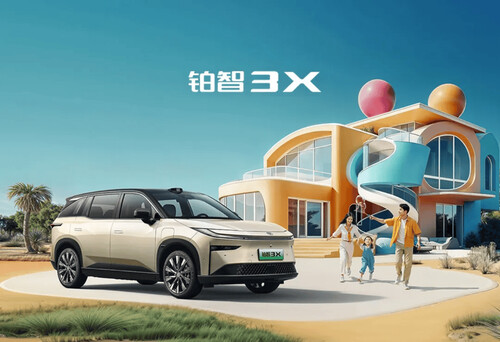
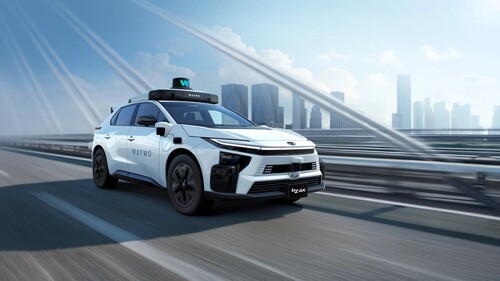
TOKYO — Toyota and Waymo will begin testing factory-built Toyota bZ4X robotaxis in Japan next year, the first step toward deploying the vehicles in Japan, Britain and other markets, with the goal of achieving large-scale commercial operations worldwide.
Toyota will build the modified all-electric crossovers and install Waymo’s autonomous driving hardware at its Takaoka plant in Toyota City, the partners said on Oct. 30.
The move pairs the world’s largest automaker with one of the leading autonomous driving companies.
“The partnership with Toyota and the bZ4X will be the platform that we use to take this technology to large-scale commercial operation,” said Dmitri Dolgov, co-CEO of Waymo. “It will be the platform for right-hand-drive in Japan, in U.K., and beyond.”

Keep up with product planning news with Automotive News' regularly updated database.
Future Product database: 5-year vehicle timelines
Future Product guide: Our 10-week series on future products by brand
The fleet will offer Japan’s first fully autonomous ride-hailing service using high-volume, domestically manufactured vehicles, the partners said. It will use the sixth-generation Waymo Driver system in bZ4X EVs modified with automatic doors and ride-hailing interiors.
The companies did not give a timeline for starting the service in Britain or other countries.
Left-hand-drive markets to come later
The rollout starts with right-hand-drive vehicles suited to the road rules of Japan, Britain and other countries that drive on the left side of the road. But the partnership will expand to other markets that have their steering wheels on the left, Toyota Chief Technology Officer Hiroki Nakajima said.
“We are also preparing a lot of left-hand-drive vehicles too. The BZ4X will be able to be used in left-hand-drive markets as well,” Nakajima said of the upcoming robotaxis.
Sign up for our daily First Shift morning newscast email for a quick video to start your day.
Details for the 2027 launch in Japan are still being coordinated with local authorities, Nakajima said. The companies could not say where the service would begin or how many vehicles would be used. The service will likely start in Japan at a limited scale, Nakajima said.
The latest step builds on an agreement struck between the companies in April 2025.
Trialing robotaxis in Japan comes as the country plays catch-up to U.S. and Chinese competitors in the technology. Toyota and other Japanese manufacturers have turned to outside partnerships with technology companies to accelerate their shift into autonomous driving.
Honda Motor Co. said in 2023 it planned to start testing a driverless ride-hailing service in 2026, with vehicles from General Motors-backed autonomous driving company Cruise. The plan ended after GM absorbed Cruise as an internal department.
In March, Nissan Motor Co. agreed with ride-hailing giant Uber and Wayve to deploy modified Nissan Leaf EVs in Tokyo by the end of this year. That autonomous vehicle ride-hailing service will use Wayve’s AI Driver system through Uber’s app.
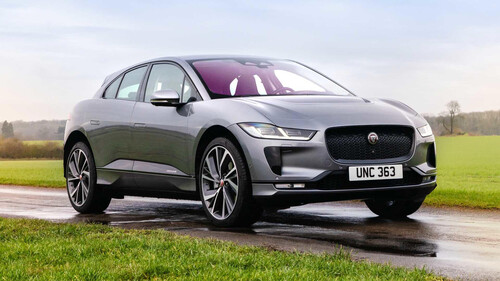
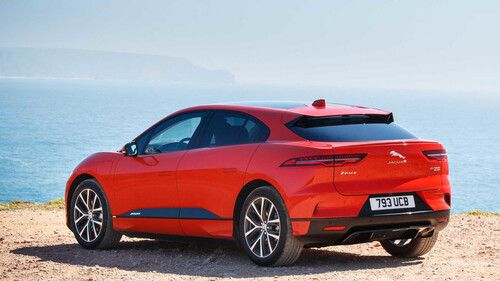
Waymo already has a test fleet in Japan based on the Jaguar I-Pace. But that project was centered around human drivers from Japanese taxi operator Nihon Kotsu manually operating the vehicles to map Tokyo and adjust to driving on the left-hand side.
How does Waymo’s partnership with Toyota compare with its Jaguar tie-up?
Teaming with Toyota to assemble vehicles and install Waymo’s systems in the same factory takes Waymo’s robotaxi partnerships to a new level of integration, Waymo and Toyota said.
It allows Toyota and Waymo to quickly troubleshoot problems or devise improvements, and it gives Toyota ground-level visibility into Waymo’s technology from an early stage, Nakajima said.
In many ways, it mirrors the relationship Toyota has with traditional suppliers, in which it works with suppliers from pilot product development through manufacturing.
“When we work together under one roof to achieve an even better robotaxi, it is going to be a very significant step,” Nakajima said. “By deepening our understanding of the vehicle, we can then think about the challenges that we will have in expanding the services.”
In Waymo’s partnership with Jaguar, the I-Pace electric sedans were made by contract manufacturer Magna Steyr in Graz, Austria, and shipped to Waymo’s workshop in Arizona for retrofitting with its hardware and software to make the vehicles self-driving.
Magna Steyr built the I-Pace from 2018 to 2024. Production ended ahead of the Jaguar brand’s launch of a new generation of battery-electric models.
In the U.S., Waymo has also sourced China-made robotaxis from Geely’s Zeekr brand.
Toyota’s autonomous driving roadmap envisions deploying Level 4 autonomous driving robotaxis, buses or shuttle services through an outsourced partner such as Waymo by around 2028. It targets its own in-house Level 4 autonomous services from around 2032.
Toyota targets in-house Level 4 personal-use vehicles also around 2032.
Toyota will continue to develop its own autonomous systems with its software subsidiary Woven by Toyota and input from the Waymo partnership, Nakajima said. Meanwhile, the Waymo tie-up has potential to evolve into new businesses such as robo-shuttles, he added.
“This collaboration with Waymo using the bZ4X will go beyond this robotaxi … maybe we can go into other domains,” Nakajima said. “We think this collaboration can lead the industry.”