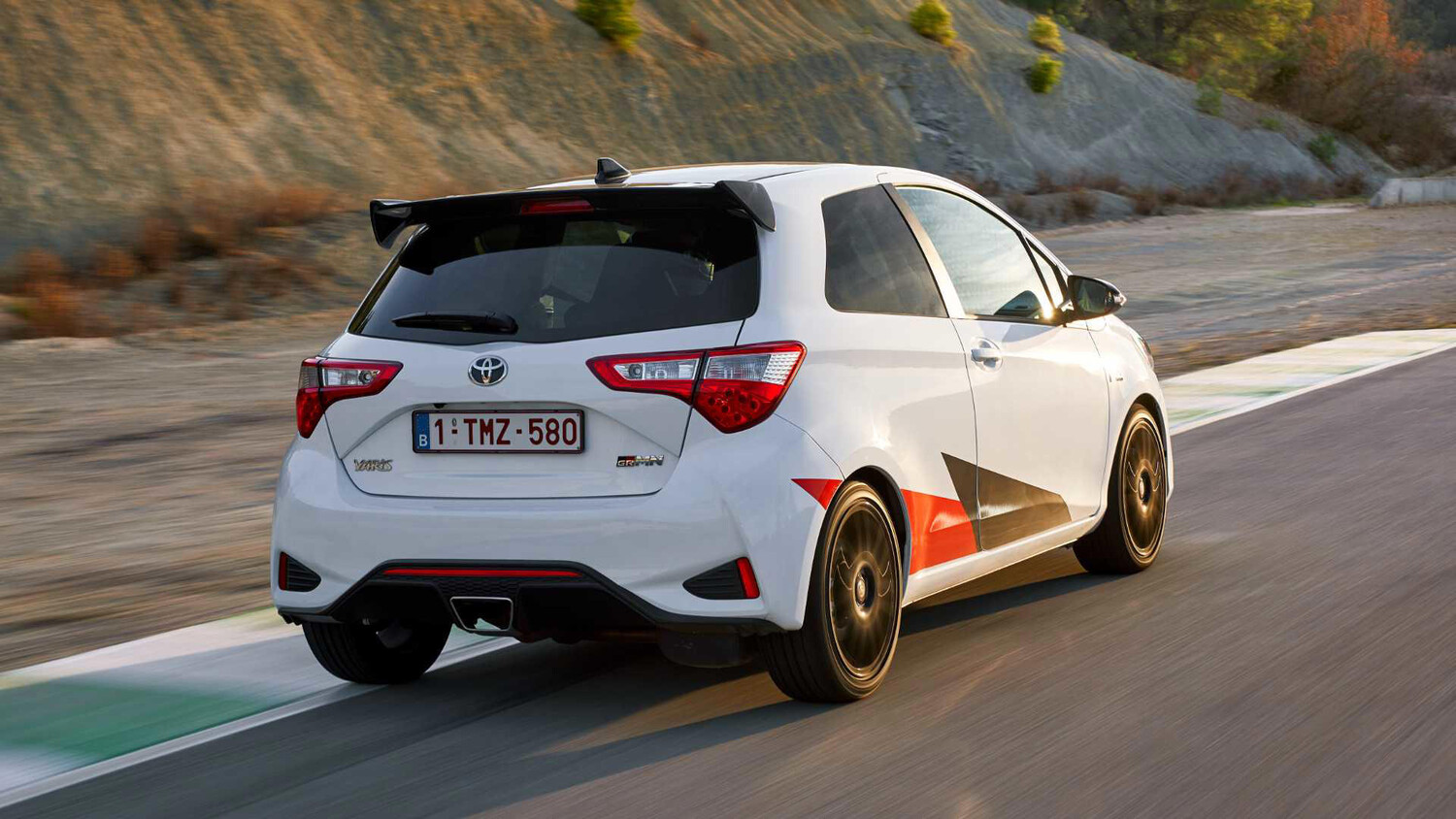
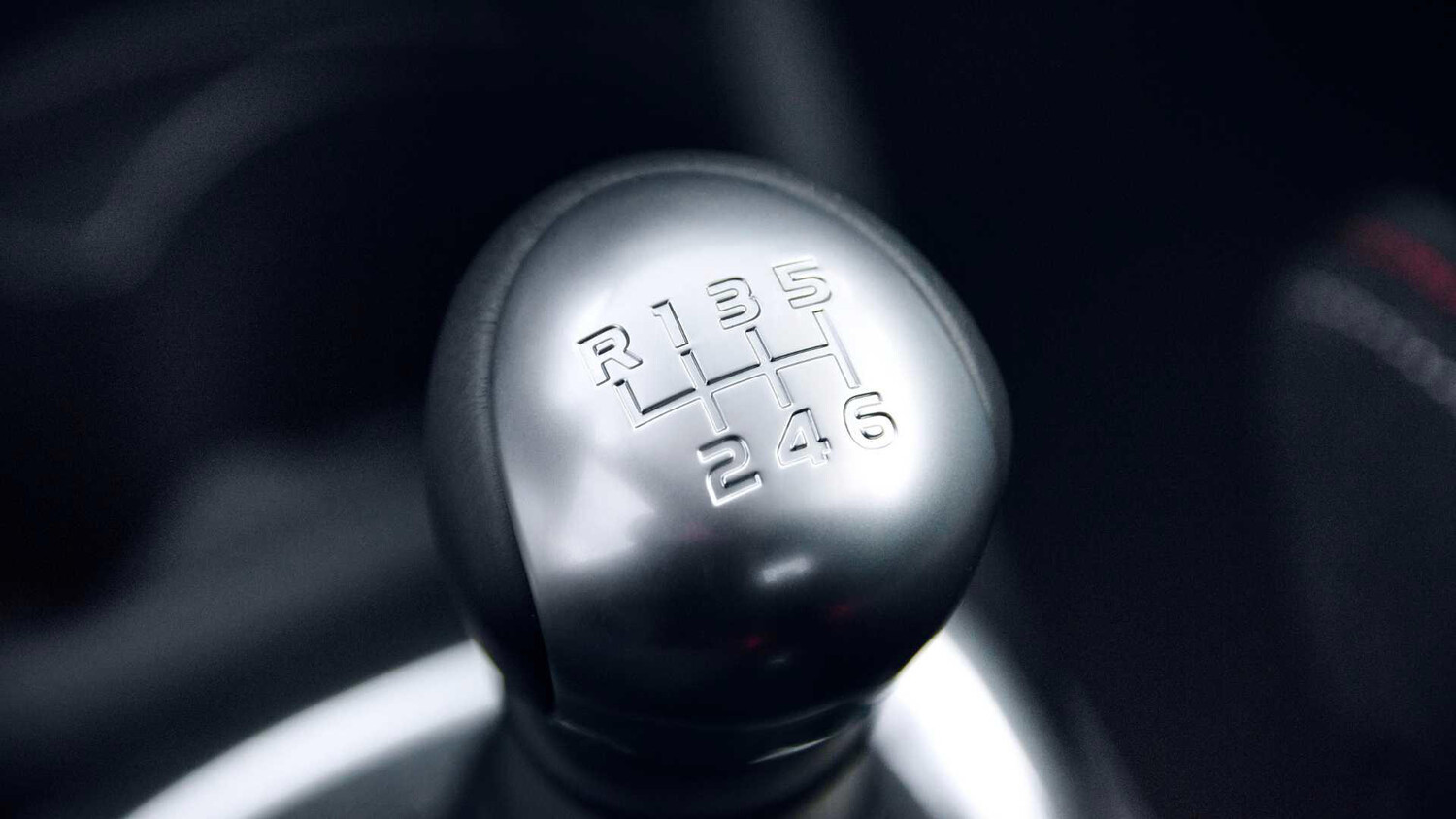
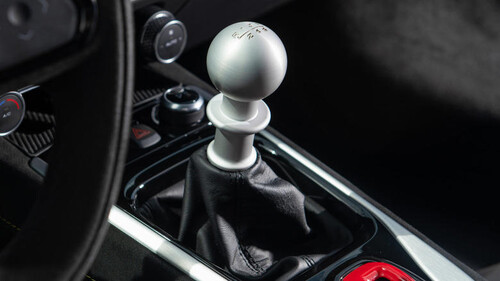
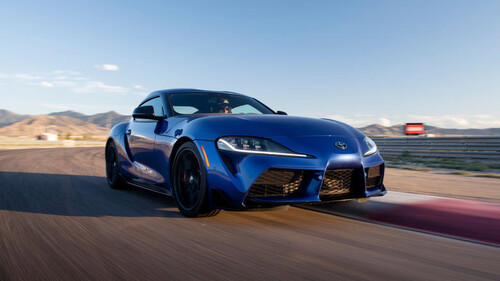
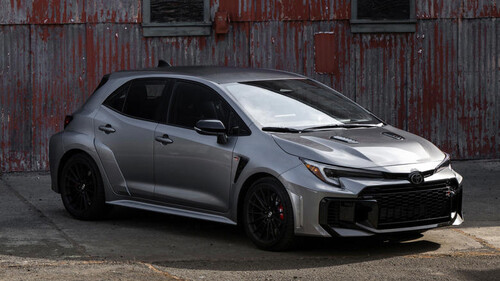
When you look at Toyota's performance-oriented lineup these days, the brand produces just a couple of models. The Supra officially went out of production this past March, leaving the pure-hearted Toyota GR86 sports coupe alone with the all-wheel drive GR Corolla hot hatchback. The latter model is, in essence, a rally car for the road with a 300-horsepower three-cylinder engine under its hood that was lifted directly from Toyota's World Rally Championship (WRC) program.Speaking of the GR Corolla, Toyota ended up building another souped-up hatch just under a decade ago, but few actually remember it. It was called the Yaris GRMN, which stands for "GAZOO Racing tuned by the Meister of Nürburgring", which is a mouthful. However, thanks to the Yaris GRMN's supercharged engine, pronouncing its full name might take longer than getting from 0-60. To boot, only a few hundred of the things were made, making them exceedingly rare. Perhaps, then, that's why no one remembers it. Toyota Needed To Bridge The Hot Hatch Gap Toyota Toyota's Gazoo Racing program began in the late 2000s as a sort of pet project. It was initially led by Hiromu Naruse, a Toyota test driver, who was in charge of a group of student test drivers. Toyota vice president Akio Toyoda was also involved. By 2009, the Gazoo Racing subsidiary was producing tuned models for the road alongside models for racing, such as the Toyota iQ GRMN. Following the hot iQ was the Vitz GRMN in 2013, Mark X GRMN sedan in 2015, and the GT86 GRMN in 2016.While the iQ and Vitz GRMN models were considered hot hatches, they weren't exactly considered "hardcore" by any stretch. Nor were they tailored specifically for the competitive Euro hot hatch market. Because of this, Gazoo Racing wanted to build a serious, fully fledged hot hatch that could compete with the likes of the Ford Fiesta ST and the Peugeot 208 GTi. The brand also wanted to commemorate Toyota's return to the WRC. It was slated to be a limited-production model, with just 400 examples slated for the European market, making it the first GRMN model to be built specifically for Europe.Production began in late 2017, just in time for the 2018 model year. The Yaris GRMN was a notable shift in Gazoo Racing's road car production philosophy. Because it was meant to be a serious contender for a foreign market, it needed to be much more fine-tuned than GRMN models that came before. In fact, the Yaris GRMN's production also showed Toyota, as well as the rest of the world, that performance components could be integrated into existing production lines in a reliable, streamlined manner. It Had A Seriously Unconventional Powertrain ToyotaThe crux of the Yaris GRMN's performance potential lies underneath its hood. It's a 1.8-liter, supercharged inline-four-cylinder engine called the "2ZR-FE," part of the Toyota ZR engine family. Supercharging is rarely integrated into four-cylinder engines, regardless of manufacturer. However, Toyota decided to go with a blower over a turbocharger to give the Yaris GRMN the ability to provide immediate power. Turbos typically suffer from lag, which can hinder performance on a racetrack, especially when accelerating out of corners.Toyota wasn't responsible for the installation of the Magnussen-Eaton supercharger. Instead, the job fell to Lotus. The British marque also helped fine-tune the blower, as it had extensive knowledge of Toyota engines due to a long-standing supplier-customer relationship. Lotus ended up providing Toyota with troves of data regarding supercharging and turbocharging Toyota engines, as well, which further helped the Yaris GRMN's performance potential.Toyota Backing up the supercharged 2ZR-FE mill is a standard six-speed manual transmission. According to Gazoo, it received extra reinforcement to handle the additional power provided by the supercharger. Hooked up to the beefed-up gearbox is a Torsen limited-slip differential (LSD), an integral component if you're trying to build a serious, track-ready front-wheel drive hot hatchback.Toyota Its underpinnings were also tuned up. For example, its chassis was reinforced with extra welds and bits of high-strength steel in the pursuit of more stiffness. Its suspension received a set of track-tuned springs and Sachs-branded shock absorbers. Its brakes are larger than the standard Yaris', and it rides on a set of 17-inch lightweight BBS wheels wrapped in Bridgestone Potenza RE050A tires.*Specs courtesy of Toyota & Toyota Yaris GRMN specsThanks to its immediate throttle response courtesy of its supercharger, along with an extremely lightweight nature, the Yaris GRMN was positioned to provide a wholehearted, old-school hot hatch experience at a time when tech, weight, and turbocharging were becoming the norm in the segment. The GR Yaris Accidentally Erased The GRMN From History ToyotaJust as the Yaris GRMN's production wrapped up in 2020, a new iteration of the hot little hatchback was introduced. This time, it was called the GR Yaris, and it's based on the model's fourth generation. Instead of the stripped-out, lightweight GRMN it replaced, the GR Yaris came equipped with a bit more tech, kit, and usability than its predecessor. Because of this, the outgoing hot Yaris quickly faded into the background.Toyota The Yaris GR stormed into the fold with a completely different engine. Instead of a supercharged four-cylinder, a turbocharged three-cylinder was used. It produced significantly more power despite its smaller displacement, and it also came with an eight-speed automatic transmission, allowing those who couldn't drive a manual to enjoy it. It also sported a rally-bred all-wheel drive system, meaning it could grip much better than the outgoing Yaris GRMN. Despite its heavier weight — over 300 pounds heavier, to be exact — the GR Yaris ended up being quicker, faster, and, if the reports are to be believed, more fun to drive than the Yaris GRMN.Toyota However, the above is not to say the Yaris GRMN was no good. The GR Yaris went about its business of track work differently, which just so happened to be a more widely accepted approach. Not to mention, its production was not limited as the Yaris GRMN's was. This meant that more buyers could be exposed to the GR Yaris, which, in turn, led to more sales and greater buzz about the model as a whole. The Yaris GRMN Could Be Toyota's Most Overlooked Modern Collectible Toyota UKThese days, interest in the forgotten little Yaris GRMN is beginning to heat up. In the age of tech that we find ourselves in now, more and more gearheads are trying to return to their driving roots, those being analogous driver's cars without loads of wires going every which way. Not to mention, many of these newer models are, typically, heavier than older performance models, simply due to the considerable amount of electronics found within them. And, as we all know, weight is the performance car's worst enemy.The Yaris GRMN fits the bill very well, and is likely the last Toyota ever built that adhered to a "less is more" philosophy. Now, it's important to note that the Americans reading this, myself included, will not be able to get your hands on one. Because it was built for the European market, the Yaris GRMN cannot be imported into the US until the 25-Year Rule timeframe elapses, which won't be until 2043 at the earliest.Toyota However sad that may be, it doesn't change the fact that the Yaris GRMN proved to the world that Toyota could build proper hot hatchbacks in a world where the essence of the segment is fading behind a wall of technology and excess weight.