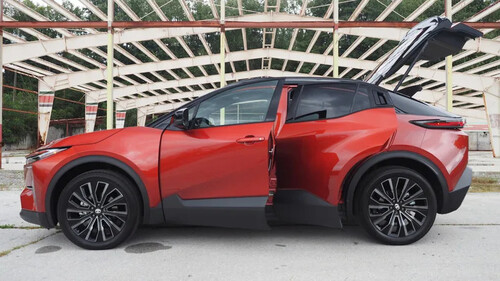
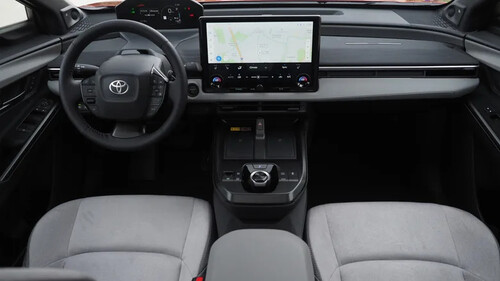
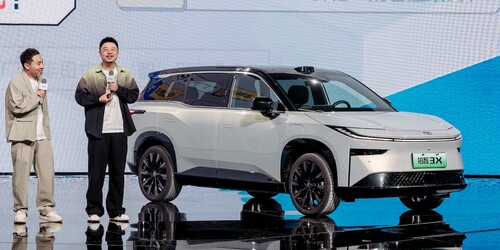
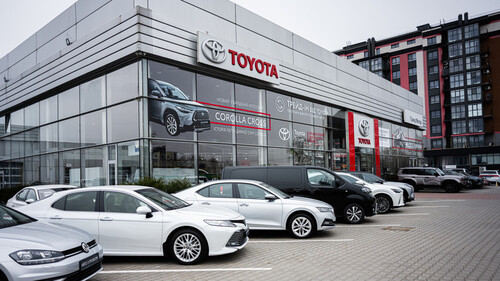
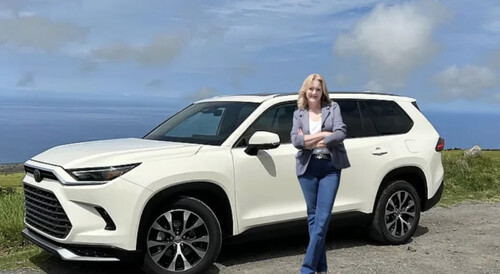
Nathan Nelson · 3 months ago@nathannelson52Toyota points to high gas prices as sales in China plunge 30% Liked by+36 othersBYDLexusToyota C-HRToyota bZ4XPost commentRelated PostsToyota warns it 'cannot survive' as it bets on next-gen Corolla EV 16 · Lauren Harris · 2 months agoToyota's new EVs catch on as registrations jump 225% in April 23 · Evan Leblanc · 3 months agoToyota is promising big things for the Lexus LFA EV sports car 72 · Matthew Gagnon · 3 months agoNorway’s Car Market Is Now 98.7% Electric. These Models Are Winning 36 · Adam Fortin · 16 days agoToyota Tundra vs Ford F-150 Depreciation: It's Not Even CloseChloé Lewis · 1 days agoToyota bets on the next-gen Corolla EV as a 'sense of crisis' grows 78 · Daniel Girard · 2 months agoToyota's electric SUVs are suddenly surging — it just scrapped a flagship EV anyway 38 · Justin Johnson · 4 months agoHere's Why Some Used Luxury Cars Are So CheapAiden Lavoie · 1 days agoChinese Car Sales Are Surging In Europe And U.S. Senators Want To Make Sure That Can't Happen Here 90 · Liam Green · 16 days agoYour Skis and Snowboards Deserve Better—We Found the Racks That Treat Them RightHannah Moreau · 1 days agoToyota's electric SUV tops 17,500 sales and outpaces key EV rivals 11 · Lily Wilson · 3 months agoToyota and Lexus are going big with their first 3-row electric SUVs 17 · Lauren Poirier · 4 months ago3 Of The Most Powerful V8 Engines Ever Built By ToyotaIsabelle Bouchard · 2 days agoNorway's Passenger Car Market in August 2026: XPENG Ranks Fifth, Chinese Brands' Share Exceeds 21% 57 · Victoria King · 16 days agoThe Scary Reason Behind Toyota's Rav4 Plug-In Hybrid Recall In October 2026Liam Green · 1 days agoTop Selling Electric Vehicles in the World — April 2026 16 · Jackson Bouchard · 4 months agoFuture EVs: Every new electric car coming to America in 2026 and beyond 72 · Audrey Girard · 4 months agoIs The Toyota Land Cruiser Body-On-Frame Or Unibody? (And Does It Really Matter?)Lauren Harris · 2 days agoToyota joins the extended-range EV race, but not as you'd expect 53 · Emma Clark · 19 days agoAustralia adds 15,000 Toyota Klugers to recall as second-row seatbacks may not lockConnor Fortin · 1 days ago




 +36 others
































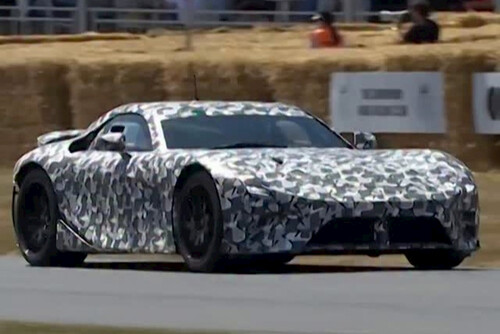
![The Lexus LFA electric supercar debuts with a fake V-8 roar [Video]](https://cdn.topcarnews.net/en/45002/thumb/id/aHR0cHM6Ly9pMC53cC5jb20vZWxlY3RyZWsuY28vd3AtY29udGVudC91cGxvYWRzL3NpdGVzLzMvMjAyNi8wNy9MZXh1cy1MRkEtRVYtc3VwZXJjYXItZGVidXQuanBlZz93PTE1MDAmYW1wO3F1YWxpdHk9ODImYW1wO3N0cmlwPWFsbCZhbXA7c3NsPTE/99abf3bea06e2854bc77646d0e7a8ee1.jpg)