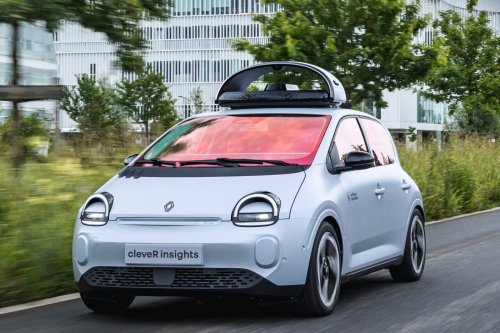
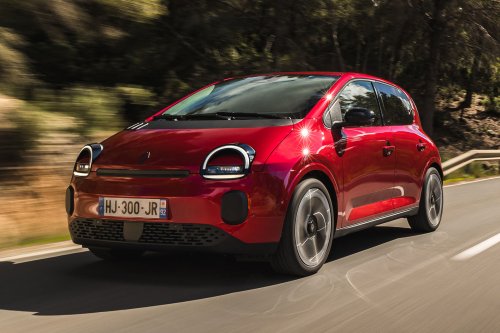
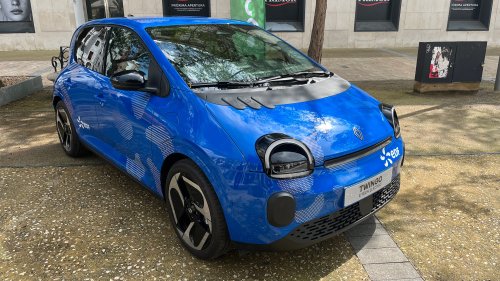
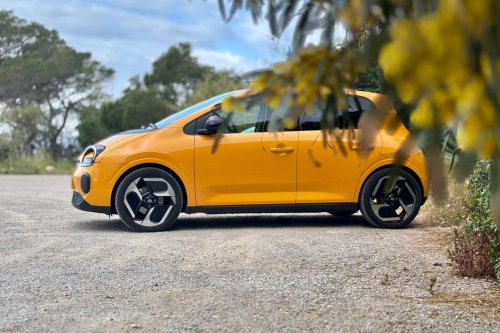
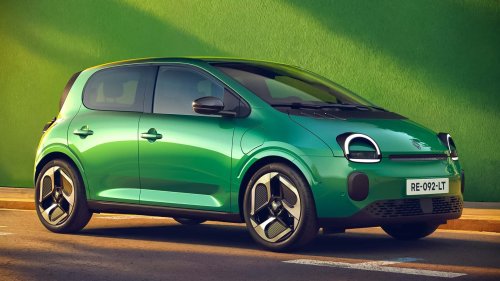
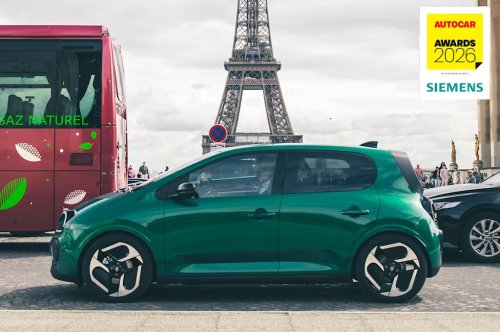
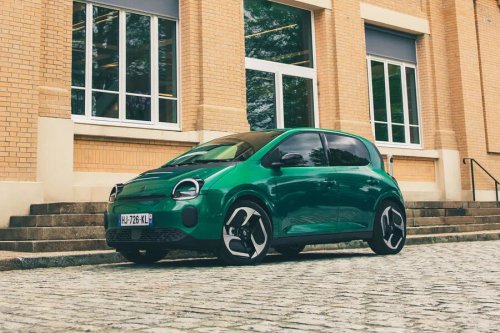
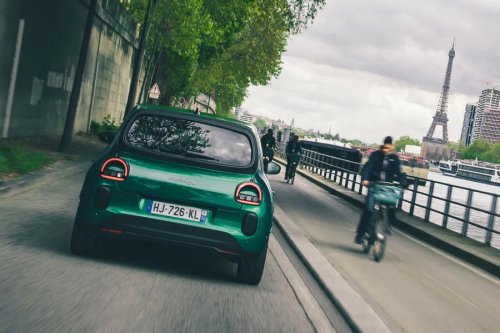
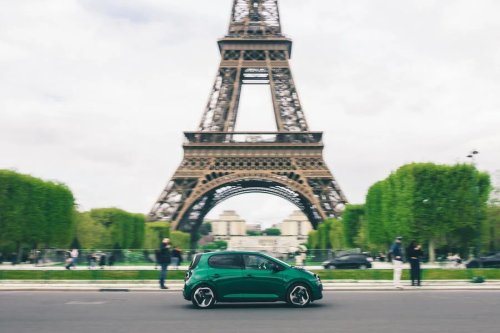
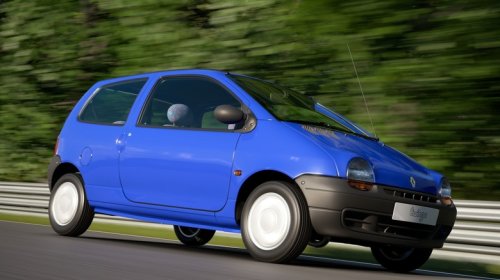
renaultrenaultIf Renault boss Fabrice Cambolive ever fancies a career change, he'd make a great tour guide.As he deftly guides me through the centre of Paris from the driver's seat of the new Twingo, Cambolive is supposed to be telling me about the French manufacturer's remarkable story of rejuvenation and success. Instead, he's busy pointing out his favourite views, comparing the city's Left and Right Banks and detailing his favourite arrondissements.AdvertisementAdvertisementIt's fascinating stuff, and Cambolive is clearly enjoying himself, although I realise I'll have to slowly drag the conversation back to the car industry. After all, there is much to discuss regarding Renault's recent success - it's why Autocar has named the brand our Best Manufacturer for 2026. Our decision is based partly on commercial achievement: last year Renault's UK sales were up 13% year on year to 68,000, of which 29% were full EVs. So far this year those sales are up a further 7% and, buoyed by the success of the Renault 5, which is one of the best-selling EVs among private buyers, the firm's EV sales are tracking well ahead of the UK's zero-emission vehicle mandate requirements.But a major reason for this award is, well, une bonne vibe: Renault has its swagger back. At a time when some rivals are still dithering about their electrification plans or fretting about how to take on Chinese rivals, Renault has picked a confident path: it is focused on EVs and full hybrids, has expanded its offerings in the crucial C-segment and, with the 5, 4 and Twingo, has proven that small electric cars can be not only affordable but also fun and desirable.Renault TwingoThe new Twingo, in fact, is Autocar's Best Small Car for 2026. To wrap up everything in one neat package, we suggested Cambolive might celebrate by taking us for a tour of Paris in the award winner. And so, as we zip our way from Renault's HQ in Billancourt and follow the path of the Seine towards the Eiffel Tower, Cambolive outlines what's led to the Twingo's success. Well, he will eventually. First he takes time to point out an old wall from the French Basque Country against which Basque pelota is now played. He knows these roads in great detail: it really is his commute to his apartment. He even shows us where he sometimes stops to admire the view.But about Renault's success? Well, there isn't one specific reason, but "a lot of successive points". He adds: "If you want to be good you have to tick a lot of boxes." Cambolive cites several key factors that were initiated as part of former group CEO Luca de Meo's Renaulution plan and which continue today under the revised strategy of his successor François Provost.AdvertisementAdvertisementOne key action, says Cambolive, was "to be in on electrification, but to stay on two legs and not go in one direction. The fact we invested in hybrids on the one hand and BEV on the other was good." That was helped by the fact that, as a relatively small manufacturer, Renault simply couldn't afford to pursue the range of powertrain technologies some rivals have.Cambolive adds: "Sometimes that's easier than thinking you want everything." But it was a change in approach: his early moves included axing the plug-in hybrid versions of the Megane and Captur. At the time, moving away from PHEV technology felt a risk given market trends, but it has been rewarded. Renault is making a similar move now, focusing on range-extender technology for its next wave of cars.Fabrice Cambolive"Sometimes you have to gamble a bit," says Cambolive. But even if you gamble, you need a plan: "Automotive is not improvisation, because you embed many billions in each decision."Another factor behind Renault's success in the past year was the decision to put a major focus on developing new products and an associated effort to change Renault's commercial approach. You'll see this from its new flagship stores and general market.AdvertisementAdvertisement"If you have bad salespeople and good product, you're dead," says Cambolive. "If you have good salespeople and bad product, you're dead. The key was to improve both at the same time and not consider volume as an objective but as a result of doing that."Luca never pushed me to gain market share, other than by improving the value of the product. We had the capacity to be consistent between the quality of the product and the quality of sales."We're currently sitting in an example of that push to improve product. During the Twingo's development, much was made of its 'China-speed' two-year development cycle and sub-£20,000 starting price. But none of that would matter if it wasn't so brilliantly well conceived: it is so well designed and engineered it doesn't feel like it was built to a budget.Cambolive is keen to show off all the functions, notably flicking to Waze on the Google-based infotainment system. "I was amazed by the level of connectivity the Twingo offers," he says. "It's more connected than some cars that are three times more expensive."Renault Twingo driving along the SeineSpoken as you would expect of Renault's CEO, of course, except Cambolive is refreshingly honest. He acknowledges some of the harder plastics in the Twingo - "but with this sort of car you have to aim for durability first" - and admits that he thought he would notice the lack of a multi-link rear suspension. "But frankly," he says, "for this car a torsion beam is fine."AdvertisementAdvertisementHe gets a chance to show that off, too, as he suddenly takes a quick left down a side street, barely pausing for our Scenic chase car to follow. He knows the traffic round here well and is keen to avoid it. Still, he thinks the Twingo is perfect for these roads, saying: "It's chaotic with all the cars, pedestrians and bikes. So having a really short turning circle and an electric powertrain is really useful. Driving this car is like having a kind of superpower in the city."To drive a Twingo, first you need to buy one - and one example of how Renault has worked at improving its sales environment to match the desirability of its products can be found in its flagship store on the Champs-Élysées, just down from the Arc de Triomphe. Our initial plan had been to head there for some laps of the Place Charles de Gaulle roundabout, but with a glance at Waze Cambolive isn't keen: the traffic is building. Much time has been spent plotting out today's route but, with the instinct and adaptability needed to run a modern car brand, Cambolive pivots the plan.Renault Twingo passing Eiffel TowerInstead we lap Place du Trocadéro while snapper Jack attempts to get two French design icons - the new Twingo and the Eiffel Tower - into frame at the same time; as a bonus, we pass a third-generation Twingo soon after. As we begin our return back to Billancourt, Cambolive is still enthusing about the potential of the new electric version. It's an example, he says, of how the firm "tries to design cars to be loved".But that's not the only goal. "If we put technology or connectivity on a car, it has to be people-oriented," he says. And if the firm is going to make EVs, then Cambolive says it has to be because it serves a purpose "and not something we have to do to comply with CO2 rules".AdvertisementAdvertisementAnd, crucially, each car has to have its own appeal. In fact, as much as Renault's award-winning success is driven by a rejuvenated product line-up, Cambolive wants you to think of individual models. "I'm against commercials where you see a full line-up of a manufacturer," he says, while nimbly wheeling the Twingo into position for some shots outside Renault's HQ. "People don't buy you; they buy one of your products. And each product has to be targeted to a specific customer."Our Paris excursion is over and, as you might expect, even more impressive than Cambolive's tour guide skills are his understanding and vision of Renault's success. The brand has undergone a quick turnaround, but it has been hard-earned - and he knows things don't stay still for long."This industry changes fast. We have been an example of rapid success over the past two years," says Cambolive, "but there are lots of examples where a firm is having success and its situation changes abruptly. We monitor our competitors, and with some I could anticipate what they would announce later. We have to be very modest and have a lot of humility."]]>




















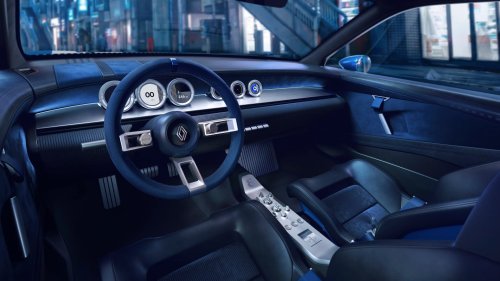


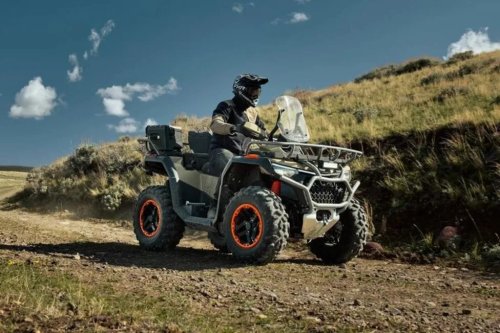
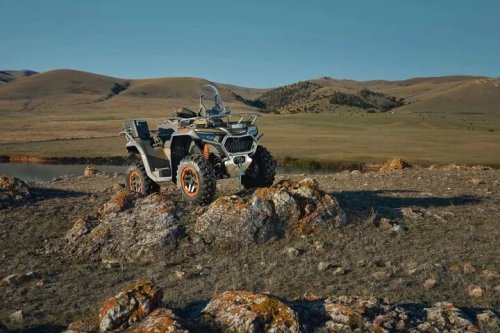
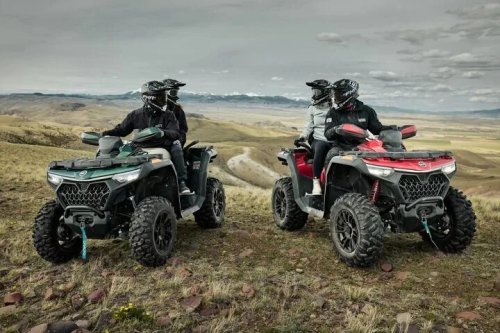



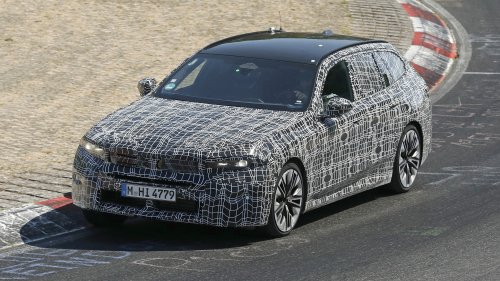
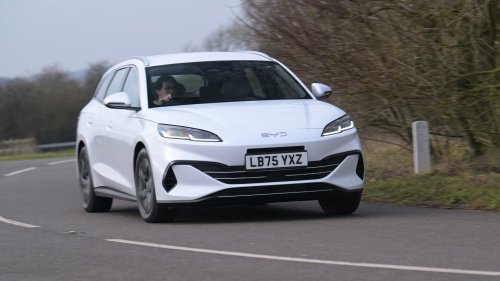
![BMW, BMW i3, Touring, BMW i3 Touring captured on video for the first time [Video]](https://cdn.topcarnews.net/thumb/id/aHR0cHM6Ly9pMC53cC5jb20vZWxlY3Ry-ZWsuY28vd3AtY29udGVudC91cGxvYWRz-L3NpdGVzLzMvMjAyNi8wNy9CTVctaTMt-dG91cmluZy1zcG90dGVkLmpwZWc_dz0x-NTAwJmFtcDtxdWFsaXR5PTgyJmFtcDtz-dHJpcD1hbGwmYW1wO3NzbD0x/87d1e813cfb7391f42f35c0bb8e007c3.jpeg?t=20260926&post_id=57091)
![BMW, BMW i3, Touring, BMW i3 Touring captured on video for the first time [Video]](https://cdn.topcarnews.net/thumb/id/aHR0cHM6Ly9lbGVjdHJlay5jby93cC1j-b250ZW50L3VwbG9hZHMvc2l0ZXMvMy8y-MDI2LzA2L0JNVy1pMy1FVi1GaXJzdC1F-ZGl0aW9uLWludGVyaW9yLmpwZWc/f3fbafb75d427fa84632579ae56d60b7.jpeg?t=20260926&post_id=57091)
![BMW, BMW i3, Touring, BMW i3 Touring captured on video for the first time [Video]](https://cdn.topcarnews.net/thumb/id/aHR0cHM6Ly9lbGVjdHJlay5jby93cC1j-b250ZW50L3VwbG9hZHMvc2l0ZXMvMy8y-MDI2LzA2L0JNVy1pMy1FVi1vcmRlcnMt-b3Blbi5qcGVn/ee056511b8cc2b0f5022977f9adf29a0.jpeg?t=20260926&post_id=57091)