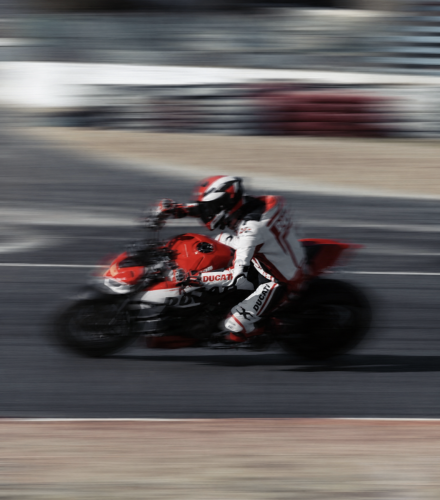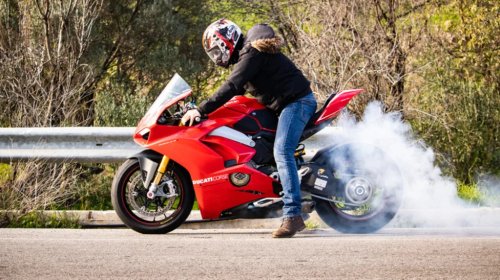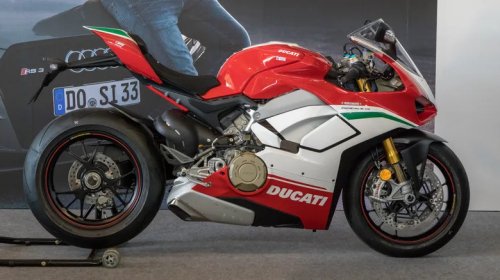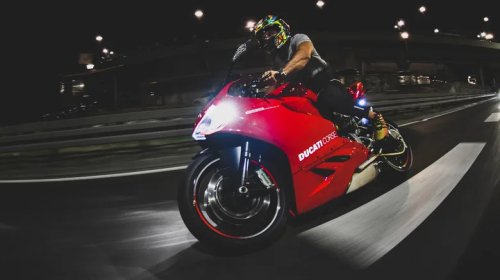
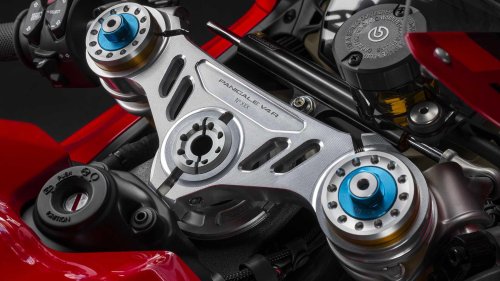
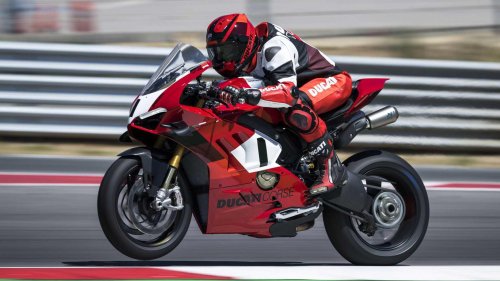
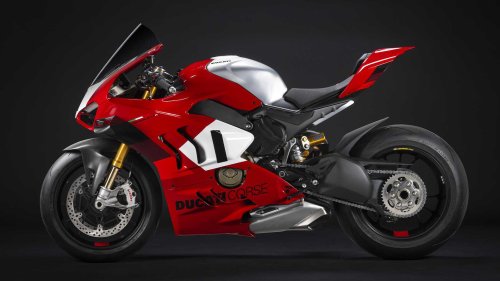
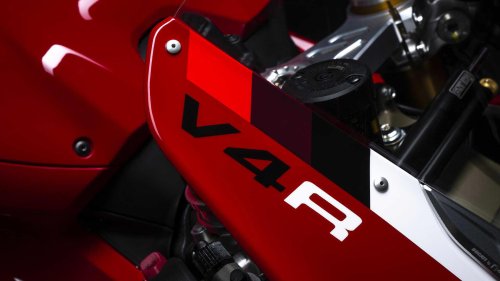
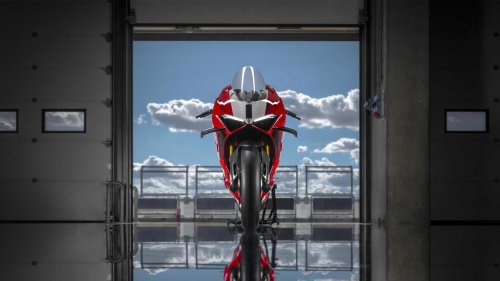
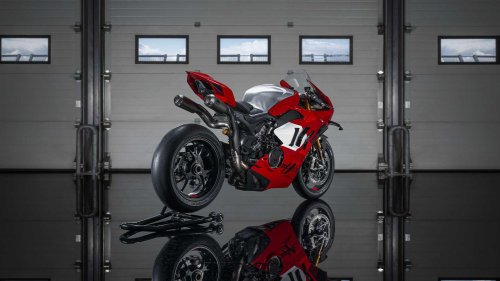
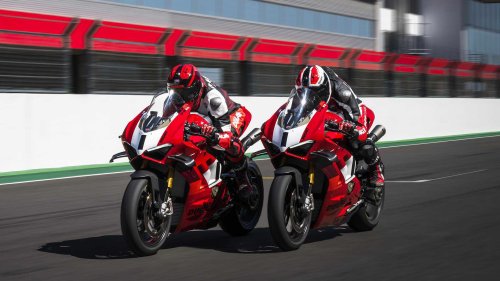


















There comes a point where calling a motorcycle “street legal” starts to feel almost like a joke. Headlights, mirrors, emissions equipment, and a license plate usually separate a road superbike from the machinery screaming down a WorldSBK straight. But one particular Italian machine makes that line unusually thin – its engine spins faster than many race bikes, its transmission follows racing logic, and even its aerodynamics work hardest when the bike sits on its side. Somehow, someone also remembered to fit turn signals. Superbikes Are Fast, But This One Was Built For A Different Reason SuzukiModern flagship superbikes already border on absurd. They can make more than 200 horsepower, carry electronics that would have looked like science fiction a generation ago, and lap a racetrack at speeds that once required a dedicated racing motorcycle. But most still begin with a simple mission: build an exceptional road-going sportbike, then give it enough performance and adjustment to make it devastating on a circuit.A homologation special starts from the other end of the problem. The manufacturer needs to sell a production motorcycle because the racing rules demand a production motorcycle to race from. The license plate comes with the deal.That distinction matters in WorldSBK. Unlike MotoGP, where manufacturers build prototypes that never need to survive a trip to the grocery store, WorldSBK remains a production-derived championship. Current rules require Superbike machinery to come from road-homologated motorcycles sold to the public, while allowing tightly controlled changes for competition. The 16,500-RPM Redline Is Only The Beginning Ducati There’s one figure that makes the tachometer sound slightly unhinged. Ducati’s 998cc V4 can reach 16,500 rpm in sixth gear, and the manufacturer limits it to a still-wild 16,000 rpm in the other five gears. Those numbers belong closer to prototype racing than ordinary road riding, especially when they come from an engine that also has to deal with emissions rules, cold starts, service intervals, and owners occasionally getting stuck behind a delivery van. The short stroke helps, but spinning that hard also demands obsessive control over mass, friction, lubrication, and valve movement.The parts list reads accordingly. Ducati uses pistons that weigh 5.1 percent less than before, titanium connecting rods with internal oil passages, titanium intake valves, a counter-rotating crankshaft, and its desmodromic valve system. The rods are particularly nerdy: Ducati drills a passage lengthwise through each one so oil can reach the small end under extreme loads. The company did something counterintuitive with the crank – rather than chasing minimum rotating mass everywhere, it increased crankshaft inertia to make power delivery more progressive, following lessons from Ducati's MotoGP program. The Ducati Panigale V4 R Is A WorldSBK Bike For The Road Ducati The motorcycle wearing that cosmic engine is the 2026 Ducati Panigale V4 R, and its reason for being sits right there in Ducati's description of the engine. The 998cc Desmosedici Stradale R was developed to meet the needs of WorldSBK competition. The company calls the V4 R the starting point for its Superbike race machine, just as earlier R models served the same job.Of course, that does not make the street bike identical to Nicolò Bulega or Iker Lecuona's factory racer – WorldSBK teams can change approved parts and settings. But it does mean Ducati had to give the production motorcycle the right bones before Ducati Corse could sharpen them for racing.Ducati In international specification, that foundation makes 218 horsepower at 15,750 rpm from a 998cc, 90-degree V4 and carries Euro 5+ road approval. The engine uses Ducati's counter-rotating crank and desmodromic valve operation, while sixth gear opens the door to that 16,500-rpm ceiling. American buyers get a different road tune: Ducati's U.S. specifications list 208.4 horsepower at 13,250 rpm.Remove the road-focused exhaust from the equation, and the gap widens quickly. Ducati rates the V4 R at roughly 235 horsepower with its full racing exhaust, then as much as 239 horsepower when that system works with Ducati Corse's dedicated performance oil. The exhaust itself drops around 6.6 kilograms, or roughly 14.6 pounds, compared with the stock arrangement. Ducati also says the racing setup can push the motorcycle beyond 205 mph.The letter R carries history, too. You can trace this branch of Ducati’s superbike family to the 996 R of 2001, the first 996 to use the 998cc Testastretta engine. Troy Bayliss won the 2001 World Superbike title on Ducati's 996-based race machine, and later R-badged models such as the 999 R, 1098 R, 1198 R, and Panigale V4 R continued linking showroom hardware to WorldSBK development. Ducati Didn't Stop At Giving It A Race Engine Ducati The gearbox makes that point before the engine even reaches five digits on the tach. Ducati installs what it calls the Ducati Racing Gearbox, or DRG. A conventional road motorcycle places neutral between first and second, where riders can find it easily at stoplights, but Ducati moves neutral below first gear, copying the layout used on its MotoGP and factory WorldSBK machines. That means a rider braking hard for a first-gear corner can keep knocking down through the box without accidentally landing in neutral and suddenly losing engine braking. Ducati's Neutral Lock adds another layer by blocking the shift into neutral unless the rider deliberately releases the lock with a separate control on the right handlebar. Neutral has basically been moved downstairs and given a security guard.The clutch follows the same logic. The V4 R uses a compact slipper dry clutch derived from the unit on Ducati's WorldSBK machine. Ducati trimmed about 800 grams from it and reduced its axial length by 24 mm compared with the clutch used on other V4 models. A dry clutch brings noise and less low-speed polish, but neither ranks very high on the priority sheet here. It cuts mass, provides the direct behavior racers want, and keeps clutch plates out of the engine oil.Ducati Then there is the bodywork. Ducati Corse added Corner Sidepods, technology that first appeared on Ducati's MotoGP bikes, to generate aerodynamic forces at deep lean angles rather than only pushing the front tire down on a straight. Those sidepods show how far motorcycle aero has moved beyond sticking wings on the fairing and calling it a day. Ducati says they create a ground-effect-style force that helps the V4 R hold a tighter line when leaned over. Bigger front wings also add 25 percent more load than before, including about 6 kilograms of extra downforce at 186 mph.Underneath, Ducati reduces the Front Frame's lateral stiffness by 40 percent and uses its hollow symmetrical swingarm to help the tires find grip. A manually adjustable Öhlins NPX fork and TTX36 shock replace the more street-friendly idea of letting electronics handle every suspension decision. Riders can alter swingarm-pivot position and rear ride height through the suspension link, giving serious track owners tools to change geometry rather than merely clicking between comfort presets. Ducati even designs the rear shock to accept a linear travel sensor for data logging. The License Plate Might Be The Panigale V4 R's Strangest Component Ducati In the end, there’s one wonderfully odd fact: Ducati sells all of this as a road motorcycle. The 16,500-rpm limit grabs attention because it sounds outrageous, but the bigger story sits underneath it. A 998cc engine exists because the racing class demands it, and Neutral moved because racers need cleaner first-to-second shifts and dependable engine braking. The dry clutch lost weight because refinement matters less than function, while the sidepods work while the bike leans hard. The chassis offers geometry adjustments because different tracks and tires demand different answers.Ducati Most superbikes start as road motorcycles and work very hard to make their riders feel like racers. The Panigale V4 R flips that relationship – Ducati needed a production machine capable of feeding its WorldSBK program, then had to give that machine enough lights, emissions equipment, and civility to earn a registration plate. That makes the 16,500-rpm figure more than a party trick – it shows how little daylight remains between Ducati Corse and the motorcycle parked outside the dealership.The most remarkable part is not that Ducati managed to make a 16,500-rpm superbike street legal. It is that the license plate feels almost incidental to what the motorcycle was actually built to do.Source: Ducati, WSBK