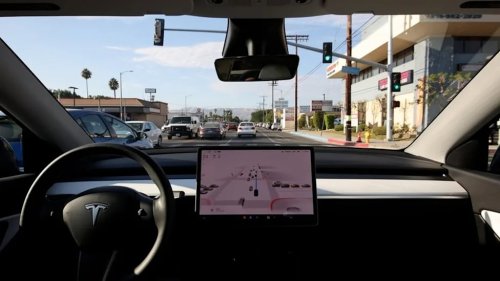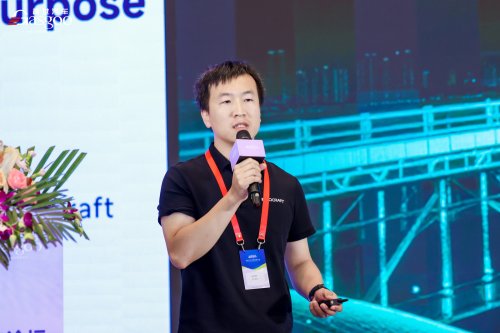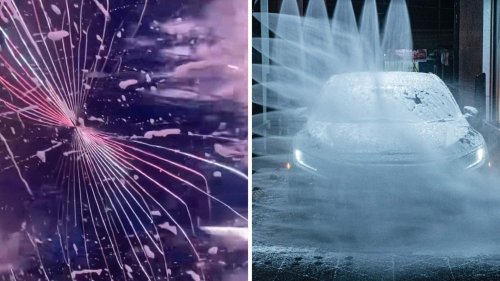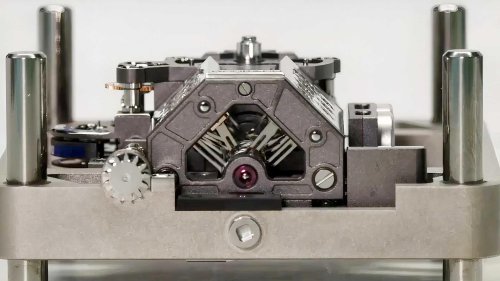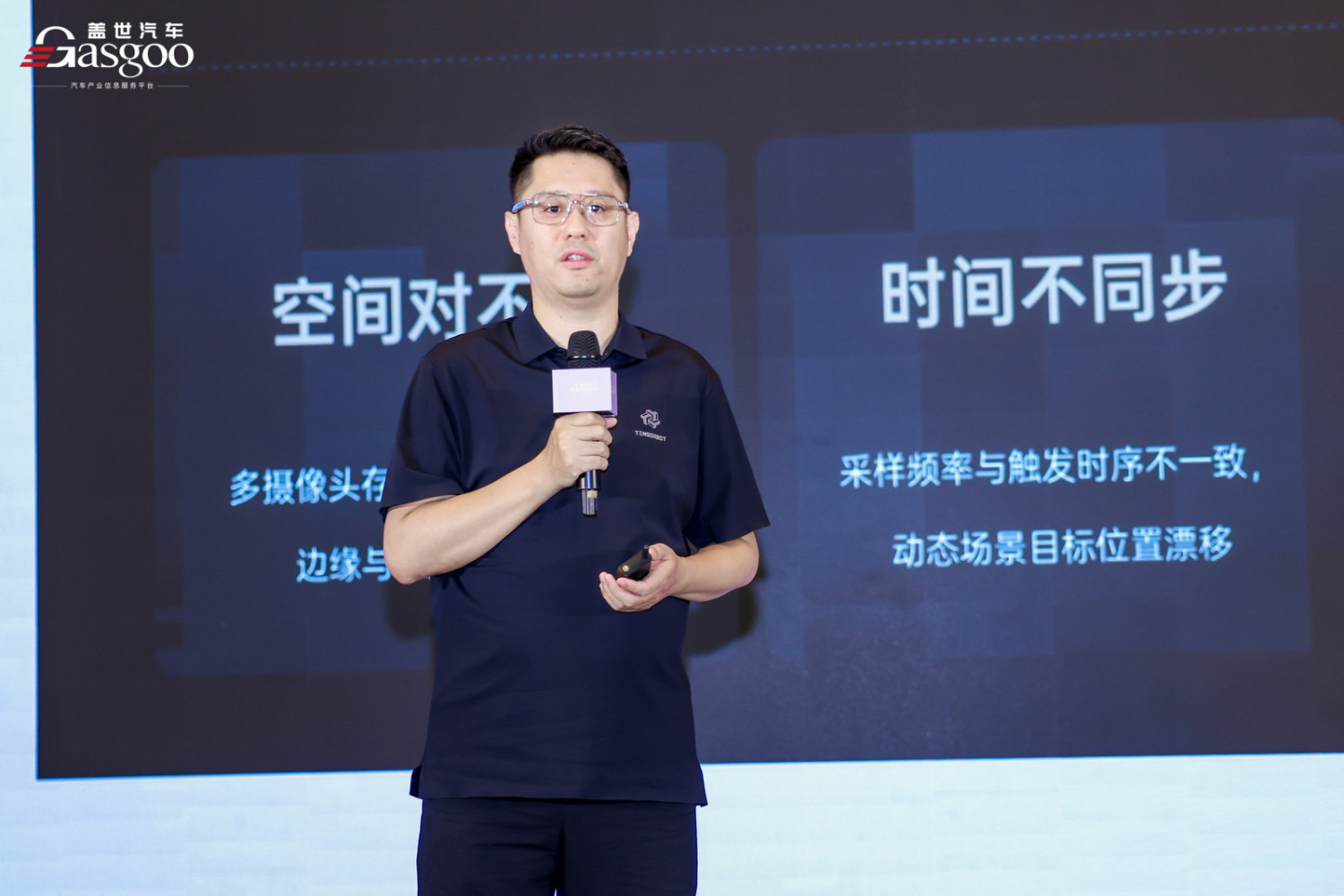












Gasgoo Munich- Ma Jian, sales vice president at Chongqing Zhongke Yaoluchuan Information Technology Co., Ltd., took the stage at Gasgoo's 4th AI-Defined Vehicle Forum on September 18. In a presentation titled "7D Spatial Intelligent Sensor Product Sharing," he addressed the industry's technical pain points, outlined a new technological roadmap, and detailed recent product advancements.Ma Jian noted that China's LiDAR sector has largely relied on an "imaging-then-computing" approach, stacking multiple sensors and fusing data at the backend to construct 3D world models. While this route powered the scaling of autonomous driving and port logistics over the past decade, it suffers from fundamental flaws: imperfect spatial alignment and time synchronization, plus data gaps in extreme scenarios. Continuously adding sensors drags down computational efficiency and has even contributed to traffic accidents, stalling industry progress. Citing embodied intelligence as an example, he highlighted the limits of current perception—robots still struggle with simple tasks, like picking up a water cup, that a three-year-old could manage, and they perform poorly with highly reflective objects. "The more sensors you push, the slower it gets," Ma Jian said, summing up the bottleneck.To tackle these issues, Ma Jian outlined THESEUS' alternative approach. The team flipped the underlying computational logic, adopting a "computing-then-imaging" path. By leveraging a high time-resolution architecture, they unify LiDAR time-of-flight (TOF) and visual data at the hardware's frontend, eliminating the need for backend data patchwork. Building on this, the company unveiled the world's first coin-sized 7D spatial intelligent sensor. The "7D" concept fuses XYZ coordinates, RGB semantic information, and timestamps. A single optical path synchronously outputs three types of imaging—3D semantic, 3D ranging, and 2D semantic imaging—achieving natural spatial alignment without backend stitching. Using a proprietary "one-path, dual-light" architecture, the device fuses RGB, depth, point clouds, and temporal data to deliver stable output in complex environments like strong light, darkness, low texture, and dynamic scenes. Ma noted that the device is plug-and-play: by front-loading computing power, it spares algorithm teams the grunt work of underlying alignment, allowing them to focus on upper-layer model development and shorten product cycles.Ma detailed three versions of the product lineup. The Embodied Edition achieves a precision leap from centimeter to millimeter level, with a ranging scope of 0.1 to 30 meters and a point cloud density of 30.72 million points—the industry's highest. The Automotive Edition boasts a 250-meter range, suited for long-distance, small-target, and complex scenarios; the company is already in talks with several OEMs. The General Edition is a coin-sized, single-device unit designed for all-scenario adaptability, offering inherent spatial alignment without stitching. In terms of validation, the device delivers clear imaging in extreme conditions like heavy fog, torrential rain, glare, and low light. Road tests conducted with Black Sesame and Great Wall Motor have shown excellent results. Based on the physics of "computing before imaging," the sensor directly measures spatial light field occupancy rather than relying on surface reflection. This allows for hole-free reconstruction of edge scenarios—transparent glass, highly reflective metal, pure white walls, and dim environments—where traditional depth cameras and LiDAR typically fail.Ma further elaborated on the three-layer architecture of spatial models. A spatial model captures the physical world and performs 3D reconstruction to form an inference model; spatial intelligence and the world model sequentially solve the core problems of "seeing clearly" and "seeing accurately." He emphasized that the boundary of the digital world is first determined by the perception capability of the physical world. As the data entry point for physical AI, industrial cameras directly set the ceiling for the world model. "Our industrial cameras serve as the data entry point for physical AI in the real world, and that determines the upper limit of the world model," Ma stated.Looking ahead, Ma Jian said THESEUS plans to partner with players in embodied intelligence and smart driving. Together, they aim to explore more possibilities for technology deployment and drive further iteration across the industry.