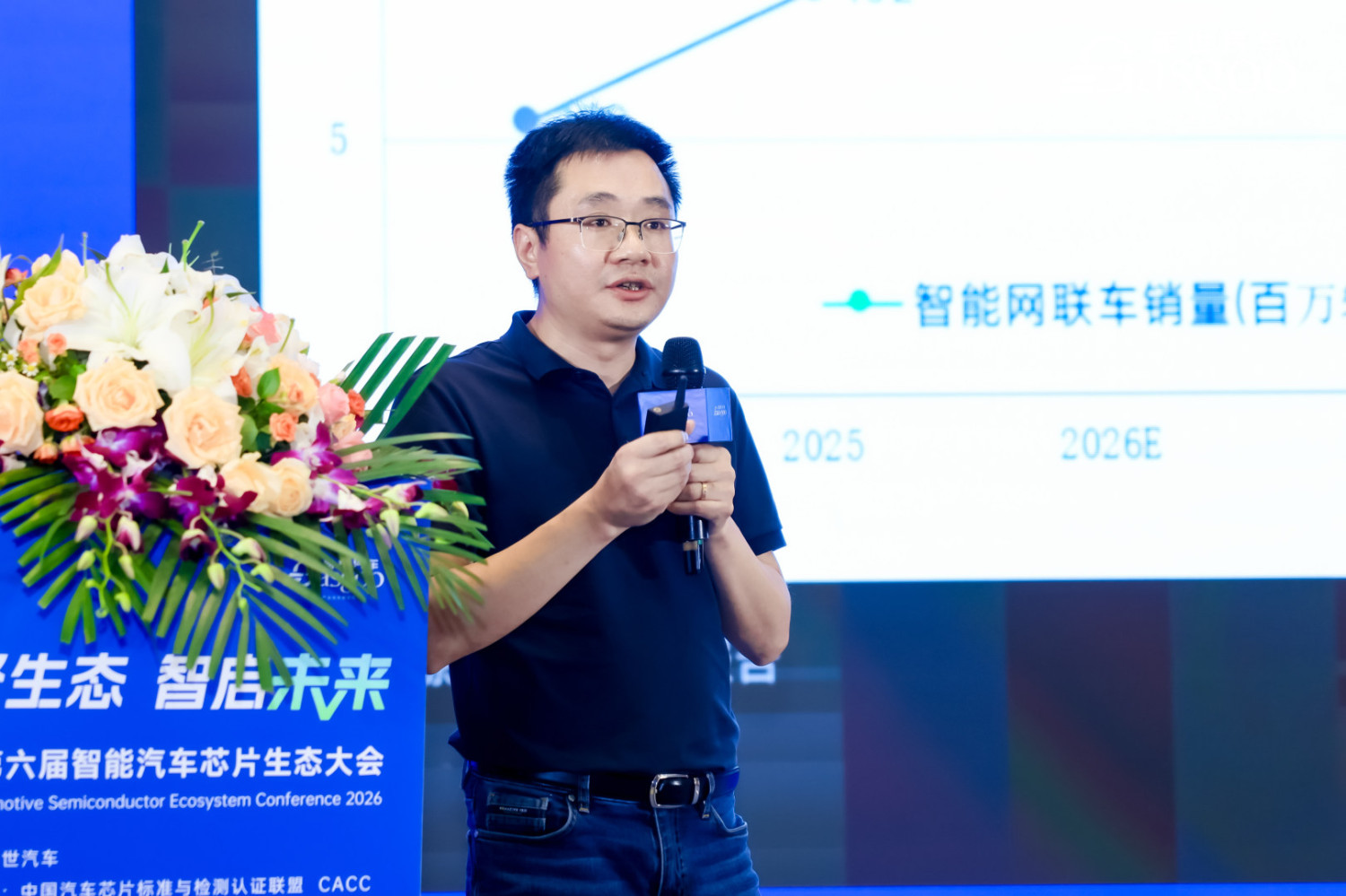
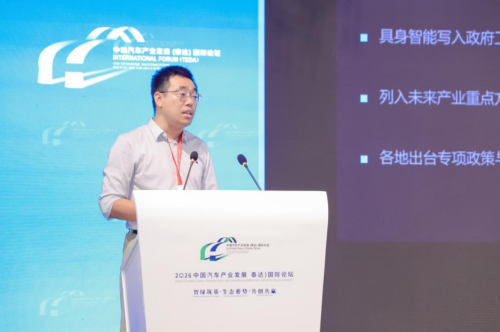
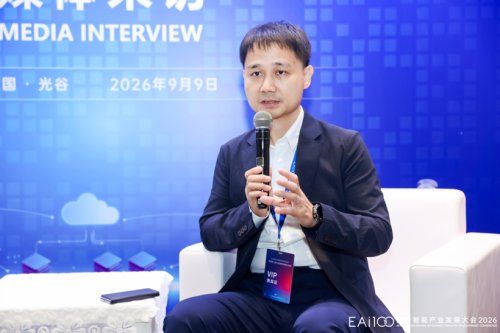
Gasgoo Munich- At the 2026 Sixth Smart Vehicle Chip Ecosystem Conference hosted by Gasgoo on September 16, Chen Jian, product director at Hangzhou HIKSEMI, took the stage to dissect the core contradictions facing in-vehicle storage. His keynote focused on the opportunities and challenges for flash memory chips in the era of intelligent connected vehicles, proposing a path forward through system-level collaboration.Chen Jian | Product Director, Hangzhou HIKSEMI Technology Co., Ltd.Chen Jian noted that surging penetration rates for intelligent connected vehicles are triggering explosive growth in storage demand. Data reveals penetration in China has climbed from an early 5.76% to 52.97%, with the market projected to top 65% by 2026. Meanwhile, average flash memory capacity per vehicle is shifting rapidly from 128GB in 2024 toward 512GB or even terabyte levels by 2026, driven by requirements across the cockpit, smart driving, and video storage.He emphasized that by 2026, the intelligent connected vehicle market will have pivoted from being purely "sales-driven" to "data-volume-driven." Consequently, the absolute growth in storage demand is far outpacing the rise in vehicle sales.Yet, lurking behind this demand surge is a severe "memory wall" challenge. Chen Jian pointed out that as end-to-end autonomous driving models go mainstream, a massive gap is opening up between the exponential growth of AI computing power and the linear improvement of storage I/O bandwidth. "Once chips with 1,000 or 2,000 TOPS arrive, how does that computing power actually translate into usage and experience? I believe storage bandwidth will be the bottleneck," he said. He further predicted that with the advent of central computing units and the push toward Level 4 autonomous driving, "storage bandwidth, not computing power, will be the constraint."To meet these challenges, Chen Jian argued that in-vehicle storage is accelerating its differentiation from "general standard products" to "scenario-specific custom parts." HIKSEMI plans to carve out market share using three core capabilities: extending lifespan through algorithms, boosting performance via customization, and saving time through collaboration.Specifically, the company uses proprietary controller chips and exclusive wear-leveling algorithms to extend comprehensive service life by over 20% on the same physical hardware—effectively lowering the cost per GB over the lifecycle. It also pursues a "one-customer-one-strategy" approach to deep firmware customization, fine-tuning parameters based on an automaker's specific thermal conditions and system loads to unlock extra IOPS performance. Furthermore, Hikvision moves the storage verification phase to the earliest stages of vehicle design, utilizing joint board-level signal integrity analysis to eliminate compatibility risks before mass production begins.Chen shared a real-world case study involving a leading EV startup. Just before mass production of a new model, the vehicle suffered intermittent drive disconnections during extreme environment testing. The HIKSEMI team stepped in with low-level protocol analysis and custom firmware development, resolving the crisis and securing the critical Start of Production (SOP) milestone."Storage isn't a standard component; by integrating it across the system, we can add value and reduce costs," Chen Jian emphasized. He expressed a strong desire for deeper system-level cooperation with automakers and chip solution providers to jointly explore the future of in-vehicle storage.