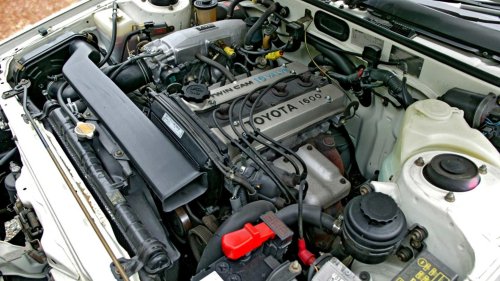
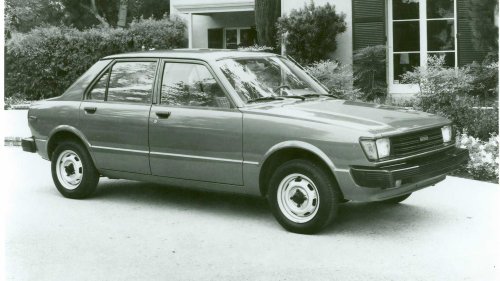
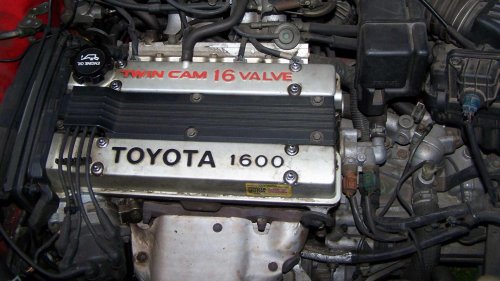
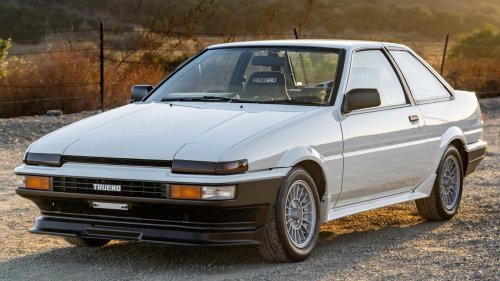
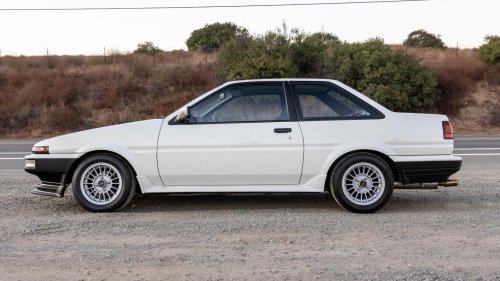
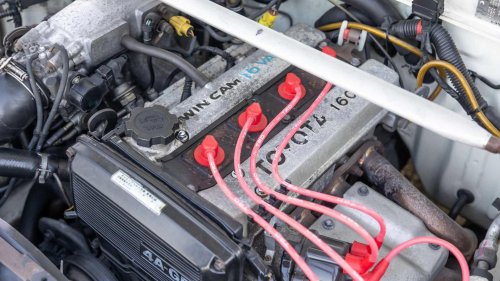
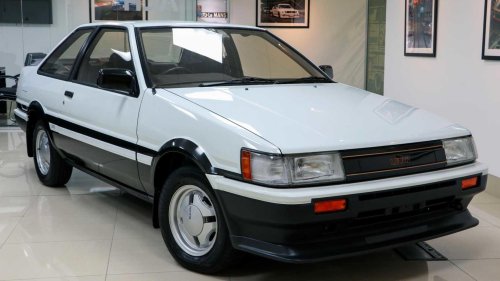


















A simple yet crucial fact about cars is that they all need some form of propulsion. Of course, the gasoline engine is still, by far, the most popular form of powerplant. However, there are also diesels, hybrids, fully electric cars, hydrogen-fueled cars, and even some that run on compressed natural gas (CNG). However, not many diesel, CNG, or hybrid motors are well-known for their performance. You could make an argument for electric power being a formidable way to shred tires, though.Regardless, there are some engines, gasoline or not, that are almost as famous as some of the cars they're featured in. A great example of this is the Honda F20C engine, the powerplant that powers the Honda S2000. It can rev up to an Olympian 9,000 rpm without breaking a sweat, leaving most other passenger car engines in the dust. However, Toyota's 4A-GE engine can come close, and even surpass the F20C's limit with just a few modifications. Humble Beginnings Wikimedia Commons: Tennen-Gas Quick Facts About The Toyota 4A-GE Engine Introduced in 1983 First installed in the 1983 Toyota Sprinter Trueno AE86/Corolla Levin AE86 Boasts a 1.6-liter displacement Initially used a 16-valve valvetrain and later a 20-valve cylinder head Before we get into the thick of things regarding the Toyota 4A-GE engine, it's important to flesh out the unit's history, where it came from, and the large family that it belongs to.The Toyota A engine traces its roots back to 1978, with the introduction of the first member of this big powertrain family. The model was called the "1A", and upon its release, it saw use in just a single model: the Tercel. This first-edition A engine only managed to pump out 79 horsepower and featured a single overhead camshaft and a two-barrel downdraft carburetor. It would only be produced until 1980, but its successor, the 2A, was unveiled a year prior.Toyota The 2A was a large improvement over the original 1A. Its first full year of service was 1979, and it had already garnered quite a lot more use across several Toyota models, like the Corolla, Corsa, Sprinter, and the Tercel. The single downdraft carb came from the 1A, but the compression ratio was higher. It had an automatic choke for easier cold-weather startups and even featured an automatic hot air intake control. Thanks to these upgrades, along with a penchant for reliability, the 2A lasted all the way to 1989.Serving as the direct successor to the 1A, the Toyota 3A engine was also introduced in 1979. At this point in time, with three A engines on tap, the lineup was broad, covering numerous small car models. The 3A iteration was similar to the 1A but with a new combustion chamber design intended to improve efficiency and power output. The 3A also lasted until 1989, and was offered in a high-compression iteration, along with a twin-carbureted version. Enter The 4A Wikimedia Commons:The most popular of the A engines was introduced in 1980: the 4A. Measuring 1.6 liters, it boasted a larger cylinder bore than the 3A mill, though the piston stroke remained the same. The first 1980 iteration was rather plain because the powerplant had a single downdraft carburetor. It produced approximately 70 horsepower in the US market, with a slight bump up to 74 hp occurring shortly after. The 4A gained fuel injection for the first time in 1983, although this iteration, coined the 4A-ELU, was only offered in Japan. The rest of the world would get a fuel-injected version going by the name 4A-FE a year later.However, the 4A engine's most notable variation, the 4A-GE, would hit the market for the first time in 1983. By 1987, the mill was found in several sporty Toyota models, including the Sprinter, Corolla, Corona, and MR2. Even today, the 4A-GE is one of the most popular Toyota mills for engine swaps. The popularity is due to the unit's reliability, penchant for power, and ability to handle high revs.Wikimedia Commons: One of the hallmarks of the 4A-GE's production was Toyota's collaboration with Yamaha. The famed engine and motorcycle brand designed the 4A-GE's cylinder head, along with portions of the valvetrain. Because of Yamaha's work, the 4A-GE could rev high and provide a wider-than-usual power band. Some of the most iconic models to feature the 4A-GE are the Toyota Sprinter Trueno, the Corolla Levin, and the Celica. It was even featured in the 1988 Chevrolet Nova Twin-Cam and the 1990–1992 Geo Prism GSi. The Nitty-Gritty Wikimedia Commons: When the 4A-GE was first launched, it was meant to be a direct replacement for the Toyota 2T-G engine, another dual-overhead camshaft motor popular with gearheads. The first iteration, known as the 4A-GEL in most markets, boasted a cast-iron engine block and an aluminum cylinder head. Despite its heavy-duty bottom end, the 4A-GEL weighs just 271 pounds fully dressed, making it one of the lightest production four-cylinder engines utilizing iron in its construction. The US-market version of the mill produced 114 hp, whereas the JDM iteration made 128 hp. These first-gen 4A-GE engines can be identified by their distinctive blue-and-silver valve covers.cars and Bids For 1987, the 4A-GE received a major upgrade. This version would also become the most famous, going by the informal moniker "Red and Black Top." The bottom end of the engine was beefed up, with larger connecting rod bearings and extra reinforcement found on the back of the block. However, despite the Red and Black Top being a newer version of the 4A-GE, it produced less power in the US market, with just 115 hp, compared to the 118 hp seen in the previous version.The third 4A-GE generation entered the fold in 1989 and was known as the "Red Top." The Red Top received a huge bump in its compression ratio, which was now rated at 10.3:1, as opposed to the Red and Black Top's 9.4:1. It also employed the use of a revised intake with smaller ports, meant to rectify an issue in earlier 4A-GE engines where too much air would enter the motor at once. In addition, a unique new lubrication component was included that squirted oil directly beneath each piston. This, along with other beefing-up measures such as thicker connecting rods, made the Red Top an extremely durable and long-lasting engine.*Specs courtesy of Drifted.comBeginning in 1991, Toyota began offering a 20-valve version of the 4A-GE for the powerplant's fourth generation, also known as "Silver Tops." The cylinder head was completely redesigned to accommodate an additional intake valve and features Toyota's VVT variable valve timing. In 1995, the final iteration of the 4A-GE was introduced, called the "Black Top."Black Top 4A-GEs received an increased compression ratio over the Silver tops, measuring 11.0:1. It also employed a MAP sensor and a revamped version of Toyota's VVT tech. The final production year, 2000, marked the end of the 4A-GE engine's production as a whole. During its final model year, the mill could produce up to 165 horsepower and 119 lb-ft of torque. Why Tuners Love It, And How To Get It To Rev Japanese Nostalgic CarThe greatest hallmark of the 4A-GE engine is its incredible ability to keep running. Even without proper maintenance, it's reported that the 4A-GE routinely reached 250,000 miles or more. Not to mention, a lot of these engines are driven hard, as they're typically installed in models like the Toyota Sprinter Trueno AE86 and the Corolla Levin AE86, both of which are extremely popular in the tuner and drift car scenes.If you've got one of these engines yourself and need some tips on how to get it to rev faster, we've got you covered. These are known to respond to light and even moderate tuning without needing much of anything else. They also take to the new power quite well, without suffering any premature failures. Allegedly, the 4A-GE can rev up to 8,500 rpm safely, with a simple ECU tune. However, to be on the safe side, you might also consider replacing the valve springs, installing forged internals, and improving lubrication. The goal is to reduce reciprocating mass, allowing the motor to rev higher with less risk.