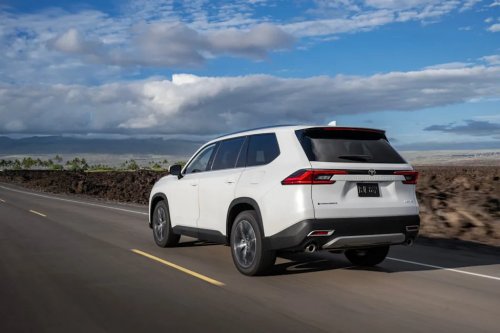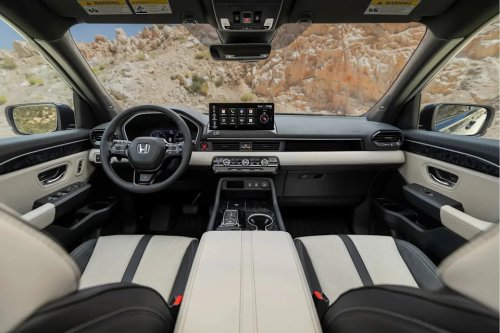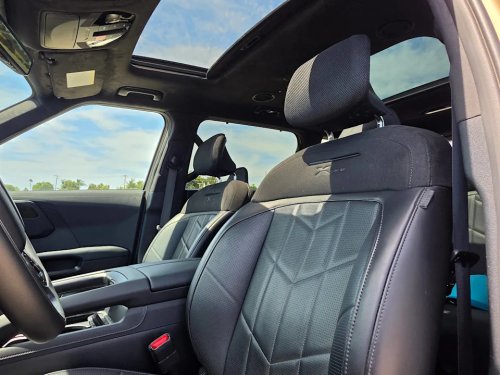
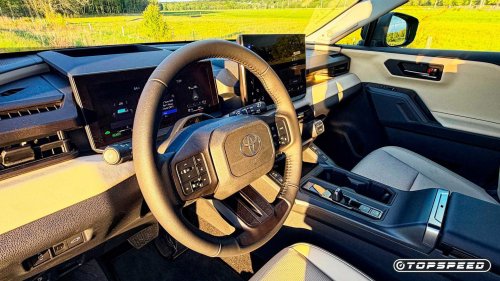
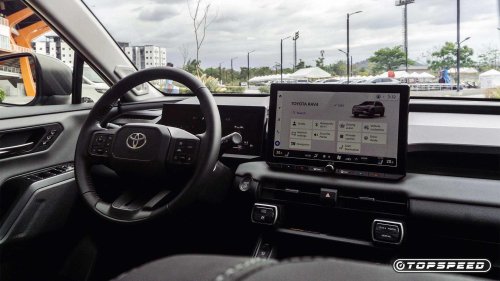
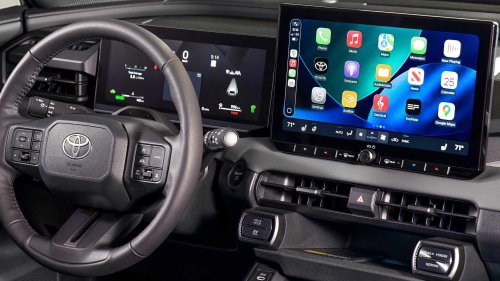
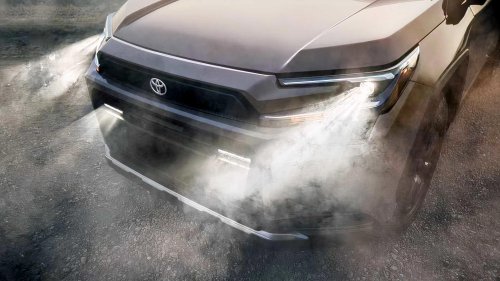
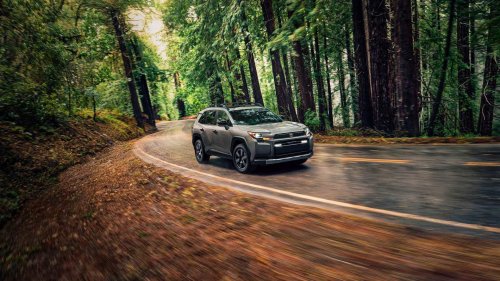
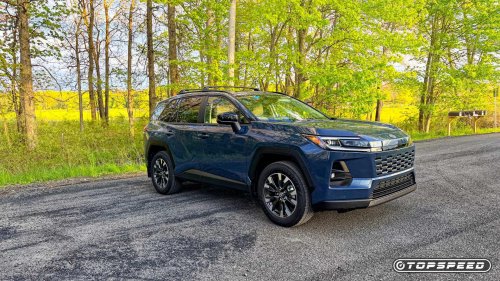
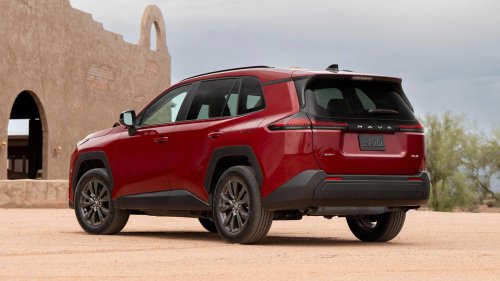
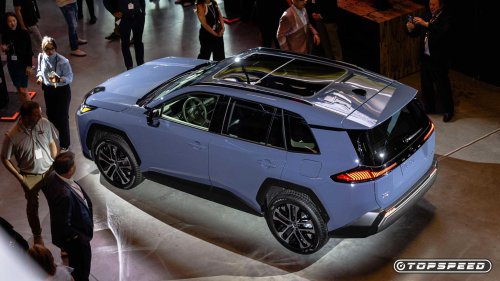
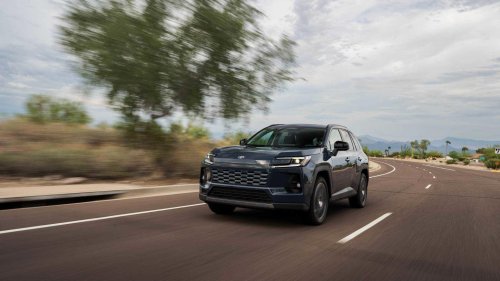



















The SUV segment in the U.S. has solidified its position as a powerhouse of the domestic automotive industry over the last five years. During this time, it has grown to capture a substantial percentage of all new passenger vehicle registrations. This massive volume expansion reflects a long-term structural shift away from traditional sedans, driven by buyers seeking a blend of elevated ride height, cargo flexibility, and improved fuel economy.Demographically, the segment's most noteworthy consumer base is defined by urban buyers drawn to its affordability and maneuverability. As the 2026 car market unfolds, the relevance of the compact SUV cannot be overstated. These models hold a steady share of the total new-vehicle sales mix, serving as the primary battleground for automotive innovation. They also act as the critical platform where automakers are aggressively deploying high-margin hybrid and electric powertrains to meet tightening emissions standards while keeping entry-level prices accessible to the mass market. Toyota's Dedicated Crossover And SUV Approach Toyota Toyota’s strategy in the U.S. for 2026 continues to center on a diverse approach. The Japanese brand prioritizes a broad lineup of crossovers and SUVs that cater to varying consumer needs rather than pivoting exclusively to battery-electric vehicles. This strategy has proven exceptionally successful. As of the first quarter of 2026, the brand's hybrid vehicles accounted for over 50 percent of total sales volume. This is a milestone that reinforces their market dominance. Sales of their most popular compact and midsize utility models remain at historic highs.Specific off-road-focused entries saw year-on-year surges as high as 84 percent for ICE variants and even more dramatic triple-digit growth for their hybridized counterparts as new generations reached dealerships. Toyota introduces hybridization as a core powertrain pillar, often making it the standard or exclusive offering for high-volume models to normalize the technology. By integrating planetary gear-based power split devices and high-capacity lithium-ion batteries across its catalog, the brand offers a seamless driving experience that requires no change in consumer behavior. Toyota's choice to standardize hybridization effectively captures 37 percent of buyers who prioritize long-term resale value and low maintenance costs over the early adoption of fully electric platforms. A Tech-Focused Cabin Experience TopSpeed | Michael Frank The LE sets a high baseline for the brand's digital smart suite, featuring a standard 12.3-inch digital instrument cluster and a 10.5-inch Toyota Audio Multimedia touchscreen equipped with wireless Apple CarPlay and Android Auto. Toyota adds comfort to the LE by including dual-zone automatic climate control and a six-speaker audio system.Stepping up to the SE adds a sportier edge with 18-inch black sport alloy wheels and blue interior stitching, while standardizing heated front seats and a power-adjustable driver’s seat.Isaac Atienza | TopSpeed The Woodland Edition, designed for outdoor enthusiasts, builds on this with a rugged exterior and interior design theme, featuring a 0.5-inch lift, all-terrain tires on 18-inch matte gray wheels, and unique 120-volt and 1500-watt household-style power outlets in the cargo area, making it a perfect base for your camping gear. It also includes Woodland-branded all-weather mats and raised roof rails with crossbars. More Digital Functions In Flagship Trims ToyotaIf you demand better refinement, the XLE Premium replaces fabric with SofTex-trimmed seating and adds a height-adjustable power liftgate and a wireless smartphone charging dock. The XSE upgrades the center display to a larger 12.9-inch touchscreen, together with ventilated front seats, a power-adjustable passenger seat, and memory settings for the driver. It also features a synthetic suede Brin-Naub upholstery and a standard surround-view camera for easier maneuvering.At the top of the range sits the Limited trim, which adds a standard nine-speaker JBL Premium Audio system, a panoramic glass roof, and heated rear seats. Convenience is rounded out by a digital rearview mirror and a hands-free kick-sensor power liftgate. Toyota's Smartest Safety Suite Yet Toyota The 2026 Toyota RAV4 is only available with hybrid powertrains. The HEV lineup introduces Toyota’s fifth-generation hybrid system, which features an improved transaxle, battery, and power control components to refine performance. The all-wheel-drive model produces a combined 236 horsepower, while the front-wheel-drive model churns out 226 horsepower. Toyota also improves the towing capacity of some of the all-wheel-drive models, including the XLE, Woodland, SE, XSE, and Limited grades to 3,500 pounds. All front-wheel-drive and LE all-wheel-drive models can pull up to 1,750 pounds.The PHEV features the company's new plug-in hybrid system, including a naturally aspirated 2.5-liter four-cylinder engine mated to a high-capacity battery and charger that is compatible with Toyota’s sixth-generation hybrid technology. This system produces a combined 324 horsepower, reflecting a 22-horsepower increase from the previous generation. You might see this as a nominal increase, but it is a noteworthy jump for a vehicle in this class. Efficiency Remains A Priority ToyotaAccording to the EPA, the front-wheel-drive model is the most efficient, achieving 49/42/45 MPG on the city/highway/combined cycle. Installing the optional all-wheel drive system worsens this result to 46/39/42 MPG, which is not too much of a sacrifice. The Woodland's larger tires and all-wheel-drive-only configuration achieve a 41/35/38 MPG result. The XSE's sporty wheel configuration changes the RAV4's consumption to 43/37/41 MPG. The RAV4's Well-Earned Respect TopSpeed | Michael FrankJ.D. Power's latest valuation of the RAV4 consists of a reasonably positive assessment, resulting in a 79/100 overall score. Joining this is a 78/100 score for the driving experience and 82/100 for resale, with a 77/100 grade for the dealership experience. iSeeCars backs this with an 8.7/10 reliability score, citing that it will benefit from a 13.8-year lifespan and cover 169,545 miles without any reliability issues. Expect a 29.1 percent probability of reaching 200,000 miles as well.According to CarEdge, the Toyota RAV4 will cost you $6,005 for maintenance and repairs during its first 10 years of service, which is to be expected considering its strong brand reputation, high consumer demand, and proven long-term reliability. According to Edmunds, you can expect to spend $36,219 over the course of five years and 60,000 miles on the base Toyota RAV4 LE. $4,427 accounts for maintenance, $601 for repairs, $11,554 for depreciation, and $7,831 for fuel. Toyota's Competitive Pricing Strategy ToyotaToyota has built a reputation for producing durable vehicles with low maintenance costs, which translates to higher resale values. The RAV4 benefits from Toyota's strong presence in the hybrid market, where it is recognized as a leader due to its early adoption of hybrid technology and consistent refinement of its models.Toyota kicks the 2026 RAV4 range off with the LE, starting at $31,900. Following this are the $34,700 SE, all-wheel-drive-only $39,900 Woodland, $36,100 XLE Premium, and the $41,300 XSE and $43,400 Limited, both of which are also all-wheel drive only. The PHEV range only consists of the SE and the XSE, priced at $44,815 and $48,685, respectively. Opting for the all-wheel drive system will see all relevant models becoming $1,400 more expensive. A Masterclass In Standard Safety Tech Chris Chin | TopSpeedThe 2026 Toyota RAV4 Hybrid debuts TSS 4.0, which marks a major evolution in Toyota's active safety that leverages enhanced sensor hardware and the new Arene software platform. A standout addition is the emergency driving stop system, which can bring the vehicle to a controlled stop if the driver becomes unresponsive while lane tracing assist is active.The pre-collision system now features expanded intersection support, detecting motorcycles and oncoming vehicles during turns, while Toyota's Proactive Driving Assist provides gentle braking or steering support to maintain distance from obstacles like parked cars or cyclists. Additionally, the full-speed range dynamic radar cruise control features curve speed management and offset passing logic, which subtly shifts the RAV4 Hybrid within its lane when passing large trucks.Toyota Beyond the TSS 4.0 suite, the RAV4 is equipped with an array of active and passive protections. Standard across all trims is the blind spot monitor with rear cross-traffic alert and a backup camera with dynamic guidelines. Higher trims or optional packages introduce front cross-traffic alert, a panoramic view monitor with a 360-degree overhead view, and Advanced Park, which automates steering for tight spots.On the passive side, the vehicle is built on the TNGA platform, featuring reinforced frame joints to optimize crash energy absorption. It comes standard with an eight-airbag system, including a driver’s knee airbag and front passenger seat-cushion airbag. Toyota's Star Safety System is also present, integrating traction control, electronic brake-force distribution, and smart stop technology.