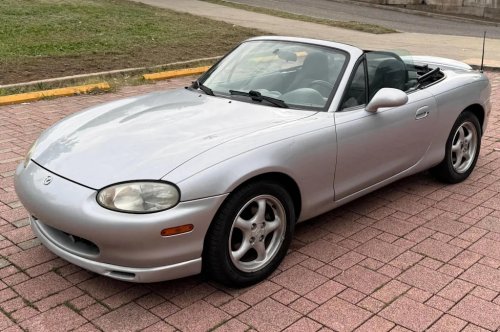
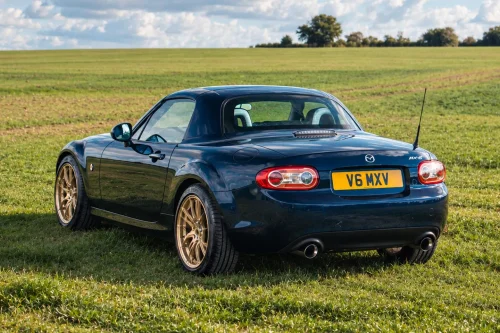
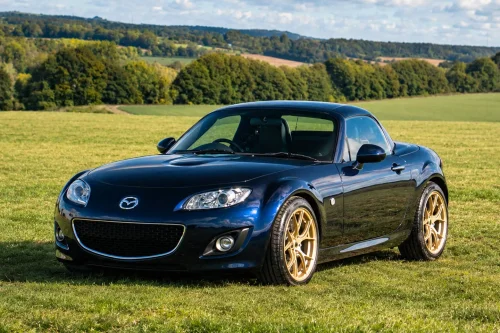
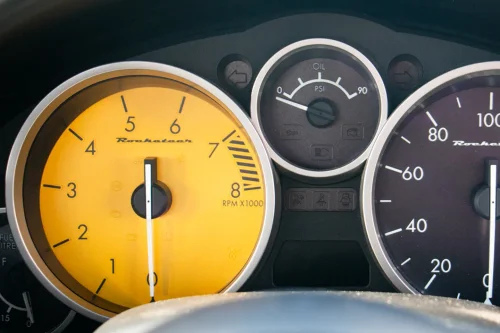
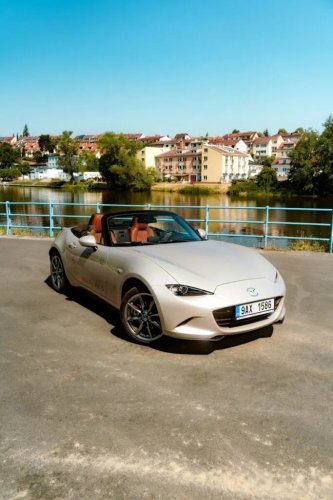
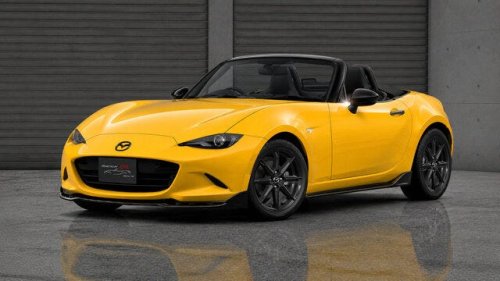
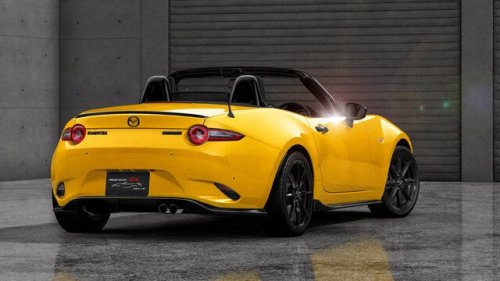
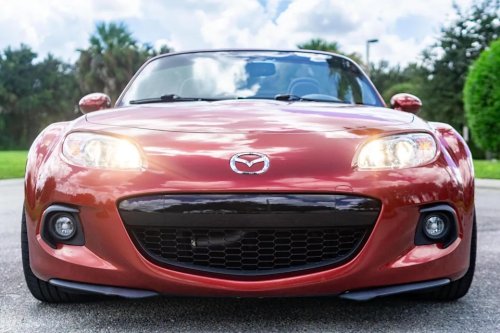
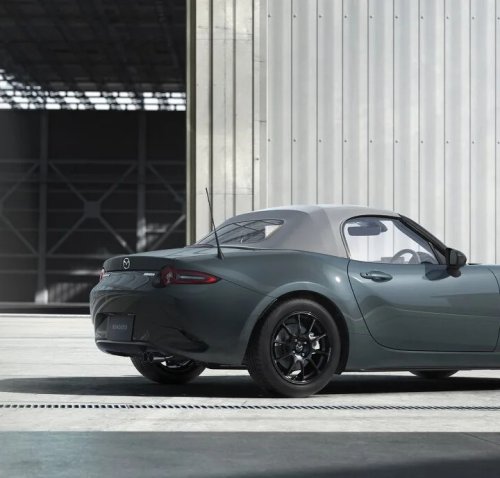
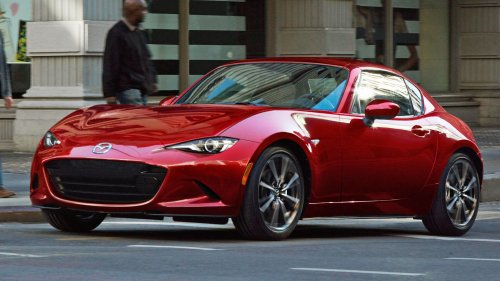
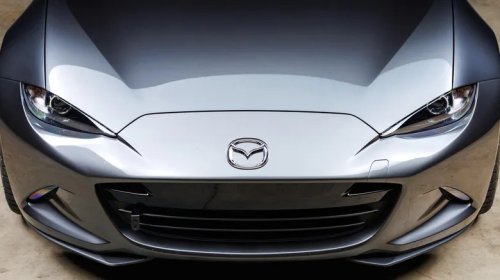
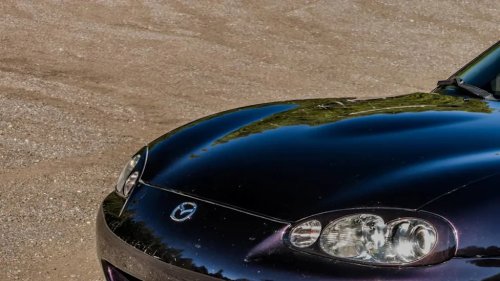
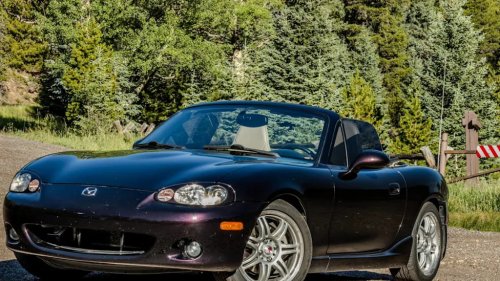
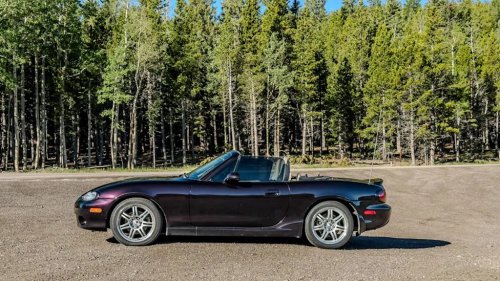
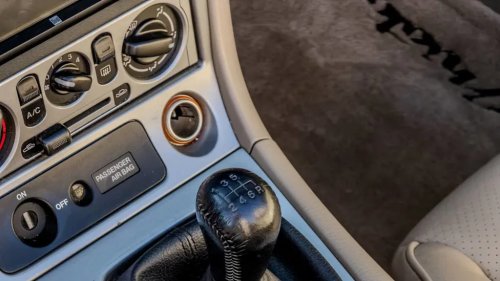
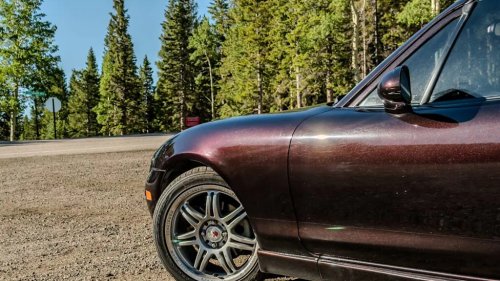
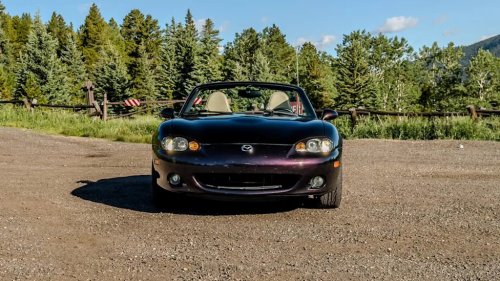
Autoblog and Yahoo may earn commission from links in this article.The Mazda Miata is a sort of anti-Porsche. It's got a lot in common with those cars from Stuttgart: a cult following of dedicated, sometimes slightly nuts owners, a healthy aftermarket, decades of forum knowledge to pour over, and drives so good it's almost annoying. None of this is new information. But in 2026, even the Miata is more digital. It has aids like ABS and traction control, a big old screen, and it feels very expensive despite being cheaper than its original MSRP when adjusted for inflation. The 2004 Mazda Miata, the car's second album, has almost none of those things for half the price.Call it a discount on the best-driving sports car on sale today, call it a cop-out, call it the obvious choice, call it whatever. In 2026, a used Miata is a panacea for your problems.First, Some BackgroundThe Mazda Miata is the anti-Porsche: it kills bugs slow.Chase BierenkovenBy 1998, Mazda was looking to replace the world-beating first-generation Miata. A sales smash hit the likes of which sports cars rarely see, Mazda decided the best option was perhaps to just keep what made the original item great while adding a little on top.AdvertisementAdvertisementThe NB generation debuted that year, ditching the pop-up lights due to new safety regs but pretty much keeping the rest. Later models got a 1.8-liter engine, but power was never the point. For all intents and purposes, every Miata makes 100-something horsepower and "I guess some" torque. Those figures, in reality, were 142 horsepower and 125 lb-ft of torque by 2004. Price? An inflation-adjusted $45,062.46 for the top-tier LS model. Turns out, that new Miata isn't such a bad deal.Chase BierenkovenView the 6 images of this gallery on the original articleRegardless, the NB refined the Miata a bit. Said LS trims got leather seats, an optional Bose sound system, luxuries like cruise control, and even air conditioning. They were, like the NA generation that preceded them, a hit.The NB Miata In 2026Chase BierenkovenView the 2 images of this gallery on the original articleAdvertisementAdvertisementToday, you can pretty much get any NB-generation Mazda Miata you want for under $15,000. That figure nets you a nice, low-mile example that's been well taken care of, largely unmodified, and well maintained. Sort of like, well, my NB-generation Mazda Miata. After a Porsche Boxster understeered its way out of my life, I found myself missing the Mazda Miata press loan that usually shows up this time of year. So, I cut out the middleman.Items to look for are simple. Is the clutch original? Do the tires have tread? Do the brakes work, or does the rotor have a fatter lip than a Skoal sponsor? Has the timing belt been done? Does it run? That's about it. The advantage of the Miata is and always has been simplicity, and that applies to old ones as well as new.How Does The Driving Experience Stack Up?Chase BierenkovenView the 2 images of this gallery on the original articleIn the 22 years (yikes) since this car was made, one big difference stands out: materials. We are so much better at making sports cars drive like regular cars. The lack of noise, vibration, and harshness in today's Miata is a world apart. The newer car will always be more comfortable. Old NBs crash over bumps, vibrate at unpleasant frequencies, and have sucky stereos. This LS trim even has the Bose sound system with speakers in the wind deflector, and it still gets blown away by the radio in your average three-year-old Mitsubishi.AdvertisementAdvertisementThe rest? This is where the NB starts to feel like a bargain. It's quick. Later models had an optional six-speed transmission, and even with the extra ratio, the gears are so close together you can be in sixth at 2,500 rpm and not even be doing 60 miles per hour. one-hundred-and-whatever horsepower suddenly feels like a lot when you're banging up through gears in a car that weighs less than 2,400 pounds. Even against modern lightweight sports cars like the BRZ and today's Miata, the NB feels quick and fresh.Mazda makes an effort to have cool colors for Miatas, but Black Cherry Mica is my favoriteChase BierenkovenThat 1.8-liter also lets out a wonderfully audible growl, but not through some exhaust that'll deafen passersby. Part of today's modern emissions and sound-deadening materials means a lot of that gets buried. Not here - I imagine adding an intake truly makes this car feel alive thanks to the snap of the induction noise when you mash the (cable) throttle open. Of course, because it's a Miata, it's also efficient, getting a decent 24 mpg combined by my math.Now for the obvious: the excellent inputs, the reason you buy one of these. The gearbox is magic - the pedals are so perfectly placed for heel-toe shifting, you'll never want to rev-match another vehicle. The shifter is so direct it's almost hilarious. You can practically tell what rpm the engine is at through the shifter. Throws are nothing short of perfect - this is the kind of gearbox every stick car should have.The chassis balance is classic. A front-engine, rear-drive layout produces predictable, unscary results at speed. There's no traction control, but the rear end stays planted thanks to this car's optional differential and suspension. When it does begin to slip, you can hear it in the tires and feel it in the seat. The steering rack is simple and direct, making that correction for oversteer easy. Understeer is fixed with a little less aggression, and the nose will tuck in almost instantly.The Predictable EndingChase BierenkovenUnsurprisingly, the Miata is still a great sports car. Perhaps the only real surprise here is how close it feels to modern contemporaries. This comes down to, I think, the formula, not the car. That lightweight, front-rear coupe formula is so addicting to so many. There are very few experiences like it, and that's what helps the Miata feel so fresh, whether it's a 2004 or a 2026.AdvertisementAdvertisementThis story was originally published by Autoblog on Jun 29, 2026, where it first appeared in the Reviews section. Add Autoblog as a Preferred Source by clicking here.


















 +7 others