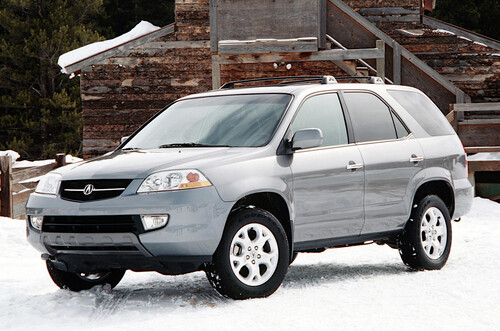
The Volvo PV544 was the first car to employ a 3-point seatbelt. (Photo by Sjoerd van der Wal/Getty Images)Getty ImagesEvery new car promises to be revolutionary, but genuine revolutions are rare. Throughout automotive history, only a handful of breakthroughs have fundamentally changed the way cars are built, driven and experienced. Some saved lives, others improved performance, handling or reduced emissions, while a few quietly laid the foundation for today's software-defined vehicles.Here are some of the most influential automotive world-firsts of the past 70 years—and how each one transformed the global car industry.Three-Point SeatbeltAdvertisementAdvertisementPerhaps no automotive invention has saved more lives than Volvo's three-point seatbelt. Introduced in the PV544 model in 1959 by engineer Nils Bohlin, Volvo made the patent freely available so every manufacturer could adopt it. Interestingly, Bohlin was an aviation engineer who had designed military ejector seats. He knew firsthand exactly how much force a human body can survive, so he used this knowledge to design a 3-point belt that securely locks the body in place during a crash.In his 1965 breakthrough book 'Unsafe at any Speed,' Ralph Nader championed the 3-point seatbelt and accused American carmakers of prioritizing design over safety when they hesitated to fit belts. In fact, American carmakers resisted installing seatbelts in the 1960s because they feared that offering safety gear would make buyers think their cars were dangerous. Volvo says that more than one million lives are estimated to have been saved worldwide thanks to the three-point seatbelt. It remains the single most important passive safety innovation ever introduced to the automobile.The Jetfire first used a turbo.TurbochargingGeneral Motors became the first manufacturer to offer turbocharged production passenger cars when it launched the Oldsmobile Jetfire and Chevrolet Corvair Monza Spyder in 1962.AdvertisementAdvertisementTurbocharging eventually revolutionized engine design by allowing smaller, lighter engines to produce the power of much larger units. Think of a turbocharger like an athlete wearing a specialized oxygen mask. Instead of relying on normal breaths, the mask forces extra oxygen into the athlete's lungs, allowing them to run faster and harder. Today, turbocharged engines dominate the global market as manufacturers pursue greater performance alongside lower emissions.The VW Type 3Electronic Fuel InjectionWhen Volkswagen's introduced its first electronically controlled fuel-injection system in the VW Type 3 in 1968, it represented one of the earliest successful computer-controlled fuel management systems in a mass-production passenger car.Electronic fuel injection dramatically improved fuel metering, engine reliability, emissions and cold-start performance. By the late 1980s, carburetors had virtually disappeared from new passenger vehicles worldwide.AdvertisementAdvertisementFour-Wheel Computer-Controlled ABSIn 1971, the Chrysler Imperial became the world's first production car to be equipped with a four-wheel computer-controlled anti-lock braking system. ABS, as it was called, is an automated safety feature that keeps a vehicle's wheels from locking up during heavy braking. This tech transformed vehicle safety by allowing drivers to maintain steering control under heavy braking. Today it serves as the foundation for virtually every modern active safety technology, including traction control, electronic stability control and autonomous emergency braking.Mainstream Passenger Car Four-Wheel DriveWhile the 1941 Willys Jeep pioneered four-wheel drive for military and civilian use, Subaru's Leone, which debuted in 1972, became the first mass-produced mainstream passenger car designed specifically for everyday buyers with full-time four-wheel-drive capability.AdvertisementAdvertisementThrough the Leone, Subaru demonstrated that four-wheel drive wasn't just for off-road vehicles. The technology reshaped consumer expectations in snowy and mountainous terrain and paved the way for today's enormously popular crossover SUVs.Driver and Passenger AirbagsIn 1974, the Oldsmobile Toronado became the first production car available with both driver and front-passenger airbags. Many buyers hated the new seat-belt starter interlocks—a system that kept the car from starting unless you buckled up. Some drivers bought the expensive airbag option just to avoid the annoying interlock feature.Airbags evolved into one of the industry's most important passive safety systems. Combined with seatbelts, they have saved hundreds of thousands of lives and are now mandatory in virtually every new passenger vehicle sold worldwide.AdvertisementAdvertisementCatalytic ConvertersAs emissions regulations tightened dramatically in the 1970s, manufacturers introduced catalytic converters on production vehicles including the 1975 Buick Regal, Chevrolet Impala and Ford Mustang.Using precious metals and chemical reactions, catalytic converters transform harmful carbon monoxide, hydrocarbons and nitrogen oxides into significantly less harmful carbon dioxide, nitrogen and water vapor.Catalytic converters became one of the most significant environmental technologies ever fitted to automobiles, dramatically improving urban air quality and enabling gasoline-powered vehicles to comply with modern emissions standards.The Honda NSX from 1990.1990 Honda/Acura NSX – A Supercar Packed With World FirstsAdvertisementAdvertisementLaunched in 1990, Honda's original NSX (labeled an Acura in the US) wasn't simply an outstanding driver's car—it introduced an extraordinary collection of world-firsts. It became the world's first mass-produced car with an all-aluminum monocoque chassis and body, the first production car to combine electronic power steering with a V6 engine and to feature sophisticated four-channel ABS, and among the first to employ a fully electronic drive-by-wire throttle system.Sending shockwaves through the hallowed halls of Ferrari in the early 90s, The NSX redefined what a supercar could be—lightweight, reliable, technologically advanced and easy to drive. Many of its engineering solutions would later become commonplace across both high-performance and mainstream vehicles.The Mazda Eunos Cosmo employed the first GPS sat-nav system.In-Car GPS NavigationFollowing the U.S. military's decision to make GPS technology available for civilian applications during the 1980s, Mazda introduced the world's first production in-car GPS navigation system in the rotary-engined powered Eunos Cosmo in 1990.AdvertisementAdvertisementAs drivers realized they didn't have to constantly bury their faces in map books anymore to find a destination, satellite navigation fundamentally changed how people travel. Today's navigation systems have evolved into connected ecosystems integrating live traffic congestion, real-time weather, route optimisation and location-based services, becoming an indispensable part of the modern driving experience.The Legacy of InnovationMany of today's most sophisticated technologies—from autonomous driving and artificial intelligence to vehicle connectivity—can trace their origins to these pioneering breakthroughs. The three-point seatbelt made cars safer, turbocharging made them faster and more efficient, catalytic converters made them cleaner, ABS made them smarter and safer, and GPS made them easier to navigate.Together, these innovations did more than introduce new features—they permanently changed the direction of the global automobile industry. As manufacturers race toward an era defined by electrification, software and autonomy, the next world-first may already be waiting just around the corner.This article was originally published on Forbes.com