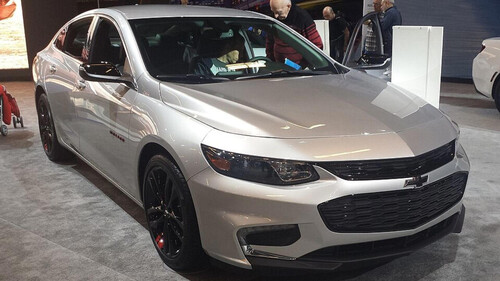
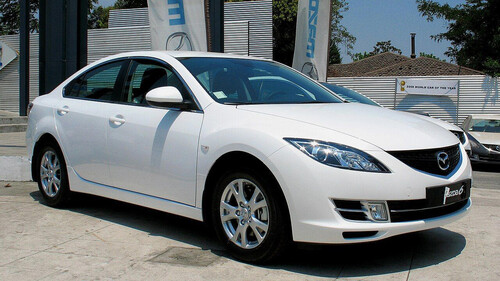
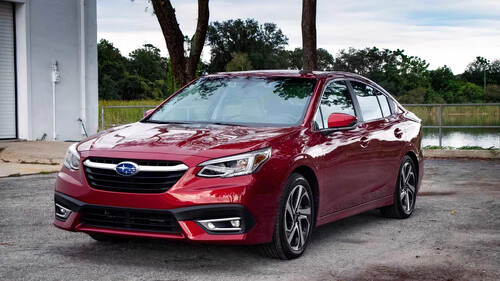
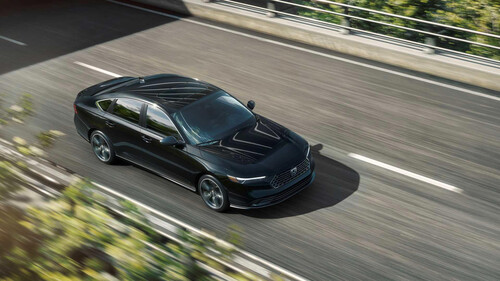
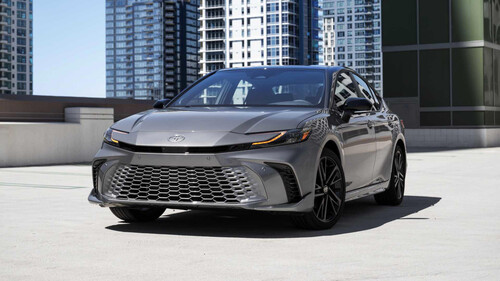
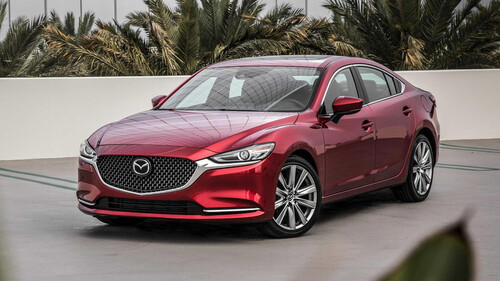
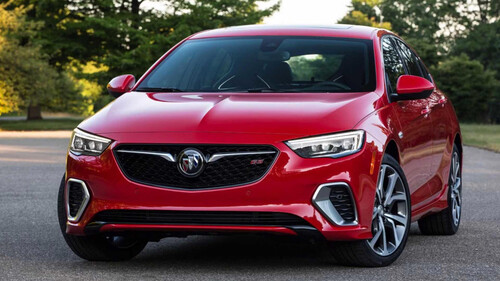
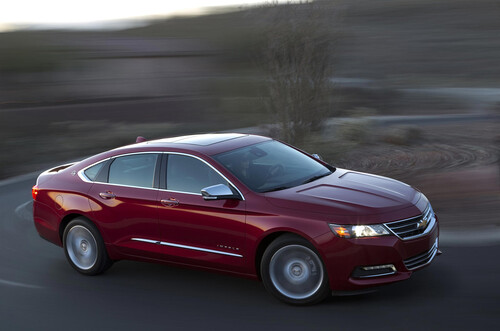
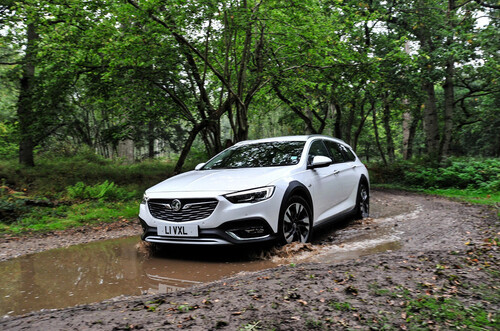
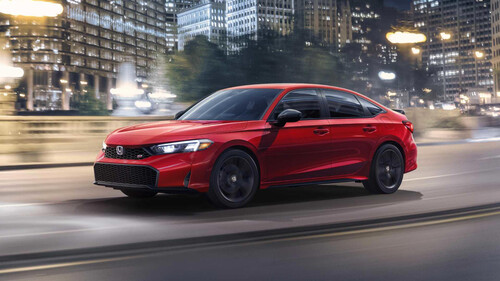
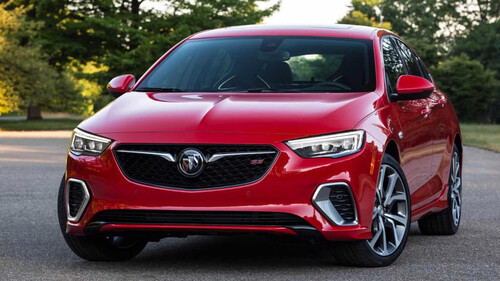
Autoblog and Yahoo may earn commission from links in this article.State of the Midsize Sedan MarketBack in 2003, Car and Driver once said: "If a midsize family sedan is what you want, the market is flooded with 'em." Indeed, there was a wide variety of midsize sedan choices, with over ten available. In 2006, the midsize sedan market was easily selling over a million units per year combined, but today? It's a struggle to get past half of that.These days, only the Camry remains a top-ten best-seller; the Accord has long been knocked out of the said top-ten list. Let's not forget that the Nissan Altima has an axe hanging above its roof, too. We've already lost quite a number since 2020, but what models were these? Here's a list of midsize sedans that have met their demise this decade.NissanBuick RegalRight at the dawn of the new decade, the Buick Regal was discontinued, with the final model year being 2020. The last iteration was a captive import from Germany and effectively an Opel Insignia for North America. That's not totally a bad thing, though, as the Insignia was actually a good midsize sedan, even serving as the basis for two generations of Regal.AdvertisementAdvertisementA barrage of complications led to the discontinuation of the Regal after just three model years. For starters, General Motors sold off Opel to the group that would eventually form Stellantis, and the latter wasn't exactly too keen to sell and produce a vehicle under license from its rival. Then, of course, sales dwindled, bringing an abrupt end to the last-generation Regal.BuickChevrolet MalibuWhile we're on the subject of General Motors, the Chevrolet Malibu would become America's last true mainstream sedan, holding on until the 2025 model year. While it shared the same underpinnings as the aforementioned Buick, the Malibu was no captive import, as it was produced at the Fairfax assembly plant in Kansas City, Kansas.The ninth and final generation of Malibu was introduced in 2015 for the 2016 model year, and the last one rolled out in November 2024. GM's decision to concentrate on trucks, crossovers, and SUVs, along with weakening demand, led to this model's cancellation.ChevroletFord FusionHere's another Euro-bred sedan adapted for American tastes. The final-generation Ford Fusion was essentially a renamed and federalized Mondeo, and traces its direct ancestry to the Contour. Introduced for the 2013 model year, it was a big hit for Ford at the time, selling over 300,000 units in 2014 and 2015. After that, though, sales declined, but it was still selling over 100,000 annually.AdvertisementAdvertisementHowever, Ford's decision to concentrate on SUVs and crossovers meant the Fusion had to go, along with the Fiesta and Focus. A bit of a shame, really, as those Euro Ford models were genuinely good cars that drove well. The Fusion's final model year was 2020, and it was the last sedan from the Blue Oval in North America. European Mondeo sales ended not long after that.Mazda 6Speaking of midsize sedans that drove well, that's the legacy of the Mazda 6. Replacing the competent but otherwise forgettable 626, the Mazda 6 was the midsize sedan the Hiroshima-based automaker desperately needed. Known as the Atenza in its home market, the shift towards a sharper and sportier design proved to be the right move for Mazda.But no matter how much praise was bestowed upon it, it did nothing to boost sales, which simply trailed off year after year. It also didn't help that the final generation, which debuted way back in 2012, didn't evolve much, save for an infotainment update in 2015 and a facelift in 2017. Still, it hung on for as long as it could, with the final year of sale in the U.S being 2022.Zac PalmerSubaru LegacyThe most recent addition to this list (for now), the Legacy, was often credited for being a significant and pivotal model for Subaru. It changed the course of the brand and helped transform it into what it is today. Without the Legacy, there would be no Impreza, no World Rally Championship successes, no Outback, and no Forester. That's the impact the Legacy made.AdvertisementAdvertisementIts last generation ran from 2020 to 2025 and saw the return of the turbocharged engines. Unfortunately, that wasn't enough to pique interest in the car. Still, there are a few left in dealer lots, and if you can find an XT turbo model, you can bag yourself what is possibly one of the last reasonably-priced sleeper sedans in the country.SubaruVolkswagen PassatThe sole European offering here, the Volkswagen Passat, was, by all means, the last step before heading to an Audi showroom. It was a true slice of midsize German motoring goodness right up until the introduction of the 'NMS' version in 2011, a model specifically for the U.S. and, later on, China.The final version of the American Passat was bigger than the global version, but built at a lower cost in a bid to attract more buyers. It was a huge success in its early years, being the kind of car that gave Volkswagen North America the sales it needed. But, as always, SUVs and crossovers got in the way of sustained sales success. The car was updated eight years after its introduction in 2019, but it wasn't enough to turn the tide. The last NMS Passat rolled out of Chattanooga in 2022.VWHanging in ThereWith the impending discontinuation of the Altima, the number of midsize sedans left in the U.S. is down to four. Of course, the Toyota Camry and Honda Accord are still around and could be marked safe from the culling. The other two are from South Korea: the Hyundai Sonata and the Kia K5.AdvertisementAdvertisementIt's worth pointing out that most of the models mentioned above are still in use in very few countries. The Regal, Malibu, and Passat are still being produced in China. The VW is even being exported to the Middle East and sold exclusively as a wagon in Europe. The Fusion lives on as the Chinese-built Mondeo and shipped out to the Middle East as the Taurus. As for the Mazda 6, it has an indirect successor in the form of the 6e, a product of the Mazda-Changan collaboration.Save for Ford, which is actually reconsidering sedans for North America, it's unlikely we'll see GM, Mazda, Subaru, and Volkswagen even return to the midsize sedan class stateside. There are simply too many market forces working against those companies to even think about bringing back the traditional midsize family sedan, given the demand for crossovers and SUVs. Factor in regulations that favor light trucks, and there's just not enough incentive for automakers to bother with it in the first place.MazdaView the 6 images of this gallery on the original articleThis story was originally published by Autoblog on Jul 19, 2026, where it first appeared in the Features section. Add Autoblog as a Preferred Source by clicking here.