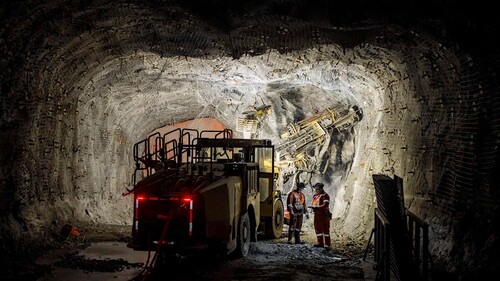
It’s Climate Week here in New York City, and data centers have grabbed much of the attention. Looming large over all, though, are other critical sectors including the global mining industry. Mines feed the supply chain for EVs, solar panels, wind turbines, and other elements of the energy transition, alongside significant impacts on the environmental quality as well as the loss of life, health, and well-being among mine workers and their communities. Two Lessons From The 2010 Chilean Mining Disaster The 2010 mine disaster in Chile is one in a string of high profile episodes that continues to resonate today, underscoring the need for reform as the push to decarbonize the global economy heats up. By 2010, Chile was already known as a top producer of copper. It was also well known for tolerating a high number of fatal mining accidents. The disaster that unfolded in Chile 16 years ago could have easily added another 33 deaths to the register. On August 5, 2010, the San José copper and gold mine, located near the city of Copiapó, Chile, collapsed, trapping 33 miners half a mile underground. The catastrophe reportedly followed warnings from safety officials that were ignored by the mine owner, the San Esteban Mining Company. All 33 men survived for 69 days on a small store of emergency supplies before rescue teams reached them. Their story of mutual trust and support is one lesson from the disaster. Another lesson is the collaboration between the experience of legacy professionals and the next generation of innovators. Many engineers, specialists, and support crews from Chile around the world collaborated intensively on the rescue effort, with the resolved-upon plan ultimately selected by an experienced leadership team that embraced a new idea pitched by a 20-something engineer, Igor Proestakis. An Inter-Generational Effort I had a chance to speak with Mr. Proestakis last week, during the run-up to the release of the new National Geographic Series, Chilean Mine Rescue: A Race Against Time (unspooling on Nat Geo Sept. 25, to be followed by streaming on Disney+ and Hulu). When Proestakis arrived on site, some equipment was already at the scenes and two other plans were proposed, dubbed Plan A and Plan C. The final decision was up to Andre Sougarret, a 46-year-old mining engineer who was hand-picked by the President of Chile to lead the rescue effort. I asked Proestakis to describe what led Sougarret to decide on his solution, Plan B. It involved putting a known method — drilling a pilot hole and then widening it — to a new contingency. Here is his answer (edited for clarity and flow): When I arrived at the mine, only the first plan was there, the drill rig was already there. That was plan A…I arrived in the right moment and talked to the right people and said the right words. The idea of using a pilot hole and making it wider is not new, it is standard. What is not standard is the use of the cluster hammers. [They were] previously used only in shallow holes, and vertical drilling. We had a very steep angle and many turns, or “doglegs.” That’s the spirit of the idea that later became Plan B. When I arrived, I saw the meeting for Plan C at the job site, on the same day. Plan B and Plan C were presented on the same day; Plan C was before, but ours was approved. I was very young, only 24 years old, and I am very obsessive with the things I like. I’m a huge nerd with everything that I sent my mind to, so even when I had not much experience in drilling I had a good technical background. Again, it was the precise time and I had the right knowledge and I trusted in what I knew at that point…You have a 24-year-old young guy talking to the top guys in charge and I always say the same thing, good for Andrea [Sougarret]. It’s not every day you see someone so open. I would add that trust in technology and new things that are not usually done is okay, but it all comes down to trusting in people. Nothing we see today would have happened if a certain person didn’t listen to a certain young person. We have to trust the young people. Slow Steps To Mining Reform The trust factor, of course, is not confined to one generation or another. Neither is the innovation factor, for that matter. However, the general idea of trust is central to the idea of progress on technology, on the environment, and on human rights. In terms of the energy transition, the technology trust factor has been hard at work. Wind and solar resources have begun to break into industrial sectors including mining. The transition has also become a follow-the-money situation. Considering the current state of global fuel markets, a solid bottom-line case is materializing for clean, locally sourced energy, helping to spur mining decarbonization at the power generation and equipment end, including electric trucks and charging stations as well as renewable energy. In comparison, unpacking generations of environmental and human rights abuses in the global mining industry is an even more formidable challenge, particularly when shifts in political winds can undo decades of progress. The potential for reversal exists in the US, as in anywhere else around the world. However, signs of a two-steps-forward movement continue to persist. For example, take a look at the fraught environment of in South Africa, where the Wits Mining Institute is hosting a one-day seminar on October 8. The agenda consists of four pillars covering both active and inactive mines, under the self explanatory title, “From Legacy to Leadership: Shaping Sustainable Mining Futures.” Three of the pillars cover social and environmental consequences, workforce development, and technology innovation. “The fourth pillar – critical minerals and the just transition – will consider the opportunities presented by growing global demand for critical and green minerals,” the WMI explains. “With South Africa possessing significant mineral resources in several of these commodity groups, the seminar will explore where the country can realistically compete in the value chain,” WMI continues. That’s a lot of ground to cover in one day, but WMI director Pontsho Twala emphasizes that her country cannot afford to keep spinning its wheels. “The question is how we move from managing these challenges to developing practical, leadership-driven solutions for a different future,” she said in a press statement. Readers, if you have any thought upon how leadership here in the US can support efforts like WMI, drop a note in the discussion thread. Photo: A new documentary series on the 2010 Chilean mine disaster continues to resonate today as the global mining industry adopts new technologies in support of the global energy transition (“Workmen looking over the drill” on site of 2010 rescue operation in Chile; lightly cropped; credit Cristián Leighton via Nat Geo).