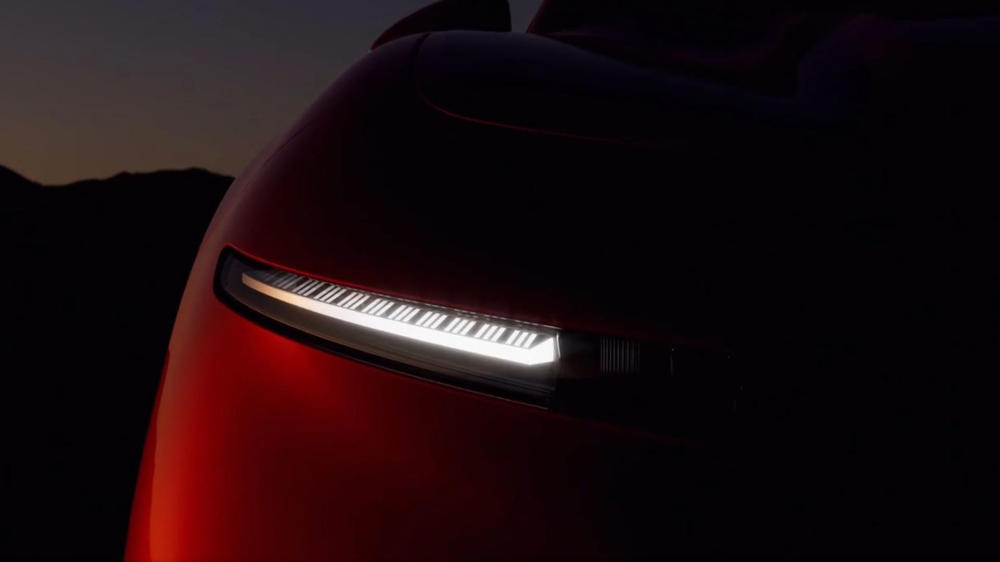
Lucid, the luxury EV automaker based in the US, is on track to complete and launch its new assembly plant. But the American EV company isn't building it in the US, despite all the issues regarding tariffs. Instead, the Cosmos crossover will be built and shipped to the US from halfway around the world, despite the company having a plant in Arizona. Lucid Is Struggling To Survive And Needs Cosmos Soon Lucid CEO Silvio Napoli discussed the Cosmos during the company's November 9 earnings call, including its manufacturing location. The crossover will be built in Saudi Arabia, an area currently facing security and safety challenges resulting from the US war with Iran. The explanation here is that Lucid is majority owned by the Saudi Public Investment Fund. The decision to start production in Saudi Arabia seems like a strange one. Among other things, Yemen’s Iran-backed Houthi rebels have launched missile and drone attacks targeting energy infrastructure, industrial regions, and airports. “Over the last few months, AMP-2 remained on track despite the regional challenges,” Napoli said. "Given the rapidly evolving situation in the region, our teams are constantly reevaluating potential scenarios and putting additional mitigations in place," Napoli explained. Why Not Build The Cosmos In The US? According to Napoli, the factory in Arizona was designed for its current vehicles and "introducing a new line will create inefficiencies." He also notes that the infrastructure for suppliers isn't there for the Saudi Arabia plant, and that Lucid will initially "bring in parts and components from other places," but they want to build up the infrastructure there. Napoli has been doing upbeat media interviews lately, but the reality is that Lucid is in big trouble. It has completed two significant rounds of staff cuts that eliminated 2,400 jobs. Massive losses are continuing to pile up. And it has a recall in motion for cars catching fire. It's a far cry from last year's optimism. Now, Lucid not only desperately needs the Cosmos on the market, but needs it to sell well. New Teaser Shows More Of Cosmos Before Official Reveal Lucid Cosmos Teasers (1) Just recently, Lucid took to social media platform X to share a new video, captioning it with fluff about how the company has always looked at movement differently. It's all very artistic, but it's only late on in the video where the Cosmos makes a surprise appearance. It's not a full reveal, but it's a couple of shots that show off the new SUV. The first shows a camouflaged development prototype sliding across the ice at around the one-minute mark, while from 1:20 onwards, we get two brief clips, one of the headlight detail (top of article) and another of the rear end in shadows, with red light-up Lucid lettering across the back. The latter two seem to indicate that a reveal is not far away. CarBuzz Insight – Why This Matters It's contradictory to say that the Arizona plant can't produce the Cosmos because it will create inefficiencies. Building a vehicle in a region without a supply chain, never mind one that is currently under fire from missiles and drones and is located halfway around the world from its major market, sounds mighty inefficient to us. While the Middle East is typically a great market for luxury and ultra-luxury vehicles, the Cosmos needs to be a big-selling vehicle – which means strong sales in Europe and the US, and strong production to make sure it can meet demand. Building in the US also means sidestepping import taxes and tariffs. Lucid has gotten itself into quite a mess, and it's hard to take Napoli's explanation for not building the Cosmos in Arizona at face value. The reason most likely comes in the form of pressure from the Saudi Public Investment Fund, which is looking more and more like it needs to diversify from oil and petroleum. Ever-increasing gas prices, even before the Iran war started, have been driving consumers to look toward hybrid and all-electric vehicles in order to use less gas. An automotive industry that serves its own region makes a lot of sense for Saudi Arabia, but the question is whether it makes a lot of sense for Lucid.

 Liked by Caleb Johnson, Morgan Walker






 Liked by Caleb Johnson, Morgan Walker


