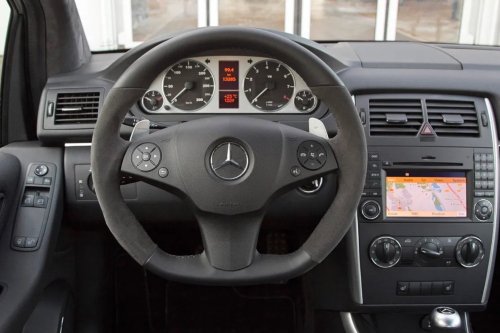
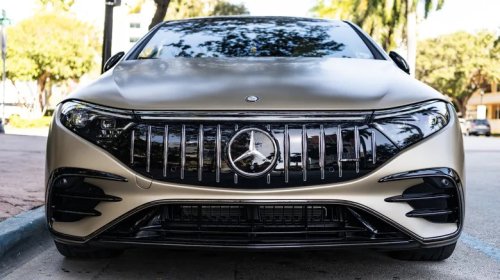
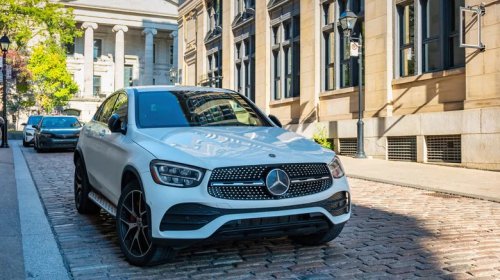
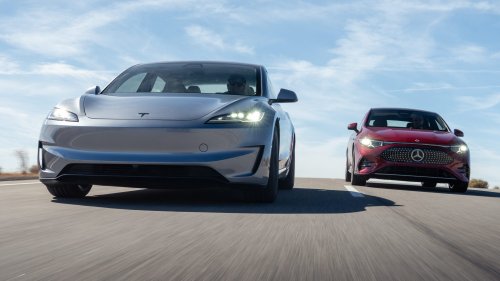
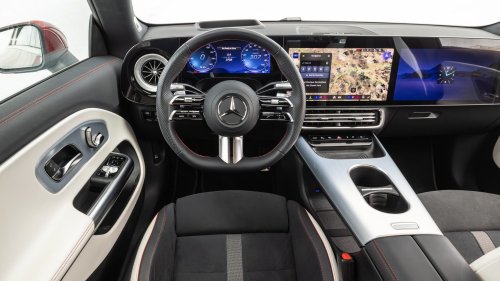
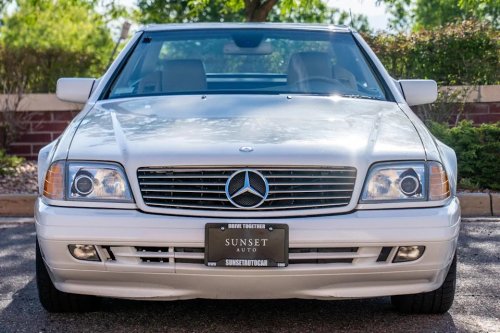
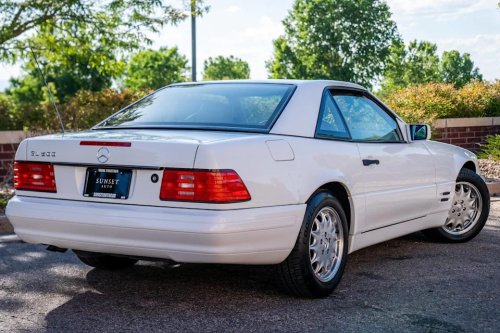
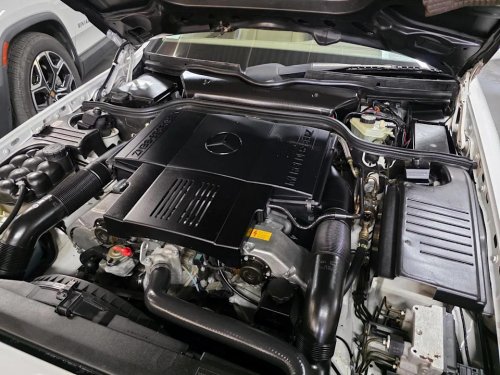
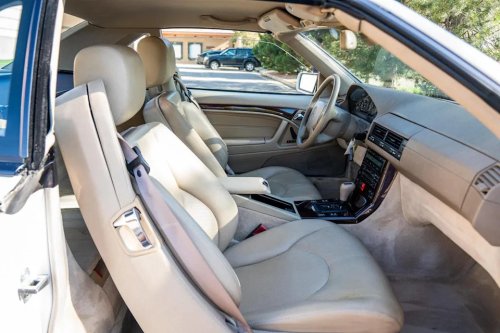
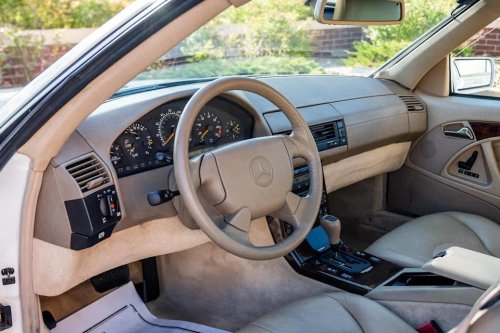
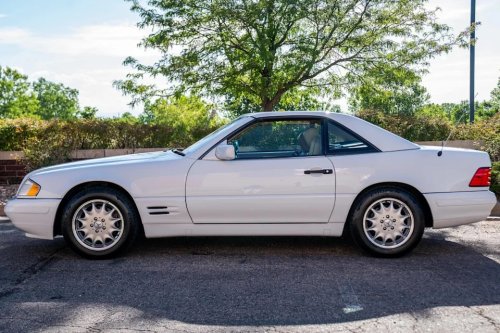
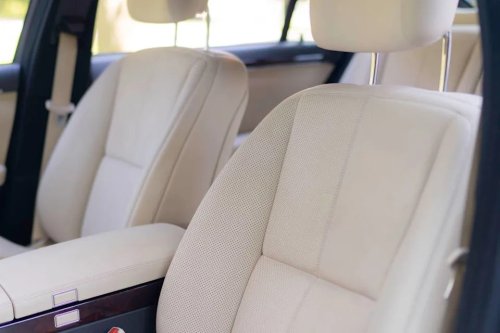
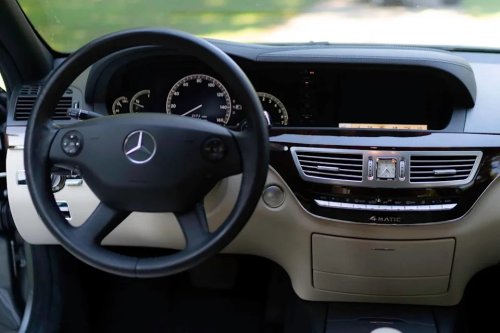
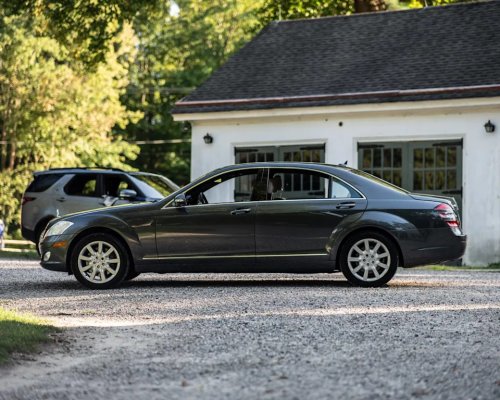
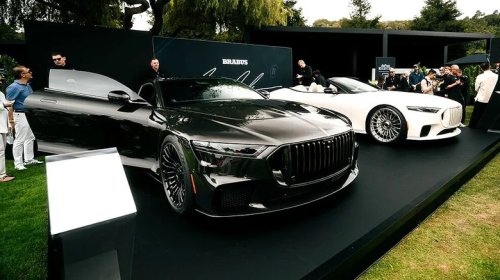
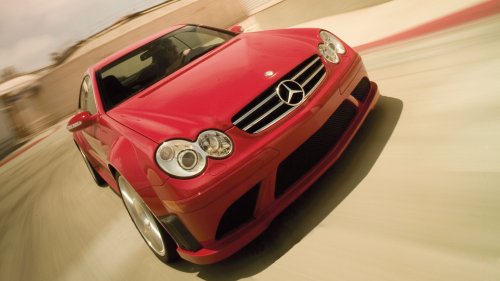
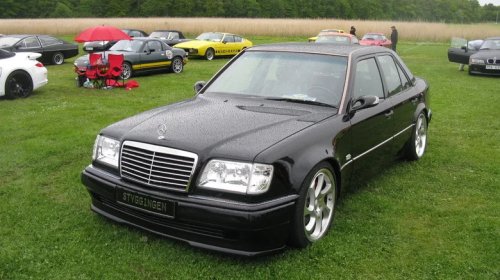
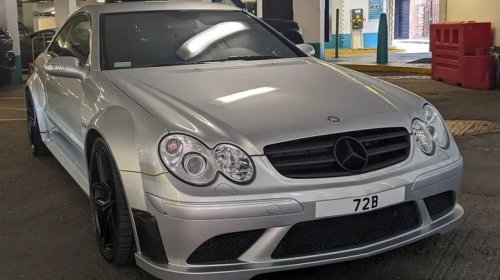
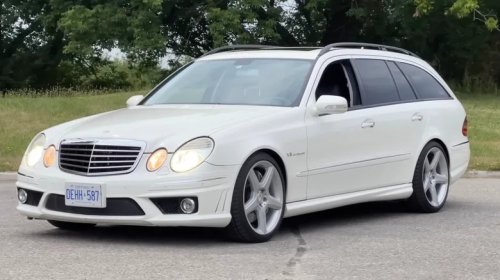
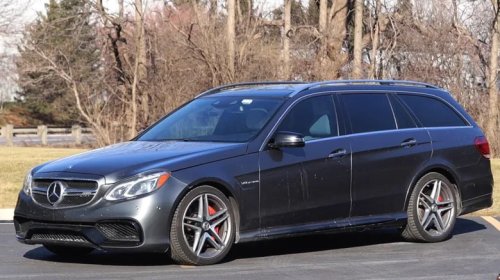
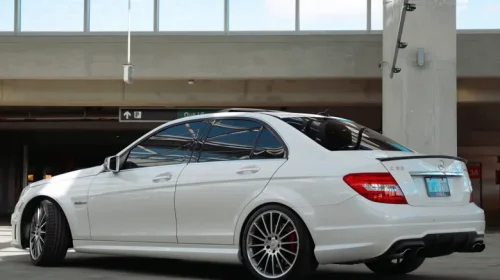
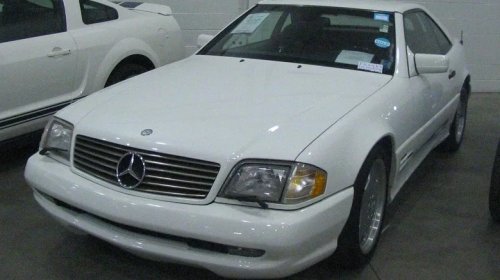
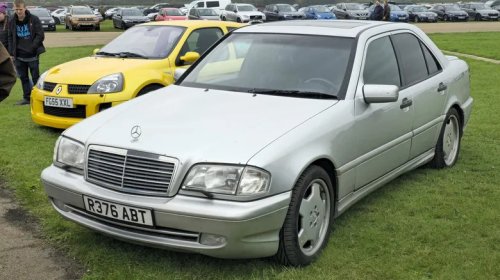
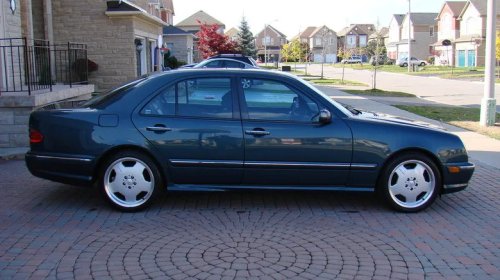
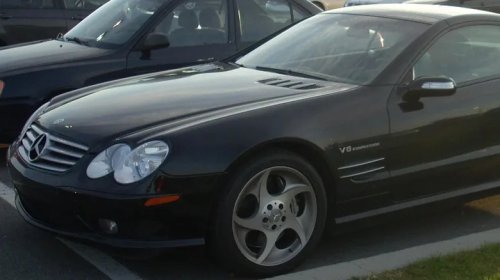
A close up of a Mercedes-Benz steering wheel with a driver's hands. - lilaclion/ShutterstockDriving a cool late-model Mercedes is one of those enthusiast temptations that can easily get you burned. You start looking at what they sell for versus the cost of buying something boring and responsible from your local Toyota dealer, and the wheels in your head start turning. Surely a car person like yourself should be able to sneak into a depreciated German luxury performance bargain and come out the other side intact. Right?Maybe! Of course, buying a cheap old Mercedes-AMG can leave you financially devastated. But that doesn't mean all of them will. Nor does a Mercedes need to be an AMG to be cool, though it certainly helps. In many cases, you really can end up in one of the coolest cars in the parking lot without climbing out on a financial or reliability limb to get there.The trick is knowing which problems the used-Mercedes community has already crowdsourced to the front of the line, then finding a clean example that gives you a fighting chance at a good ownership experience. If you can thread that needle, you just might get away with owning something that punches far above its price.AdvertisementAdvertisementRead more: 10 Of The Largest Private Car Collections In The WorldMercedes-Benz 500E/E500, W124A black Mercedes-Benz 500E sits on a lawn. - nakhon100/Wikimedia CommonsThe Mercedes-Benz W124 500E is what happens when Mercedes decides it needs a V8 super sedan and brings Porsche to the table to help make it happen. Porsche was awarded the development contract by Daimler-Benz in 1988, and the resulting car paired W124 seriousness with the 5.0-liter V8 from the 500 SL, wider bodywork, upgraded running gear, and just enough visual restraint that most people still won't realize what they're looking at.That sleeper quality is part of the appeal, but it also means good ones are not exactly falling out of trees. Porsche says 10,479 examples had been built by April 1995, which puts it in the sweet spot for this list: not impossible to find, but scarce enough that condition, records, color, mileage, and originality can narrow the field quickly.The 500E is not here because it's cheap to keep alive. It's here because the scary stuff is mostly known old-Benz territory: biodegradable wiring that can lead to extensive electrical frustrations, a suspension that's pricey to fix, and there's enough going on with the engine that a mechanical once-over by someone who knows the lay of the land is a must. Oh, and while they're in there, you can be doing a very close check for rust, too.Mercedes-Benz CLK63 AMG Black SeriesA 2008 Mercedes-Benz CLK63 AMG Black Series sits in a showroom. - Calreyn88/Wikimedia CommonsThe Mercedes-Benz CLK63 AMG Black Series is capable of great violence, but subtler than you'd think. It's what happens when AMG takes a perfectly respectable luxury coupe and decides the correct next step is swollen fenders, no back seat, a 6.2-liter V8, and F1 safety-car energy. It started with the already-rowdy CLK63, then added bodywork, functional carbon-fiber ducts, a rear spoiler, bigger wheels and brakes, adjustable suspension, additional chassis bracing, and enough menace to make the regular CLK look like it was late for a tennis lesson.AdvertisementAdvertisementSounds like a blast, right? You'll just have to find one. There were only 700 produced globally, which isn't "one guy knows where they all are and owns a third of them" rare, but is rare enough that clean, unmodified examples with the right records are not something you can casually search up on a whim.Beggars can't really be choosers when you're talking about vehicles with three-digit production volume, but there are some things to watch out for if you get a chance to consider one. The M156 V8, otherwise known as the whole reason the car exists, is also the thing that demands a second look, if not a third. Head bolts tend to fail and take the whole engine down with them when they do, and camshafts pretty much need to go at around 100,000 miles before they start causing trouble. These are the kinds of things that aren't necessarily devastating to rectify before they fail, but they can cause cascading consequences if they quit before you get around to it.Mercedes-Benz E55 AMG Wagon, S211A white Mercedes-Benz E55 AMG Wagon sits parked. - Magnacars/YouTubeIn a world where more cars should be turned into wagons, the E55 AMG was and we're all better for it. Mercedes took that already wonderfully ridiculous E55 formula — supercharged 5.4-liter V8, huge torque, executive-car manners — and put it in a wagon body. It's properly fast, useful, understated, and just obscure enough that most people will only realize something is up after it has disappeared down the road.The catch is that Mercedes barely sent any of them here. They weren't advertised in period, and the only ones in the U.S. were special orders, for the ultimate "if you know, you know" kind of car. As a result there are apparently just 126 Stateside, at least officially. That means you aren't just looking for a good used AMG wagon. You're looking for one of a tiny pool of U.S. cars that also has managed to avoid neglect, bad mods, and being worn into the ground as an actual family-hauler (which it legitimately is).AdvertisementAdvertisementThe upside is that the M113K engine is generally the part people want. The homework is the W211 stuff around it: SBC brakes, Airmatic suspension, aging electronics, intercooler pumps, oil leaks, transmission cooler lines, and the normal tires-and-brakes appetite of a heavy AMG wagon. A good one is a dream; a cheap one is probably a trap.Mercedes-Benz E63 AMG Wagon, S212A dark Mercedes-Benz E63 AMG Wagon sits in a lot. - Shooting Cars/YouTubeThe S211 we just discussed is probably the purer cult object, but Mercedes didn't jump the shark with the S212. The S212 E63 AMG wagon took the same premise — enormous power, actual cargo space, and the smug knowledge that most people still think wagons are boring — and dragged it into the modern era. By the facelifted 2014 model year, that meant rear-biased all-wheel drive, E63 S spec as the default wagon configuration, and a twin-turbo V8 with the kind of power that makes "family car" sound like a joke, if not a dare.It's easier to find than the earlier E55 wagon, but only in relative terms. Word was out, and Mercedes-Benz sold more than triple compared to the prior generation, which still meant just 783 units in the U.S. from 2014 through 2016. That gives you a bigger pool than the S211, but not one so big that you can get picky about color, mileage, records, and whether the previous owner discovered tuning forums before discovering maintenance.The M157 twin-turbo V8 is not a deal-breaker, but it does move the homework into a newer, more complicated AMG era. Watch for service history, oil and timing-cover leaks, coolant-hose issues, ignition items, and signs that extra boost was treated as a substitute for good judgment. A sorted one is still one of the best arguments for never buying an SUV.Mercedes-Benz C63 AMG, W204A white Mercedes-Benz C63 AMG sits parked. - Sam CarLegion/YouTubeRight now, Mercedes-AMG is killing the four-cylinder C63 in favor of an inline-six C53, which would have bordered on inconceivable when the W204 C63 AMG arrived on the scene. It isn't rare in the same way the CLK63 Black Series is rare, but that might be part of the charm. This was the attainable-ish AMG delinquent: a compact Mercedes sedan or coupe with a naturally aspirated 6.2-liter V8 and the general attitude of a car that knows rear tires are consumable and so should be consumed. It was loud, fast, a little crude by Mercedes standards, and all the better for it.AdvertisementAdvertisementFinding one is not the hard part. These cars could definitely be improved in the aftermarket with an emphasis on tuning and forced induction, but that's the kind of thing that can really cut both ways in terms of maintenance and reliability. Maybe you want to do that kind of work under your own supervision and maybe you'd be okay with it assuming a solid service history from a reputable shop, but that's a line to tread carefully.The M156 V8 is again the place to spend your pre-purchase inspection time and attention. Earlier cars are known for head-bolt concerns, while camshaft and lifter wear, cam adjusters, and oil leaks are also worth checking before falling in love with the noise. This is one of those cars where the best one may not be the cheapest one, because deferred maintenance can turn into a wallet-busting incident, albeit one with a great soundtrack right up until the end.Mercedes-Benz SL500, R129A white Mercedes-Benz SL500 sits parked in a garage. - Bull-Doser/Wikimedia CommonsAfter all the AMG noise, the R129 SL500 is here as a reminder that a used Mercedes doesn't need to be violent to be worth coveting (though we admit that it helps). This is the sensible classic SL pick, at least by the standards of old luxury roadsters with power everything and a convertible roof mechanism that's a feat of engineering in its own right. You get proper old-Mercedes presence, V8 smoothness, two-seat grand-tourer charm, and a car that still looks expensive without needing to explain itself at every gas pump.The "if you can find one" part is less about raw production rarity and more about condition. R129s are out there, but the good one is the car with records, clean electronics, a healthy wiring harness, and no evidence that it spent the last decade being started twice a year and called "mint." These cars reward careful shopping more than brave shopping.AdvertisementAdvertisementThe nice thing is that the SL500 keeps the recommendation on the sane side of the R129 family. The V12 cars have their own appeal, but the V8 is the one that makes the most sense for someone who actually wants to use the thing. Watch especially for 1993-1995 wiring-harness degradation, roof issues, aging electronics, and the usual old-car leaks and suspension wear. The best one is probably not the cheapest one, which is usually how these stories go. And heck, with as much appreciation as there is out there for these old(ish) SLs, you might even find a Mercedes-Benz SL500 that's sketchy only in the good way.Mercedes-Benz C36 AMG/C43 AMG, W202A silver Mercedes-Benz C43 AMG sits parked on a lawn. - Calreyn88/Wikimedia CommonsThe W202 C36 and C43 AMG are from the part of the AMG story before every other Mercedes on the road had giant wheels, giant power, and a badge that made sure you knew exactly what you were looking at. The C36 gave Mercedes a compact factory-backed AMG sedan with a worked-over inline-6, while the C43 swapped in the 4.3-liter V8 and added a little more menace without turning the car into something that looks like it should be at an LA street takeover. They're subtle, genuinely significant, and small enough by modern standards to make even a current C-Class look like it's been stress eating.They also exist in that awkward zone where they aren't impossible to find, but are absolutely easy to miss. Mercedes says there were just 5,221 C36 AMGs, while total C43 production was 3,857 cars. That isn't nothing, but it's low enough to make the hunt real, especially once you start filtering for unmodified, well-documented, rust-free examples.The good news is that neither car is here because it has some infamous engine grenade waiting to pull the pin. The C43's M113 V8 is part of the appeal, and the C36 has its own early-AMG charm. The bad news is old W202 stuff: rust, suspension wear, cooling-system age, old electronics, and transmission maintenance. Rust is the big one. If the body is crusty, the AMG badge is not going to save it, though it'll look good on your desk if you remember to pry it off before sending the thing on its way in defeat.Mercedes-Benz E55 AMG, W210A dark Mercedes-Benz E55 AMG sits in a driveway. - Michael Siu-Ming Ng/Wikimedia CommonsThe Mercedes-Benz W210 E55 AMG is where this list gets a little quieter, at least compared with the supercharged wagons and Black Series nonsense. It is still a proper AMG sedan, though: subtle bodywork, rear-wheel drive, a tuned chassis, and a 5.4-liter M113 V8 that gives it the kind of effortless pace that makes newer, shoutier performance cars feel like they're working too hard. It isn't the dramatic choice. It's the one that feels like you knew something before everyone else did.AdvertisementAdvertisementIt is also uncommon without being unobtainable. With just over 10,000 W210 E55 AMG sedans built, production volume is low enough to matter but not so low that every example has disappeared into climate-controlled storage. The catch is that the W210's reputation is not built around the engine exploding. It's built around the body trying to return itself to the earth. The good one is the dry, stock, rust-free car with records, not just the cheapest one still wearing the AMG name.That is also why this car can still make sense. By most accounts the engine and drivetrain remain stout, but rust is by far the biggest problem for this E-Class generation. Check the obvious stuff, then check the less obvious stuff harder: sills, subframes, inner wheelarches, front spring cups, doors, front wings, rear quarters, and the underside. If the metal is right, the W210 E55 can be a very clever old-AMG buy. If it isn't, the V8 is just a nice engine attached to a crumbling dream.Mercedes-Benz SL55 AMG, R230A black Mercedes-Benz SL55 AMG sits parked. - Bull-Doser/Wikimedia CommonsThe R230 SL55 AMG is a fitting place to end because it's exactly the kind of used Mercedes that can be either a brilliant idea or a personal finance trap, depending almost entirely on which example you buy. The V12 SL600 and SL65 might live rent-free in enthusiast heads, but the ownership experience is not for the faint of heart. The SL55 gives you a bunch of the fizz for a fraction of the fear: a supercharged V8, big AMG roadster energy, and enough performance to make the more terrifying versions feel a little less necessary.It also neatly sums up the theme here. The SL55 is not impossible to find, but the right one is a different story. You want the car with records, a healthy active body control suspension, a working roof, clean electronics, no mystery leaks, and enough evidence that somebody kept maintaining it like an AMG roadster after depreciation made it look like a bargain.AdvertisementAdvertisementThat is really the used-Mercedes game in miniature. The badge, engine, and original price can get you interested, but they are not what make one worth buying. Condition does. Documentation does. A seller who can explain the expensive stuff without blinking does. Find that unicorn, and the SL55 is not just a cheaper alternative to the V12 cars. It is the smarter kind of outrageous, which for the purposes of this article, is really the whole premise.Want more like this? Join the Jalopnik newsletter to get the latest auto news sent straight to your inbox, and add us as a preferred search source on Google.Read the original article on Jalopnik.




















 +15 others