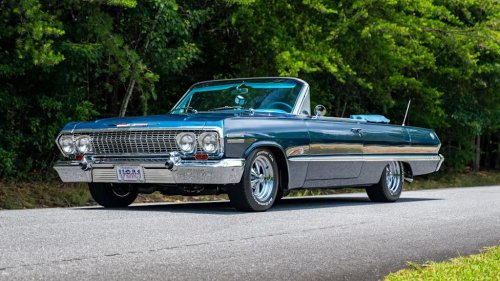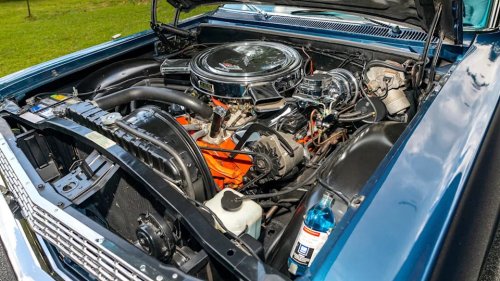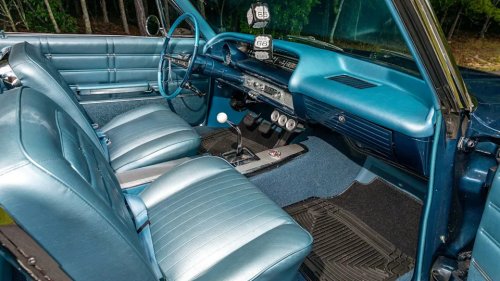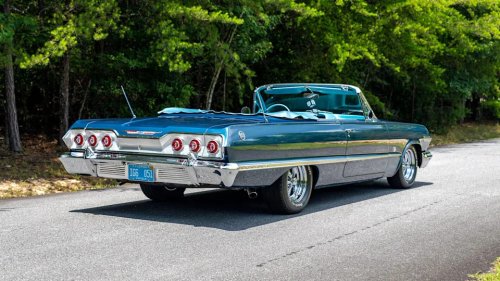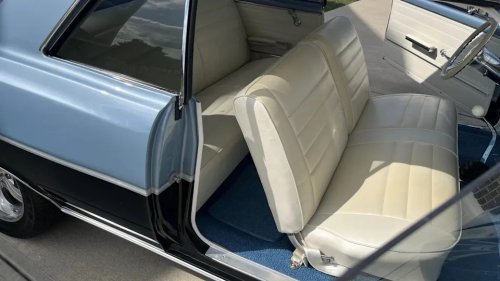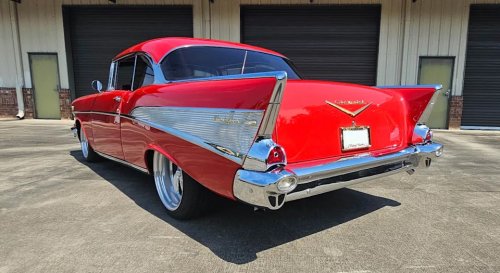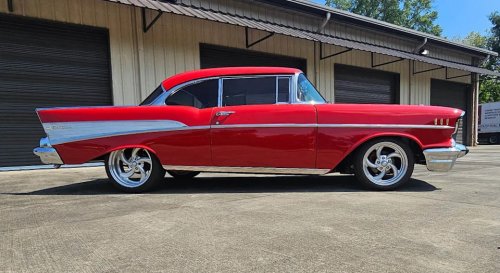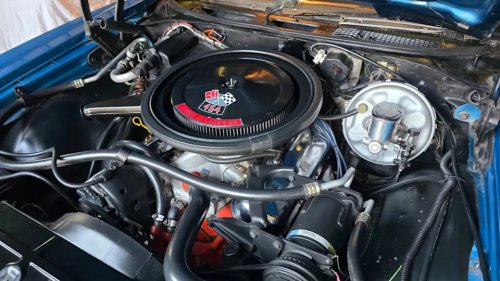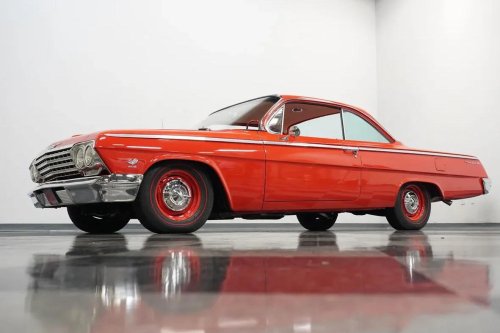
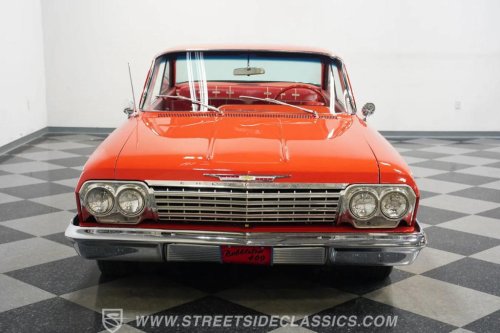
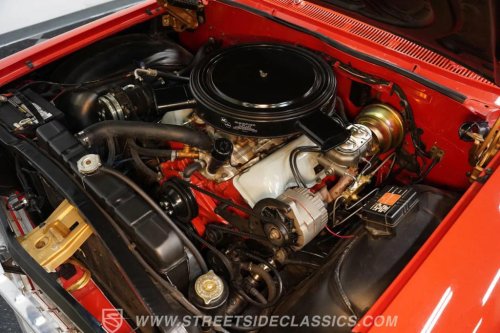
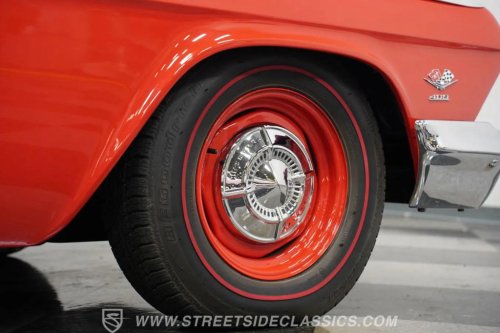
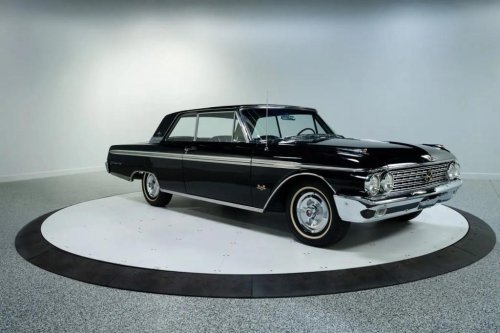
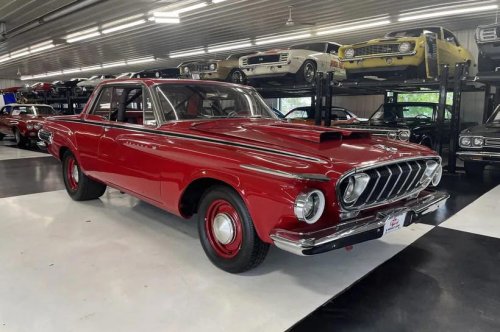
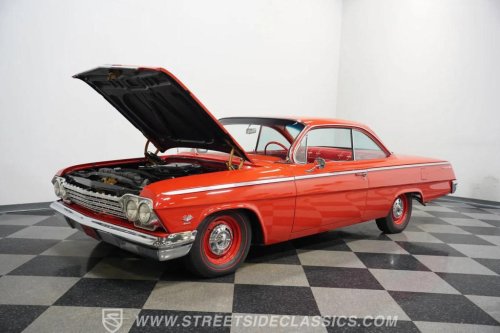



















Long before the term “muscle car” entered the American lexicon, a factory-built beast dominated drag strips across the United States. The 1962 Chevrolet Bel Air Sport Coupe, affectionately known as the “Bubbletop” and equipped with the legendary 409 cubic-inch V8 engine, was a purpose-built speed machine. It combined lightweight construction with raw horsepower to rule the quarter-mile. The Genesis of the 409 Bubbletop In the early 1960s, Detroit’s “Big Three” automakers adhered to a strict philosophy: win on Sunday, sell on Monday. To dominate the National Hot Rod Association (NHRA) stock classes, Chevrolet needed a vehicle that maximized power while minimizing weight. For 1962, Chevrolet transitioned most of its full-size lineup to a more rigid, upright roofline. However, a loophole allowed for a brief run of the 1962 Bel Air using the leftover 1961 “Bubbletop” roofline. This thin-pillar, large-glass design was lighter and more aerodynamic than the standard hardtops. Engineering the 409: “She’s Real Fine” The heart of this vehicle was the 409 cubic-inch big-block V8 engine, immortalized by The Beach Boys’ 1962 hit song. The engine was an evolution of the 348 “W-series” block but featured massive internal upgrades. The top-tier power plant pumped out an incredible 409 horsepower at 6,000 RPM, achieving the magical golden ratio of one horsepower per cubic inch. It backed that up with 420 pound-feet of tire-shredding torque at 4,000 RPM. This brutal output came courtesy of dual Carter four-barrel carburetors feeding an 11.0:1 high-compression setup. Drivers slammed through the gears using a heavy-duty Borg-Warner T-10 four-speed manual transmission, making it a pure mechanical monster. This high-compression setup utilized solid lifters, a hot camshaft, and massive port heads to breathe efficiently at high engine speeds. Quarter-Mile Dominance The 1962 Bel Air Bubbletop 409 was engineered specifically to win NHRA Super Stock racing. By stripping away luxury amenities like power steering, heavy sound deadening, and plush carpeting, Chevy shaved critical pounds off the full-size platform. To shave off every ounce of excess weight for NHRA Super Stock competition, Chevrolet offered specialized factory delete options and went to extreme structural lengths. Factory technicians completely omitted the heavy asphalt-based insulation and thick jute padding typically glued under the carpets and inside the door panels. Luxury items like the passenger-side sun visor, armrests, and deep-pile carpeting were swapped for basic, lightweight rubber floor mats and minimal vinyl trim. Power steering pumps, power brake boosters, and heavy air conditioning compressors were strictly left off the assembly line to prevent both extra weight and parasitic power loss from the engine. Beyond stripping the interior, Chevrolet surreptitiously fabricated a limited number of front-end body parts out of lightweight aluminum instead of standard stamped steel. These rare, race-ready packages included aluminum front fenders, an aluminum hood, and specialized inner fender wells. Even the heavy steel front and rear bumpers were swapped for thinner, aluminum versions mounted on lightweight brackets. 1962 Chevrolet Bel Air Bubble Top 409 listed for sale on Hemmings Marketplace. These severe factory omissions and aluminum component swaps successfully shed over 150 pounds off the standard Bel Air body weight. Crucially, removing this mass exclusively from the front nose drastically improved the car’s front-to-rear weight distribution. This lighter front end allowed the front suspension to rise violently upon acceleration, transferring maximum weight to the rear slick tires for an instantaneous, hard-hooking launch off the starting line. Track Performance Metrics When launching on vintage racing slicks, this full-size heavyweight could rocket from zero to sixty miles per hour in under four seconds. On a prepped drag strip, a properly tuned 409 Bubbletop would consistently stop the clocks in the low 12-second range. It crossed the finish line with a trap speed climbing well over 115 miles-per-hour. These performance numbers meant the heavy full-size Chevy could outrun almost any contemporary sports car or factory vehicle over a 1,320-foot strip of asphalt. Muscle Car Rivals The 1962 Chevrolet Bel Air Bubbletop 409 was a street legend, but on the 1962 NHRA drag circuit, it was locked in a brutal three-way war for factory supremacy. The “Big Three” went all-in on displacement, matching Chevy’s dual-quad 409 against the Ford Galaxie 406 Tri-Power and Chrysler’s sinister 413 Max Wedge short-wheelbase intermediate cars. While the Bel Air balanced high-RPM horsepower with legendary street styling, its rivals brought very different mechanical weapons to the 1,320-foot asphalt battlefield. Ford’s Contender: The Galaxie 500 XL 406 Tri-Power Ford’s answer to the 409 was the high-performance FE-block 406 V8, most famously stuffed into the stylish Galaxie 500 XL. Rather than dual quads, Ford utilized a distinct “Tri-Power” setup with three Holley two-barrel carburetors sitting on an aluminum intake manifold. On paper, the Ford 406 was a torque monster, putting out 448 pound-feet to help move its substantial weight. However, in pure showroom stock configuration, the Ford Galaxie was the heaviest of the trio, which hampered its off-the-line acceleration against the lightweight Bubbletop. While the 406 was a dominant force on the high-speed banks of NASCAR, it usually trailed the 409 by a car length at the local drag strip unless it was heavily modified by legendary factory-backed racers. Ford recognized this straight-line deficit quickly, which is why the 406 was phased out early the following year to make room for the legendary, cross-bolted 427 FE monster. Mopar’s Terror: The 413 Max Wedge If the Chevy 409 was a dual-purpose street-and-strip machine, Chrysler’s 413 “Maximum Performance” Wedge engine was a pure, unadulterated race car engine that happened to clear the showroom floor. Available in downsized, lightweight intermediate bodies like the Plymouth Savoy or Dodge Dart, Mopar threw out the rulebook. The 413 featured a wild, high-rise cross-ram intake manifold with long, overlapping runners that shoved fuel and air into massive staggered valves at an alarming rate. Running a sky-high 13.5:1 compression ratio, the Max Wedge pounded out a heavily underrated 420 horsepower and a massive 470 pound-feet of torque. It came standard from the factory with exhaust cutouts, meaning racers could unbolt the caps directly in the staging lanes to bypass the mufflers entirely. While the automatic transmissions of the era usually sluggishly drained power, Mopar’s TorqueFlite three-speed automatic was so stout and efficient that automatic Max Wedges routinely launched just as hard as Chevy’s four-speed manuals. In terms of raw, out-of-the-box acceleration, a 413 Max Wedge car was the undisputed bully of 1962, frequently dipping into the 12-second bracket with nothing more than a set of slicks and open headers The 1962 Chevrolet Bel Air Bubbletop 409: The Ultimate Pre-Muscle Car Drag Champion is For Sale on Hemmings Marketplace The 1962 Bel Air Bubbletop 409 is one of the rarest models in Chevrolet history. Because the Bubbletop roofline was officially phased out early in the 1962 production year, only a small number of Bel Airs received this body style. Even fewer were equipped from the factory with the top-tier dual-quad 409 engine. Today, authentic, numbers-matching examples are highly coveted by collectors, routinely commanding six-figure prices at major automotive auctions. They represent the absolute pinnacle of the pre-muscle car era, an era defined by big engines in lightweight, no-frills packages. Finding an authentic, surviving piece of this drag racing lineage is a blue-moon event for serious collectors, which is exactly why the example currently crossing the block here on Hemmings demands your attention. This stunning, beautifully preserved 1962 Chevrolet Bel Air Bubbletop 409 represents the absolute peak of American pre-muscle car history, complete with the dual-quad big-block V8 and a heavy-duty four-speed manual transmission. Whether you want to dominate local car shows, add a crown jewel to your high-performance collection, or feel the raw, unfiltered acceleration that terrified Detroit rivals in 1962, this rare factory speed machine is ready to deliver. The post The Beach Boys Sang About It, Hemmings is Selling It: Snag the Ultimate 1962 Chevrolet 409 Bubbletop Before It’s Gone appeared first on The Online Automotive Marketplace.