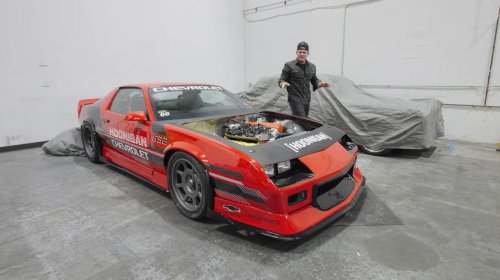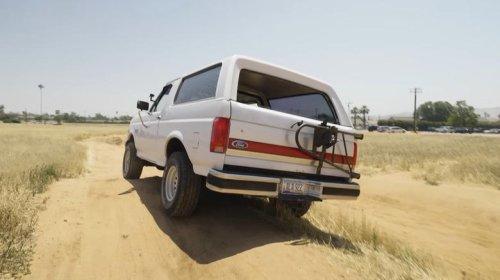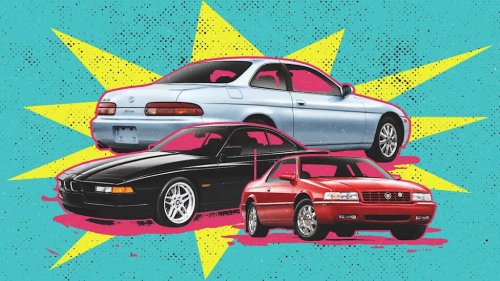




















the 7 best project cars for first time restorersIf you're looking to get some dirt under your pretty, little fingernails and spin a few wrenches at the same time, you could start installing commercial grease traps… or you could do the sensible thing and buy a project car. If you'd prefer to go the automotive route (have you ever considered installing grease traps?), there's a nearly inexhaustible supply of vehicles out there just waiting to be restored, though not all are ideal for beginners. Keeping things simple, here are seven excellent options to consider for your first project car.Built by drivers for drivers, insurance through Hagerty features Guaranteed Value - you set your car's value upfront and in the event of a total loss, that's what you'd be paid, guaranteed. Plus, that value is locked in and doesn't depreciate. Visit https://www.hagerty.com/insurance today for a free quote.But First, the BasicsBefore you start trolling Facebook Marketplace of Craigslist for a restoration-worthy rust bucket, you need to consider a few points. A little forethought before taking cash out of your bank account and signing the title could save you untold headaches – and heartaches – down the road.AdvertisementAdvertisementPoint No. 1, buy a project car you're passionate about. If you don't care about off roading, for instance, don't buy a Jeep. If you love American muscle, you should probably avoid a Japanese Kei car. Makes sense, right? Even if your automotive tastes are somewhat eclectic, go with something you like.No. 2, and this might be even more important: acquire a vehicle you can actually afford. Practically everybody loves a Gullwing Mercedes or some super-rare vintage Ferrari, but good luck finding one that mere mortals can obtain. I don't have trust fund money or a sugar mama handing out stacks of blank checks, and you probably don't, either, so keep expectations reasonable and shoot for a vehicle that comfortably fits your budget.And finally, point No. 3, when shopping for a classic, make sure to consider parts availability. Finding window garnish moldings for a 1934 Pierce-Arrow might be impossible, but they're probably reasonably available for a Plymouth of the same year. So, think about that as well. You do not want to be missing some mission-critical component that can't be purchased or fabricated.Anyway, with all that in mind, and a little help from our friends at Hagerty, here are seven great project vehicles to consider.7. Little British Sports CarsAs you can see in the heading above, our first recommendation is little British sports cars. Yes, that's a bit vague (OK, a lot vague), but there are numerous great options to choose from, and these cars are a lot of fun. Austin-Healey offered a range of models in the 1950s and ‘60s, there's the MG Midget and MGB, and even an assortment of Triumphs like the TR6.AdvertisementAdvertisementParts availability for models like these should be decent, plus they're not outrageously expensive. According to the Hagerty Valuation Tool, MG Midgets in good condition from the late ‘60s and early ‘70s go for around $7,000, while concourse-perfect models are priced at nearly $24,000. Austin-Healeys are generally the same, though some models are significantly more expensive. Regardless of the model or year, you should be able to find a decent British sports car to work on without completely decimating your finances.6. Volkswagen Beetlethe 7 best project cars for first time restorersNext up, another automotive legend, one of the most produced vehicles in history, the Volkswagen Beetle. Simple, sturdy, efficient and about as common as fallen leaves on the forest floor, the "people's car" as it's called in German was designed to mobilize everyday folks. Today, the Beetle is an affordable way to get into the classic car hobby. Over its decades-long production run, the original model was offered in a range of body styles and with a dizzying array of changes, so there is a lot of variability. Still, you can drive home in a good example from the 1970s for anywhere between about $9,000 to $14,000 according to Hagerty, which is eminently reasonable, even in 2026.5. Chevrolet CamaroOK, now it's time for something a little more potent. How about a GM F-Body? This platform underpinned the Chevrolet Camaro and Pontiac Firebird muscle cars – or pony cars, depending on who you ask. In the case of the Chevy, it came out for the 1967 model year and was offered – mostly uninterrupted, mostly – for six generations up until 2024, and most of those generations were built on the venerable F-Body architecture.Over the decades, you could get the Camaro with a staggering range of engines including plenty of thundering V8s, though swapping in whatever powerplant (or transmission, for that matter) you want should be pretty easy these days. As for pricing, it is, not surprisingly, all over the map, from less than $10,000 for something basic and unloved, to hundreds of thousands of dollars for special models. Grab a Camaro that isn't rarer than hen's teeth and you'll have a great project car that's affordable, restorable and highly upgradable.4. Ford Model TNext up, another vehicle that was produced by the millions and millions (and millions), the Ford Model T. The OG car that put the world on wheels, this machine is as basic as it is rugged, dead simple to work on and tougher than a coffin nail. The Model T might be way too crude for some of you out there, but parts availability should be fantastic, and depending on what you want, you can get a good example for around 10 grand. You may not want a "Tin Lizzie" for your everyday classic, but thanks to its virtues, this is an incredible first project car to cut your teeth on, to really learn new skills.3. Ford Model AAnother great Ford project car is about an order of magnitude more sophisticated than the Model T, while still having plenty of that old-fashioned charm. We're talking, of course, about the Model A, the T's successor. Many millions of these rugged and mechanically approachable cars were built from roughly late 1927 to early 1932, and consequently, plenty of new old stock and reproduction parts are available. Aside from having a far more comfortable interior, double the power and a conventional, sliding-gear transmission – unlike the Model T's planetary gearbox – the A is also highly affordable. You can get a good example for roughly $12,000, a car you can drive just about anywhere, just maybe not on interstate highways unless you increase the power and, ideally, add overdrive.2. Trucks from the 1970s and ‘80sUp to this point, we've only had cars on this list, no trucks. But that changes right now! Slotting in at No. 2 are pickups from the 1970s and ‘80s. Like the British sports cars mentioned earlier, this is a bit of a nebulous recommendation, but there are a lot of great options for a project vehicle, whether it's your first or fiftieth.AdvertisementAdvertisementTrucks from this era like the Chevy C/K, Ford F-150 and Dodge D Series – back when Dodge used to make trucks (the Ram brand handles that now) – are rugged, widely available and should have great parts support, whether you need a replacement door, a new set of ignition points or fresh wheel bearings. These pickups should also drive reasonably well and be easy to upgrade if you want disc brakes, a modern transmission or an improved suspension system. Of course, engine upgrades should be a snap, too. Not surprisingly, pricing is all over the map, but you can get a good example of a mid-‘70s Chevy half-ton, F-150 or Dodge D100 for anywhere between about $12,000 to roughly 20 grand. If you want something nicer you will, obviously, be spending more than that.1. Mazda Miatathe 7 best project cars for first time restorersAnd finally, one of the absolute best project cars of all time is – drumroll please – the Mazda Miata. A thoroughly modern take on the classic British sports car formula, the petite Miata delivers outsized driving fun in a package that's far more reliable than the models it was inspired by.Four generations of Miata have been offered since this sports car hit the road in 1989, and all have earned a well-deserved reputation for all-around excellence. If you want a project Miata, it's probably best to stick with the NA and NB variants, the first two generations of the car. Parts should be widely available and, according to Hagerty, you can expect to spend around $9,000 for a decent example, though, pristine models do cost more, though they are not outrageously expensive.NOTE: This is sponsored content produced in partnership with Hagerty