The transition to electric trucking is reaching another important milestone as Tesla brings megawatt-scale charging infrastructure to one of America’s busiest freight markets. Tesla has officially opened its first Megacharger station in Texas, introducing eight high-powered charging stalls in Mesquite, just east of Dallas.
Announced on November 18, 2026, the new facility offers charging capacity of up to 1.2 megawatts per stall, providing infrastructure designed specifically for Tesla’s all-electric Semi trucks. The opening marks an important step in Tesla’s efforts to establish a nationwide heavy-duty charging network capable of supporting commercial transportation.
With additional charging locations emerging across the United States and Semi production expanding, the Mesquite station highlights both the opportunities and challenges facing the electrification of long-distance freight transportation.
Tesla’s First Texas Megacharger Opens in Mesquite
Tesla’s newest Megacharger station is located at 2175 South Town East Boulevard in Mesquite, Texas, at a Fuel City truck stop near U.S. Highway 80. The facility features eight dedicated charging stalls, each listed with a maximum output of 1.2 megawatts, or 1,200 kilowatts. Unlike Tesla’s familiar Supercharger stations for passenger vehicles, Megachargers are designed to meet the substantially greater energy demands of Class 8 commercial trucks. Tesla Charging confirmed the opening on November 18, with the company’s Semi division identifying it as the first Megacharger in Texas.
The location is particularly significant because it places electric-truck charging infrastructure within the Dallas–Fort Worth metropolitan region, a major centre for logistics, warehousing, and distribution. The truck stop provides access to surrounding highways, including Interstate 30 and Interstate 635, giving freight operators potential connections to important regional transportation routes. For trucking companies evaluating electric vehicles, convenient charging locations can make the difference between a practical route and one requiring substantial operational adjustments. Tesla has not publicly specified the station’s charging prices or individual fleet customers, leaving some operational details to emerge as the facility begins serving commercial traffic.
Why 1.2-Megawatt Charging Is a Major Development
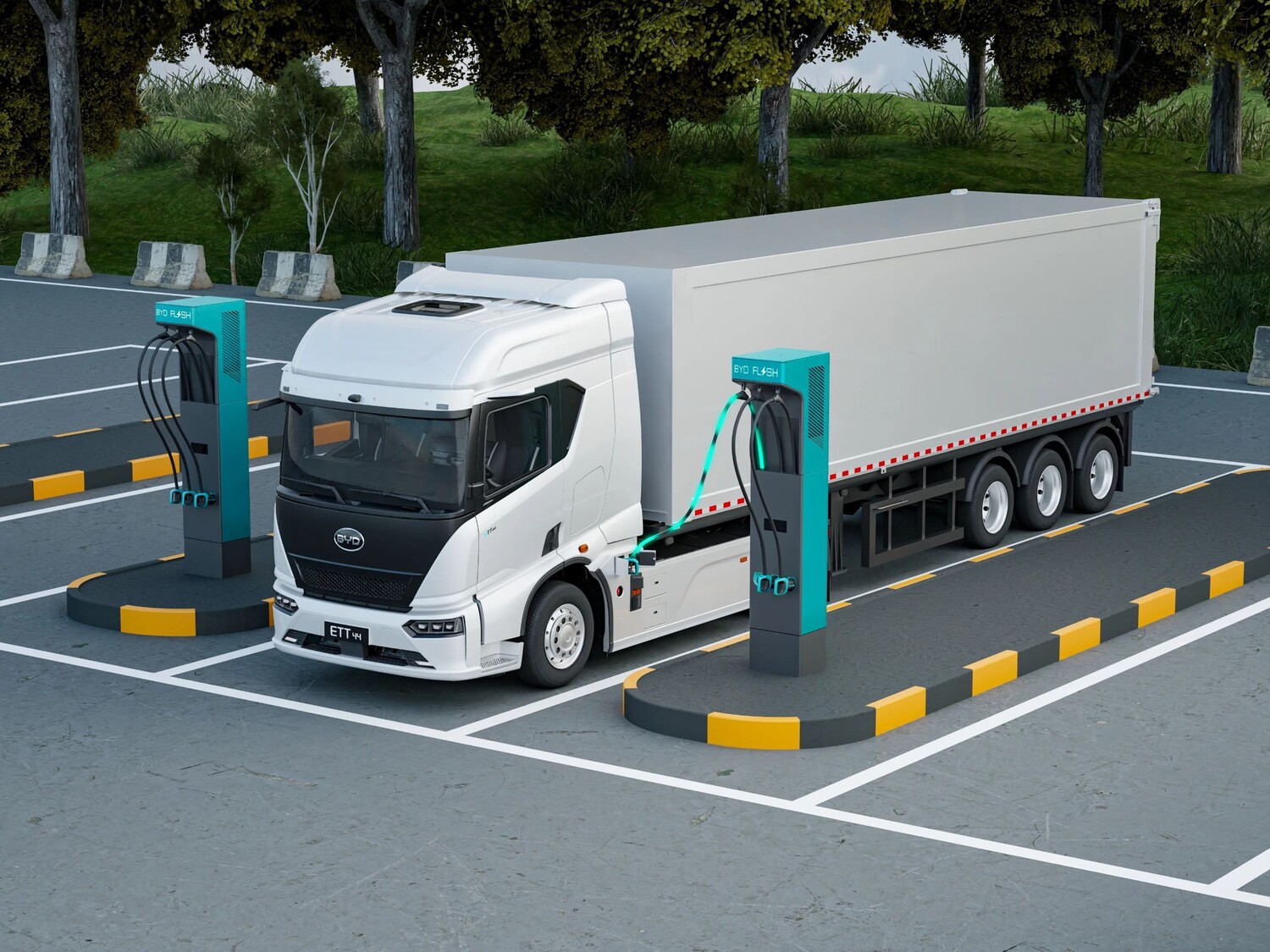
The defining feature of the Mesquite facility is its charging capability. Each stall is rated for peak power delivery of up to 1.2 megawatts, considerably higher than the charging speeds normally associated with passenger electric vehicles. According to Tesla, its Megacharger technology can replenish up to 60% of a Semi’s driving range in approximately 30 minutes. For the long-range Semi, which carries an estimated 500-mile range rating, that could theoretically translate into roughly 300 miles of additional rated driving range during a well-timed charging stop.
However, the headline charging figure represents maximum capability rather than a guaranteed rate throughout every session. Tesla explains that actual charging performance depends on battery temperature, state of charge, and whether another truck shares the same charging equipment. Its commercial Megacharger specifications also indicate that a 1.2-megawatt power cabinet can serve two charging posts, meaning maximum power is shared between those connections. Consequently, eight stalls do not necessarily mean the entire station can deliver 9.6 megawatts simultaneously. For fleet operators, these technical distinctions matter because predictable charging times are essential when trucks must meet delivery appointments and maintain demanding schedules.
Tesla Semi’s Range Makes High-Speed Charging Essential
Tesla’s production Semi is offered in two configurations intended to serve different commercial transportation needs. The Standard Range version carries an estimated driving range of 325 miles, while the Long Range model increases that figure to approximately 500 miles. Both versions have a stated energy-consumption target of 1.7 kilowatt-hours per mile. Tesla bases its published range estimates on specific operating conditions, including a gross combination weight of 82,000 pounds, moderate temperatures, and steady driving on relatively flat roads. Real-world results can vary with vehicle speed, weather, terrain, and trailer configuration.
Those details explain why an expanding charging network is just as important as battery technology. A distribution company operating predictable regional routes may have different requirements from a carrier moving freight across several states. Drivers must also comply with federal hours-of-service regulations, including a 30-minute break after eight cumulative hours of driving without a qualifying interruption for most property-carrying operations. Fast charging creates opportunities to coordinate battery replenishment with those required breaks. However, successful planning still depends on the location of available chargers, the energy remaining when a truck arrives, and how much driving remains before the next destination.
Dallas–Fort Worth Offers a Strategic Location for Electric Trucking
The decision to establish Tesla’s first Texas Megacharger near Dallas reflects the region’s importance to American freight transportation. According to the North Central Texas Council of Governments, Dallas–Fort Worth sits at the intersection of four major interstate highways: I-20, I-30, I-35, and I-45. The metropolitan region also accounted for approximately 30% of Texas’ gross domestic product in 2024. Its concentration of warehouses, distribution centres, trucking companies, and transportation infrastructure makes it a natural location for testing how electric heavy-duty vehicles can integrate into existing supply chains.
For trucking companies, that concentration of commercial activity offers opportunities to operate electric Semis on predictable regional routes. A vehicle transporting merchandise between warehouses, retail distribution centres, and manufacturing facilities could potentially use the Mesquite station to supplement charging at its home depot. However, individual routes would still require careful planning around charging availability and the truck’s remaining range. The facility’s opening does not establish that particular carriers have committed to using it or that the surrounding highway network already offers comprehensive electric-truck charging coverage. Its immediate significance is providing another charging option in a region where freight transportation plays a major economic role.
Tesla’s National Megacharger Network Is Growing, but Coverage Remains Limited
The Texas opening follows several notable additions to Tesla’s charging network during November 2026. New locations appeared in Hodgkins, Illinois; Urbandale, Iowa; Ogallala, Nebraska; and Riverdale, Utah. Combined with existing facilities in California and Georgia, these additions brought the reported network to nine operational locations before Mesquite opened. Including the eight Texas stalls, the broader mapped network reaches 10 sites and approximately 55 stalls across seven states. The distribution illustrates how Tesla is gradually connecting major freight markets rather than immediately providing nationwide coverage.
Published network totals nevertheless differ, partly because reports do not consistently include the same charging facilities. Electrek counted seven public locations and 44 stalls on November 18, while other trackers included three additional smaller locations in Iowa, Nebraska, and Utah. The Riverdale facility, for example, was listed at a maximum of 414 kilowatts, substantially below the typical 1.2-megawatt Megacharger rating. Private fleet depots also represent a separate category of infrastructure. Regardless of the counting method, Tesla’s network remains relatively small compared with the geographic coverage required for unrestricted cross-country freight operations. Expanding the number of interconnected charging corridors will be essential as more Semi trucks enter commercial service.
Truck Stops and Fleet Depots Are Both Essential to Tesla’s Expansion
Tesla’s relationship with major truck stop operators is becoming an important part of its charging strategy. In October 2026, Tesla and Pilot opened their first collaborative Megacharger facility at a Pilot travel centre in Ellabell, Georgia, featuring six high-powered stalls. Pilot subsequently confirmed that additional locations were being developed along major freight corridors, including Interstate 5 and Interstate 10. At the time of its October announcement, the company reported 12 additional heavy-duty charging locations under construction, with a Flying J facility in Fort Stockton, Texas, among those approaching completion.
These partnerships could make electric trucking more practical by introducing charging equipment at locations already familiar to commercial drivers. Truck stops provide amenities, parking, and services that fit naturally into freight operations. Meanwhile, private charging depots remain important for operators whose vehicles return to the same facilities regularly. Tesla offers both its high-power Megacharger and a lower-power, 120-kilowatt Basecharger intended for longer charging stops. Another example emerged on November 5, when Forum Mobility added two Tesla Semi-compatible megawatt chargers at its Port of Long Beach depot. Together, public travel-centre charging and dedicated fleet infrastructure offer complementary solutions, allowing companies to balance predictable overnight charging with the flexibility needed for longer or less predictable routes.
Megawatt Charging Creates New Challenges for the Electrical Grid
Installing a high-powered truck charging station involves considerably more than placing charging posts beside a parking area. Operators must consider electrical-grid capacity, utility connections, equipment costs, and how much power several vehicles may require simultaneously. The scale of this challenge becomes apparent when considering the demands of future heavy-duty charging hubs. Researchers at the National Renewable Energy Laboratory have explained that stations serving multiple electric trucks could eventually require 20 megawatts of power or more. That is an enormous electrical requirement compared with conventional passenger-vehicle charging facilities.
The Department of Energy has also recognized the infrastructure challenge. In January 2025, it announced $68 million for projects intended to develop large-scale charging solutions for medium- and heavy-duty electric vehicles. One project along the Interstate 10 corridor was designed to demonstrate 10 truck charging stalls supported by solar generation, battery storage, and advanced power management. Such approaches illustrate how future charging facilities may balance rapid energy delivery with limitations imposed by local electricity networks. Tesla’s Mesquite opening provides another real-world location in this developing infrastructure market, although the company has not disclosed enough site-specific electrical information to establish its maximum simultaneous power demand or whether it uses battery storage.
Tesla Semi Production and Service Expansion Will Determine What Happens Next
The expanding charging network arrives at a crucial moment for Tesla’s commercial trucking business. During a September 24, 2026, event in Nevada, Tesla confirmed that Semi deliveries were beginning for an initial group of commercial customers and reiterated its longer-term ambition of producing 50,000 trucks annually at its Nevada facility. That figure represents a production-capacity target rather than a confirmed current output. Tesla’s third-quarter regulatory filing also identified public Megacharger deployment as an important part of preparing for higher Semi production volumes. However, the charging rollout remains behind the approximately 37 locations depicted in Tesla’s earlier 2026 network plans.
The company’s Texas expansion extends beyond charging infrastructure. Tesla held an opening event for its dedicated Semi Service Center in Laredo on November 12, strengthening its ability to provide maintenance and technical support in a major international freight market. Regional economic development officials also reported plans for a public Megacharger near that service facility, although the charging location had not yet opened. For commercial fleets, the combination of charging access, reliable vehicles, and responsive service will ultimately determine whether electric trucks can compete effectively with established diesel operations. Mesquite represents meaningful progress, but Tesla’s larger challenge is transforming scattered infrastructure investments into a dependable transportation network capable of supporting everyday freight operations across the country.