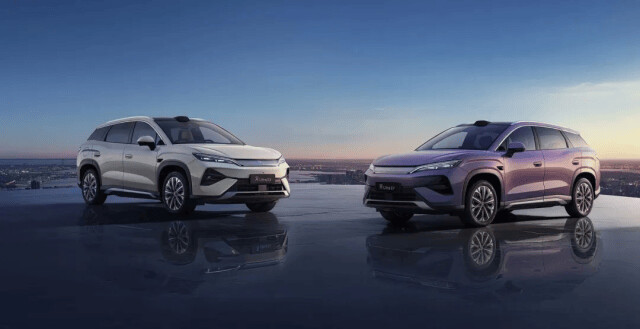
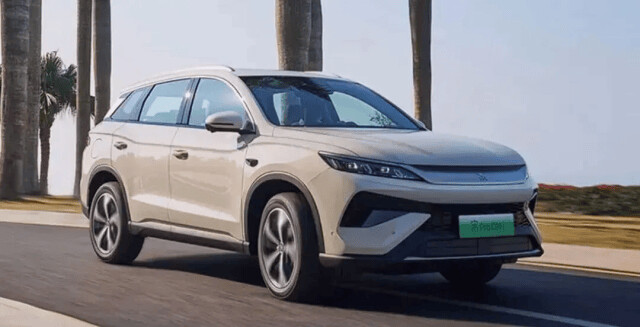
Leapmotor and Geely Auto reported brisk sales following the end of China’s biggest auto trade show, taking advantage of Tesla’s absence and sales inertia during the Labour Day holiday, as domestic electric vehicle (EV) makers strengthened their presence against foreign rivals.
Leapmotor, backed by Fiat owner Stellantis, said in a statement on Tuesday that it received 18,000 orders during the “golden week” holiday from May 1 to 5, surpassing its expectations. The surge included a daily record of 3,700 orders on Monday, the Hangzhou-based producer said.
The bumper sales followed a 174 per cent jump in deliveries last month from a year earlier. Leapmotor handed over 41,039 units to buyers in April. Its total deliveries last quarter topped 128,591 units, up 166 per cent from a year earlier.
“The auto show in Shanghai inspired thousands of buyers in making their purchase decisions on their favourite models,” said Zhao Zhen, a sales director at Shanghai-based dealer Wan Zhuo Auto. “Home-grown brands also took advantage of Tesla’s no-show at the event to increase their market share.”
The 10-day Auto Shanghai trade show attracted more than 70 carmakers from 26 countries and regions and drew more than 1 million visitors, the organisers said, with 163 new car models making their global premiere.
Geely Auto reported that 31,000 customers had bought its Galaxy-branded EVs during the five-day holiday, an unprecedented buying spree. Galaxy delivered 96,632 units to domestic customers in April, a 281 per cent jump from a year earlier.
Tesla stayed away from the biennial Auto Shanghai for a second time, giving its Chinese rivals an opportunity to showcase their advanced features including preliminary autonomous driving systems, digital cockpits and ultra-fast battery charging technology.
Chinese EV makers, particularly those who assemble cheaper models, enjoyed sizzling sales during the holiday given the state of the economy amid a global tariff war, Zhao said.
Both Leapmotor and Galaxy build EVs priced below 150,000 yuan (US$20,620). Most of them are fitted with driver assistance systems and sophisticated in-car entertainment software. Tesla’s Shanghai-made Model 3 is priced from 235,500 yuan and its Model Y from 263,500 yuan.
State subsidies also helped boost sales. Local buyers looking to replace their existing cars are eligible for a trade-in subsidy of 20,000 yuan, while those buying petrol-powered cars are entitled to a 15,000 yuan rebate. EV buyers are also exempted from a 10 per cent sales tax under Beijing’s push to switch drivers to new-energy vehicles.
Tesla’s first-quarter deliveries in China fell 22 per cent to the lowest level in three years as Chinese rivals snapped at its heels with better-equipped and more affordable models. The US company delivered 172,754 cars from its Shanghai factory, according to data from the China Passenger Car Association.
China’s indigenous car brands now control more than 90 per cent of the domestic EV market. On the mainland, half of the new cars taking to the streets are either fully electric or plug-in hybrid vehicles.