- Xiaomi rose to sixth, while GWM and Xpeng entered the October NEV retail top 10.
- Leapmotor holds third place in the January-October rankings, while Xiaomi returned to the top 10.
BYD (HKEX: 1211) continued to lead China's new energy vehicle (NEV) market in October with a 22.4% share, while Tesla (NASDAQ: TSLA) dropped out of the top 10 after ranking fourth in September.
BYD's retail sales of passenger NEVs in China totaled 250,301 units in October, down 15.4% year-on-year but up 1.4% month-on-month, according to rankings released by the China Passenger Car Association (CPCA) on Tuesday.
The company's NEV market share fell from 22.8% in September, narrowing its lead over second-placed Geely Auto (HKEX: 0175), though it remained well ahead.
Geely ranked second with 131,708 units, down 19.8% year-on-year but up 10.0% month-on-month. Its market share rose to 11.8% from 11.0% in September.
Leapmotor (HKEX: 9863) held third place with 83,573 units, up 31.1% year-on-year and 6.9% month-on-month. Its share increased to 7.5% from 7.2% in September.
Changan Automobile (SZSE: 000625) climbed to fourth with 68,925 units, down 17.4% year-on-year but up 11.7% month-on-month. Its share rose to 6.2% from 5.7%.
SAIC-GM-Wuling rose to fifth with 67,696 units, down 33.8% year-on-year but up 23.5% month-on-month. Its share increased to 6.1% from 5.1% in September.
Xiaomi's (HKEX: 1810) automotive unit, Xiaomi Auto, climbed to sixth from ninth with retail sales of 50,123 units, up 3.0% year-on-year and 25.3% month-on-month. Its share rose to 4.5% from 3.7%.
Xiaomi posted the fastest month-on-month growth among the top 10 and was among just 3 automakers on the list to record year-on-year growth, alongside Leapmotor and SAIC Passenger Vehicle.
Data released by the CPCA yesterday showed Xiaomi's wholesale sales totaled 50,168 vehicles in October. The 45-unit gap between wholesale and retail sales is counted as exports under CnEVPost's methodology.
Chery (HKEX: 9973) remained seventh with 44,747 units, down 22.5% year-on-year and 4.5% month-on-month. Its share fell to 4.0% from 4.3% in September.
SAIC Passenger Vehicle held eighth place with 38,881 units, up 40.8% year-on-year, the fastest growth among the top 10. However, its sales fell 3.5% month-on-month, and its share declined to 3.5% from 3.7%.
GWM (HKEX: 2333) entered the list in ninth place with 37,469 units, down 8.6% year-on-year but up 16.9% month-on-month, giving it a 3.4% share.
Xpeng (NYSE: XPEV) entered in tenth place with 36,911 units, down 0.3% year-on-year but up 20.6% month-on-month, with a 3.3% share.
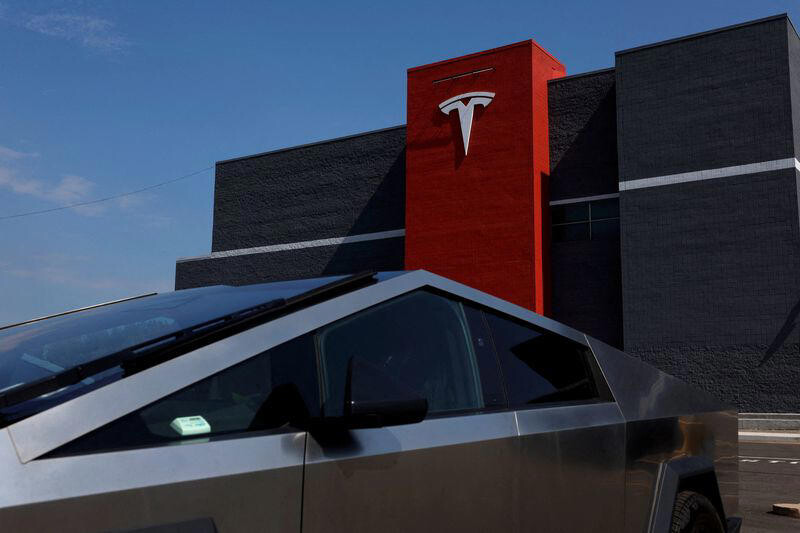
Tesla (NASDAQ: TSLA) and Huawei-backed HIMA (Harmony Intelligent Mobility Alliance), which ranked fourth and tenth respectively in September, both dropped out of October's NEV retail top 10. Li Auto (NASDAQ: LI) and Nio Inc (NYSE: NIO) remained absent from the monthly list.
Tesla's retail sales totaled 8,817 units in October, compared with 34,030 for Nio and 27,018 for Li Auto.
In the January-October rankings, BYD retained first place with 1,945,400 units, down 31.5% year-on-year. Its share rose to 21.9% from 21.8% in January-September.
Geely ranked second with 1,045,823 units, down 16.8% year-on-year, while its share remained at 11.8%.
Leapmotor held third place with 590,540 units, up 40.1% year-on-year, the fastest growth among the top 10. Its share rose to 6.7% from 6.5%.
Changan ranked fourth with 570,105 units, down 14.0% year-on-year, with a 6.4% share. Leapmotor's cumulative lead over Changan widened to 20,435 units from 5,787 at the end of September.
SAIC-GM-Wuling rose to fifth with 438,037 units, down 31.3% year-on-year, with a 4.9% share. HIMA climbed to sixth with 400,767 units, down 3.9%, with a 4.5% share.
Tesla fell to seventh from fifth in the cumulative rankings, with retail sales of 389,905 units, down 15.0% year-on-year. Its share declined to 4.4% from 4.9% in January-September.
Xiaomi Auto returned to the cumulative top 10 in eighth place with 336,613 units, up 6.7% year-on-year, with a 3.8% share.
Chery rose to ninth with 334,125 units, down 20.8% year-on-year, also with a 3.8% share.
Nio fell to tenth from eighth with 333,406 units, up 38.5% year-on-year, with a 3.8% share.
Li Auto, previously ninth, dropped out of the cumulative top 10.
In the broader passenger vehicle market, which includes conventional internal combustion engine vehicles, China's retail sales totaled 1.643 million units in October, down 27.1% year-on-year but up 1.5% month-on-month.
Of that total, NEV retail sales were 1.109 million units, down 13.7% year-on-year but up 2.3% month-on-month, according to the CPCA's monthly report released yesterday. NEVs accounted for a record 67.5% of passenger vehicle retail sales.
BYD's share of the overall passenger vehicle market was 15.2% in October, down from 15.3% in September. Geely remained second with 196,244 units, with its share rising to 11.9% from 10.9%.
Changan climbed to third with 89,064 units and a 5.4% share. Chery fell to fourth with 84,148 units, while Leapmotor held fifth place with 83,573 units, both with a 5.1% share.
FAW-Volkswagen ranked sixth with 80,379 units, down 40.9% year-on-year, with a 4.9% share. SAIC-GM-Wuling rose to seventh with 73,132 units and a 4.4% share.
SAIC-Volkswagen, FAW Toyota and GAC Toyota ranked eighth through tenth, with retail sales of 62,200, 55,958 and 53,022 units, respectively. Tesla dropped out of the overall passenger vehicle retail top 10.
In the first 10 months of the year, China's cumulative passenger vehicle retail sales totaled 14.98 million units, down 22.3% year-on-year, with BYD and Geely retaining the top 2 positions.
BYD's cumulative share rose to 13.0% from 12.7% in January-September. Geely recorded cumulative retail sales of 1,725,437 units, with its share holding at 11.5%.
BYD's cumulative sales lead over Geely widened to 219,963 units from 165,906 at the end of September. Changan ranked third with 876,916 units and a 5.9% share.
Leapmotor ranked seventh in the overall passenger vehicle cumulative rankings with 590,540 units and a 3.9% share. It was also the only automaker in that top 10 to post year-on-year growth.