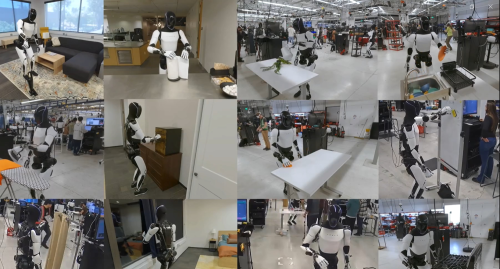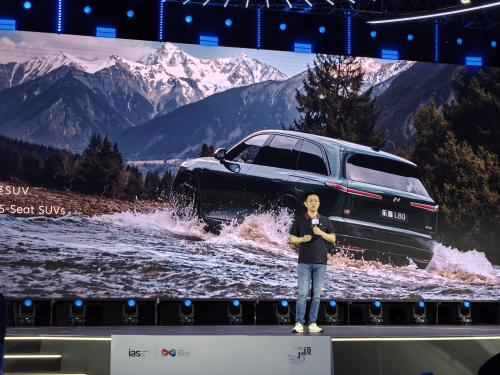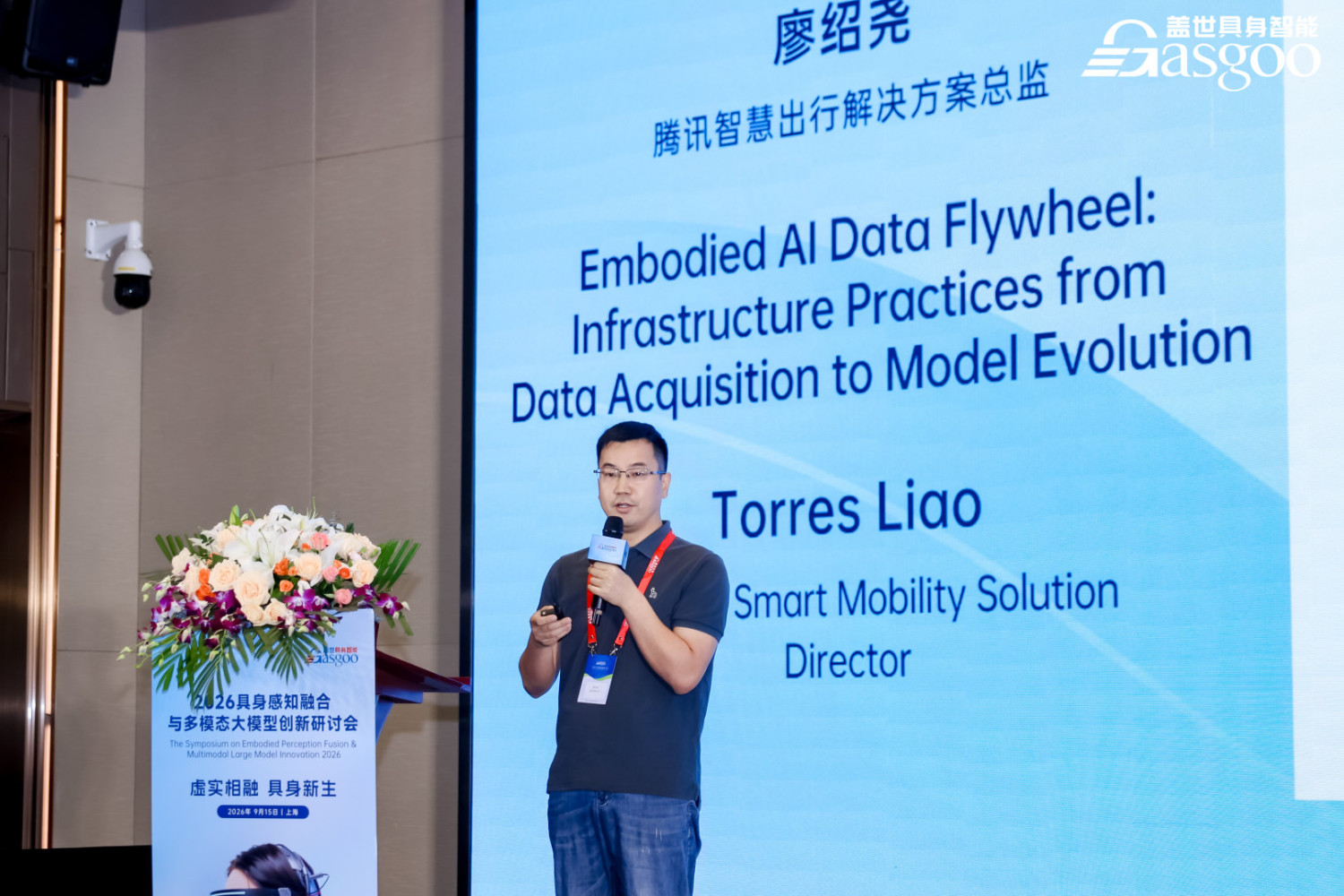






















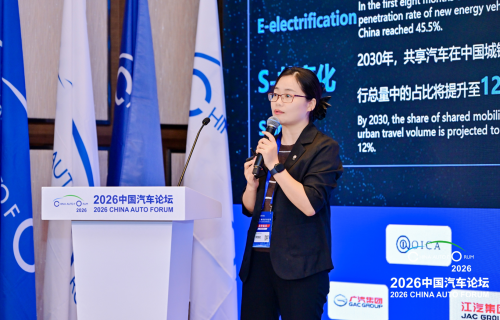


Gasgoo Munich-On September 15, at the Gasgoo's The Symposium on Embodied Perception Fusion & Multimodal LargeModel nnovation 2026, Liao Shaoyao, director of smart mobility solutions at Tencent, outlined the tech giant’s positioning as a cloud provider in the realm of embodied intelligence.Image credit: GasgooTrue industry consensus on autonomous driving wasn't forged by flashy demos or automaker press events. Instead, it came down to weekly software updates and monthly tallies of city expansions — a unified yardstick for measuring progress across the board.Using autonomous driving as a benchmark, the robotics sector has yet to reach its own "city expansion" moment. Right now, robot hardware, models, chips, cloud providers, and ecosystem partners are all entering the fray. Embodied intelligence has evolved from a trend into an irreversible consensus, yet significant hurdles remain outside of that agreement. The primary challenge is the data gap: collection methods like physical interaction, teleoperation, and simulation each have flaws, requiring a mix of engineering solutions.Bridging that data gap hinges on scaling up device deployment, rapidly feeding collected data into the next round of training, and then using improved model capabilities to upgrade the devices themselves. To keep this cycle spinning fast, cloud vendors must provide elastic computing power, data closed-loop tools, and robust model training platforms.Tencent’s role is to accelerate that industry iteration.On the collection front, hardware establishes a channel with the cloud via SDKs, relying on nationwide nodes and weak-network resilience to transmit data back. For training, Tencent supplies tidal computing power—shifting workloads to off-peak night hours—and builds thousand-GPU clusters by mixing large and small cards, as well as memory-intensive and compute-intensive types. On the simulation front, Tencent has converted typical NVIDIA scenarios into default images that launch with a single click, enabling browser-based access to cloud simulation integrated with its machine learning platform. Finally, for deployment, a unified cloud-edge-device architecture dispatches lightweight computing tasks to the nearest edge, reducing latency and network costs.At the ecosystem level, the Tencent Robotics Lab platform offers free toolchains and software to help hardware manufacturers rapidly validate specific vertical scenarios.