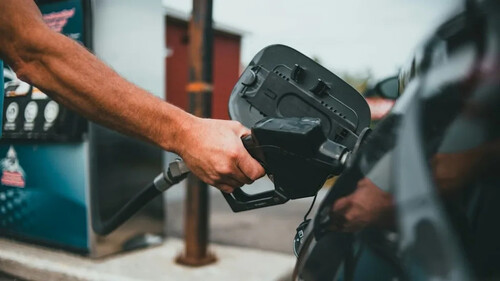
Recent headlines have fixated on ultra-fast EV chargers that can add hundreds of miles of range in the time it takes to refuel a gas car. Automakers are touting ever-faster charging speeds. Infrastructure providers are racing toward megawatt charging (regardless of whether or not today’s EVs can even manage it). Across the industry, the idea is clear: the faster charging becomes, the closer we get to solving the EV adoption challenge. But this entire conversation is built on an assumption that all but falls apart under closer examination: that the ultimate goal of EV charging is to replicate the gas station experience. That assumption might sound reasonable. But it’s causing the industry to overlook one of electrification’s most important advantages. The Industry Is Optimizing for the Wrong Benchmark For more than a century, drivers have measured convenience by the amount of time spent at a fuel pump. The gas station became the benchmark because it was the only practical way vehicles could acquire energy. As a result, much of today’s EV conversation focuses on compressing charging into the shortest possible event. The objective is straightforward: make charging so fast that it feels indistinguishable from refueling. The problem is that this approach assumes the gas station is the standard against which all transportation systems should be judged. The gas station is a solution to a specific problem created by internal combustion engines. If a gasoline vehicle needs energy, the driver must interrupt whatever they are doing, travel to a dedicated location, and wait while the vehicle refuels. The entire system is organized around dedicated trips to acquire energy. Electric vehicles, however, operate under an entirely different logic — that’s the whole point. What Makes EVs Different Is Also What Makes Them Valuable EVs can acquire energy seamlessly while their owners go about their day. If someone drives their EV to work and parks for eight hours, the vehicle can acquire energy during the workday. A forty-five-minute stop at a grocery store can top up the battery while shopping. An overnight stay at a hotel can fully recharge the vehicle by morning. Even in apartment buildings, EVs can acquire energy while their owners sleep. In each of these scenarios, energy becomes something the vehicle acquires while another activity is already taking place, unlike refueling at a gas station, which is an event in and of itself. The industry’s current fixation on charging speed treats this distinction as a weakness. The logic is that charging must become more like refueling because refueling is familiar. A stronger argument is that charging creates the opportunity to eliminate the refueling trip altogether. Those are very different objectives: One seeks to improve an existing experience, the other seeks to make the experience unnecessary. The Bigger Opportunity This pivot is even more significant — and potentially lucrative — when viewed through the lens of real estate. Most discussions about charging focus on transportation infrastructure. Increasingly, the more interesting conversation may be about property. A gas station creates value during the few minutes a customer spends refueling. Once the tank is full, the interaction is over. Charging works differently. Someone who drives an EV may choose a hotel because it offers charging, meaning the charger is creating value throughout that person’s entire stay. If an office building offers workplace charging, it becomes more attractive to tenants. When deciding where to grab a burger, someone might opt for the restaurant with EV chargers in the parking lot. If an apartment community offers reliable charging access, it becomes more competitive in the housing market. If a retailer offers charging, customers may spend more time on-site. The charger is not simply dispensing electricity. It is increasing the utility — and potentially the value — of the underlying property. For all kinds of businesses, charging can become a competitive amenity that attracts visitors, tenants, and customers. Viewed this way, charging begins to look less like fuel infrastructure and more like a feature of the built environment. This changes where value is created. The most important charging locations may not be the places where vehicles stop specifically to charge. They may be the places people already want to visit. Why This Matters for the Next Phase of EV Adoption None of this means faster charging is unimportant. Part of the reason behind the gas station comparison is that consumers sometimes evaluate EVs through the lens of the occasional road trip rather than the daily commute. While it is important to have the convenience of reaching your grandmother four states away in a single unimpeded trip, the reality is that you would generally stop once throughout the journey, making the hypermaxxing edge case irrelevant. That helps explain why charging speed receives so much attention: people tend to remember the moments when they need energy immediately, not the many hours their vehicles sit parked. Long-distance travel will continue to benefit from higher-power charging. Commercial fleets have operational requirements that make charging speed extremely valuable. Freight corridors will require robust fast-charging networks. But those use cases shouldn’t define the entire industry’s strategy. Most vehicles spend most of their time parked. Most charging will occur where vehicles already spend time. The companies that define the next phase of electrification will not simply build faster chargers. They will figure out how to integrate charging into doctors’ offices, workplaces, multifamily housing, retail centers, hotels, airports, and other destinations — places where vehicles already spend time and where charging can make the underlying property more valuable. In other words, they will focus less on making charging resemble refueling and more on making charging fit naturally into everyday life. The Gas Station Is a Workaround The irony is that the gas station was never a transportation ideal. It’s not as if early automakers dreamt of a future where drivers would stop at these little facilities a few times a week. No, gas stations are a necessity. We accepted dedicated fueling trips because we had no alternative. Electrification is that alternative. Yet much of the industry remains focused on duplicating the workaround as efficiently as possible. The question is not how quickly EV charging can imitate the gas station. The question is whether the gas station should remain the benchmark at all. By Aatish Patel, Founder of XCharge North America