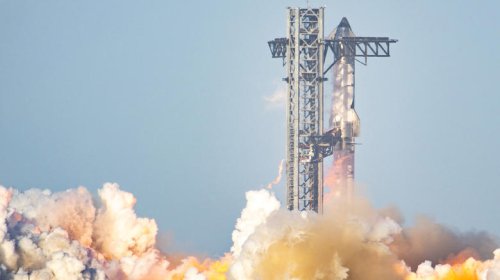
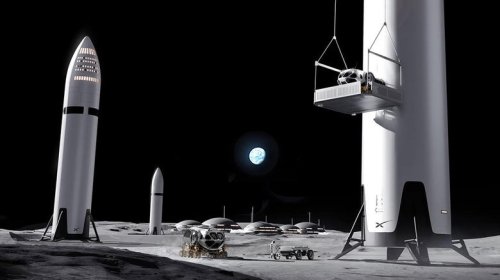
Regular readers have heard me natter on about Star Power, an educational game for 12 to 35 players designed by R. Garry Shirts for Simulation Training Systems in 1969. The game combines chance and skill at trading to establish a score. Players are assigned categories based upon their relative scores, with the highest scoring category being able to change the rules. The game is designed to illustrate the behavior of human beings in a system that naturally stratifies them economically or politically. Notice the language in italics, which is the most important aspect of the game. It exposes the most basic element of human interaction — the urge to accumulate power (usually represented by money) and to defend that power at all costs. There are anecdotal reports of instances when large groups of players have descended into physical altercations as the game moved toward its conclusion and had to be terminated by those in charge for the safety of all concerned. Some will find echoes of Lord Of The Flies, Animal Farm, Brave New World, and 1984 in the results of these Star Power simulations. This coming week, the SpaceX initial public offering will take place — the largest IPO in history and one that will make Elon Musk the wealthiest person in human history by a large margin. Millions of words have already been written about this event — some of them by various contributors to CleanTechnica. Predictably, some believe that buying shares of SpaceX will make them millionaires, while others think it is a classic “pump and dump” scheme designed to extract money from foolish investors and transfer it to those on the inside — the “stars” in the Star Power game. As you read the reports that follow, pay careful attention to the parts about changing the rules. That is really the key to understanding this financial blitzkrieg. The Motley Fool Some believe The Motley Fool is an oracle that should be listened to while others think it is a scheme designed to extract money from your wallet in the form of subscription fees. Whatever the case, its track record is pretty impressive, with a claimed return on investment for those who followed its advice of 968 percent versus 211 percent for the S&P 500 over the same period of time. In a post on June 6, 2026, Sean Williams of the Motley Fool put a spotlight on the rules changes — the ones predicted by Star Power — that have occurred in advance of the SpaceX IPO. Here’s what he had to say: [H]istorical precedent might not be the biggest issue for everyday investors. Rather, it’s the structural changes and the proverbial hoops that major indexes jumped through to include SpaceX that can be the undoing of retail investors. Notably, Nasdaq amended several of its long-standing rules to expedite SpaceX’s inclusion in the Nasdaq 100. The “Fast Entry” rule change, which took effect on May 1, shortened the waiting period for Nasdaq 100 inclusion from around three months to just 15 trading days…..Minimum float requirements were also eliminated. But this wasn’t the only change made. SpaceX can enter the Russell U.S. Equity Indexes and FTSE Global Equity Index Series after just five trading sessions. It’s a somewhat similar story for the S&P 500. For decades, a company has needed to trade for at least 12 months and to have generated four consecutive quarters of GAAP profitability to be considered for inclusion. Both of these qualifiers may be waived, potentially leading to SpaceX’s inclusion in the S&P 500 before the end of 2026. [Note: other reports indicate that S&P has refused to shorten the one year waiting period. See below.] [F]ast entry inclusion into the U.S. Russell Equity Indexes and Nasdaq 100, and faster than normal inclusion in the S&P 500, will require passive exchange traded funds that mirror these indexes to buy shares of SpaceX. We’re talking tens of billions of dollars in forced buying activity by passive funds shortly after Musk’s space and AI conglomerate goes public. But herein lies the problem: SpaceX’s float (i.e., tradeable shares) will mostly be gobbled up by passive funds, which are required to do so. While this could pump up SpaceX’s shares and valuation for a week or three following its debut, it sets the perfect trap to transfer wealth from retail investors to company insiders. Insiders hold an overwhelming majority of SpaceX shares, and the company isn’t utilizing a 180 day lockup period. Typically, 180 days after a company debuts, insiders…..are free to sell their shares. SpaceX is setting up a staggered resale system that allows insiders (not including Elon Musk, who agreed to a 366 day sell restriction) to begin cashing out as soon as the second trading day after the first quarterly earnings release –likely in August. These staggered hurdles, based on performance and time since its IPO, allow insiders to sell their shares to everyday investors. This combination of historical precedent, structural rule changes to facilitate faster index inclusion, the company’s thin float, and an accelerated potential cash-out schedule for insiders will leave retail investors holding the bag. [Emphasis added.] A Different Perspective Chris Armitage is a journalist who has created The Existentialist Republic on Substack. His post on June 6 is a deep dive into the history of Elon Musk, Tesla, and SpaceX. It is a long and detailed piece which makes for interesting reading. In it, he details Elon’s history of over-promising and under-delivering, describing him as basically a flim-flam man. Here is a portion of what he wrote: SpaceX makes the same kind of promise about the future [as Tesla did], on a much larger scale, and it is the company that makes Musk a trillionaire. It is private, so outsiders cannot see its full financial records, and it now also contains xAI and X, which Musk merged into it. AkademikerPension, the Danish pension fund, studied the offering and refused to buy it, putting the company’s real worth at no more than $1 trillion. The offering itself sets the price at about $135 a share, which values SpaceX near $1.77 trillion and would raise roughly $75 billion. That is a record price for a company that went from a $791 million profit in 2024 to a loss of about $4.9 billion in 2025, with another $4.3 billion lost in the first quarter of 2026. After the sale, Musk will hold about 85 percent of the voting power while serving as chief executive and chair, and the company will register as a controlled company, which exempts it from the Nasdaq rule that a majority of the board be independent [emphasis added.] The people who buy shares will have no way to remove him or outvote him. There is something particularly insidious about Musk’s strategy here. When the offering sells new shares, the roughly $75 billion goes to SpaceX itself, so buying in does fund the company directly. After that, the index rules will apply. Nasdaq rewrote its methodology so a company this large can enter the Nasdaq 100 just fifteen trading days after listing, which would be in early July, and the funds that track that index, including the retirement accounts and ETFs, are then required to buy the stock. [emphasis added]. The one provider that refused to shorten their waiting period was S&P, which on June 4 declined to waive its twelve month seasoning rule and its profitability requirement, so SpaceX cannot enter the S&P 500 for at least a year, and only if it turns a profit. To summarize for those of us with less experience around financial markets, they basically have these groups of investments and once your accepted into one of the groups, everyone who invests in that group then automatically purchases your stock. Some people say that Elon peddles imaginary progress to artificially inflate the value of his companies so he can buy his way onto these funds that his companies have no real right to be on if you look at their actual earnings and fundamentals. To be clear, I’m not saying that, but some people sure are. Now, do you know who loves buying into these funds? Public and institutional investors. That means state governments, unions, and organizations that hand over their money to trusted advisors who are doing their level best to make sound investing decisions. Armitage has more to say about bending the rules to favor some at the expense of others — which is Star Power 101: The claims Musk makes are themselves are protected by law. Over President Clinton’s veto, Congress passed the Private Securities Litigation Reform Act in 1995, creating a safe harbor for a company’s forecasts about its own future as long as it labels them forward-looking. Clinton warned it would block investors with legitimate claims from going to court, and Congress passed it anyway. So a prediction that fails is protected, and only an outright false statement about a present fact is fraud, as when the SEC charged Musk in 2018 over his claim that he had secured funding to take Tesla private. This is another example of the law being narrowed over the last 3 decades to make it easier for the powerful to avoid justice. Consider what has happened to every ordinary check on Musk. The courts gave the pay package back. The bylaws now block shareholder suits. The safe harbor protects the wild claims. The people who run public funds are among the few left who can still do something to substantively influence the situation. Musk enterprises do not belong in a well balanced and responsible financial investment portfolio. And yet, the “rules” require professional asset managers to include SpaceX in their portfolios because it will be part of the NASDSAQ, the Russell US Equity, and the FTSE Global Equity indexes. Are you seeing a pattern here? Students of Star Power would predict precisely this result — the transfer of wealth from those who have the least to those who have the most. The SpaceX IPO may not be an example of the Golden Rule in its purest form but it could easily go down in history as The Golden Fleece.




















 +60 others