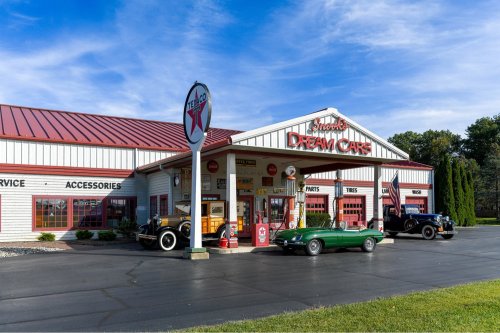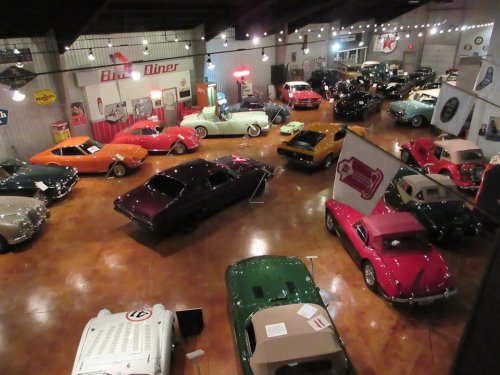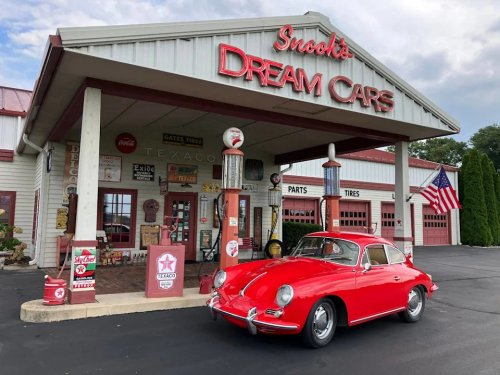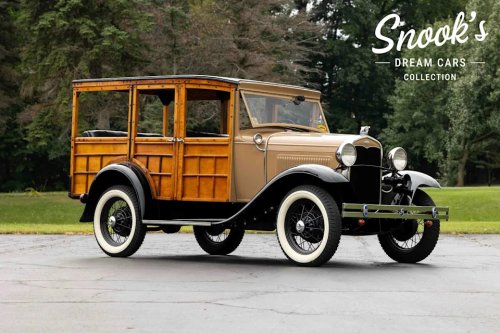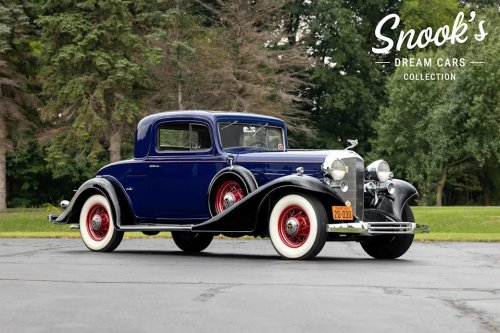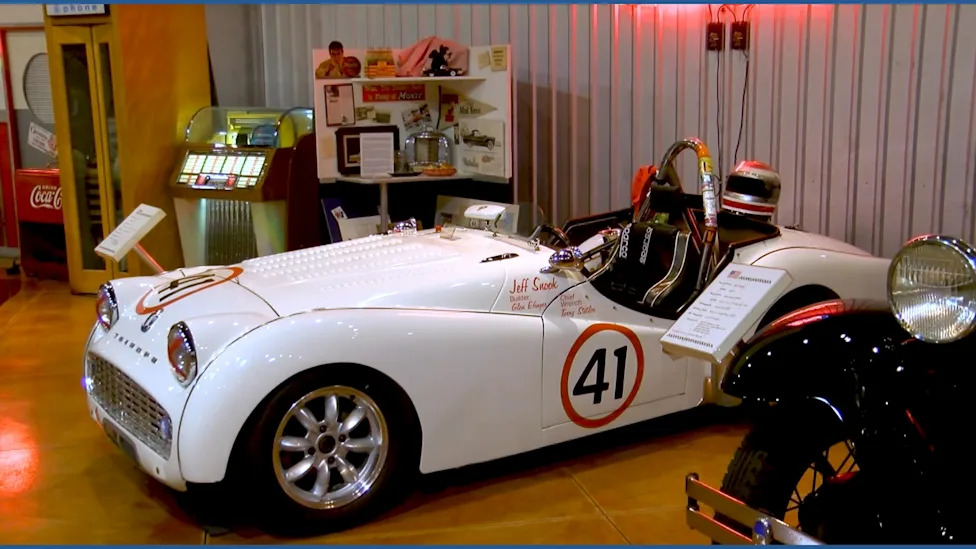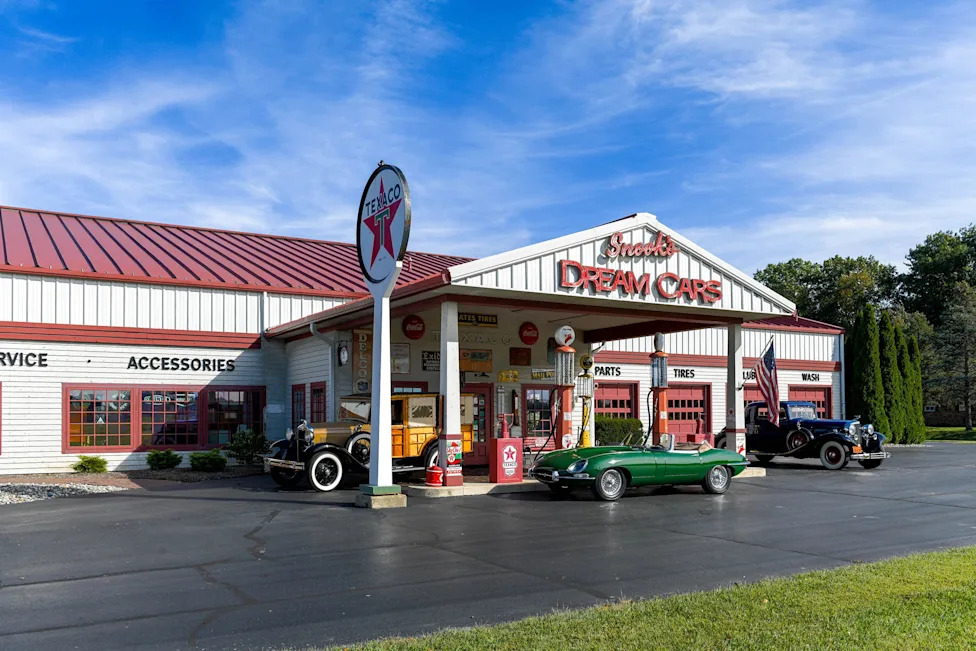
















Snook's Dream Cars Is Closing Because Its Mechanic Is Retiring, Not Because Business Was BadBackfire NewsShawn HenryThu, September 17, 2026 at 6:00 PM UTCAdd us on GoogleSnook's Dream Cars Is Closing Because Its Mechanic Is Retiring, Not Because Business Was BadMost car museums close because the money runs out. Snook's Dream Cars in Bowling Green, Ohio, is shutting its doors at the end of September for a more specific reason: the person who keeps its cars running is retiring, and owner Jeff Snook doesn't see a realistic way to replace him.The collection traces back to 1963, when Bill Snook and his teenage son Jeff restored a 1929 Model A Ford together. That project turned into a lifelong habit of buying cars and automotive memorabilia, and in 2002 the Snooks opened their private collection to the public in Bowling Green. Over the following 24 years it grew to roughly 30 vehicles spanning the 1930s through the 1970s, arranged inside period displays that include a recreated 1940s Texaco station and a 1960s-themed racetrack scene. Snook estimates 40,000 to 50,000 visitors walked through the door, and the cars themselves made it to hundreds of outside shows and cruise-ins.None of that history is why the museum is closing. Terry Steller has maintained the collection for 27 years, longer than the museum itself has existed, and he's retiring. For Snook, that's not a staffing inconvenience, it's a mechanical dead end: "somewhere, sometime, something's going to break," he said, and without a specialist on hand to fix it, he's no longer comfortable driving cars he's spent decades keeping road-ready.AdvertisementAdvertisementThat's a bigger deal than it might sound. Cars built before the 1970s run on carburetors instead of fuel injection, generators or early alternators paired with voltage regulators that auto parts chains don't stock, drum brakes that need periodic manual adjustment, and manual gearboxes without synchros on the lower gears. None of that is exotic knowledge, but almost nobody teaches it anymore, and the generation of mechanics who came up on points-and-condenser ignitions is retiring faster than anyone is replacing it. A 30-car fleet of drivers, rather than static display pieces, needs that expertise on a rolling basis, not once a decade, and Snook has decided it's smarter to sell the cars to people who can keep using them than to let them sit.Every car in the collection is being sold through Hagerty Marketplace, listed entirely without reserve, the same no-reserve approach a Barrett-Jackson consignor used on a supercharged Bel Air restomod this week. As of this writing, 15 lots were live, with bids running from $3,000 for a numbers-matching 1964 Jaguar Mark II up to $37,500 for a 1954 Kaiser-Darrin 161.The Kaiser-Darrin is worth knowing about if you don't normally follow oddball postwar American cars. Kaiser-Frazer built only about 435 of them, its fiberglass body predates the Chevrolet Corvette's by roughly a year, and its doors slide forward into the front fenders instead of swinging open. That rarity is exactly why it's commanding the collection's top bid, in a field that otherwise ranges from work-truck functional, a 1942 Ford GPW military Jeep currently at $7,200, to backyard-hobbyist reachable, a 1931 Ford Model A Station Wagon currently at $3,700.A handful of lots will look more familiar. A 1957 Chevrolet Bel Air convertible is bid to $33,000, considerably more than a rougher, long-stored 1957 Bel Air recently asked for on eBay, and a 1965 Ford Mustang convertible with the 289 V8 sits at $16,000. Rounding out the field are a 1971 Datsun 240Z, a 1959 Alfa Romeo Giulietta Spider, a 1952 MG TD, a 1941 Pontiac Torpedo Streamliner, a 1940 Packard One Twenty convertible, a 1933 Cadillac 355-C rumble-seat coupe, a 1963 Volvo P1800, and a 1963 Jaguar XKE Series I roadster bid to $18,500. Even the memorabilia is playing along: a Kaiser-Darrin pedal car built for driveways instead of roads is bid to $750 right alongside the full-size lots.AdvertisementAdvertisementSelling without a reserve matters here beyond the drama of watching bids climb from nothing. It means Snook has committed to letting every car go to whoever bids highest, with no minimum price quietly protecting the estate. That's good news for buyers hoping to pay a fair market price instead of a number some seller pulled out of hope, though it also means a well-documented museum car can sell for less than a private seller with no paper trail might ask for the same model.That paperwork is the real reason to pay attention here. A car that's spent decades under one mechanic's care usually comes with a service history that a random online listing simply doesn't have, and it's worth more than most buyers give it credit for. Anyone bidding should still ask for maintenance logs, find out when the brakes and cooling system were last serviced, and budget for a pre-purchase inspection even on a car that looks freshly detailed, since museum pieces are often driven only occasionally and can develop dried-out gaskets, stale fuel systems, or flat-spotted tires from sitting between shows. The fundamentals are the same ones worth running through on any older classic before money changes hands.The bigger picture is that small, owner-built car museums are more fragile than their attendance numbers suggest. They tend to run on one family's knowledge, one mechanic's hands, and one person's willingness to keep the lights on, which is the same underlying vulnerability now facing Cooter's Place in Virginia after its co-founder, Dukes of Hazzard star Ben Jones, died this year. That's a different animal entirely from a week like Monterey Car Week, where hundreds of millions of dollars change hands and the market runs on a completely different scale. Snook's collection is a reminder that most of the collector car hobby still runs on modest, no-reserve sales of $3,000 to $40,000 cars, not eight-figure headlines.Snook calls the closing bittersweet, but he's treating it like any other project: set a plan, then see it through. Snook's Dream Cars stays open through the end of September, and after that, Bowling Green loses a museum that ran for nearly a quarter-century on nothing more complicated than one family's stubborn love of old cars, and one mechanic's willingness to keep them running.