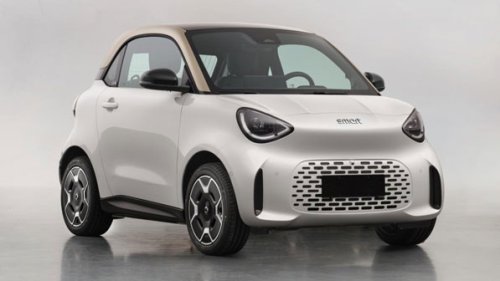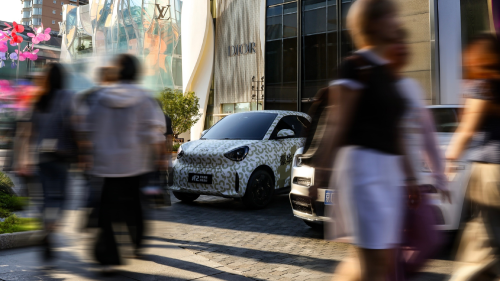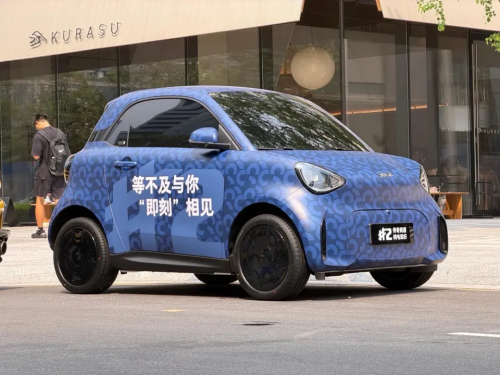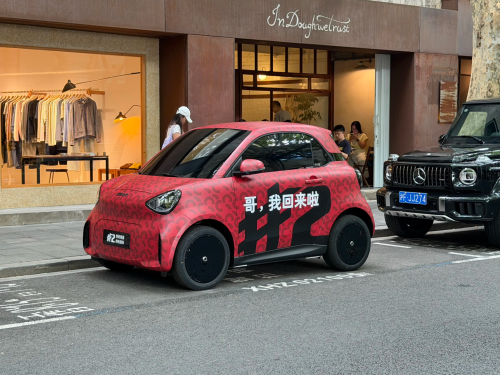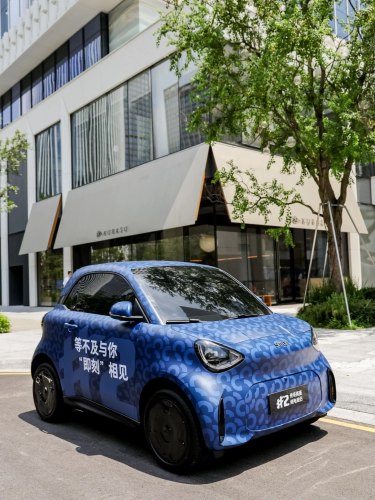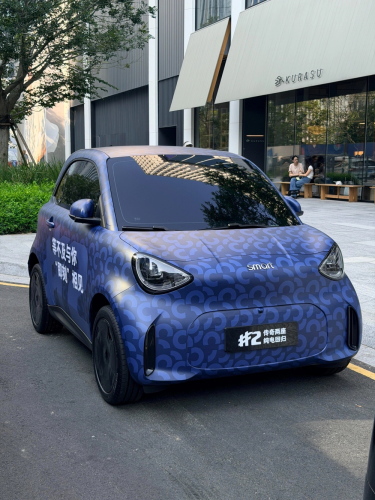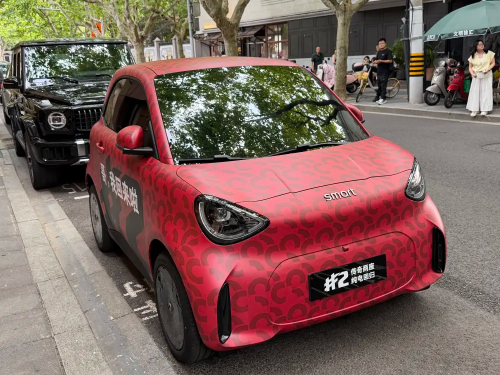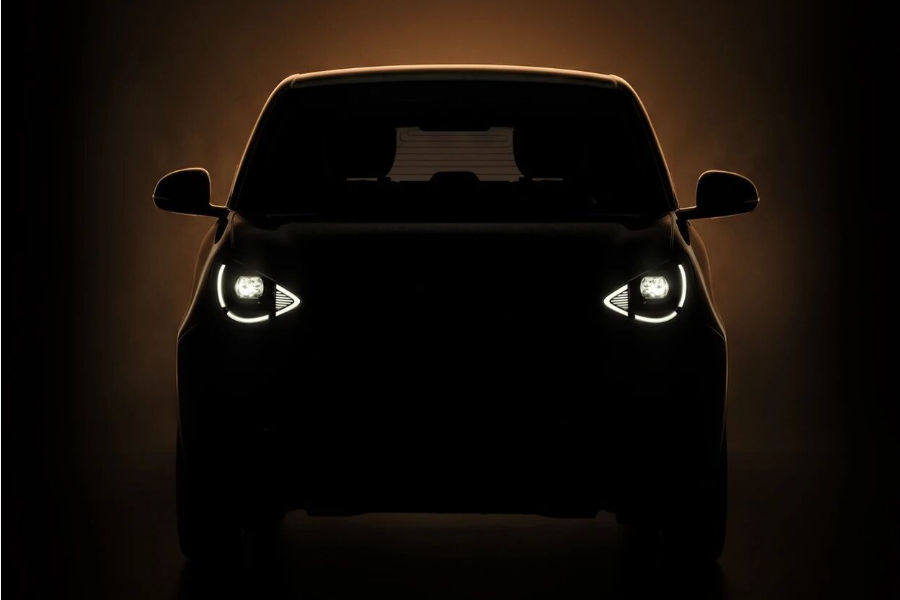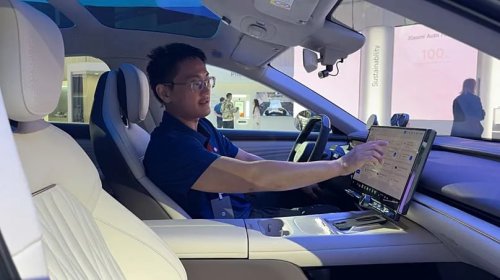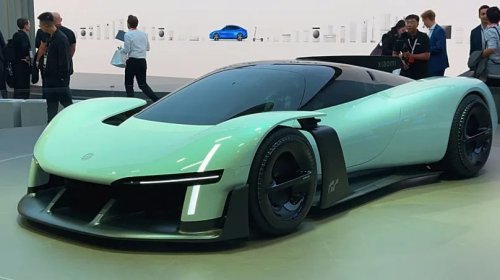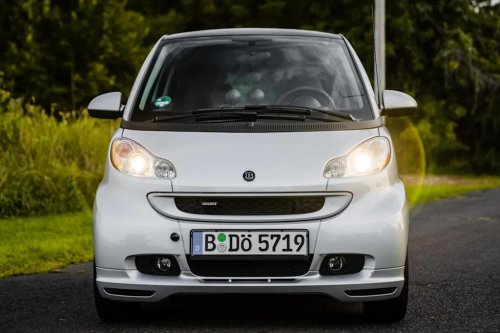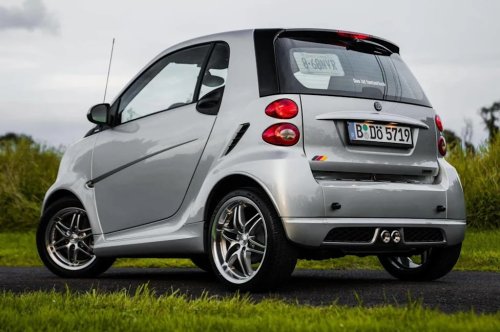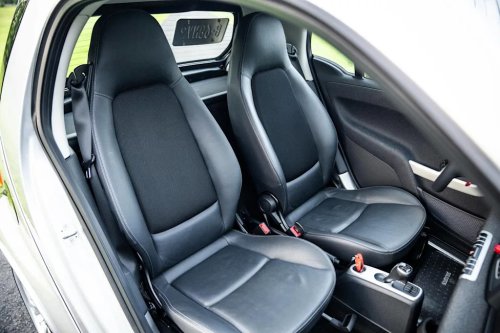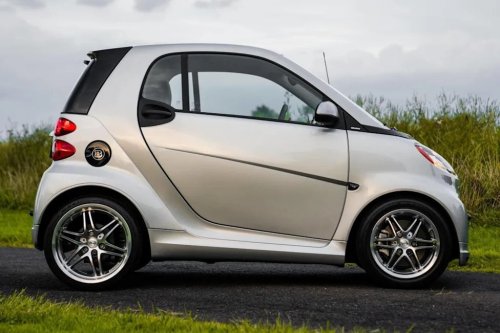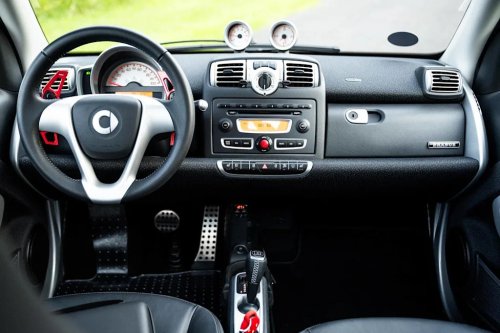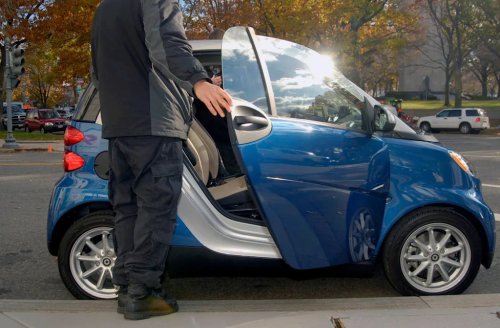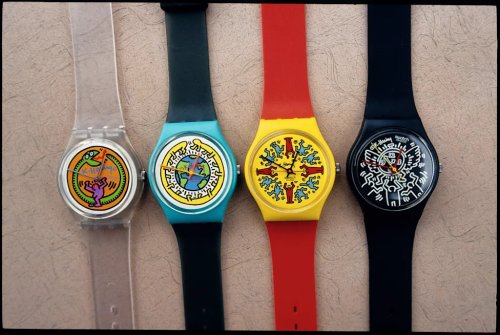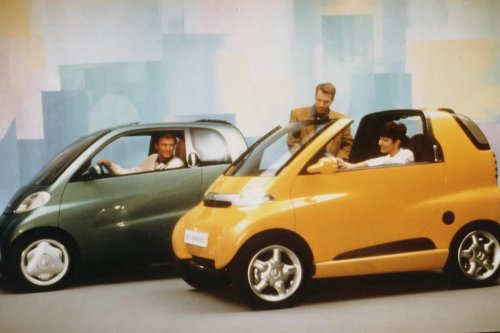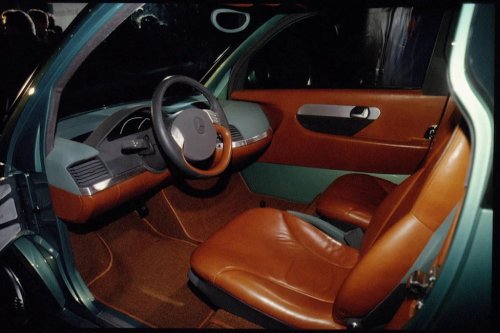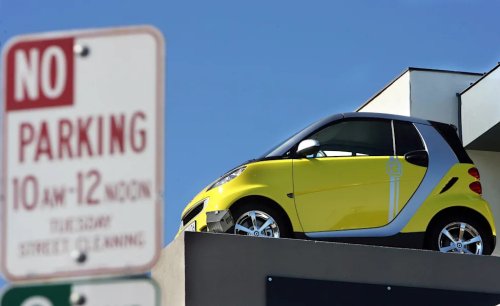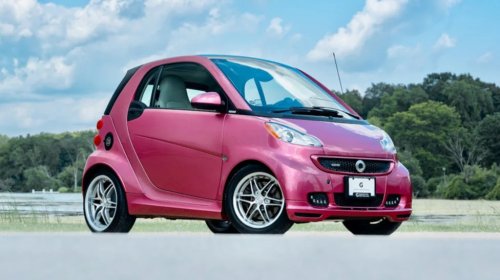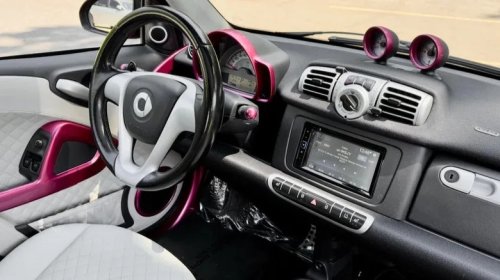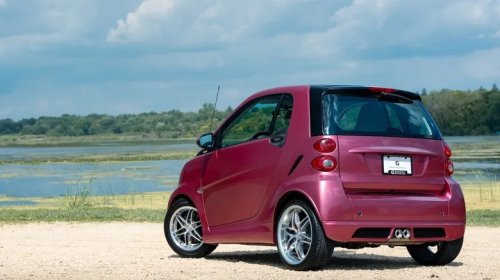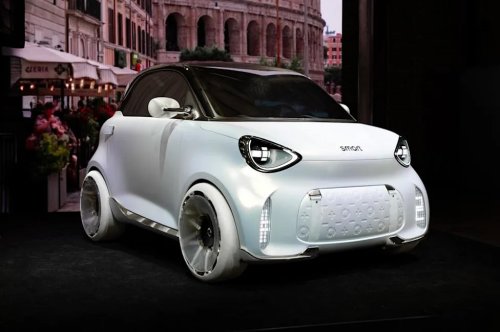
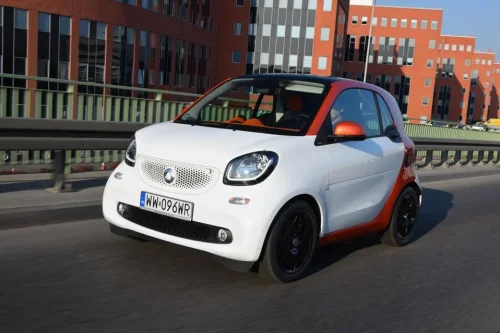
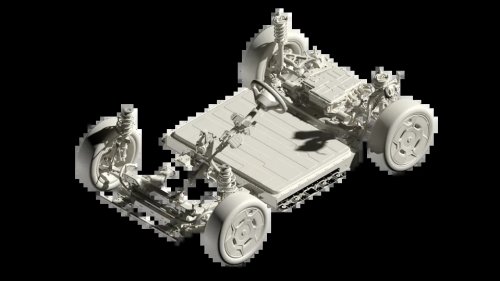
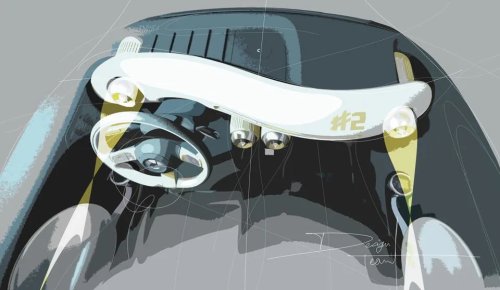
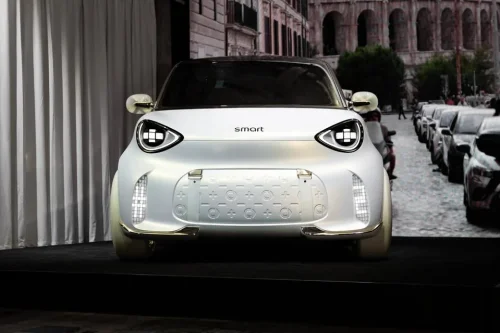



















The Smart #2 has a strong design heritage from the most recent Fortwo two-seater.Julian BossertSmart made its name with an iconic two-seater city car, which has sold 2.5 million units worldwide since its launch in 1998. But the Fortwo ceased production in 2024, and the company has moved toward larger, all-electric models like the #1, #3 and #5. Now the Fortwo is back, only this time it's called the #2. Smart has unveiled more details, including interior design and range intentions. I talked to Smart CEO Wolfgang Ulfer and Xuan-Zheng Goh, Director Product, Marketing & Communications about what the Smart #2 means for the company and urban mobility.Smart #2: Rebirth Of An Icon, Only Electric"We have already grown this year," says Ufer. "We're doubling our volume in Europe. The #5 won Car of the Year 2026 in Norway, and Family Electric SUV of the Year in the UK's What Car? 2026 awards. The #2 is a great chance for us. The big difference is that we don't need to conquer a new segment for the brand." Previous Smart customers had been wondering if this was the same company. When the #1 was launched, many asked why it wasn't a two-seater like the cars Smart had made famous for over 25 years. With the #3 and #5, Smart's vehicles got bigger and further away from the original concept. However, Smart didn't want to turn away from its previous customer base, with 600,000 Fortwos sold in Italy, 350,000 in Germany, and over 70,000 in the UK. The return of the Smart two-seater, reborn as the #2, has garnered interest already from existing customers."Our objective with the #2 is to end up where we've been," says Ufer. However, while there were electric versions of the Fortwo, most previous sales were combustion. Now Smart is a pure-EV brand, and the #2 will only be available in electric form. Ufer reckons the time is right for this move, however. "In Germany, for example, electric cars have a 20% market share and it's really growing each month after another. There is also the situation in the Middle East changing people's mindsets. This is a movement what we can see continuing, and therefore we are as a company really convinced that the #2 will be a big part of our future volume."The original Smart Fortwo sold over 2.5 million units worldwide.When Smart unveiled the #2 at Auto China 2026 in Beijing, one of the most surprising aspects was how much it looked like the most recent version of the Fortwo. "We had three major objectives with the #2," says Ufer. "First, everyone who sees it needs to understand this is the new Smart two-seater. Second, we want to show a modern, innovative car. And third, there needs to be a familiarity with our current portfolio. Our designers achieved these three objectives very well."Smart #2: Double The Range, Interior InnovationOriginally, Smart was a joint venture between The Swatch Group (as in the watches) and Mercedes-Benz. But since 2019, the partnership has been between Mercedes-Benz and Chinese automaking giant Geely. "If you go back 26 years, we always had a cooperation partner," says Ufer. This can make compromises necessary. However, Ufer sees the Geely joint venture as entirely positive. "We say clearly what we want, and we can make that happen. This is giving us a lot of additional power."AdvertisementAdvertisementHowever, this healthy collaboration raises the question why Smart took so long to bring out a new two-seater. Goh explains: "It's a couple of things: one, Smart in its current guise is a fairly new company, and we wanted to make sure that we hit the right segments in the market. When the joint venture was set up, we looked at what the biggest volume opportunity segments in Europe were, and those were clearly the B and C segment, so that was why the decision was made to go with those vehicle types. The other reason is technology. From Geely, we had the components to create B and C segment vehicles. To create a compelling new two-seater, which we felt would do justice to the heritage of the Fortwo, we needed to wait for the technology to catch up. Now with the #2, we've got the right ingredients."The Smart #2 debuts the ECA platform aimed at small city cars.One of those ingredients is range. The Smart #2 will be the first car to use the company's new Electric Compact Architecture (ECA), specifically optimized for small city cars. Smart is targeting a battery size of 35.7kWh, over 60% larger than the electric EQ Fortwo's 22kWh. This will make the #2 capable of a potential WLTP range of 186 miles, where the EQ Fortwo only managed 81 miles. So the #2 won't be so confined to the city as its predecessor. "We really needed the energy density, or changes in battery chemistry, to allow us to provide that," says Goh. "We needed to find something that would allow us to deliver the range that customers are looking for." ECA also enables the #2 to maintain the incredible 6.95m turning circle of the Fortwo, greatly facilitating maneuverability and parking in urban environments.Another clear area of improvement for the Smart #2 over its predecessor is the interior cabin experience, which was on show for the first time at the Rome unveiling. "We have very nice displays, not too big, but the right size, where we can show our software-based connectivity, which will also be in that car, like in our all others," says Ufer. Another innovation is bench-style seating (which remains adjustable for comfort). "If someone wants to park in a challenging environment, normally the issue you have is that the space is too small to step out, or someone on one side has a problem." With the bench and no central console, they can slide over to the other side of the car easily.The #2 has a significantly upgraded interior, with many innovations."Our core purpose was to create a two-seater that fits the urban lifestyle," says Goh. "We know from our previous data that we have a wide range of customers, whether it's their first car or their eighth car. We want to create a car that most of our customers would appreciate. We know that you spend most of your time in the interior of a car, so that was an area we thought we could significantly improve on. The #2 design does two things. It's an evolution of the previous two-seaters, but it also fits in with the rest of the current lineup, where premium interior quality is one of our calling cards."AdvertisementAdvertisementDespite being manufactured in China, the #2 is very much aimed at the European market. Ufer would like to sell cars in the US, as there are pockets of popularity for previous models, for example in California and Portland, Oregon, but the current tariff structure rules this out. Smart still sells vehicles in 41 countries, with Argentina recently added. Despite China's penchant for large cars, the Smart Fortwo also has a cult following in that country. However, while Smarts were once popular in Japan, the company has no plans to sell its cars there.How The Smart #2 Fills A GapThe original electric Smart EQ Fortwo was quite reasonably priced, starting at under £20,000 ($26,500). However, nothing has yet been announced about the #2. "We are a premium brand, so we want to position the vehicle appropriately," says Goh. "It's a very dynamic market, but we're also very conscious that we have a unique selling point that we are the only two-seater, so we have an idea of where we want to price the vehicle. I don't see us going more expensive than previously. We have a #1 in the market already, so that establishes what the ceiling is for a #2."Smart completes is portfolio lineup with the #2."The #2 is not there to overshadow our current lineup, but to embody it," says Goh. "It's what makes a Smart a Smart. By coming back with the two-seater, our current portfolio of vehicles makes a lot more sense. It's the distillation of what makes us Smart, and when you see it in the context of the #1, #3, and #5, it's now clear that we are a portfolio brand, which really offers something for all customers. Now we've got cars for the A, B, and C segments. The reaction to the Concept #2 has been overwhelmingly positive. We've had good feedback on #1, #3, #5, but #2 is the one that a lot of diehard two-seater fans have been waiting for.""We talk a lot about transformation in the automotive industry today," concludes Ufer. "But Smart is already transformed. We are a new generation of OEM. The only thing we need to do now is grow. Everything else is solved already. We are super small, efficient, we have shareholders, we have a great connection to Mercedes-Benz with the sales and after sales network, and we have the design support. We have the technology of Geely, where we can, with our own R&D department, create cars in two years. We are really looking forward to launching the Smart #2, because this was missing in the middle of our portfolio. Now we bring the two-seater back, so people understand we do premium electric cars in a compact car segment. We went up to #5 in terms of dimension, but one segment was completely blank. Now we come back, conquer that one, and everyone understands our idea and our mission."This article was originally published on Forbes.com