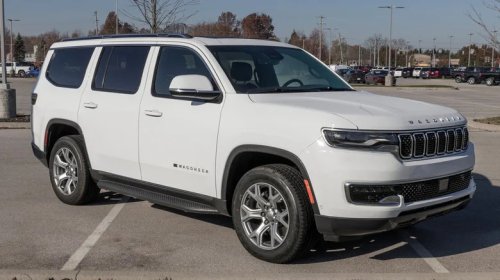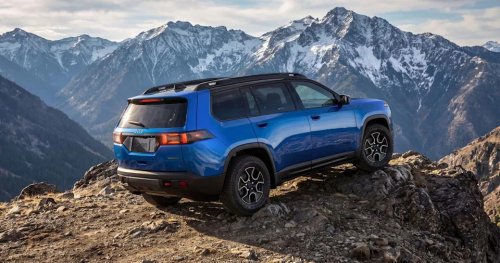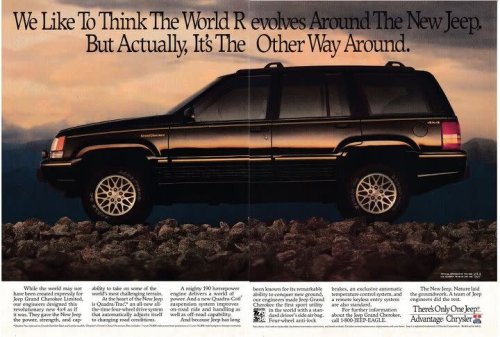
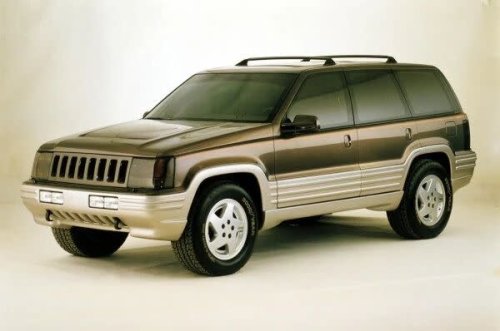
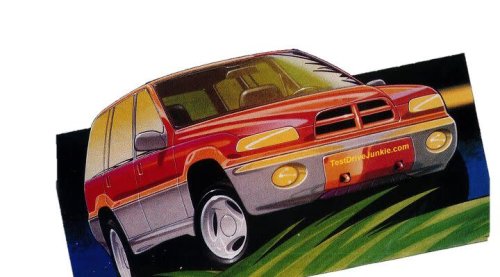
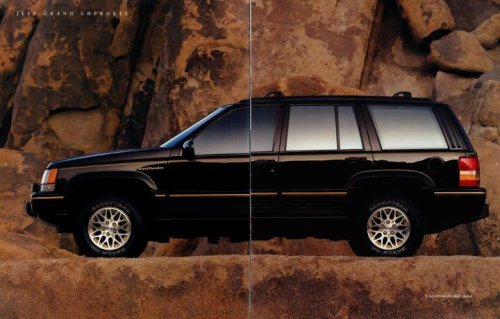
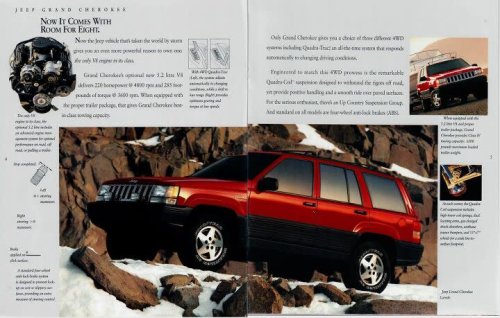
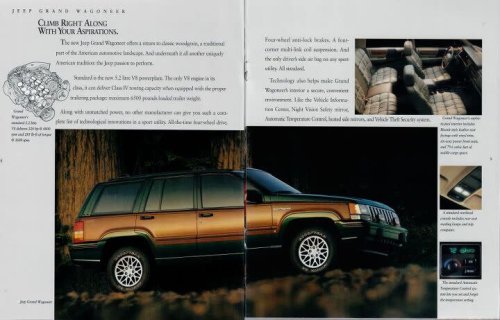















In our last Jeep Wagoneer installment, we reached the end of the line for the antique SJ Grand Wagoneer. Designed with user-friendly roots and launched in 1963 with relatively few frills, it soldiered on through 1991 and concluded its run as a wood-clad beast of burden with a luxurious interior, a carbureted engine from 1970, and the aura of desirability among its wealthy customer base. Jeep's new owner Chrysler was eager to recreate the Grand Wagoneer magic, and did so as soon as the Grand Cherokee launched.As mentioned last time, the vehicle which became the ZJ Grand Cherokee was originally planned to be a replacement for the XJ Cherokee. AMC intended to replace the Cherokee by the late Eighties, but Chrysler had other ideas when it took over in 1987. In Chrysler's hands the ZJ project was delayed, expanded, and turned into the more upmarket Grand Cherokee of 1993.Chrysler saw the SUV boom coming, and a lot of potential in Jeep. That's why it purchased AMC in its failing state, acquiring much of the failing company's debt in order to do so. The midsize SUV was moving into the suburban middle class driveway at a rapid rate circa 1990, and as a class was becoming a more family-oriented vehicle while also moving upmarket.AdvertisementAdvertisementDomestic manufacturers added rear doors to models like the S10 Blazer and Jimmy around this time. Ford debuted its very important and slightly late entrant to the party, the Explorer, in 1991 - now the bestselling SUV in history. Each subsequent model introduced (regardless of brand) was more luxurious than its predecessor, with more content in a family-friendly package.The Range Rover sat atop the pyramid with an empty space next to it where Grand Wagoneer resided through 1991. Entrants like the FJ80 Land Cruiser of 1990 morphed into the Lexus LX 450 in short order. A year after the LX 450, Mercedes-Benz introduced the first German luxury SUV built for family and on-road use, the ML-Class. BMW's X5 followed thereafter.Like the XJ Cherokee, the ZJ Grand Cherokee used a unibody design and boxy shape with upright proportions. Its design was as expected in a time when SUVs put function over style. Enlarged in all dimensions, the Grand Cherokee was - as its name suggested - larger than the Cherokee.First displayed in 1989 to the public as the Jeep Concept 1, its exterior was nearly production ready at that time. The initial concept used vertical Dodge Caravan handles that didn't make it to production, as Jeep sensibly used push-button grab handles from the XJ Cherokee instead. In what would have created an interesting alternate history, Chrysler toyed with the idea of using the ZJ with Dodge styling cues as a replacement for the defunct Ramcharger. Unnamed, it was only presented in drawings circa 1990.AdvertisementAdvertisementWhen it debuted the Grand Cherokee used a wheelbase about five inches longer than the XJ, at 105.9 inches. It was notably larger on the outside than the Cherokee, and in its initial guise the Grand Cherokee measured 178.7 inches. It was a couple inches wider than Cherokee at 69.2 inches, and stood three inches taller (67.3 inches) than the smaller XJ model.AdvertisementAdvertisementGiven its intentions as a family vehicle and the already fading popularity of the two-door SUV by the early '90s, the Grand Cherokee was only offered as a four-door with a rear liftgate. It was powered by an amalgam of engines from various sources in the finest AMC tradition. The smallest engine was a 2.5-liter VM Motori diesel, while bread-and-butter versions used the 4.0-liter AMC inline-six from the XJ Cherokee.The inline-six proved itself a reliable and long-lived engine in Cherokee usage, and was a given for Grand Cherokee use. V8 power came from the Ram Truck division, with either a 5.2-liter or (shortly thereafter) 5.9-liter V8 of Chrysler's Magnum family. Both those engines were modernized derivations of the 318 (5.2-liter) V8 of 1968.Those engines were paired to a variety of automatic transmissions over the years, all of four speeds. Initially sourced from Aisin, the automatics were subsequently replaced by four different versions of Chrysler's TorqueFlite automatic. Manual transmission SUVs were still an entity in the early Nineties, and one was offered in the Grand Cherokee from 1993 to 1995. The Aisin five-speed could only be paired with the inline-six engine.The V8s in particular gave the Grand Cherokee bragging rights, as it was the only SUV on offer in 1993 in the midsize class with a V8. Similar competitors from Chevrolet and Ford topped out at V6 power. Even larger models like the Land Cruiser made do with an inline-six in those days.AdvertisementAdvertisementGrand Cherokee launched with three different trims, two of which wore names that quickly identified the model's status to onlookers. The entry-level Grand Cherokee was an unlabeled base model (later called SE), while the majority of consumers purchased the mid-tier Laredo. The peak of the Grand Cherokee was the Limited, with leather, wood, standard four-wheel drive, and an optional V8.Above all those was the brand new Grand Wagoneer. In 1993 Jeep granted the legendary SJ's name in full to its new offering. The company made a similar move previously, when the XJ Cherokee morphed into its ill-fated Wagoneer version. That one was named Wagoneer Limited while the SJ Wagoneer Limited was renamed Grand Wagoneer.It was important to note the Grand Wagoneer was advertised specifically as a separate model, and not a trim of the Grand Cherokee. Intended as a full return to the glory of the SJ Grand Wagoneer, the XJ version asked big bucks, and made some big promises upon its appearance. We'll pick up there next time.[Images: Chrysler]Become a TTAC insider. Get the latest news, features, TTAC takes, and everything else that gets to the truth about cars first by subscribing to our newsletter.