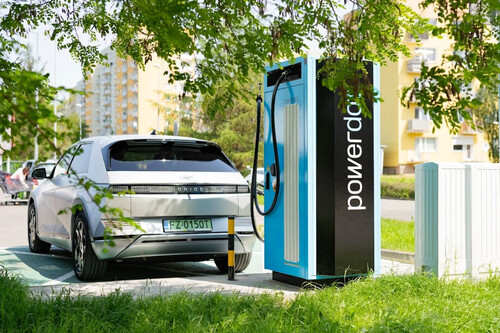
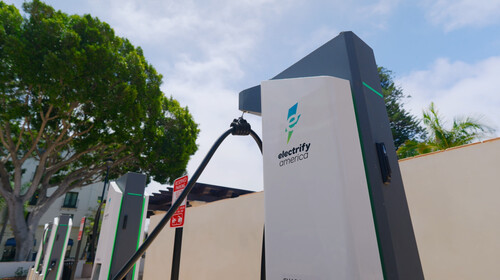
MANILA, Philippines — The Philippine government is proposing a more than sevenfold increase in funding for its electric vehicle program in 2027 as electric vehicle sales accelerate and the country works to build the charging infrastructure needed to support them. The Department of Budget and Management (DBM) has proposed P228.92 million ($3.71 million) for the Electric Vehicle Industry Development Program under the 2027 National Expenditure Program, up from P32.46 million ($526,000) appropriated for the program in 2026. The increase comes at a point when electrified vehicles are becoming a significant part of the Philippine automotive market. Department of Energy (DoE) data show that 66,685 electrified vehicles were sold from January through August, representing 24.7 percent of the estimated 270,124 total vehicle sales during the period. The figure, however, covers more than battery-electric vehicles. The DOE’s tally includes hybrid electric vehicles, plug-in hybrids and battery-electric vehicles. Of the 66,685 units, 16,320 were battery-electric vehicles, 29,649 were plug-in hybrids and 20,716 were hybrids. Infrastructure requirements differ considerably between a conventional hybrid and a vehicle that depends entirely on external charging. This is the biggest technical hurdle the update in budget wants to answer. The government is directing the new funding toward two areas that address that infrastructure challenge: charging facilities at selected government offices and the creation of an EV charging-system testing facility. E-vision The first is the Electric Vehicle Infrastructure Scoping, Implementation and Operationalization in Selected Government Offices, or EVision Project. It is intended to identify suitable locations and establish charging infrastructure within government facilities. The second would strengthen the DoE’s ability to test charging equipment and determine whether charging systems meet technical and safety requirements. The testing capability is particularly relevant as the charging market becomes more fragmented. The DOE had accredited 422 EV charging station providers by Aug. 31, 2026, while registered charging stations nationwide had reached 1,876. The progress and the scale of the remaining task The government’s Comprehensive Roadmap for the Electric Vehicle Industry, or CREVI, calls for at least 7,300 charging stations between 2023 and 2028 under its business-as-usual scenario. A more aggressive scenario calls for 66,500. At 1,876 registered stations, the country has reached about one-quarter of the lower target. The challenge is not simply installing more charging points. The charging network has to be integrated with the electricity distribution system, comply with technical standards and remain operational as demand grows. The DOE has been developing rules covering charging-station installation, operation and accreditation under the Electric Vehicle Industry Development Act, or EVIDA. The department has also been working on guidelines identifying public and private establishments that will be required to install charging stations. Those requirements place charging infrastructure within a wider transportation and energy policy rather than treating it solely as a private automotive service. Government facilities are one part of that strategy. EVIDA requires covered government agencies, local governments and other public-sector entities to transition part of their fleets to electric vehicles. The law establishes a minimum 5-percent EV share for covered fleets within the period prescribed by CREVI, with the requirement intended to increase over time. Trust in charging The government therefore faces a practical requirement to provide charging for the vehicles it is itself expected to adopt. The EVision Project could help address that problem while providing government agencies with direct experience in operating electric vehicles and charging equipment. The proposed testing facility addresses a different problem: establishing confidence in the hardware. Charging equipment can involve high electrical loads and, in the case of DC fast charging, sophisticated power-conversion systems. Standardized testing provides regulators with a means of checking equipment before and during deployment instead of relying entirely on manufacturers and private operators. The DoE has already been acquiring equipment for charging-system testing. The proposed 2027 facility would provide a more permanent institutional capability as the market expands. The move comes as the government attempts to develop an EV ecosystem rather than simply increase vehicle adoption. Executive intervention President Ferdinand Marcos Jr. issued Executive Order 121 in July establishing the Electric Vehicle Incentive Strategy, or EVIS, to encourage investment in EV and component manufacturing. The strategy provides a framework for fiscal support intended to attract manufacturers and develop domestic supply chains. That industrial policy operates separately from the P228.92 million proposed for the Electric Vehicle Industry Development Program. EVIS is aimed at building an industrial base, while the 2027 EV development allocation is focused on infrastructure and government capacity. Both respond to different weaknesses in the Philippine EV market that has traditionally depended heavily on imported petroleum for transportation, leaving motorists and the wider economy exposed to international oil prices. Electrification offers a way to reduce petroleum consumption, although the benefits depend on the electricity used to charge the vehicles and on the continued development of renewable generation. That energy-security argument has gained greater attention during periods of international oil-market volatility. For the Philippines, the transition is therefore not simply a matter of replacing gasoline and diesel vehicles with electric ones. It involves shifting part of the country’s transportation energy demand from imported petroleum toward electricity while developing the infrastructure required to deliver that electricity to vehicles. The pursuit of meeting EV joy creates new requirements for emergency responders, technicians and other workers. The DoE has begun conducting safety activities covering high-voltage systems, battery handling, charging practices and emergency response. As EV numbers increase, fire and rescue personnel will increasingly encounter vehicles with high-voltage battery systems that require different procedures from conventional vehicles. The same applies to vehicle inspection, maintenance and repair. These capabilities rarely attract the same attention as vehicle launches or sales figures, but they determine whether an EV market can scale safely. This is because the charging network itself is also changing. Early Philippine EV charging infrastructure was concentrated largely in commercial locations and among a relatively small number of operators. The growth of accredited charging providers is broadening the market, while government regulations are beginning to define where charging stations should be installed and how they should operate. The next stage will require greater coordination between vehicle manufacturers, charging companies, electricity distributors, property owners and government regulators. The proposed P228.92 million cannot finance that entire transition. It is small compared with the private investment required to build thousands of charging stations or the capital needed to expand electricity networks. The government is putting money into the parts of the EV ecosystem that private operators are unlikely to provide on their own: public-sector charging infrastructure, technical testing capability, regulatory capacity and the development of standards. That may become increasingly important as EV adoption moves beyond early adopters. The Philippine market is already large enough for charging availability to become a practical consideration for buyers. A driver considering a battery-electric vehicle needs to know not only the vehicle’s range but where it can be charged, how long charging will take and whether the equipment will be available when needed. For fleet operators, the calculation is more demanding. Charging has to be coordinated with vehicle schedules, electricity availability, parking arrangements and operating costs. Those considerations will become more important as government fleets, public transport operators and commercial fleets begin adopting larger numbers of electric vehicles. The Philippines has therefore reached a different stage of its EV transition. The question is no longer whether electric vehicles can be introduced into the market. They are already there. The question is whether infrastructure and institutions can expand quickly enough to support them. The proposed 2027 budget is an indication that the government recognizes that the next phase will require more than incentives for vehicle purchases. It will require chargers that can be tested and trusted, locations where vehicles can reliably recharge, electricity networks capable of accommodating additional demand and public agencies equipped to manage the technology. For a country seeking to reduce its exposure to imported petroleum while increasing the use of cleaner transport, those systems will ultimately determine how far electrification can go.