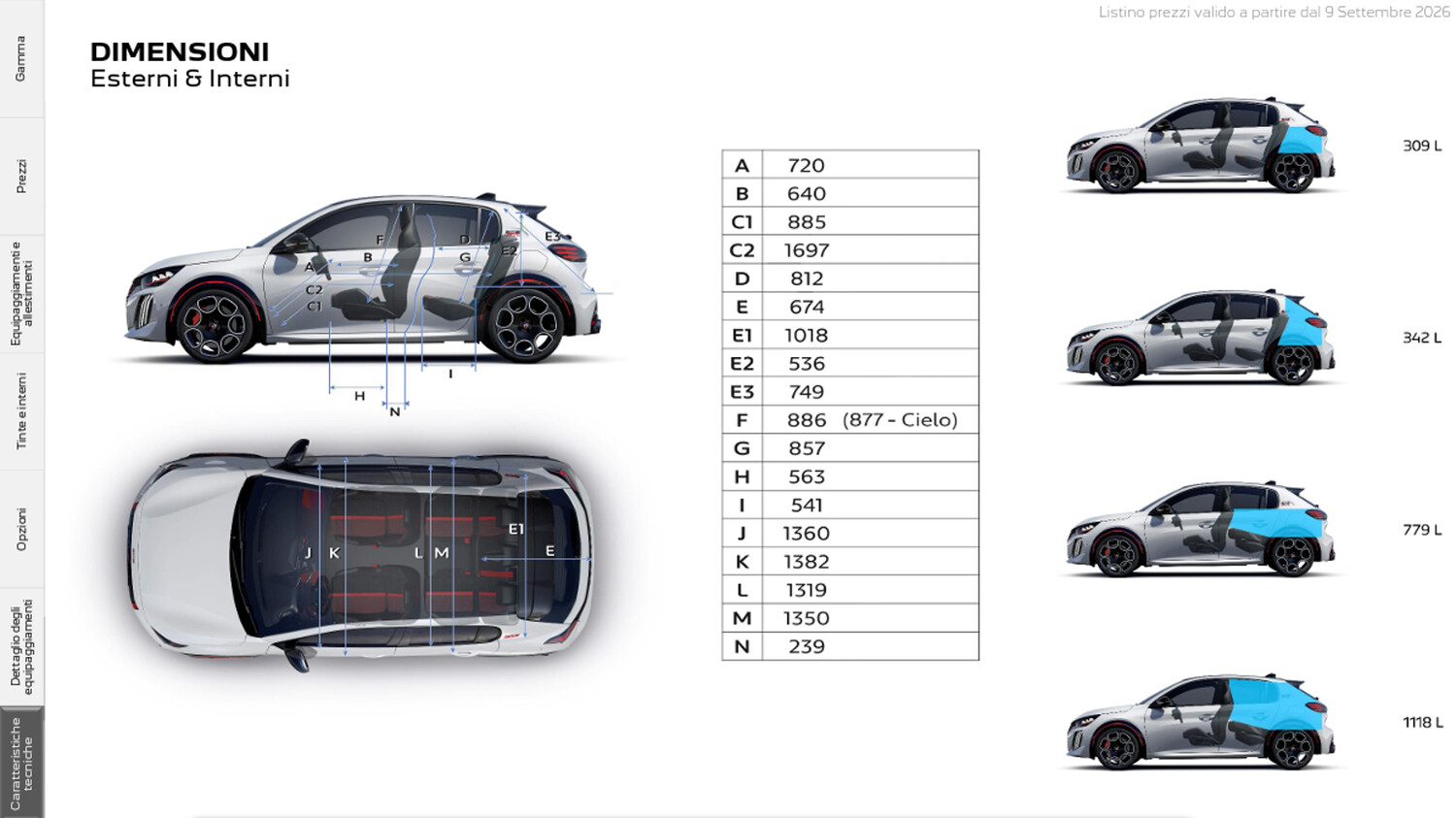
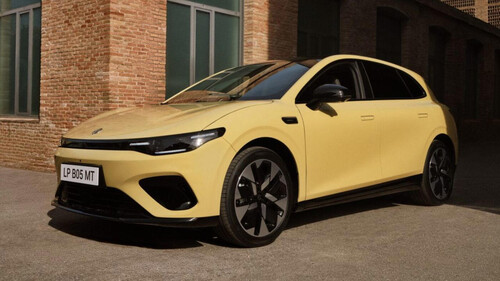
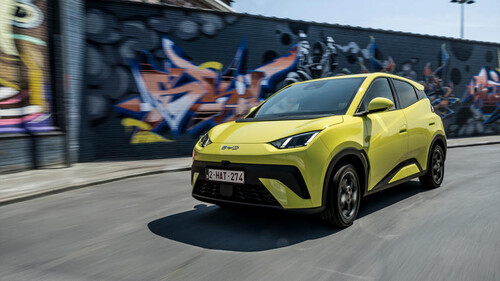
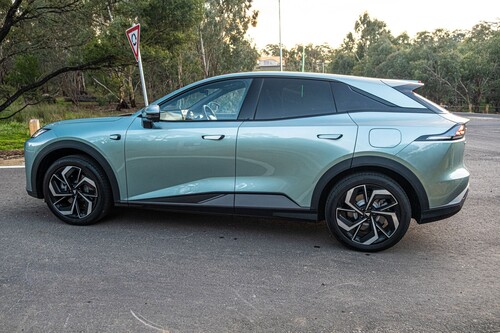
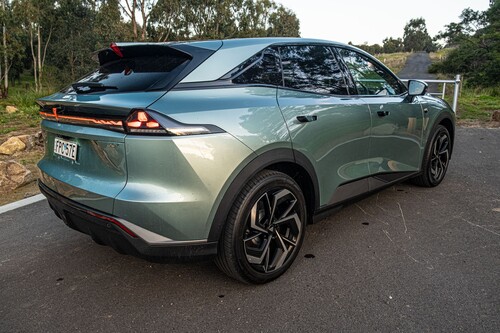
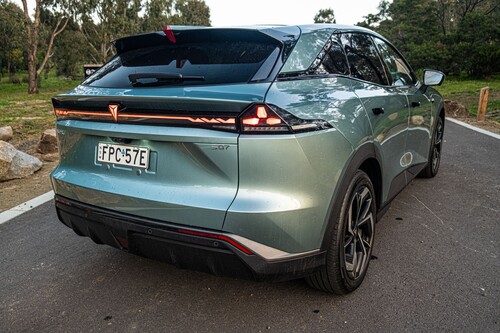
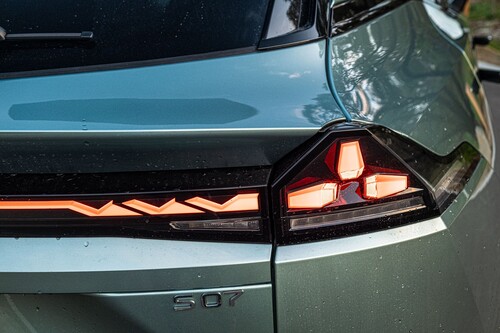
On a recent trip to Sardinia with my wife, I rented a Peugeot E-208. I always try to sample new EVs while traveling, and islands like Sardinia seem like a perfect place for EVs. While there, I saw far more EVs than I did on a trip earlier this year to Naples. For a vacation, the clean, quiet operation of an EV is more relaxing and lets you better enjoy your surroundings. Also, given petrol costing well over €2 per liter (~$9/gallon), it undoubtedly saved us some money. Picking up at the Olbia airport, we rented from local company Drivalia. This let us rent an EV at a reasonable price. However, the car had some wear and tear and wasn’t pristinely clean. The inside of the windshield had what appeared to be spray-on suntan lotion, which made it hard to see when the sun was low or headlights from oncoming traffic were shining. However, after a few napkins, the problem was solved. The E-208 comes with either a 100 kW or 115 kW motor, although the smaller motor comes with a smaller battery and the performance difference is minimal. The smaller battery car we drove has a WLTP range rating of 363 km, whereas the larger battery offers 433 km. In Italy, the E-208 starts at €34,480, including VAT. That is a hefty premium over the gasoline 208, which starts at €18,100 with VAT. Above the regular E-208 is the E-208 GTi, which starts at €43,650. That car has a 207-kW motor, enabling it to accelerate from 0-100 km/h in 5.5 s. At 4055 mm long, the car falls between the current BYD Seagull and the upcoming next generation Seagull in length. Door openings were a little small, making me have to duck to get in, but I fit once inside. Seats were fairly comfortable and had manual adjustments. credit: Peugeot Cargo space was a bit limited, but we managed with the use of the back seat. Of note, Peugeot marketing materials show different measurements for the cargo space. This includes the standard liquid measurement from the floor to the top of the seatbacks, as well as the Tesla-centric liquid measurement to the roof (which would also include underfloor volume, if the E-208 had it). I have essentially stopped reporting on cargo volume measurements, as Tesla started a trend of companies making up their own measurement standards. The numbers become pointless. Peugeot showing different measurements helps with apples-to-apples comparisons, and I appreciate that. Being a rental, our car had the entry-level powertrain. While it wasn’t going to win any drag races, power seemed perfectly adequate for most driving, with electric motor torque making it feel a bit punchier at low speeds than a comparable ICE vehicle. The E-208 was clearly an adapted ICE vehicle. It does not have a frunk up front or under floor storage (where the muffler would go). Also, it does not have the kinds of aerodynamic optimizations seen on many other EVs. That made it much less efficient on highways as speeds increased compared to slower backroads. Peugeot E-208. Photo by Larry Evans Speaking of range, around 300 km was enough for us. The rental counter warned us that charging could be a challenge. Where we stayed in Alghero was a couple of blocks from a Level 2 charger, which had multiple stalls. We would put the car on the charger after our adventures for the day and then return with adequate range after dinner. Overall, the experience was easy. We never needed a Level 3 charger, not that we saw any on our trip. However, when we went to Olbia for the night before our return flight, it was a bit more challenging. We picked a hotel that offered charging, but an ICE SUV had already claimed the spot. We then went to three public chargers that were out of service and one that was blocked by an ICE car. We then ended up at a charger a little over a mile from our hotel that had a broken touch screen, but it luckily accepted the RFID card and started charging. Needless to say, public charging left something to be desired. Someone used to prolific public charging in China or Tesla’s well-maintained supercharger network would be disappointed. However, Enel, who powered the chargers, has clearly put some effort into renewables. On the north side of the island, we saw a lot of solar panels and wind turbines. In a place like Sardinia, the combination of wind and sun makes it an obvious choice. Getting back to the car, the curb weight of 1530 kg (3373 lb.) is not light for an ICE vehicle of this size, but it is lighter than many EVs. However, it is significantly heavier than the upcoming, larger Seagull, which will start at 1180 kg, according to regulatory filings. With much of that weight down low, the E-208 handles well, in a FWD French hatchback kind of way. I can see how it would make a good foundation for the GTi hot hatch. The combination of good handling, a small footprint and poor highway efficiency gave me incentive to take the twisty backroads for most of the trip. I practiced my driving lines and late apexing at a moderate speed. The kind of thing you would do when racing a momentum car, like a Miata, but slower and with more focus on maintaining momentum for efficiency. It was fun, but it didn’t terrify my wife in the passenger seat. I could see a future for great handling, low-power EV momentum cars moving forward. I hope we see more options along those lines. Peugeot E-208. Photo by Larry Evans The interior had a proliferation of hard plastic. It felt like what you would expect from the €18,100 ICE car that this vehicle is based upon. Technology felt like a bit of a throwback compared to other cars that I have driven recently. I could not get my phone to connect, so I relied on my wife holding it for navigation. Overall, a BYD Seagull offers more technology and interior quality for less than €20,000 in Europe. However, starting at €34,480, including VAT, the E-208 is priced up against cars like the excellent XPENG L03, starting at €34,990 in Italy. That larger vehicle starts with more power, more range, more onboard technology and a far better interior than even the E-208 GT Exclusive trim at €42,430. For the price of that E-208, you are looking at a RWD Long Range Ultra L03, with 480 km of range and XPENG’s excellent VLA 2.0 intelligent driving system, as I tested recently in Amsterdam. In the context of the US Market, a price of ~€29k before VAT ($32,660 USD) would position it up against cars like the Chevy Bolt. In comparison to that car, the Peugeot would make a stronger argument for itself. However, as EV choices become more prolific in Europe, the E-208 starts making less sense on paper. Peugeot E-208. Photo by Larry Evans Beyond all the numbers, I still enjoyed driving the E-208. It had character. When I look at the B05 from Stellantis partner LeapMotor, it is clearly a better car. Starting at €23,900, it is also a much better value. Despite being good vehicles, I have always thought that LeapMotor cars can feel a bit bland and generic. Perfectly acceptable, just feeling like they could use a bit more flavor. They seem like the perfect starting point for a rebadge and tuning. However, if you were to combine the EV expertise and production efficiency of the B05 with the style and tuning of the E-208, it would be an amazing car. Chinese technology combined with French flavor. Peugeot wouldn’t be able to keep up with the demand. So, while the current E-208 has its shortcomings, if they are open to making the most of the collaboration, the next generation E-208 could be a winner with customers. And not just for those at the rental counter.