YOKOHAMA, Japan — New Nissan global design chief Matthew Weaver is slashing the time it takes to finish a vehicle’s styling in half as he tries to match Chinese speed and deliver “brave” looks.
Weaver, who took the helm Oct. 1, said his team is leveraging artificial intelligence, streamlined decision-making and new approaches learned from their joint venture in China.
Overall, the design center has slashed styling time, from first sketch to design freeze, by half to as little as five months, Weaver told Automotive News on Nov. 4 at Nissan’s global headquarters.
The goal is to deliver fresh designs faster to keep pace with the industry’s shortening lead times, while also cultivating Nissan Motor Co.’s design DNA for funky vehicles.
Keep up with product planning news with Automotive News' regularly updated database.
Future Product database: 5-year vehicle timelines
Future Product guide: Our 10-week series on future products by brand
Weaver, who joined Nissan in 2001, helped create that DNA by helping design such products as the quirky Juke and breakthrough Qashqai and Rogue Sport crossovers, as well as the R35 GT-R sports car.
The bent C-pillar roofline in the GT-R? That was Weaver’s idea.
“We should always be bold as a company. It’s in Nissan’s DNA. … Even in the mass markets and our mass models, we should still be brave. Fortune favors the brave,” Weaver said.
The question is not academic as Nissan struggles to rekindle global sales on course to fall to the lowest in almost 25 years. Many designers hesitate to risk unconventional styling on top-selling nameplates because one misfire could severely dent a carmaker’s volume.
“Are safe decisions the right decisions?” Weaver said.
Nissan expects sales to slip to 3.15 million vehicles in the current fiscal year ending March 31. That would be the company’s eighth sales contraction of the last nine fiscal years.
At the same time, Nissan is under pressure to speed up its product development timeline to better compete with the breakneck model rollouts from new Chinese rivals. Nissan has overhauled its main global nameplates into just three families. Doing so will help it match “China Speed” by slashing lead times from 50 to 30 months.
Design is chipping in through a three-pronged approach, said Weaver, who took over from Alfonso Albaisa, the veteran Cuban-American who had served as global design boss since 2017.
The first is leveraging AI.
New AI tools allow every stylist to be their own design director, turning out an endless variety of concepts every week and choosing the best to present for review. AI also enables designers to quickly make super detailed, realistic and precise three-dimensional design images and videos. That makes it easier for executives to give a green light much earlier in the process.
“We’re showing feature length films of the car as if it’s operating from desert and it’s been shot, you know, in the Sahara, or it’s driving through the streets of Manhattan, and the reflections are perfect,” Weaver said. “And this is just after a few days.”
Next, Nissan has streamlined design approval.
Final sign-off was a cumbersome process involving up to a dozen executives providing feedback. But CEO Ivan Espinosa stripped down approval to a four-person panel encompassing himself and the heads of design, planning and R&D.
“It just simply makes a very quick one voice,” Weaver said. “Lets us go quick and light.”
Finally, Nissan is learning tricks from its China joint ventures
Weaver visits Nissan’s China design studios monthly. He said design techniques there are ahead of legacy automakers in several ways, including their approach to fit and finish and the use of upscale flourishes at lower cost. Weaver cited flush glazing between the door and window glass as one sophisticated design point the Chinese have mastered.
“Maybe it’s very expensive, but they can do it cheaply because it’s in China,” Weaver said. “It’s way too expensive outside of China, but we can observe that actually reducing these offsets does give a much nicer appearance, and that’s something we should follow and chase.”
Albaisa will continue working as an adviser through Dec. 31 to smooth the transition to Weaver.
Meanwhile, Weaver is working on new designs for next year’s Japan Mobility Show.
“Our homework now is where are we going? How do we stand out?” he said. “JMS will be just the first manifestation of these things, new brand directions.”
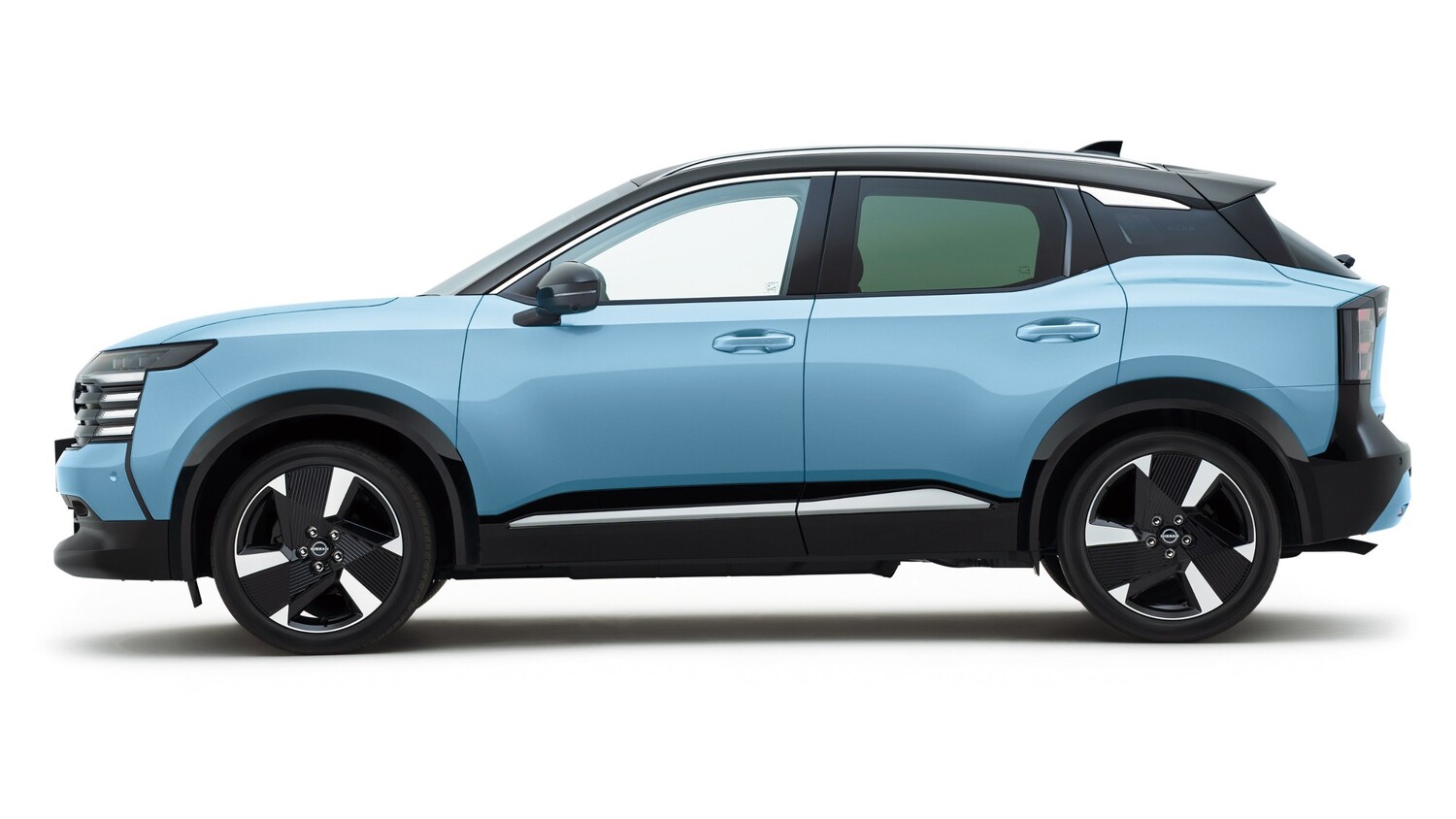
Weaver said the ideas are still coming together. But the first hints of a new direction, he said, will be seen in the upcoming Skyline sedan to debut in December, the all-electric next-gen Juke and the Xterra SUV that kicks off Nissan’s new family of frame-based trucks around 2028.
“This is when,” he said, “you start to see this amplification of character coming through, the start of the shift.”