The South China Morning Post is embarking on a six-part series of motoring reviews to focus on Chinese electric vehicles that are made for the export market, either in the right-hand drive versions or their original left-hand drive editions. In this instalment, Mark Andrews puts Nio’s ET7 through its paces, concluding that the car’s quality materials make it a rival for German marques – for significantly less money. Read the first review, of Xpeng’s G6.
Nio believes that it has the best answer to charging, the problem vexing potential EV buyers around the world: battery swapping, which takes less time than filling up a petrol tank.
Earlier this year Nio introduced its fourth-generation battery swap station. It currently has 2,601 swap stations of all generations in China and 56 in Europe. However, each third-generation station came at a cost of 3 million yuan (US$421,000), and Nio has yet to declare the cost of the fourth-generation stations, which have reduced swap time to two and a half minutes.
Although Nio achieved reasonable sales with its first-generation cars, it wasn’t until the second generation that sales really took off. The first of these was the Nio ET7, which was a major departure from the earlier cars.
Introduced in 2022, the ET7 was the brand’s first-ever sedan; all first-generation models were SUVs. The car also introduced a new suite of sensors, which has become an integral part of all subsequent models.
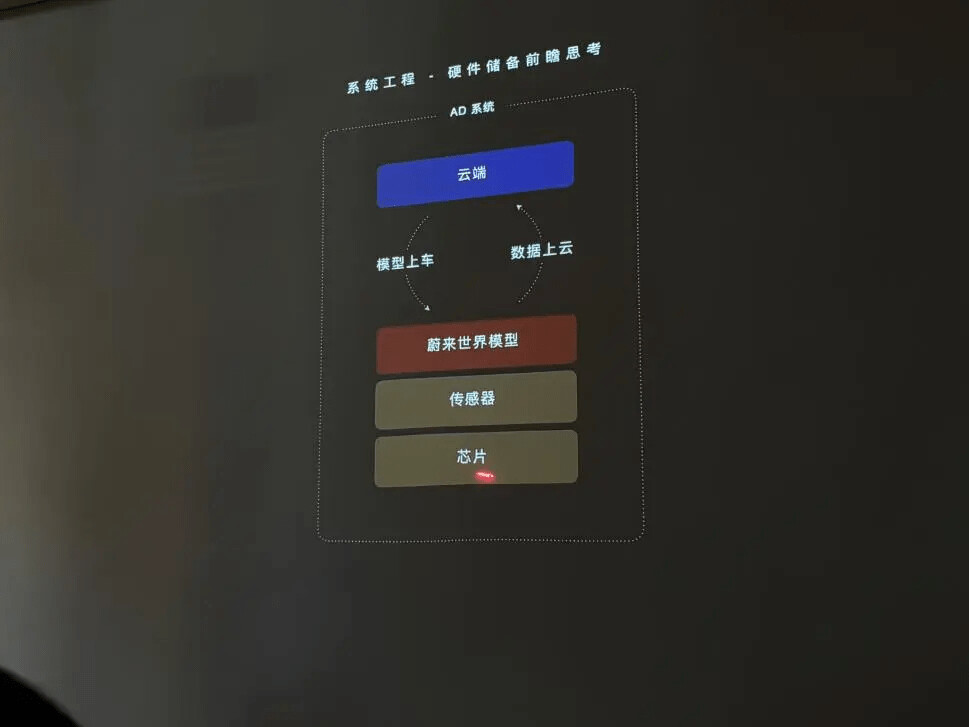
Visually this can best be noticed by the watchtower sensors above the windscreen, consisting of a Lidar unit and two high-definition cameras. The complete suite also includes millimetre-wave radars plus high-precision positioning units. Processing all the data is the Nio Adam supercomputer, which boasts 1,016 TOPS (trillions of operations per second) of computing power thanks to four Nvidia Orin X chips – twice as many as most competitors.
It took Nio many months to start rolling out systems that put all this technology to use, but since 2023 the capabilities have been steadily increasing. Nio’s flagship system is called NOP+ (navigation on pilot), and although the hardware is fitted to all models, users need to pay a subscription fee to use it.
Currently, the system can drive on most highways and inner city roads. On a test of an earlier version that was largely restricted to highways, I found the system was less capable than that of Xpeng, needing far more interventions and not able to optimise speed as well. Furthermore, even though on paper it offered very similar capabilities to Li Auto’s system, in practice it wasn’t as seamless. While both would frequently drop to a lower assistance level due to the area coverage, Nio’s lower-assistance pilot system failed to work as well as Li’s equivalent system.
In terms of interior appointments, the difference between the first-generation ES8 and the second-generation ET7 is significant. Although the general layout of the ET7’s cabin is not hugely different, the quality of the materials make Nio a serious threat to German competitors.
Nio claims to use 40 per cent more Nappa leather than most other brands, which finds its way not only onto the seats but also the steering wheel and door inserts. Nappa leather is a premium option; standard editions use vegan leather, which has the advantage of being easier to keep clean and more resistant to wear. With the ET7, Nio introduced the use of Karuun, a wood veneer produced from environmentally friendly rattan.
A few weeks before my initial ET7 test, I drove the China-only Audi A7L. After experiencing the Nio, I realised how much of a threat it potentially posed to the Germans. The interior felt generally more luxurious and notably brighter thanks to a 1.9 square metre panoramic roof. Furthermore, the equipment level seemed equal or better, yet for a significantly lower price.
The ET7 ranges from 428,000 yuan to 516,000 yuan in China.
All Nio models have a high degree of continuity for the general interior layout, consisting of an instrument panel, a large vertically mounted infotainment screen and a centre console with an integrated drive selector. One of Nio’s main selling points is its Nomi AI voice control assistant. My test car had an optional swivelling dashboard-mounted personification, complete with facial expressions. Although the car’s system can be put into English, Nomi – at least in mainland China – is only really conversant in Chinese.
Other equipment includes a heads-up display, a Dolby Atmos sound system with 23 speakers, electrically adjustable front and rear seats with heating, ventilation and massage functions, and a front cubby hole that also serves as a lockable safe. Nio does away with the traditional glovebox, opening up space for the front passenger.
Thanks to being a purpose-designed EV, space is dedicated to occupants, and Nio claims the car delivers cabin space equal to a BMW 7 series in a 5-series-sized package. Part of that is through locating the rear bench well back in the car. This reduces boot space to 503 litres, which is on the small side; a Mercedes E-class, for example, has 540 litres.
All Nio models have dual motors. The ET7 has a 180-kilowatt (kW) motor on the front axle and a 300kW motor on the rear. The set-up is biased toward the front wheels, meaning the rear motor is only used under hard acceleration. Nonetheless, the ET7 is the fastest Nio to date with an acceleration time to 100km/h of 3.8 seconds. However, it pitches up noticeably under aggressive acceleration.
There are various drive settings which dial down the acceleration to more manageable levels. Furthermore, the setup can be customised.
The braking regeneration is never particularly strong, even in the strongest “standard” setting. In most modes, the steering is too light, although this, like the acceleration and braking regeneration, can be adjusted. Equipped with air suspension, the ET7 is a very comfortable ride even when performing a slalom manoeuvre.
Nio currently offers 75-kilowatt hour (kWh) and 100kWh swappable batteries for the ET7, and even offers buyers the opportunity to rent the battery to reduce the purchase price. The maximum range with the 100kWh battery is meant to be 705km, but this depends on which tyres are fitted to the car.
With my second ET7 experience, I had the car for five days and drove it over similar routes to a Li Auto L9, an extended-range EV that uses a petrol engine as a generator. While I did not need to charge or refill the Li at all, I had to swap the Nio’s battery about halfway through. To do so I found a battery-swap station near me and made a booking. Once I was in an area in front of the swap station, the car took over, driving itself into the station. Around three and a half minutes later I then drove the car out, overall a much happier experience than with a charger lottery.
Nio has been gradually moving into overseas markets, and hoped to be in 25, including right-hand drive ones, by the end of 2025. It is now highly unlikely to achieve that target given trade restrictions. The ET7 is one of the first Nio models to make the move into export markets. It scores highly for looks, equipment levels and luxurious feeling, while delivering a reasonable drive and ever-increasing self-driving capabilities.