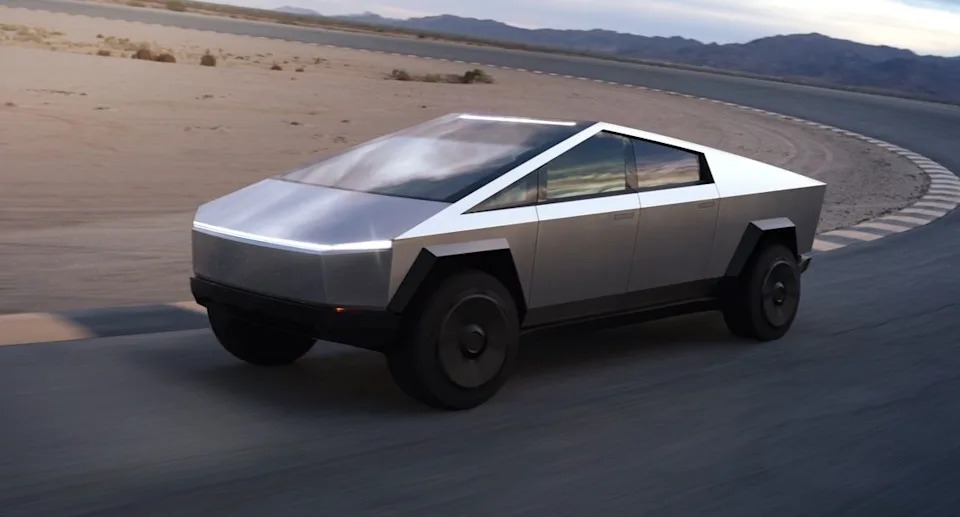



















Image Credit: Shutterstock. | Credit: Shutterstock.comConsumer Reports has released a study on car privacy practicesThe report found huge privacy breaches across the boardBig Tech firms are some of the largest recipients of your personal dataYour car could be leaking personal information to Big Tech data brokers and invading your privacy without your knowledge. That's the conclusion of a new study from Consumer Reports, and it will be uncomfortable reading for anyone who's concerned that their car may be sending personal info to data brokers.The report was conducted by privacy researchers from Northeastern University in Boston and used Consumer Reports' vehicles and Auto Test Center. The data, it argues, shows that "your car may be spying on you," with the information it gleans from your driving behavior being sent to "some of the world's biggest tech companies."It's no secret that many recent cars collect an enormous amount of data about you — not just the way you drive, but the apps you use and even your voice. This is sometimes used to market products to you and could potentially result in you being charged higher insurance premiums. Several carmakers have been fined for carrying out these practices without clearly informing users.Now, Consumer Reports says that, of the vehicles it tested, "Nearly every automaker sent data to outside companies."Moreover, "almost a quarter of the vehicles' apps were found to be sending out personally identifiable information, including vehicle owners' names, vehicle identification numbers (VINs), and precise geographic locations." That data could be sold to data brokers and linked to other information held about you, which means that anyone who purchases that information would know a huge amount about you without having met you.It also puts you at greater risk should that data be leaked or hacked. A massive aggregation of personally identifiable information could be used for stalking, identity theft, medical fraud or other damaging forms of criminal and nefarious behavior.As Sarah Elizabeth Gillespie, one of the study's co-authors, opined: "It does not appear that a customer can buy a new car that does not track you."Where is the data going?Credit: TeslaThe worst privacy breach involved those firms that sent both the VIN and another data point, such as your email address or full name, to a data broker. That allows an advertising firm to link you to "to one of many commercially available consumer profiles, which are sold by data brokers and other companies. The data often includes online behavior and shopping history," Consumer Reports concluded.Interestingly, Consumer Reports said that "The top recipients of the driver data were some of the country's largest tech companies, including Amazon, Google, Meta, Microsoft, Pinterest, Snap, and Yahoo."Why is this data primarily flowing to Big Tech firms? The answer, Consumer Reports said, was twofold: they are often providers of connected apps in the car's infotainment system, and also function as operators of advertising auction platforms used by third-party marketers.While some automakers said that their data-sharing terms could be opted out of, that could severely restrict the way you use it. In the case of Tesla, the company's data-sharing agreement says that opting out "may result in your vehicle suffering from reduced functionality, serious damage, or inoperability."Indeed, Tesla was one of the worst offenders, with the researchers noting that the Tesla Model 3 connected to 34 advertising, tracking or analytics domains. The second-worst offender in this category was another Tesla vehicle, the Cybertruck, with 23 connections."Of the vehicles tested, 28 of 30 connected mobile apps sent data to at least one outside advertising and/or analytics company, and seven sent at least one piece of personally identifiable information — the vehicle owner's name, the car's VIN, or its precise geographic location — to at least one outside company," Consumer Reports warned.The study added that "The findings underscore the immense personal data ecosystem that American consumers are unwittingly drawn into when they purchase and use everyday consumer products, including autos."