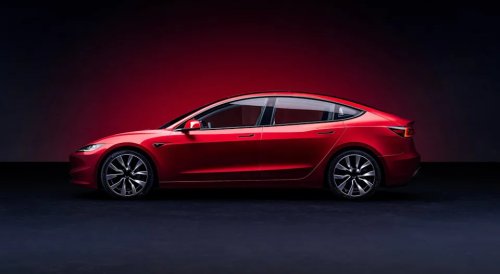
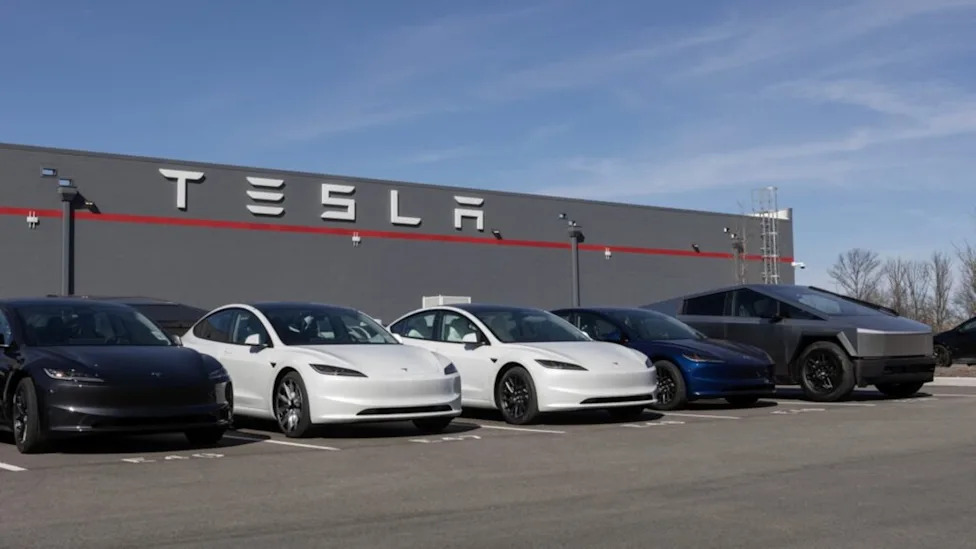
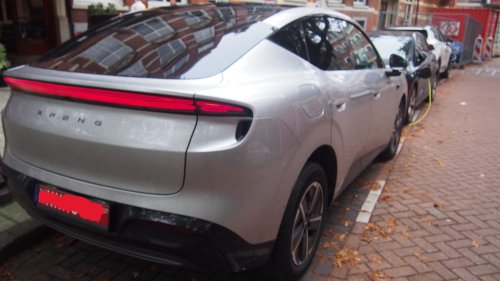
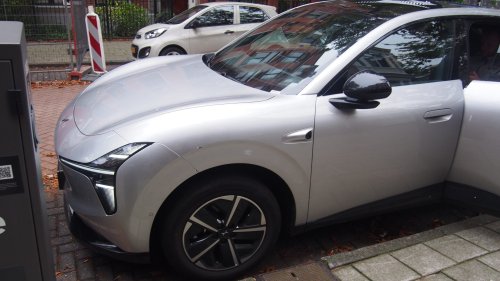
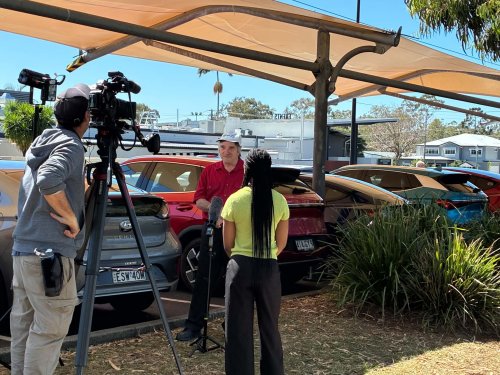
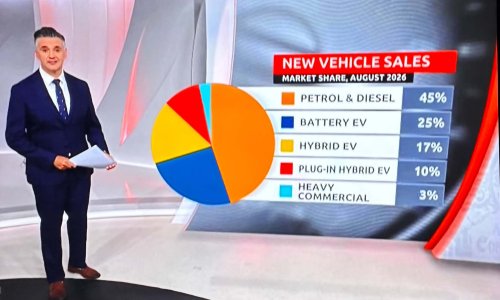
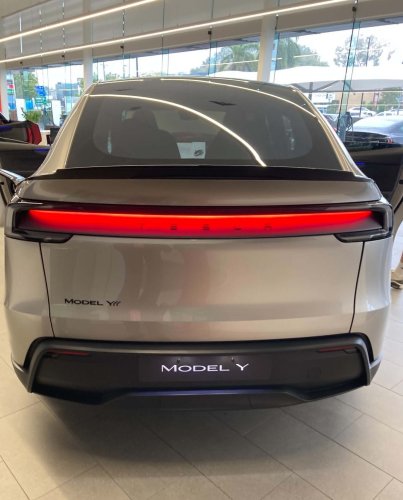
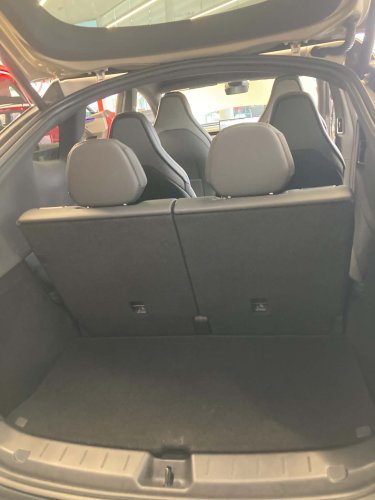
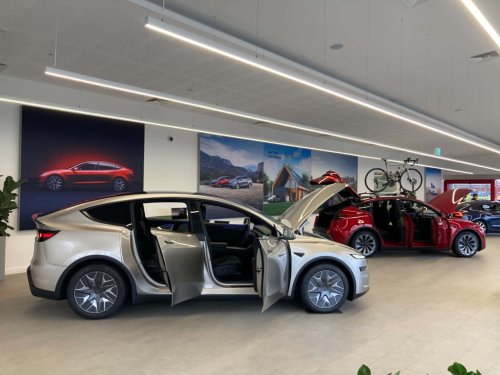
In a recent post on X, Elon Musk lauded Tesla Australia in reaction to this post from Tesla Australia and New Zealand: “For the first time ever, EVs outsold ICE vehicles in Australia 🇦🇺 Model Y was the #1 vehicle & Tesla the #3 best-selling brand overall for the month of August.” “Congrats Tesla Australia!” Musk responded. It wasn’t just a triumph for Tesla. Over 35% of all vehicles sold in the month of August in Australia had a plug! Out of the 109,000 cars sold, 27,000 were BEVs (up 170% YOY) and 10,591 were PHEVs. Even the mainstream media is taking notice. The following chart appeared on SBS “On the Money.” SBS “On the Money.” CarExpert ran the following headline and subheading: “VFACTS August 2026: EVs outsell petrol, diesel and hybrid new vehicles in bumper month. The Tesla Model Y topped the charts in a month where electric vehicles outsold all other powertrain types for the first time, achieving record market share.” It then added: “For context, a total of 25,824 deliveries were of petrol-powered vehicles, followed by 23,608 diesels, 18,662 hybrids.” The Australian Broadcasting Commission (ABC) came out to our humble coffee morning and interviewed Adam Nelson, Chair of the Australian Electric Vehicle Association—Qld, and myself. They were looking for some “B” footage for a puff piece on EVs and got more information and enthusiasm than they bargained for. The journalist promised a link when the footage goes to air. I will share it when it is available. ABC interviews David. Photo courtesy Majella Waterworth. When you look at the top ten best-selling vehicles in Australia for August 2026, 3 are Battery Electric. I remember seeing this on the Chinese reports, where the top ten vehicles and the top ten electrics merged. Seems like Australia is on the same trajectory. Can you tell that I am excited! Bear with me as we explore this further. The top ten vehicles sold in Australia in August of all drive trains were: Tesla Model Y — 6,414 Toyota RAV4 — 5,470 (some of these will be HEVs and PHEVs) Toyota HiLux — 4,833 Toyota Prado — 2,475 Ford Ranger — 2,440 BYD Sealion 7 — 2,213 Chery Tiggo 4 — 2,012 GWM Haval Jolion — 1,891 Zeekr 7X — 1,748 Isuzu D Max — 1,708 Lurking just out of the top ten but ready to pounce were the Jaecoo J5, the BYD Shark, and the Geely EX2. What we really need are some good electric utes. Then it will be game over. “Every Chinese brand in the top 10, plus Tesla, was up YoY; every other brand, in contrast, was down.” Every other brand! In Australia, legacy auto is doing it tough. As we have asked in the past, can legacy auto survive without export markets? Read our analysis here. Time is running out. Are they dead brands walking? According to CarExpert, over half of the Model Ys sold recently have been the Model Y Long. In July, 2,429 Model YL were delivered (outselling the standard 5-seat Model Y, which moved 2,215 units). In August 2026, there were 3,236 deliveries (again beating the standard 5-seat Model Y’s 3,178 units). We had fun checking out the Model YL at the Tesla dealership. A few years ago, when all five of our children were still living at home, we would have been tempted. Instead, we had to make do with a Toyota Tarrago. Here are some photos of the newest version of the Model Y: Model YL rear. Photo courtesy Majella Waterworth I guess I have kept you waiting long enough. Drum roll…. The top ten best selling battery electric vehicles in Australia for the month of August were: Tesla Model Y — 6,414 | year to date 31,454 BYD Sealion 7 — 2,213 | 17,277 Geely EX5 — 1,947 | 10,737 Zeekr 7X — 1,748 | 9,172 Omoda Jaecoo J5 — 1,672 | 8,910 Geely EX2 — 1,279 | 1,753 Tesla Model 3 — 1,271 | 4,597 BYD Atto 2 — 1,122 | 7,737 Kia EV5 — 612 | 4,213 Kia EV3 — 515 | 3,977 No Japanese? No Europeans? Toyota came in at about number 15, with the BZ4X selling just over 400 units. I am looking forward to its full electric lineup becoming available. The Mazda 6e is off to a solid start, with 382 units sold. Even dealers seem to be surprised by the new electric Mazda from China. The best the Europeans could manage was the Volkswagen ID.4 at number 20. Plenty of space in the Model YL. Photo courtesy Majella Waterworth In the battle of the brands, BYD is #1, but not by much, leading Tesla by only ~3,000 cars — that’s only half a shipload! Number 3 is Geely, at only one third of the numbers, followed by Zeekr and Kia. Politicians are taking credit for the “structural change,” saying it is due to the New Vehicle Efficiency Standard. My opinion is that it is due to value-for-money Chinese vehicles, and the increasing insecurity of the petrol and diesel supply — despite the continuing bitter campaigns of misinformation in the media. Whatever the reason, it is a cause for celebration in the Australian EV community. Model YL. Photo courtesy Majella Waterworth. Every time Australia takes a step forward with EV penetration, we hear the same caveat: “There aren’t enough public fast chargers.” So bleats the FCAI. My lived experience is that the charging network is doing very well, thank you, and anyone who wants the hard data can check out Open Charge Map. See the map here or here. A recent survey by the NSW from the NRMA (National Roads and Motorists Association) points to a bright future for electric vehicles, with only 17% of people surveyed saying that they would not consider buying an EV. The major driver towards EV ownership is no longer a concern about the environment, but cost. Electricity cost at 34¢/kWh vs a petrol cost of $2.50 a litre. The main concerns appear to be “how long will the battery last?” “Where does it go when it fails?” FUD has done its job well. More information will be needed to allay these fears. Can we reach 40% penetration in Australia by Christmas? With record solar and battery deployment, affordable, tech-packed electric cars, the Australian motorists’ future is bright and electric.


















 +49 others