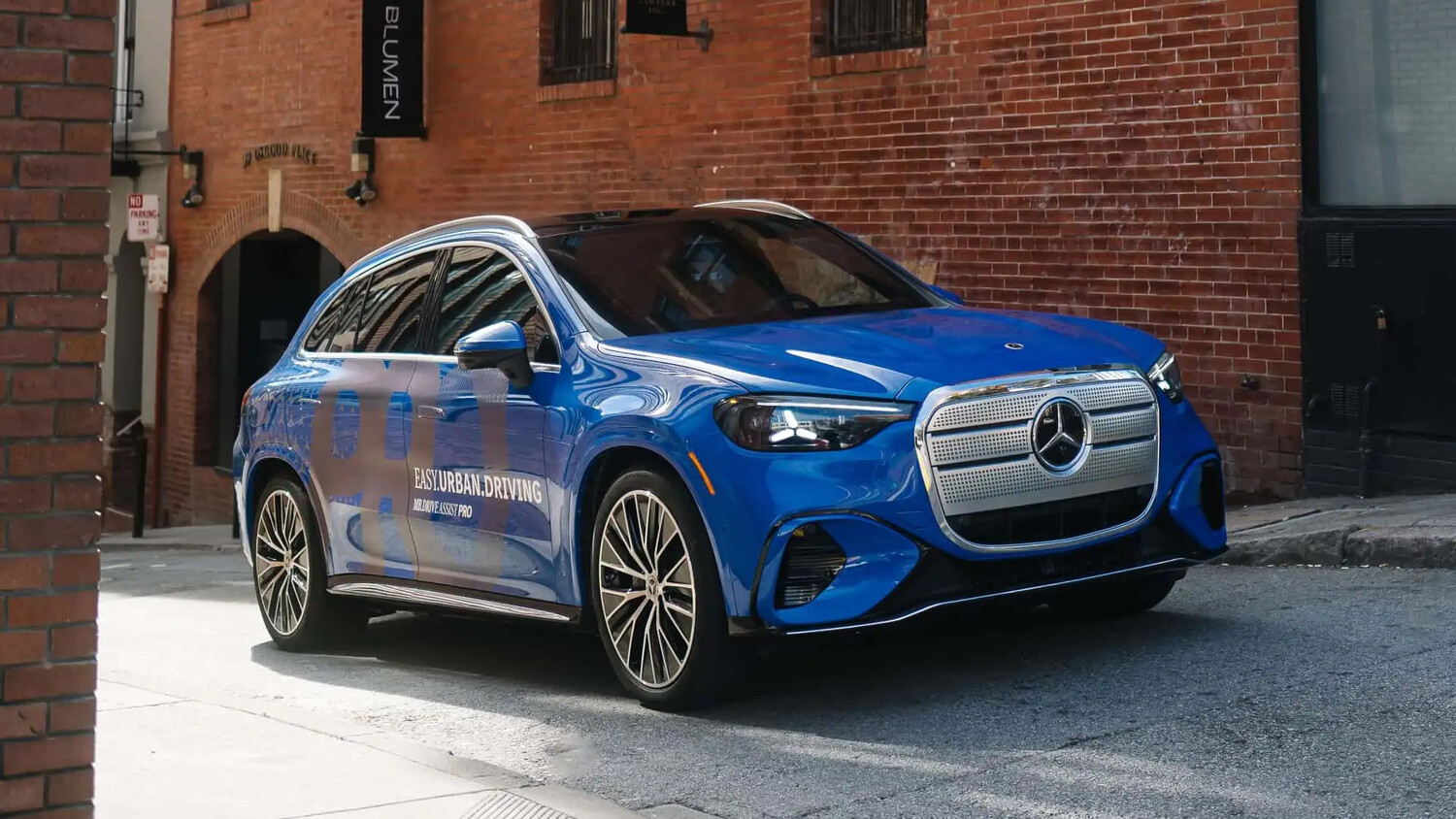
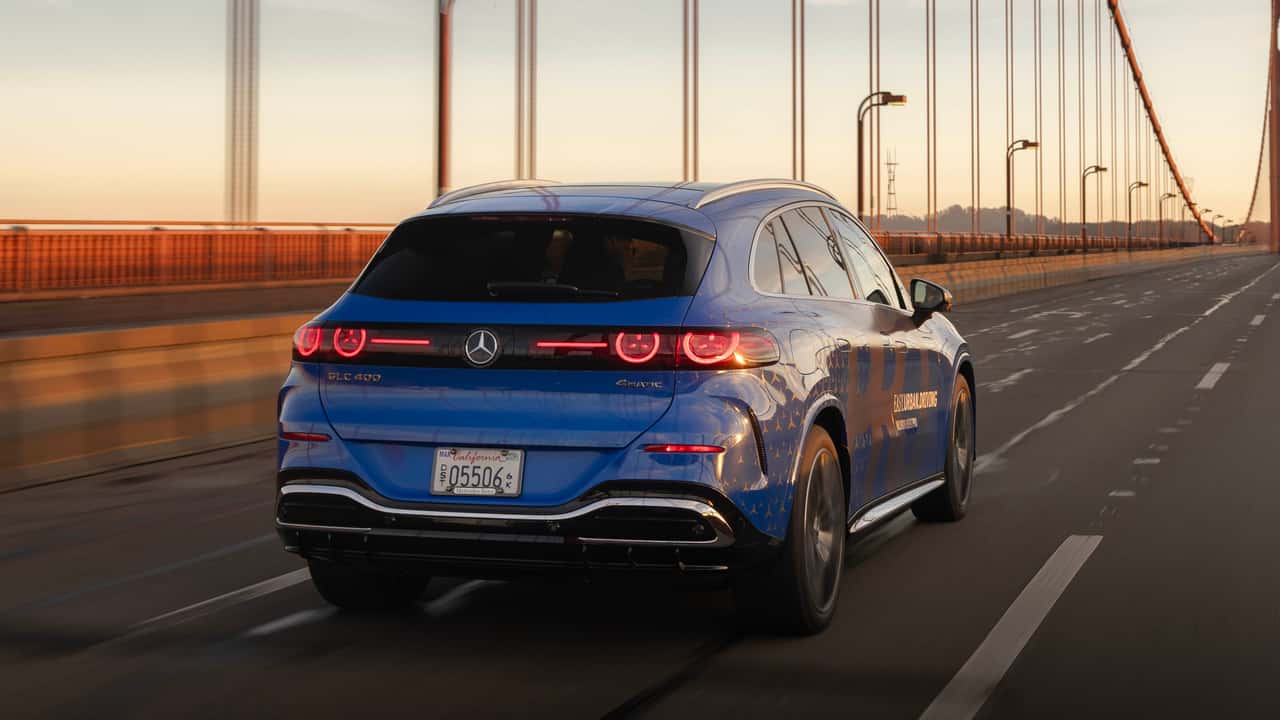
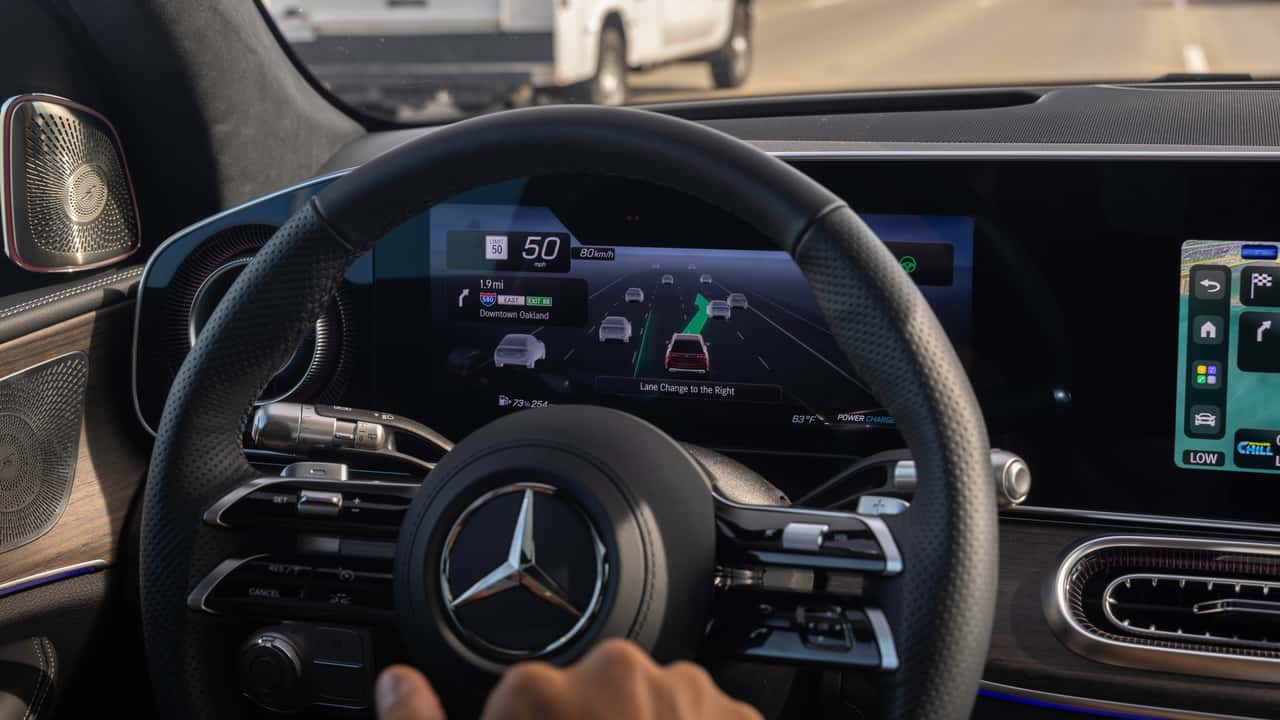
Mercedes-Benz is expanding its Level 2 driver assistance software in the US, which it calls “MB.Drive.” The automaker’s autonomous features now include what it calls “point-to-point” driver assistance and hands-free highway driving—simply put in an address, and it’ll take you where you want to go. The new MB.Drive Assist Pro and Highway Assist software kick off with an early access program for select California owners in December 2026. Eligible participants will be selected from owners or lessees of the 2026 and 2027 CLA Electric, 2027 GLC Electric, S-Class, GLE SUV and Coupe, and GLS SUV. The rest of the US gets the tech in spring 2027—but we got access even earlier than that. The company conducted a demonstration of the MB.Drive on the streets of San Francisco, California, earlier this month, and we got an early look at how it will work. How Mercedes-Benz Says The Software Should Work The move into more advanced Level 2 autonomy—that is, those that allow for partial automation like supervised steering and throttle inputs—comes after the company, in its own words, came to "regret" rushing Level 3. It just wasn’t what customers wanted at the time. The new MB.Drive Hands-Free Highway Assist is a step below Level 3, and the software aims to fix that technology’s overreach. The goal is to make highway driving more comfortable by asking you to do less of it. On certain controlled-access highways with the right driver aids engaged, Mercedes drivers will be able to remove their hands from the wheel at speeds up to 85 miles per hour. A new Proactive Lane Change Assist feature will also change lanes to automatically overtake slower traffic, or to follow a given route down a highway exit. As a whole, the new suite of software is intended to provide drivers with a “point-to-point” experience, wherein you’re effectively an arbiter, hands on and eyes peeled, while the car navigates. Most importantly, that includes in traffic. The move into more advanced Level 2 autonomy... comes after the company, in its own words, came to 'regret' rushing Level 3. It just wasn’t what customers wanted at the time. Once your destination is programmed in—say, from home to work—the MB.Drive Assist Pro software is activated with a single press of a button on the wheel. In whatever capacity it can, it’ll assist with highway entry and exit, hands-free cruising where applicable, changing lanes, merging, turning at intersections, and acceleration and braking. All this is already on top of the usual suite of driver aids you’ll find in a new Benz, like adaptive cruise control, blind-spot warnings, and collision mitigation software. The tech is wrangled by some serious computing power. The cars themselves have a total of 10 cameras, five radar sensors, and 12 ultrasonic sensors. The sensor data is processed by a high-performance computer delivering up to 254 TOPS (Tera Operations Per Second). The massive amount of data necessitated a partnership with Nvidia, which helps Mercedes put to use the huge amounts of data needed to make a system like this work reliably. How MB.Drive Assist Pro Worked On The Road A new Mercedes-Benz was waiting for me outside my hotel with a company engineer in the passenger seat. Across our 45-minute loop through downtown San Francisco, we encountered obstacles and real-world scenarios that might’ve flummoxed other lesser driver assist systems. The journey starts as advertised: you input a destination, and just like setting the cruise control, you activate Drive Assist Pro with a single press of the button on the steering wheel. An in-dash icon lets you know the system is engaged, and the car sets off. From here, the job is monitoring the system, not driving. All of that is handled by the car; you just wait to correct the system if needed. Photos by: Mercedes-Benz This is the best part of the new software. Mercedes engineers tell me that they put a lot of effort into making you feel like you’re on the same team as the vehicle, not lording over it. And that’s exactly how it feels. While headed down a two-way street with cars parked on either side, I saw the system choosing to ride the lane marker to keep clear. My preference is not to be near the oncoming lane, and a gentle nudge of the wheel was all it took to keep the car tucked closer to the parked cars. More importantly, it also stayed there. In some other Level 2 systems, the driver is left to constantly enforce this choice. Not here. Mercedes says cars will be able to learn from these corrections to better tailor to your preferences. MB.Drive Assist Pro is good enough as a Level 2 system that this is really the last barrier. Multiple other journalists thought the system was too aggressive at intersections—creeping up to lights, accelerating harder than they’d want to, or similar—but it felt natural to me. This is the best part of the new software. Mercedes engineers tell me that they put a lot of effort into making you feel like you’re on the same team as the vehicle, not lording over it. I was told some of these decisions are made so that the driver doesn’t feel the car is “stuck.” Basically, engineers are baking human behaviours into the system to make it feel more natural. Everyone’s tolerance for how aggressive a system like this drives is going to be different, and the brand is working on a few different “modes” with more and less aggro driving characteristics. Thus far, this feels like a good middle ground to me. Other challenges encountered along our route included a construction zone at a four-way stop, where I needed to step in and navigate, a double-parked truck with oncoming traffic, and a lunatic on a Lime scooter that dove in front of the car while at an intersection. In the latter two instances, the car navigated the situation much as I would have, proceeding confidently and with an amount of caution that I felt was enough to allow me to simultaneously monitor things. Photos by: Mercedes-Benz Mercedes’ New Level 2 System Works, But The Real Test Is Ahead At the end of the day, the system does exactly what Mercedes said it would. It drove nearly flawlessly from one point to another, requiring nothing but oversight and occasional intervention. I was able to nudge the car along when I thought it hesitated, and correct it with ease when I knew better. By the end of my loop, I found myself significantly less mentally fatigued than when I drove through the same streets under my own power. I think the best way to describe the system is that it’s a lot like riding a well-trained horse. The thing knows its way back to the barn, wants to go there, and requires very little of you besides a little nudge here and there. We certainly haven’t circled all the way back to the days of the horse, granted, but the technology makes for a more cooperative relationship. At the end of the day, the system does exactly what Mercedes said it would. What do you think? The required hardware for MB.Drive Assist Pro is already installed in certain 2027 vehicles, including the CLA Electric, GLE, GLS, and S-Class. Beginning with the 2028 model year, more vehicles across the brand in the US will be equipped to support the feature. You’ll need to pay a monthly subscription to keep access to the service, but Mercedes hasn’t announced pricing yet. Of course, the real test comes when the software goes nationwide, and when consumers decide whether whatever price Mercedes is asking is worth it for a helping hand on the way home from the office.

 Liked by Leo Fortin, Justin Labelle

















 Liked by Leo Fortin, Justin Labelle