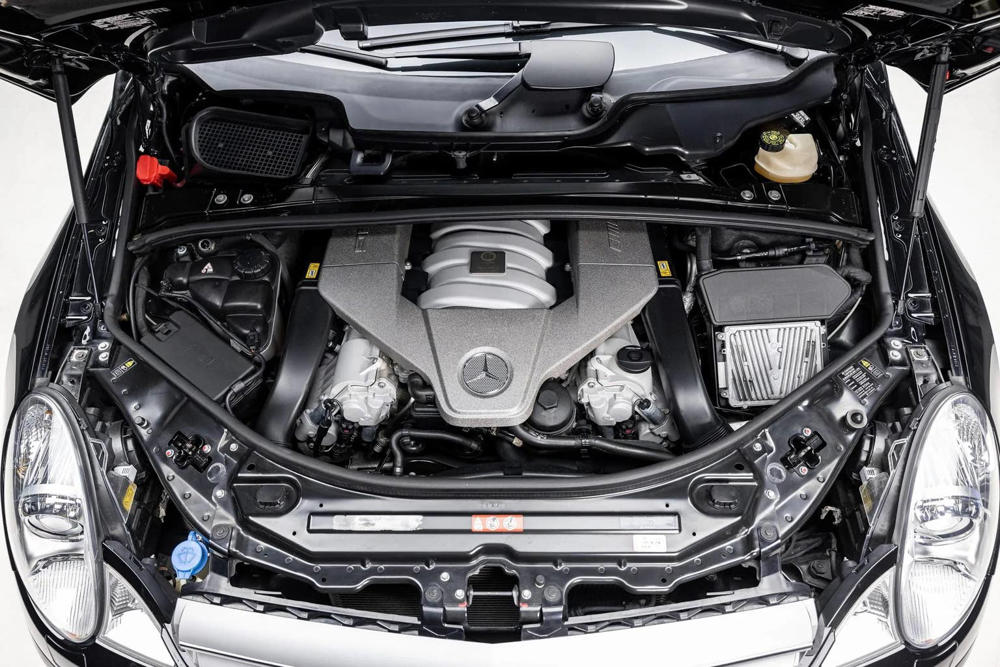
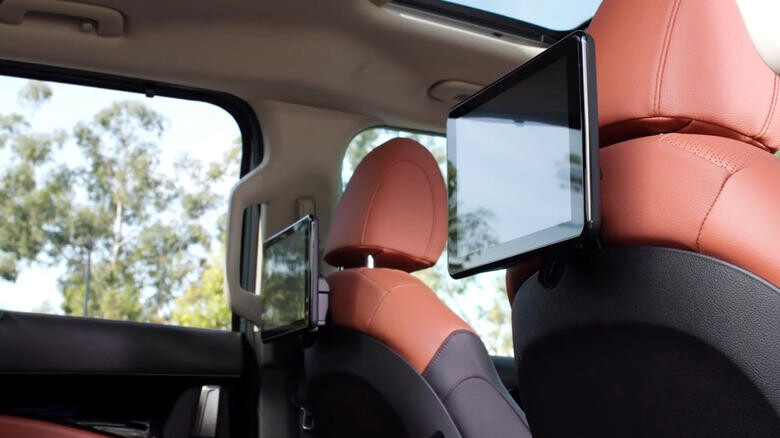
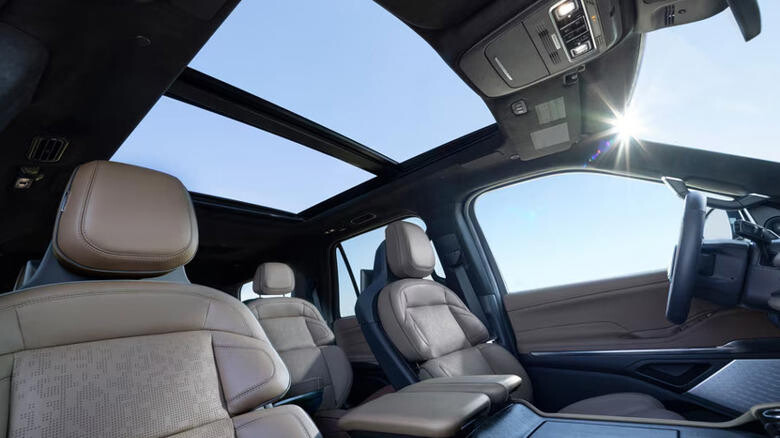
Mercedes-Benz once tried its hand at a luxury crossover minivan / multi-purpose vehicle (MPV), but the car faced an uphill battle from the start, with the odds stacked against it. The R-Class arrived in 2004 at a tumultuous time for the DaimlerChrysler empire. About halfway into this “marriage of equals,” which basically left Mercedes-Benz in charge to the chagrin of Chrysler, the R-Class arrived, just as things were going badly. The Smart, Chrysler, and Maybach divisions were losing money, and DaimlerChrysler executives thought the R-Class would be a money-maker and expected to sell 50,000 a year. The luxury MPV segment was new to Mercedes, and the company wanted to lead this class with a top-class product that had all the expected Mercedes qualities, but with three rows and wide family appeal. The R-Class was meant to provide MPV practicality, S-Class luxury, AWD, and a taller profile, while still driving and handling like a Mercedes should – a tall order in any book. The R-Class was previewed in 2002 as the Mercedes-Benz Vision GST Concept, and even then, the public was confused about what the car’s purpose would be. Preview: 2001 Vision GST Concept Mercedes-Benz described the Vision GST Concept as a “Grand Sports Tourer” design study that blended versatility, luxury, and performance in a big, futuristic family estate car with the vague outlines of a minivan or MPV. It went on display at the 2001 Detroit Auto Show to gauge the public’s response to a car that Mercedes intended to provide traditional premium luxury, but with sporty handling and long-distance comfort in a roomy form factor with the footprint of a long-wheelbase S-Class. The show car came with a naturally aspirated variant of the familiar M113 5.4-liter V8 engine producing 355 hp and had 22-inch wheels, a handcrafted cabin made of wood, leather, and aluminum, an electrochromatic glass roof, flexible seating with space for up to six people, and multiple cabin displays and entertainment features. In 2004, it was followed up by the GST 2, a high-efficiency diesel-hybrid with an electric motor, and the Vision R, a Europe-focused variant with a shorter wheelbase and a V6 diesel engine. Translated to Reality: R-Class Based on the same platform as the W164 M-Class and X164 GL-Class, the W251 R-Class sat on an SUV architecture with a choice of 117.3- and 126.6-inch wheelbases, but only the LWB was ever sold in North America. It had a gradually rising wedge shape with a downward-sloping roof that made the third row a little confined, and made it look more like an elongated MPV than a minivan. It lacked a minivan’s sliding doors or an SUV’s ground clearance, so the production model was as odd a duck as the GST and mostly drew quizzical looks from bystanders. In Europe, the R-Class was offered with a vast range of engines, ranging from a 3.0L turbo-diesel to the 6.2L naturally aspirated gas V8 in the R63. Production lasted until 2013 in international markets, but the LWB variant was sold in China until 2017. The modern-day equivalent to the luxury Mercedes minivan would be the VLE. Turned up to 11: R63 AMG And then the Mercedes-Benz R63 AMG was shown at the 2006 Chicago Auto Show to answer a question nobody asked. Sportily dressed up with big wheels, unique fascias, an AMG body kit, and 20-inch alloy wheels, the R63 housed the operatic naturally aspirated 6.2-liter AMG V8 engine with over 500 hp, paired with a sportified AMG Speedshift variant of the 7-speed 7G-Tronic automatic transmission with manual override. On paper, it was certainly an awesome piece of kit: Metric Value Length x Width x Height 203.0 / 75.7 / ~65.2 inches Wheelbase 126.6 inches Curb Weight 5,200 lbs Headroom Row 1 / 2 / 3 39.8 / 40.4 / 37.2 in Legroom Row 1 / 2 / 3 39.8 / 36.2 / 32.4 in Engine 6.2L NA M156 V8 Transmission AMG Speedshift 7G-Tronic automatic Horsepower 503 hp Torque 465 lb-ft Drivetrain 4Matic AWD 0-60 mph 4.6 seconds Top Speed 155 mph (171 w/ AMG Driver’s Package) It was no half-baked AMG, and although its 5,200-pound bulk could never provide the required handling, the hardware was on point. AMG added an upgraded cooling system, an oil cooler with a dedicated water pump and fan, AirMatic air suspension, sport pedals, special sill plates, a 200-mph speedometer, and even an AMG Racetimer module in the dash display. A Compromise and A Commercial Failure At $87,500 in 2006, the R63 AMG was an expensive indulgence and sold poorly because it was a flawed product. It was too big, heavy, and tall to offer the kind of handling AMG fans expected; it wasn’t as roomy or practical as a proper minivan, and it wasn’t an SUV either. The added performance didn’t improve it; instead, it wrote checks the driving experience couldn’t cash, and the novelty soon fizzled out. Produced for a few months, it’s not clear exactly how many were made. Most sources put the number at 200, with at least 30 of those sold in the U.S., though this figure is sometimes quoted to be 44. The R-Class as a whole is also regarded as a commercial failure, and never once reached the projected 50,000 sales per year. The best it ever achieved was 34,357 units in 2006, its first full year on sale. Sales dropped to 27,733 in 2007 and proceeded to fall off a cliff, never recovering. In 2013, its last full year in all markets, only 1,592 were sold. Minivans in general, once such a pervasive box on wheels on our roads, are a segment in perpetual decline. Final Thoughts The R63 Mercedes AMG van is one of the rarest AMG models and, without a doubt, the oddest. Nobody asked for a high-performance enthusiast’s minivan, and for all practical purposes, the R63 AMG is still the only entry in this rarefied segment to date. It went about as well as expected, as the qualities of a van and an AMG product seem irreconcilable – and they were, in practice. It was rapid in a straight line, the high-revving naturally aspirated V8 sounded gorgeous, and the luxurious interior was comfortable, though the third row was a bit tight. Handling left much to be desired, though, and fuel consumption was heavy at around 12 mpg in town and 16 mpg at best. A deeply flawed and misguided car, then, at a time its parent company was struggling with several money-losing projects. However, today, this ultra-rare AMG is quite the collector’s item, and it’s a true hen’s tooth. With perhaps 30 around on our roads, AMG fans will still look and point when they see one, enthusiastically explaining to nonplussed onlookers the significance of this very fast van. So perhaps, in a sense, that’s a small victory.

 Liked by Olivia Hill, Samuel Clark
 Liked by Olivia Hill, Samuel Clark