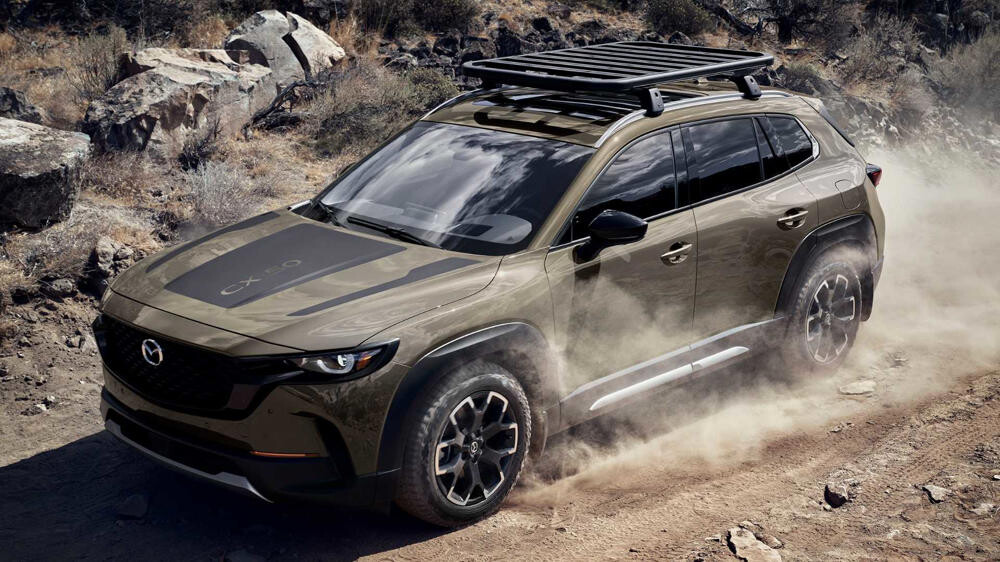
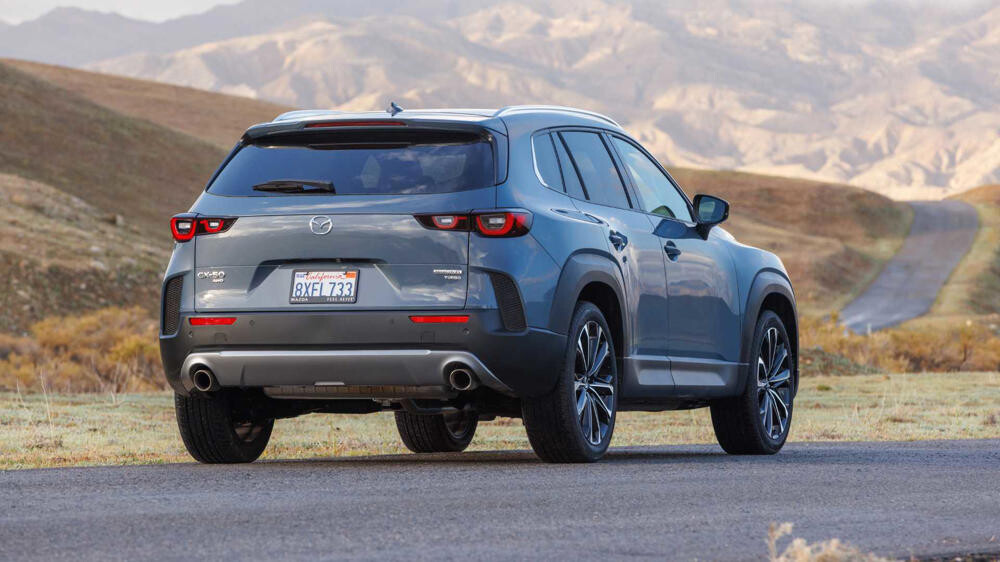
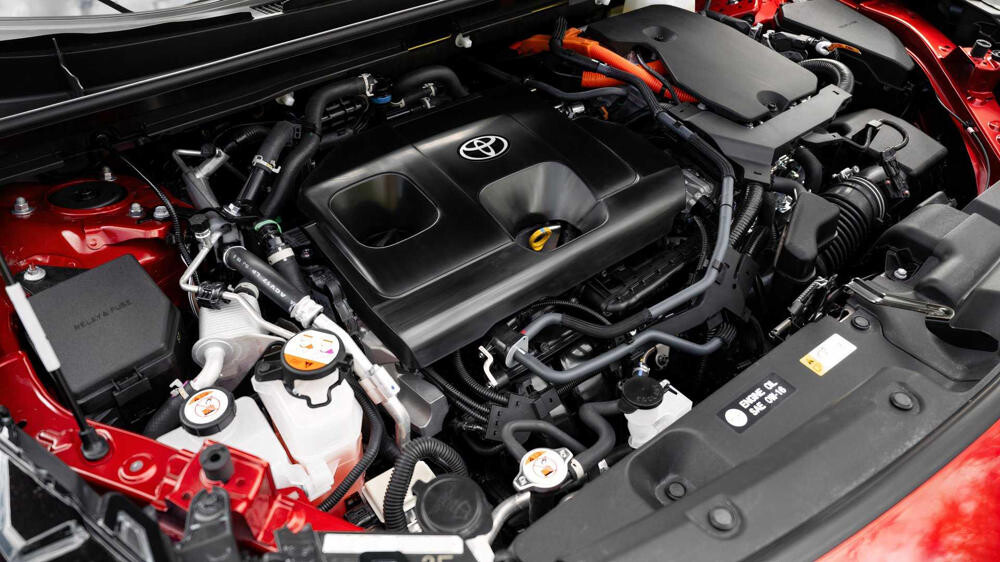
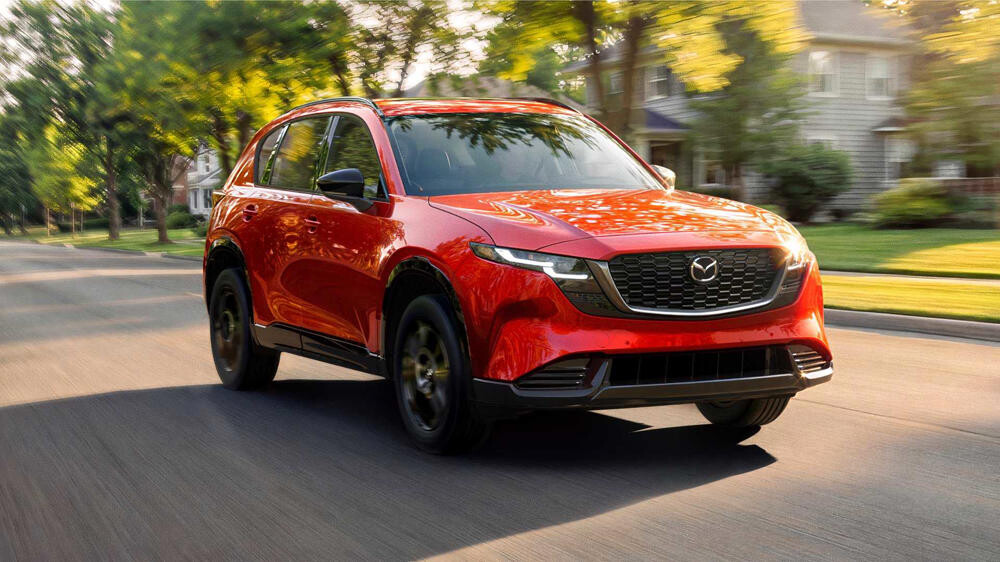
Even though the crossover SUV market is somewhat of a free ticket to earning a load of money for a manufacturer, the various marques that build such machines still need to ensure they're attractive enough to set themselves apart from the competition. With so many brands offering crossovers these days, nailing this is the key to success. One key ingredient to making a popular crossover SUV is selling it with a hybrid option, due to the performance and efficiency benefits such a setup brings. The growing importance of hybrids is illustrated by Mazda, which has seen a dramatic turnaround in the fortunes of two of its crossover offerings in 2026. How The Hybrid CX-50 Nearly Erased The CX-5's 25,000-Unit Lead Mazda takes a different approach to the crossover market than many of its rivals, since it offers two different models. Named the CX-5 and CX-50, the primary difference between the two vehicles comes down to the image they portray. While the CX-5 is geared toward being more of a city-oriented model, as illustrated by its sleeker exterior design, the CX-50 is aimed toward a more rugged character. The CX-50 comes sporting a more aggressive design with black plastic bumpers, as well as a higher ride height that affords it an extra inch or so of ground clearance. Traditionally, Mazda has seen greater success with the slicker and more urban-friendly CX-5 in the US, but things have recently taken a sharp turn. For reference, while Mazda sold 105,788 CX-5s between January and September 2025, only 79,628 CX-50s found new owners. However, moving the clock forward 12 months, the story is very different. While CX-50 sales have been boosted by 19.7% to land on 95,351 between January and September 2026, the number of CX-5s sold has plunged by 9.5% to 95,762 over the same stretch. The CX-5 still holds a slender lead, but this is a concerning trend for the model, having shed a lead of over 25,000 units in just a year. That said, some of that deficit was likely due to the third-gen CX-5 being introduced in early 2026, as production for the car would have been ramping up during the early months of the year, which would have restricted sales to an extent. The same trend isn't observed in Canada, with the CX-50 seeing its sales down by 97.8% YOY, but that's because the US-built SUV stopped being sold in the country due to recent export tariffs imposed by the Trump administration. Because the CX-5 is imported to Canada directly from Japan, it isn't affected by such tariffs, and it currently remains the only Mazda crossover option for Canadians in the market for one. But the numbers alone don't tell the full story. The CX-50's turnaround has one clear driver – and it's the same thing reshaping the entire industry. More Power, Better MPG, And Only $500 More: The CX-50 Hybrid's Undeniable Value Case The primary reason for the CX-50's sudden sales success is the recent popularity boost enjoyed by hybrid vehicles. Kelley Blue Bookreports that US hybrid sales were up 9% year-over-year in the first half of 2026, with the added performance and efficiency of such vehicles proving very attractive to Americans. That appeal has been driven by rising fuel prices in recent times, as well as the fact that hybrids are more affordable than ever before. Crucially, while the CX-50 has been able to take advantage of the hybrid trend thanks to having been available with a Toyota-developed 2.5-liter hybrid powertrain since the 2025 model year, the CX-5 doesn't yet feature one. The power gap between the two models is significant, with the CX-50 Hybrid producing 219 combined horsepower, while the base CX-5 with its naturally aspirated 2.5-liter Skyactiv inline-four power plant only has 187 hp. Despite having considerably less power on tap, the CX-5 can only achieve an average of 26 MPG with that engine, whereas the CX-50 can muster 28 MPG. The real kicker is that, due to the base CX-50 Hybrid being offered in the mid-range Preferred specification, it only costs $500 more than the equivalent CX-5 Preferred. While both cars get all-wheel drive at this price point, the CX-50 uses a single-speed CVT transmission, while the CX-5 gets a six-speed automatic unit. The CX-5's All-Digital Cabin Is Costing It Buyers Who Prefer Physical Buttons The rise of hybrids isn't the only trend sweeping across the automotive world at the moment, because new car buyers are also fighting back against the trend of digital cockpits. This approach ditches physical buttons in favor of consolidating nearly every control into the vehicle's infotainment system, meaning drivers must access everything through the center screen rather than a dedicated button, all in the name of so-called progress. The trend hasn't proven popular due to the awkwardness of accessing such settings in general, particularly while driving. The CX-50's cabin has more buttons to hand than the CX-5, which saw a third-generation variant unleashed for the 2026 model year. Mazda clearly didn't respond quickly enough to consumer pushback against removing buttons, and the primarily digital cabin of the CX-5 could also be steering buyers toward the more conventional cockpit of the CX-50. It's not looking great for the CX-5 at the moment, but a crucial change is just around the corner. The CX-5's Own Skyactiv Hybrid Could Flip The Sales Race Again Fortunately for the CX-5, it won't have to wait long before it'll be equipped with a hybrid engine of its own. Mazda is developing its own Skyactiv-Z power plant, which will be a 2.5-liter I4 paired with a single electric motor. Given its similar displacement to the Toyota unit found in the CX-50, we expect it to produce a comparable amount of power and a similar level of fuel efficiency. While specifics regarding the CX-5 Hybrid haven't been shared by Mazda, the Japanese marque has said that it'll start at a much lower price than the recently departed Turbo version of the model. As a result, it'll likely cost around the same as the CX-50. This argument is supported by the base versions of both pure ICE models being separated by $90 right now, with the CX-5 being the more expensive of the two, as it represents the newer design. This gives the CX-5 a good chance to reclaim its sales supremacy over its more rough-and-ready sibling, especially if the new powertrain ends up being technically superior to the older Toyota unit hidden beneath the skin of the CX-50. The only possible sticking point is whether buyers prefer the more traditional cabin found in the CX-50, but added performance and efficiency should offset that, especially given that the CX-5's sleeker design was enough to give it the edge before. Sources:Kelley Blue Book, Mazda.