A family SUV can be an expensive purchase long before anything goes wrong on the road. For Toronto motorists, the theft history attached to a particular model can turn an insurance search into a four-figure surprise. A November 2026 Rates.ca pricing analysis produced annual estimates reaching $6,641 for some vehicles heavily targeted by thieves, using a specific Toronto driver profile and coverage package.
That figure is neither a citywide average nor a bill every owner can expect. It illustrates how sharply vehicle-related risk can complicate the cost of ownership. Even as reported thefts have eased from earlier peaks, Ontario continues to account for a substantial share of Canada’s stolen vehicles. For drivers buying or renewing coverage, the sticker price is only part of the calculation.
Where the $6,600 Insurance Figure Comes From
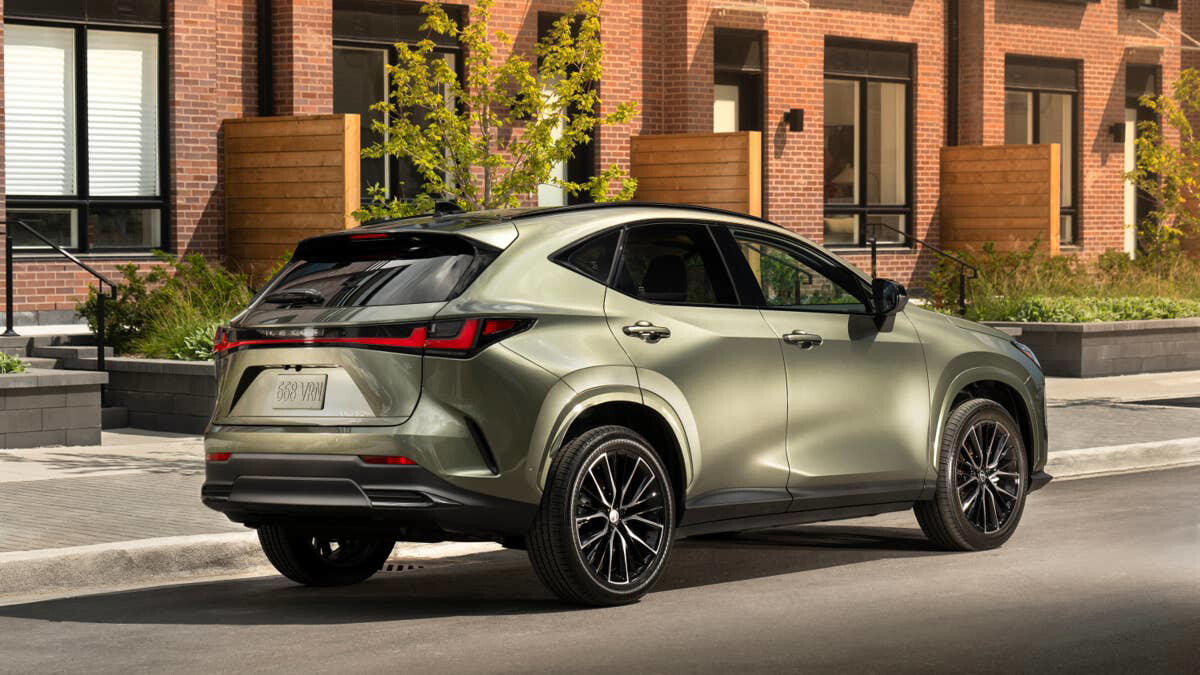
The striking number comes from a Rates.ca analysis published in early November 2026, rather than from an average of policies sold across Toronto. Its estimates used a 35-year-old male driver with a clean driving record, travelling about 10,000 kilometres a year, and a recommended personal-use policy including collision and comprehensive coverage. For a 2024 Lexus RX450h+ all-wheel-drive hybrid, the annual estimate reached $6,641, or roughly $553 a month. The figure offers a concrete example of what a high-risk vehicle can cost to insure under one set of assumptions.
It does not mean that theft alone accounts for the entire premium, or that every RX450h+ owner will receive that quote. Vehicle value, repair costs, coverage choices and personal circumstances all feed into the price. A Toronto household comparing SUVs might find that the amount added to its yearly budget changes substantially with the vehicle selected, even before financing, fuel or maintenance enter the picture. The lesson is to treat quoted figures as illustrations, not universal prices.
The Lexus TX Shows Why Theft Frequency Matters
One of the clearest examples of concentrated theft risk is the 2024 Lexus TX350. Rates.ca’s analysis of Insurance Bureau of Canada claims data from 2019 through 2024 assigned it a theft-frequency index roughly 83 times the average vehicle in that dataset. That index is a comparison of insurance claims per insured vehicle, not a prediction that 83 out of every 100 vehicles will disappear. It also needs care when interpreting newer models with relatively small insured populations.
Separate 2025 figures from Équité Association put the issue into more familiar terms. In Ontario, 266 of the 1,371 insured vehicles in the 2024 Lexus TX series group were reported stolen, a rate of 19.40%. The comparable Canada-wide figure was 279 thefts among 2,455 insured vehicles, or 11.37%. Those are striking recorded rates for the specified vehicle group and year, not a Toronto-only statistic or an estimate of any individual’s future odds. They explain why asking about the exact model year matters more than relying on brand reputation alone.
Some Ontario SUVs Had Even Higher Recorded Theft Rates
The 2025 theft-frequency rankings contain a figure that would trouble many buyers: among insured 2025 Toyota Land Cruiser Wagons in Ontario, 199 of 791 were stolen, equivalent to 25.16%. The same provincial ranking recorded 459 thefts among 5,320 insured 2024 Toyota Grand Highlanders, an 8.63% rate. These figures measure a specific model-year group within an insured population, not every vehicle carrying the nameplate across all years.
Such percentages are especially important because they reveal risks that raw stolen-vehicle totals can obscure. A newer, relatively uncommon SUV might never appear among Canada’s ten most stolen models by number, yet experience an unusually high theft rate within its smaller fleet. Equally, the percentages should not be used as guaranteed predictions of future theft or future insurance premiums. They describe what happened in 2025, while insurers also consider their own claims data and changing conditions. For buyers, a model-year-specific question can reveal more than a broad declaration that an SUV is popular with thieves.
Everyday Family Vehicles Remain Major Targets
Luxury SUVs attract attention because of their high recorded theft rates, but the sheer number of popular vehicles on Canadian roads produces a different list of familiar names. Équité Association ranked the Honda CR-V as Canada’s most stolen vehicle in 2025, with 2,137 thefts. The Honda Civic followed with 1,813, while the Toyota RAV4 recorded 1,147. In Ontario alone, the CR-V accounted for 1,598 thefts, putting an ordinary family favourite at the top of the provincial count.
Volume and frequency tell different stories. Nationally, the CR-V’s 2025 theft rate was approximately 0.39% of insured vehicles, far below the 11.37% recorded for the Lexus TX series group in the frequency ranking. That does not make a CR-V theft harmless to its owner, nor does it mean every CR-V should face an unusually high premium. It means broad popularity and intense targeting are not interchangeable. Shoppers benefit from examining both the number stolen and the percentage of comparable insured vehicles affected.
Theft Is Declining, but Insurers Still Face Large Losses
There is encouraging news behind the worrying insurance estimates. Équité Association reported 46,999 private passenger vehicles stolen across Canada in 2025, an 18% decline from 2024. Ontario recorded 19,319 thefts, down about 22% over the same period. The improvement continued nationally during the first half of 2026, when thefts fell another 10.1% compared with the first six months of 2025. The direction of travel is better than during the theft crisis’s peak years.
The financial consequences, however, have not vanished. Équité estimated that auto theft generated about $900 million in Canadian insurance claims costs in 2025, while only 51% of stolen vehicles in Ontario were recovered that year. An unrecovered vehicle can leave an insurer facing a substantial replacement claim and a household scrambling to arrange transportation. Lower theft counts may eventually ease some pricing pressures, but a falling national total does not immediately eliminate the exposure associated with particular models, locations or costly claims.
Toronto Drivers Start With a Costlier Insurance Baseline
The Toronto market adds another layer to the problem. Ontario’s Financial Services Regulatory Authority reported an average annual premium of $2,868 across the Greater Toronto Area as of June 2026, compared with $2,218 provincewide. Against that GTA benchmark, the $6,641 sample estimate for the Lexus RX450h+ is more than twice as large. It is a useful illustration of the difference between a regional average and a premium attached to a particular vehicle and driver profile.
The comparison has limits. FSRA’s figure is a broad GTA average covering many drivers, vehicles and levels of coverage, rather than a Toronto-only quote for a 35-year-old motorist. Still, the regulator identifies geography as a factor in pricing, because collisions and vehicle theft do not occur evenly across the province. A vehicle kept in an urban neighbourhood may be assessed differently from an otherwise similar one insured elsewhere. For households already budgeting for parking, commuting and car payments, a substantial insurance estimate can affect which vehicle is practical to own.
Theft Risk Is Only One Part of the Premium
An insurer does not calculate a bill by looking up a stolen-vehicle ranking and adding a single fixed amount. FSRA says prices can reflect driving history, the type of vehicle, where it is kept, annual mileage, chosen coverages, deductibles and the insurer’s own claims experience. That helps explain why the published Toronto estimates cannot be reproduced for every applicant. Two people driving the same SUV may see different offers even if neither has made a recent claim.
Other expenses are moving the calculation as well. The regulator identifies labour, parts prices and more complex vehicle technology as sources of higher repair costs, including components such as cameras and sensors embedded in bodywork. A comprehensive policy addresses risks such as theft and vandalism, while collision coverage responds to a different set of losses. Both protections add to the policy’s cost. For an owner comparing quotes, separating the coverage package from the vehicle’s theft classification is essential: a lower price may reflect less protection rather than a safer or cheaper car to insure.
High-Theft Surcharges Can Add Another Expense
For some drivers, the concern is not limited to a high underlying premium. In a November 2026 Canadian Press report, insurance brokerage experts described high-theft vehicle surcharges reaching $1,500 a year in certain cases when owners do not install an insurer-approved security device. That is not a standard fee charged to all Toronto motorists. Insurers apply different lists, conditions and pricing practices, which can produce very different outcomes for the same model.
Belairdirect, for example, tells selected customers that an additional High Theft Risk premium will apply at renewal if a specified vehicle has not received a TAG tracking and recovery system. The company also advertises an additional discount for qualifying installations. An owner receiving such a notice should ask which device is acceptable, when installation must be completed and how the total premium will change. Buying an unrelated tracker without checking first might improve security but fail to satisfy the insurer’s requirement. In a tight household budget, that distinction can be expensive.
Security Measures Work Best in Layers
Police and insurance organizations recommend more than one obstacle between a thief and a vehicle. A locked garage or well-lit parking area can reduce opportunity; a steering-wheel lock adds a visible deterrent; and a Faraday pouch can shield key-fob signals used in relay attacks. Aftermarket immobilizers are intended to stop unauthorized starting, while tracking systems may improve the chances of finding a vehicle after it disappears. These measures address different stages of a theft rather than offering identical protection.
The location of the risk also matters. Équité’s 2026 Canadian Auto Theft Impact Survey reported that 82% of thefts happened at or next to the victim’s home. A familiar driveway should not automatically be mistaken for a protected space. York Regional Police recommends storing keys away from entry points, using visible locks and parking in a secured garage when available. None of these steps guarantees that a vehicle cannot be taken, and a tracker is not the same as theft prevention. Drivers seeking an insurance benefit should confirm approved equipment with their provider before spending money on installation.
Theft Coverage Is Not Automatically Included
A driver paying an expensive premium still needs to know exactly what the contract covers. In Ontario, protection against theft is typically purchased through optional comprehensive, specified-perils or all-perils coverage. Collision coverage alone is not designed to pay for the theft of a parked vehicle. Deductibles and exclusions can apply, and policy details determine what happens after a loss. Rates.ca’s high-priced examples included both collision and comprehensive protection, which is important when comparing them with cheaper, more limited quotes.
There are other decisions hidden in the paperwork. Ontario’s regulator describes OPCF 20 as optional transportation-replacement protection, which can help pay for a rental while an insured vehicle is repaired or replaced. OPCF 43 can remove depreciation deductions in eligible claims. Without the applicable endorsement, a stolen vehicle’s settlement may be based on depreciated value, subject to policy terms and deductibles. Toronto Police advises victims to report a theft promptly and keep information such as the licence plate and vehicle identification number available. Checking these details before a loss is far easier than discovering a coverage gap afterward.
Ontario’s Regulator Wants Theft Pricing to Reflect New Data
The pressure on vehicle owners has caught the attention of Ontario’s insurance regulator. FSRA has said auto theft peaked in the province in 2023 and then began to moderate. Its guidance tells insurers that prices, high-theft surcharges and incentives should reflect the improving claims picture rather than remain tied indefinitely to older conditions. Insurers are expected to provide actuarial justification for high-theft vehicle pricing as soon as practicable before January 1, 2027, including updated claims information and a review of whether previously flagged models and territories remain unusually risky.
That expectation is not a promise that every affected policyholder will receive a cut on January 1. Rates still depend on company-specific evidence and other claim costs, while FSRA reviews proposed pricing and risk classifications for fairness and reasonableness. It does, however, give consumers a useful question at renewal: is a theft-related charge based on recent experience for the exact vehicle and area? With theft patterns changing, transparency about why a model is penalized matters nearly as much as the published average.
A Quote Before Buying May Be the Best Protection for a Budget
For a family preparing to buy a new or used SUV, the insurance inquiry belongs near the beginning of the shopping process, not after the purchase agreement is signed. The Canadian Press reported that brokers recommend obtaining a quote for the specific vehicle because one insurer may classify it as high theft while another does not. Comparing offers with the same coverage limits, deductibles, drivers and annual distance makes those differences more meaningful. It also exposes mandatory security equipment or added charges before they become a surprise.
Existing owners have choices worth exploring, too. They can ask whether an approved tracker would remove a surcharge, whether bundling policies offers savings and whether a different insurer prices the vehicle more favourably. Any savings need to be weighed against device costs and coverage differences. The $6,641 estimate is a warning about potential ownership costs, not a prediction of every Toronto driver’s next renewal. The most useful response is to price the complete vehicle-and-insurance package, with theft protection and actual coverage treated as part of the purchase decision.