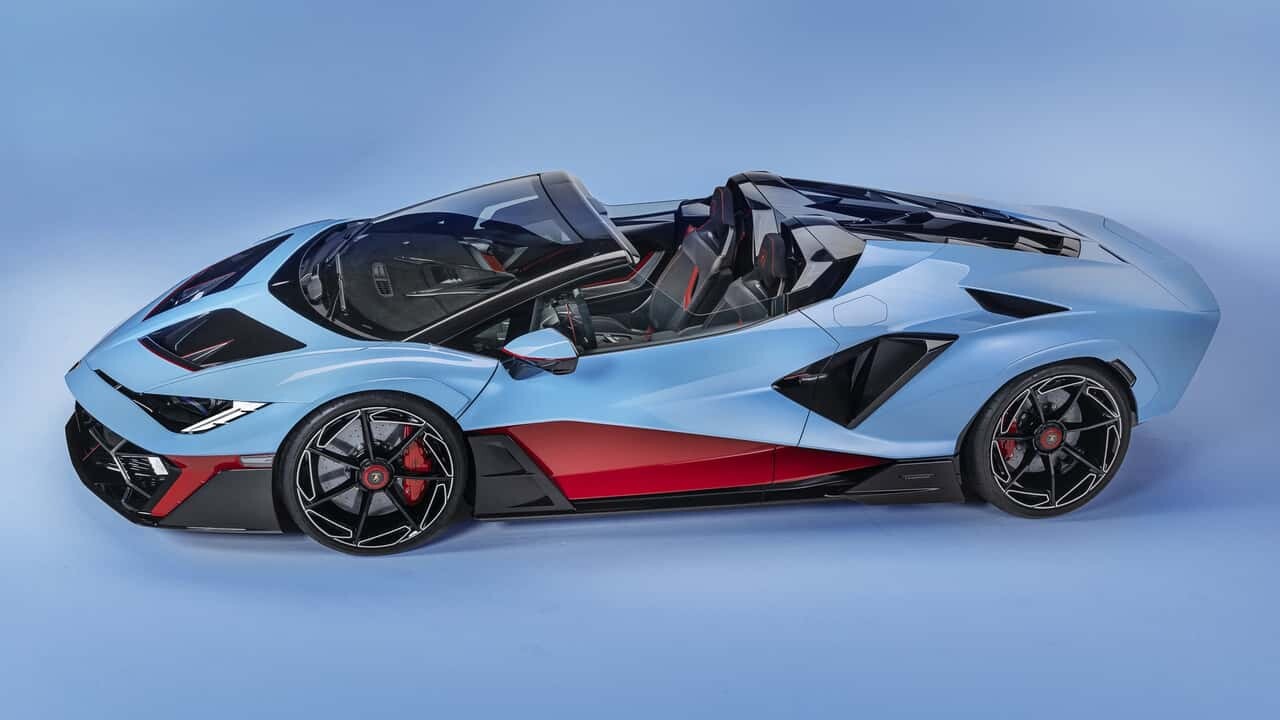
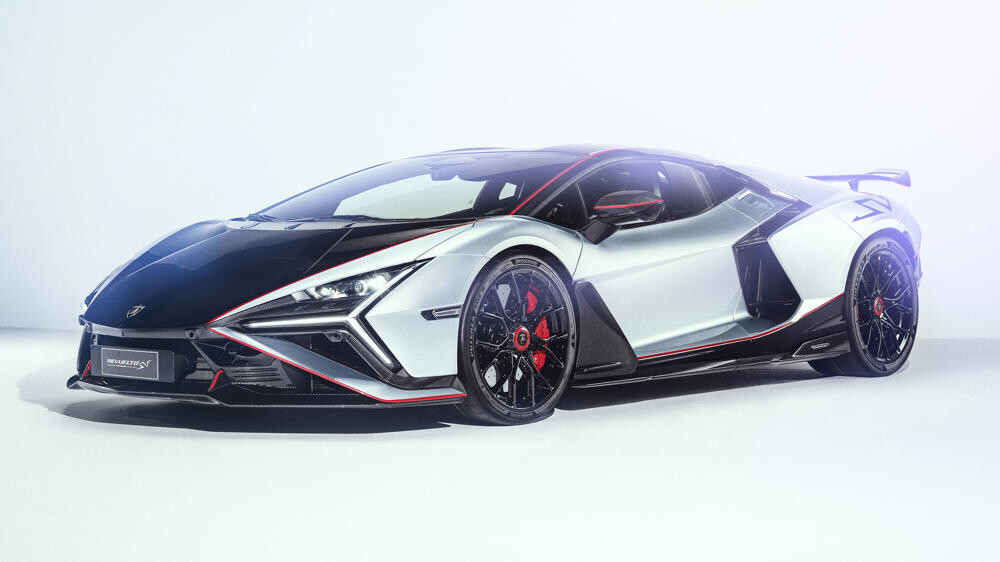
The new Lamborghini Temerario Spyder features a retractng hardtop roof Karl Brauer Lamborghini Chief Marketing and Sales Officer Federico Foschini recently spoke to me about the newest edition to the supercar company's lineup, the Lamborghini Temerario Spyder. This is an open-top version of its 789-horsepower V8 hybrid supercar the company introduced last year. The Spyder features a patented two-panel retractable hardtop designed to preserve the coupe's handling characteristics while delivering the open-air driving experience Lamborghini customers expect. The Temerario Spyder is the latest development in Lamborghini's transition to an entirely hybridized lineup, joining the Revuelto and Urus SE. It also introduces the first electrically operated retractable hardtop in Lamborghini's history, with an innovative design that stores the roof panels vertically between the passenger compartment and the engine rather than above the powertrain. During the vehicle's Los Angeles debut, Federico Foschini talked about the engineering behind the new Spyder, the differences between coupe and convertible buyers, Lamborghini's largest U.S. markets, and what the Italian automaker has planned for the next few years. The hardtop panels can retract in about 17 seconds Karl Brauer: Let's talk about an exciting new product coming from Lamborghini Federico Foschini: For us, this is a special vehicle because it's not just an open version of an incredible performance car. It's an open version that has almost the same performance and driving dynamics as the Temerario coupe. That's thanks especially to this patented retractable hardtop. It's the first time Lamborghini has had a retractable hardtop. In previous generations, we had either removable hardtops that had to be operated manually or the soft top of the Huracán. This is the first time we are using this technology. We have a patent because it's a dual-blade retractable hardtop that packages between the seats and the engine. This gives us the opportunity to maintain a very low center of gravity, even with the roof open. That means we can deliver essentially the same performance with the open car as with the closed car. This is a solution that our competitors are not using. The hardtop panels slide down between the passenger compartment and engine Brauer: So it's a retractable hardtop with two separate panels? Foschini: Yes, we call it dual-blade because there are two panels that move behind the seats, between the seats and the engine, in a vertical position. They don't go on top of the engine. Normally, when you have a retractable hardtop, it is stored on top of the engine. This raises the center of gravity of the car. With our solution, we keep the center of gravity low, and that gives us the same kind of handling with the open car as with the closed car. Normally, there are some differences between the two. In this case, you don't have those differences. Brauer: I would imagine there's potentially a heat issue, too. If you're putting the retrackted top over the engine, you're probably affecting its ability to dissipate heat. Foschini: Yes, thermal dissipation is certainly something you need to consider for a car like this. But this concept was really developed with the purpose of having the minimum impact on the packaging of the car. The Lamborghini Temerario Spyder will go on sale next year Brauer: Was this sophisticated roof mechanism part of the thinking when the Temerario platform was originally being developed? Foschini: Yes, because we started from the beginning.vWhen you begin developing a coupe and a roadster or Spyder, the open car is the more difficult of the two to develop. You need to consider the packaging required for the open roof. But at the same time, we didn't want to sacrifice roominess in the car. We wanted to maintain enough space for a person who is two meters tall to sit inside the car. And we wanted to preserve the agility and drivability of the car. That was exactly the concept developed at the beginning. Of course, the concept evolved over time in terms of feasibility, but the idea of packaging the retractable hardtop between the cabin and the engine was there from day one. That was the solution we chose when developing both cars, the coupe and the Spyder. If you try to add a hardtop, a retractable hardtop, or a soft top after developing the coupe, it can be very difficult. If certain things aren't considered from the beginning, you won't be able to achieve the right trade-offs. In this case, we believe we found the perfect balance. Brauer: Do you expect any differences between the coupe and convertible buyers? Do you have a sense of the different personalities that choose one over the other? Foschini: I think the coupe still has some performance characteristics that are better than those of the Spyder, but we're talking about very small differences. And I think many people who buy a coupe might later switch to the Spyder. So I don't necessarily feel there is a different customer. It also depends on the culture of the different markets. There are markets where the Spyder is extremely popular, and there are markets that are less focused on the Spyder. But I think with this kind of solution, we can appeal to both the coupe enthusiast and the Spyder enthusiast. We expect that, in the coming months, as soon as the car is on the market, the sales mix will move strongly in the direction of the Spyder for a period of time. Brauer: Where do Los Angeles and Southern California rank among Lamborghini's largest markets? Foschini: The United States is our number one market. Within the United States, California is the second-largest market, behind Florida. Florida took first place about a year ago. I think it's related to differences in the economic situations between Florida and California. There has been some change in California over the last two years, especially in big cities like San Francisco and other major cities. At the same time, I think Florida's economy is booming more than some other areas right now. But California and Florida are still more or less at the same level. They are by far our two largest markets in the United States. Brauer: And what's the third-largest market? Foschini: The Tri-State area, New York and the surrounding region. But California and Florida are clearly the top two markets. Brauer: What's Lamborghini's thinking for the next couple of years in terms of product philosophy and goals? Foschini: Last year, we completed what I would call the revolution of our product portfolio, introducing our three hybrid models: the Urus SE, the Revuelto, and the Temerario. This year, we started the first round of derivatives, which is typical of our product life cycle. We don't just develop the coupe and stop there. We presented the Urus Performante, we presented the Revuelto SV, and now we are presenting the Temerario Spyder. I think next year we have to leverage these three models. The order collection for the first two models that have already been launched has been very good. The feedback from the media has also been very positive because these are outstanding cars. They offer important improvements compared with their respective base models. With the Revuelto SV, for example, we set a record at Hockenheim as the fastest series-production car on the test track. I think these cars have been perceived as exactly the products our customers were waiting for. We are also expecting a big success from the Spyder because, as I mentioned, this car has a lot of innovation while retaining so much of what makes the coupe a great car. We will continue developing derivatives and evolving our models. We are never standing still, waiting for something to happen. We are always thinking about what comes next. And in both 2027 and 2028, we will have new product launches. These are necessary to continue engaging our customers, creating excitement, and meeting their expectations. Brauer: Thank you very much for your time. Foschini: Thank you.

 Liked by Ava Gagnon, Henry Mitchell










 Liked by Ava Gagnon, Henry Mitchell