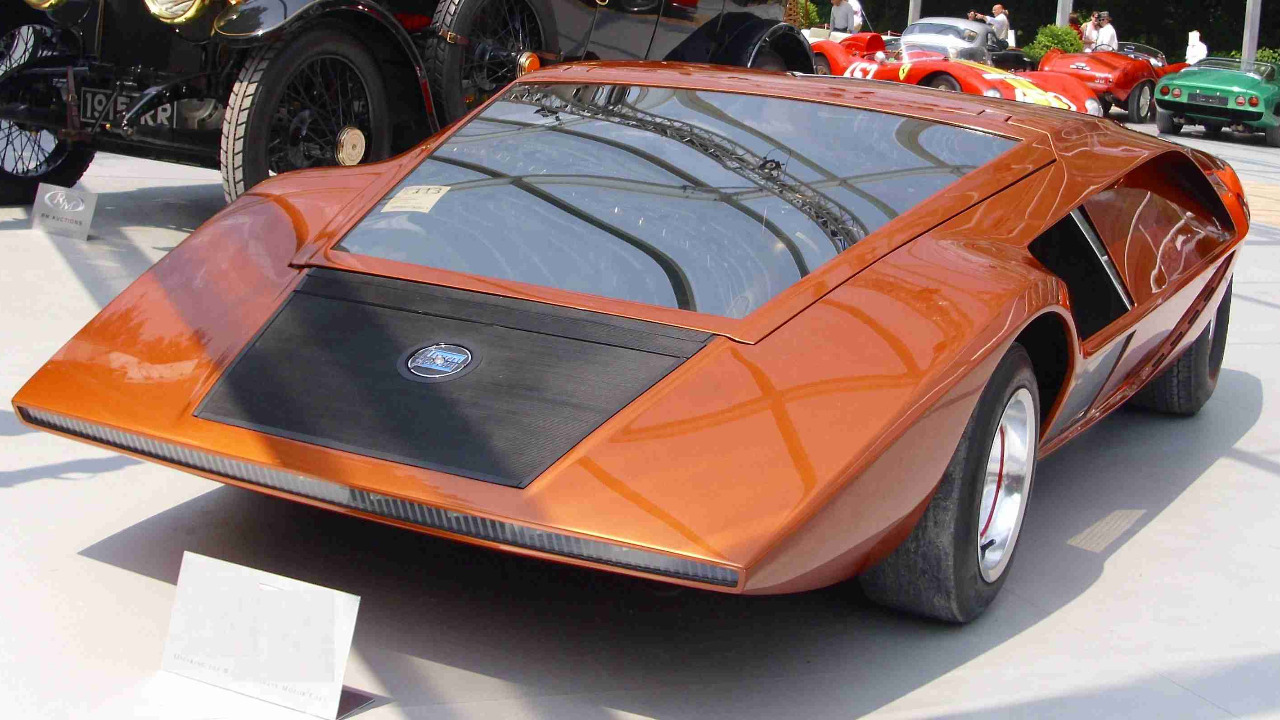
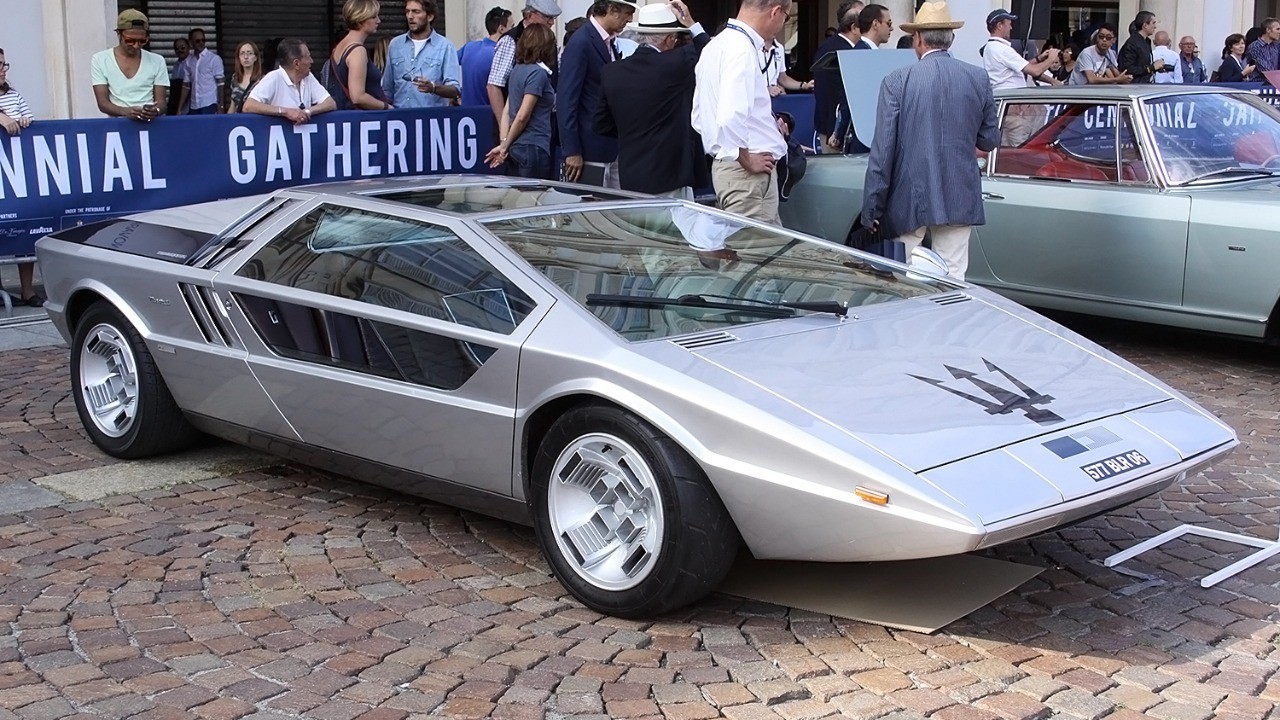
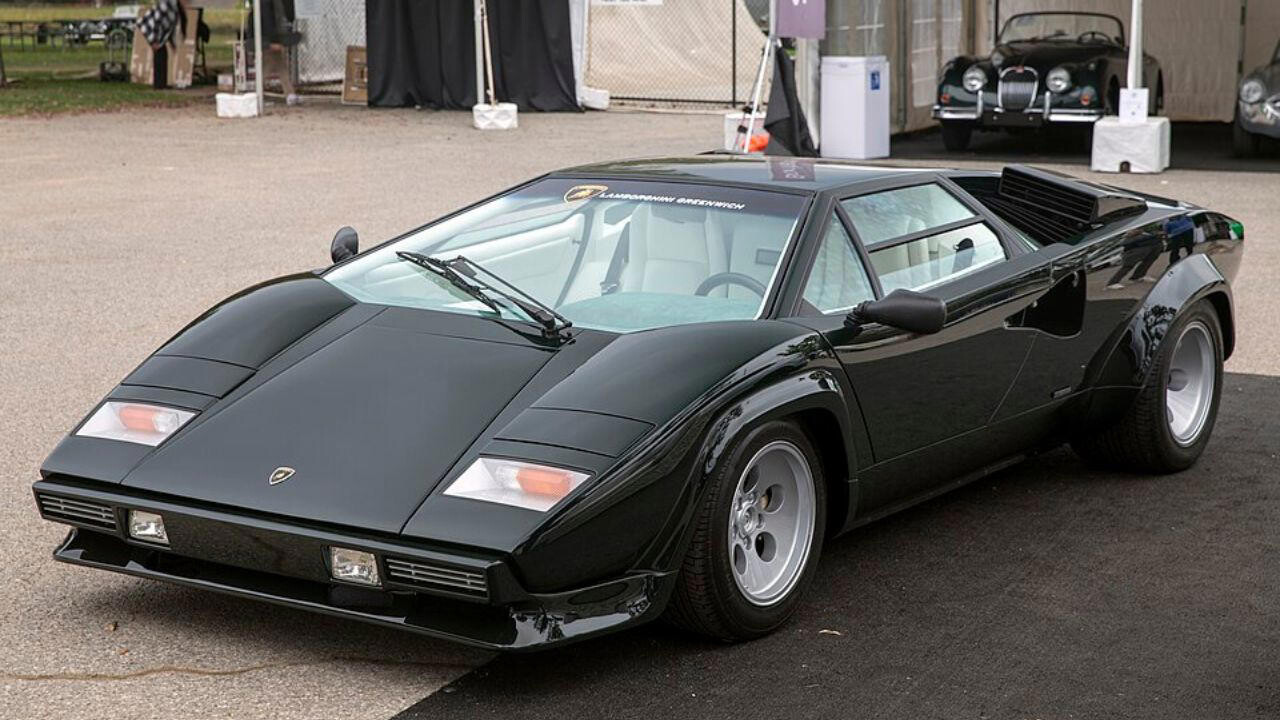
The Ferrari Modulo stands just 935 mm tall, about 37 inches, and it has no doors in the usual sense. Instead, the whole canopy slides up and forward to let you in. That is what a wedge looks like when nobody tells the designer to tone it down. From the late 1960s into the 1980s, Italian studios and a few brave makers drew cars as sharp as doorstops. Most production cars softened the idea. These are our picks of seven rare wedges that went the whole way, and the verdicts are our opinion. 1. Ferrari 512 S Modulo Pininfarina stylist Paolo Martin drew the Ferrari Modulo, and according to Hagerty he worked on it after hours. The car went to the Geneva show in March 1970. Car Design News confirms that 935 mm height and notes that it sits on Ferrari 512 S chassis 0864. According to Hagerty, it went on to win 22 design awards. Collector Jim Glickenhaus later bought it and set out to make it run. Our earlier look at why wedge-shaped cars ruled the 1970s and ’80s starts with shapes like this one. 2. 1970 Lancia Stratos Zero Bertone showed the Stratos Zero at the 1970 Turin show, and Marcello Gandini gets the credit for its shape. Top Gear puts it at about 84 cm tall and just over 3.5 meters long. Behind the cabin sat a Lancia Fulvia V4. In our view, no wedge ever committed harder to a single idea. Lancia’s later rally Stratos looked tame by comparison. 3. 1968 Alfa Romeo Carabo Gandini drew this one too, at Bertone, for the Paris show in October 1968. According to Carrozzieri Italiani, it used the Tipo 33 Stradale chassis and first ran a 230-hp V8. Its scissor doors swung upward, years before Lamborghini made them famous. Bertone also painted it luminescent green with orange details and fitted gold-tinted glass. Today, after a 1989 restoration, it lives at the Museo storico Alfa Romeo in Arese. Nothing about it was half-hearted. 4. Maserati Boomerang Giorgetto Giugiaro’s Italdesign rolled the Boomerang out at Turin on October 30, 1971, as a non-running showpiece. Then the studio made it fully operational for Geneva in March 1972. According to Supercar Nostalgia, it used the Bora’s 4,719 cc V8 with 310 bhp. Inside, only the rim of the steering wheel turns, around a fixed pod of gauges. In 1974 it went to a nightclub owner in Benidorm. We love it because even the steering wheel follows the wedge theme. 5. 1970 AMC AMX/3 American Motors went to Italy for this one. According to Hagerty, Giotto Bizzarrini handled the chassis, while Dick Teague’s team styled the body. OTO Melara then built a custom transaxle because the usual ZF unit was too long. AMC showed it to the press in Rome in March 1970 and at New York the next month. However, the planned price of about $12,000 looked too high. In the end, only nine chassis came together, and Hagerty counts six as more or less complete. Our full story covers the forgotten AMX/3 project that came too late. 6. 1983 Aston Martin Lagonda Series 2 William Towns drew the wedge-shaped Lagonda, and Aston Martin unveiled it at the 1976 London motor show. According to Jalopnik, it carried a 5.3-liter V8 with 280 hp, LCD instruments and touch-button switches. It cost around £50,000 when new. Aston built 645 of the wedge Lagondas from 1979 to 1990, and the Series 2 ran through 1985. Unlike most cars here, it actually reached paying customers. We also marked the Lagonda’s 50th birthday this year. 7. 1974 Lamborghini Bravo Gandini and Bertone unveiled the Bravo at the Turin show in October 1974. According to RM Sotheby’s, it used the 2,996 cc V8 from the Urraco P300, rated at 300 bhp. Journalist Jean-François Marchet reported that it covered about 70,000 km of testing. Still, Lamborghini shelved the project, and it never reached production. In our view, its stubby wedge looked more finished than most production cars. RM Sotheby’s sold it at Villa d’Este in 2011 for €588,000. Sources: Hagerty (1970s concept cars), Car Design News, Top Gear, Carrozzieri Italiani, Supercar Nostalgia, Hagerty (AMX/3), Jalopnik, RM Sotheby’s.

 Liked by Henry Mitchell, Mia Martin
 Liked by Henry Mitchell, Mia Martin